
Man in a Boat with Three Sheep — History & Facts
Is this a mirror — or a memory? In Man in a Boat with Three Sheep, the surface of the water glistens with hints of an unspoken past, where tranquility and unease intertwine, revealing the fragility of existence in nature. Look to the center of the canvas, where the figure of a man steers a small boat, flanked by three sheep, their woolly forms contrasting against the rippling blue. The melancholic palette of muted greens and grays suggests a world poised between calmness and chaos. Notice how the light dances upon the water's surface, reflecting not just the physical surroundings but also the emotional undercurrents that seem to ripple beneath the serene façade. The juxtaposition of man and animal speaks to the struggle for survival, with the sheep representing vulnerability while their shepherd embodies a fragile control over their fate.
The boat, both a vessel and a boundary, captures the tension between freedom and confinement. As the viewer, one might ponder whether the man’s journey is one of ascent or descent — is he navigating through life’s tranquility, or is he, in fact, a reluctant participant in a greater cycle of violence inherent in nature? Created between 1870 and 1918, this piece emerged during a tumultuous period for Auguste Louis Lepère, marked by the shadow of industrialization and the whispers of war. Living in France, he was influenced by the shifting landscapes of his time, seeking to capture the essence of nature in a world increasingly dominated by man.
His work reflects a deep introspection, attempting to reconcile the beauty of pastoral scenes with the harsh realities that lay beneath the surface.
More Artworks by Auguste Louis Lepère
Browse all →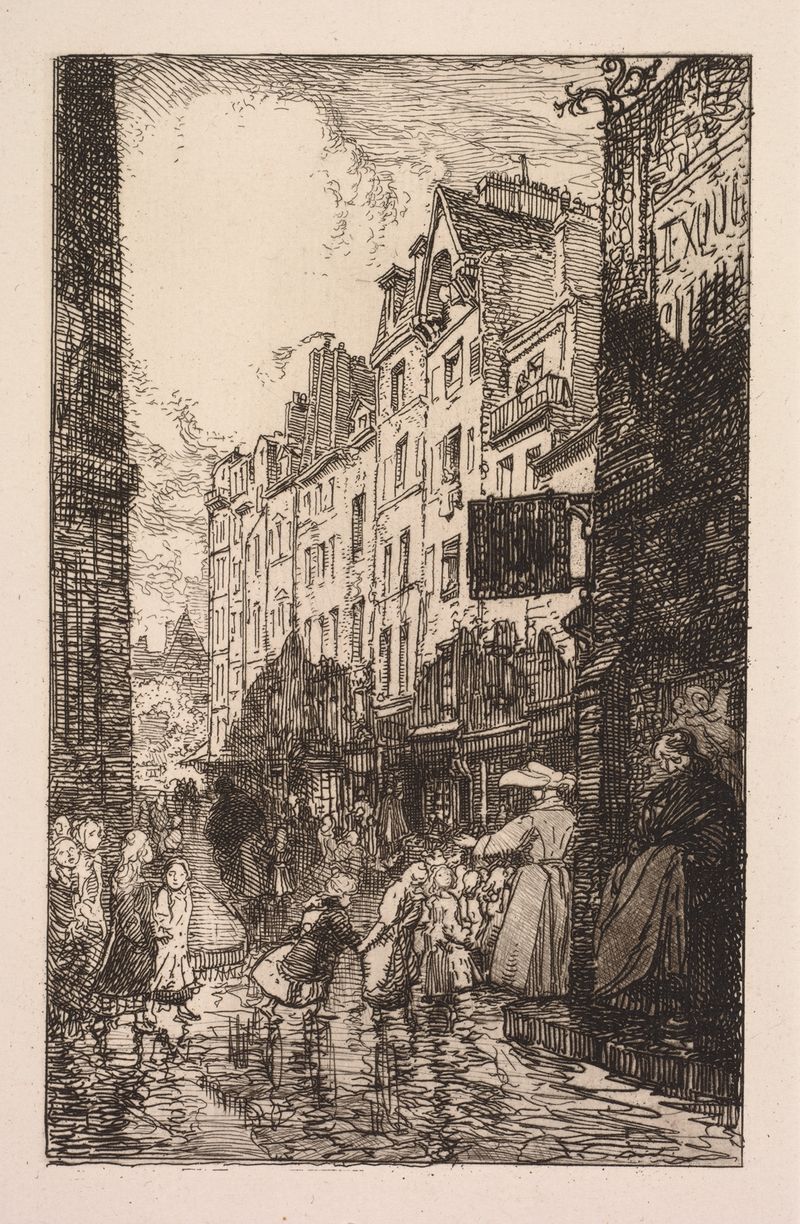
La Rue des Prêtres Saint-Séverin
Auguste Louis Lepère
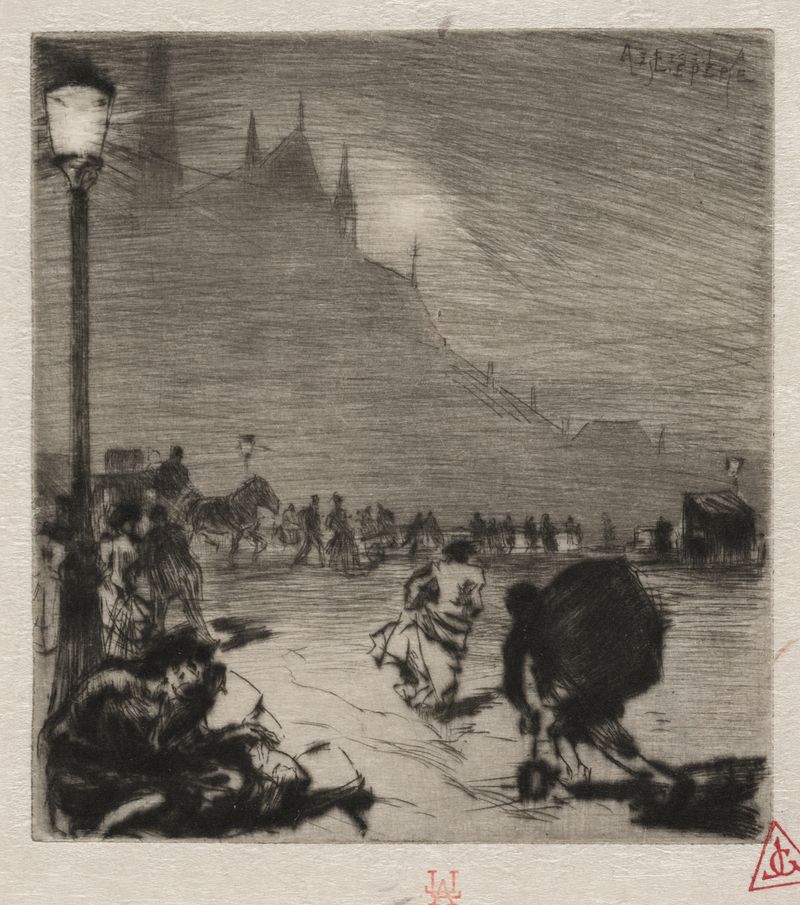
Au Coin du Pont-aux-Doubles
Auguste Louis Lepère
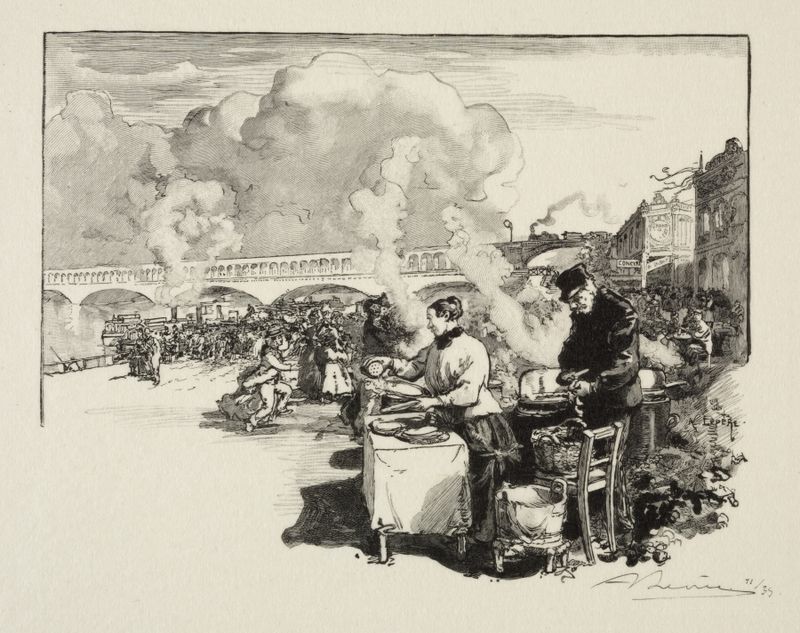
Debarcadère des bateaux-omnibus
Auguste Louis Lepère

La Seine, au quai de la Rapée
Auguste Louis Lepère
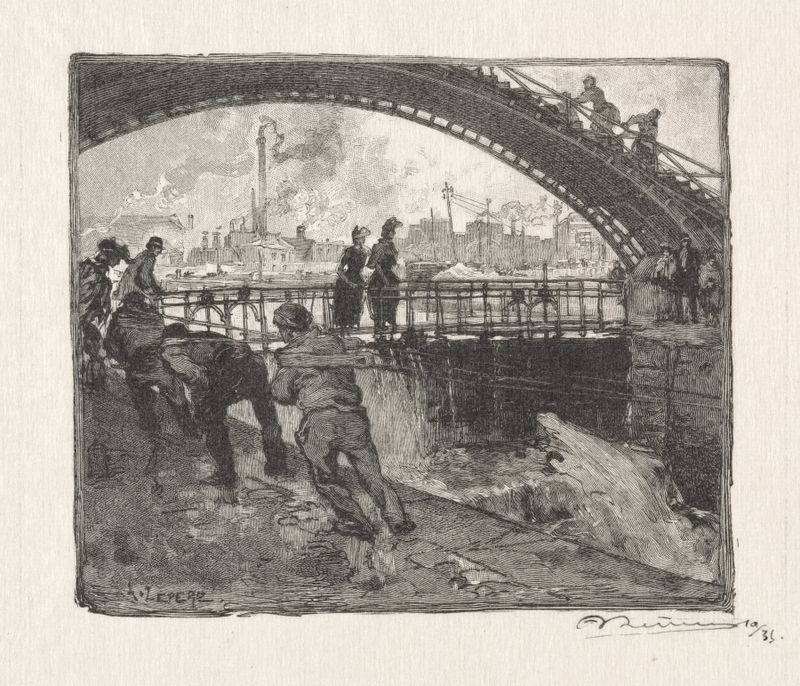
L’Ecluse du Canal St. Martin
Auguste Louis Lepère

Le Boulevard Montmartre, le Soir
Auguste Louis Lepère

Une Chasse au Mont Gérard
Auguste Louis Lepère
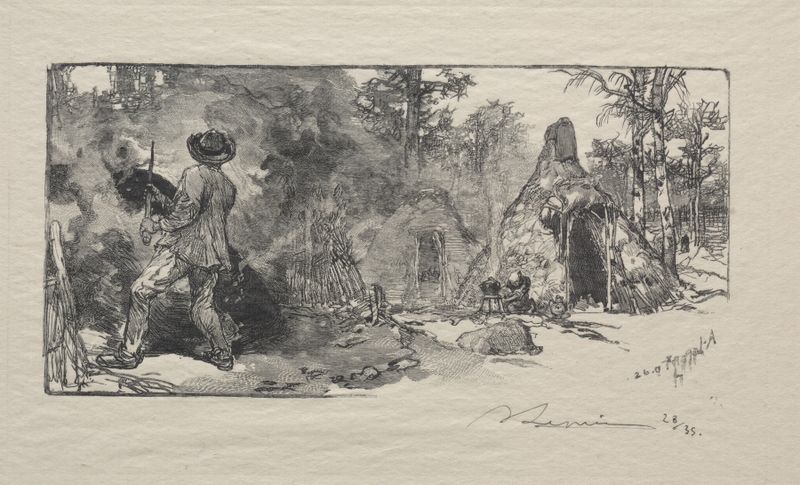
Les Charbonniere
Auguste Louis Lepère
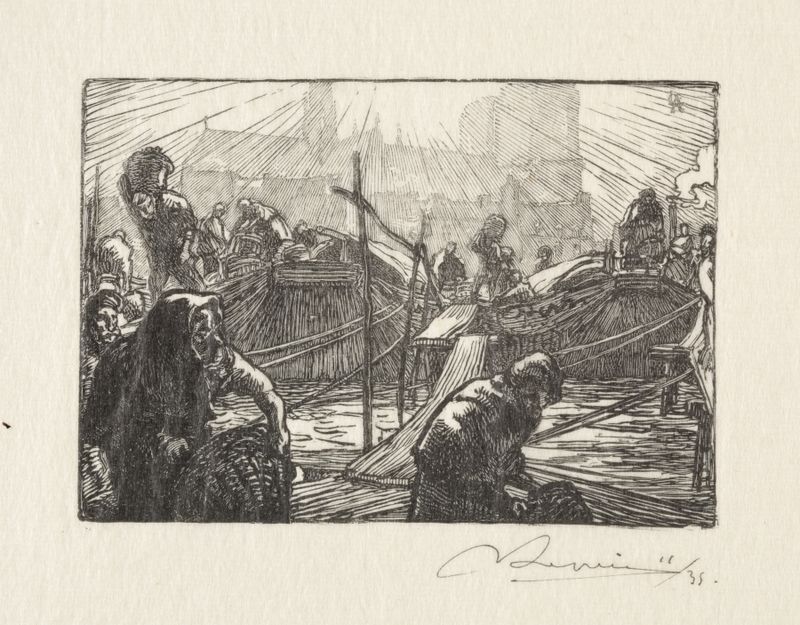
Notre Dame vue du Marché aux pommes
Auguste Louis Lepère

Le Palais des Arts Liberaux, Intèrieur
Auguste Louis Lepère





