
Mannen en een muilezel bij de Via Appia — History & Facts
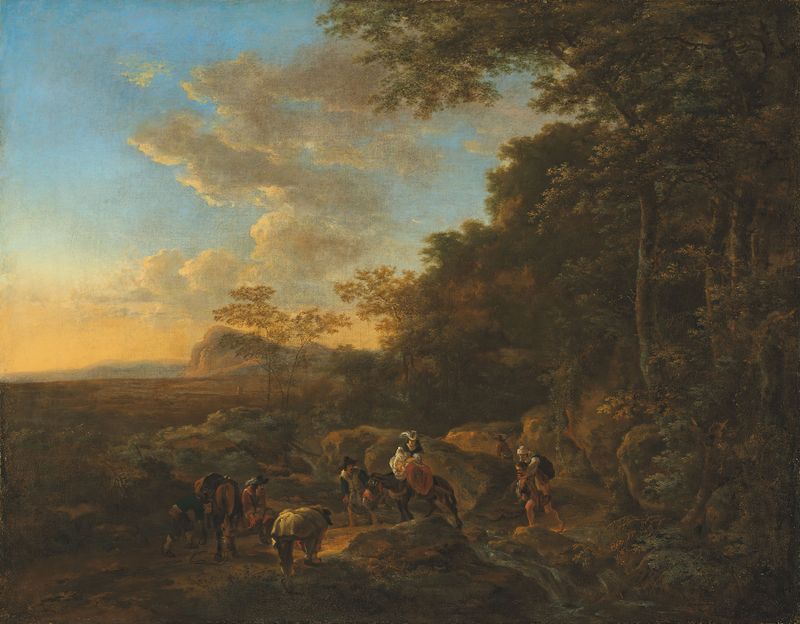
Could a single brushstroke hold eternity? In Mannen en een muilezel bij de Via Appia, the fleeting moments of life merge with the timelessness of nature, inviting a contemplation of legacy. Look to the center where the figures, a group of laborers accompanied by a mule, traverse the ancient Via Appia. Their weary postures and quiet determination contrast with the expansive landscape surrounding them. Notice how the light glances softly off the muted greens and earthy browns, creating a harmonious balance between man and nature.
The soft brushwork brings a tactile quality to the scene, allowing viewers to almost feel the texture of the earth and the warmth of the sky. Delve deeper into the painting's emotional fabric, where the laborers embody both hardship and resilience. Their modest attire hints at a life of toil, while the majestic cypress trees in the background serve as a reminder of the enduring presence of nature against the passage of time. The interplay of light and shadow casts a contemplative mood, suggesting a dialogue between mortality and the legacy of the landscapes they traverse.
Here, the mundane act of travel becomes a poignant reflection on the human experience. Jan Both painted this work between 1644 and 1652, during a time when the Dutch Golden Age was in full bloom. Residing in Italy, he captured the essence of the Italian landscape while merging it with the themes of Dutch realism. This period marked a significant evolution in his style, as he sought to convey both the beauty and struggles of life through his landscapes, leaving an indelible mark on the art world that continues to resonate.
More Artworks by Jan Both
Browse all →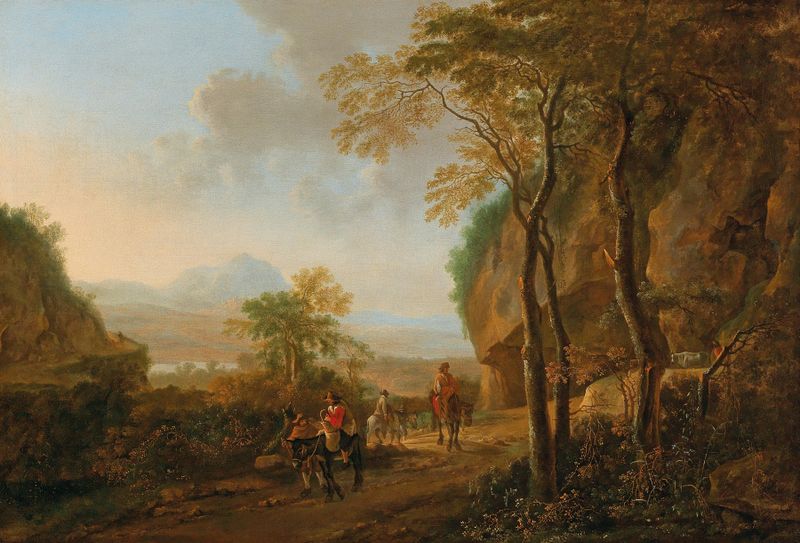
An Italianate landscape with travellers
Jan Both
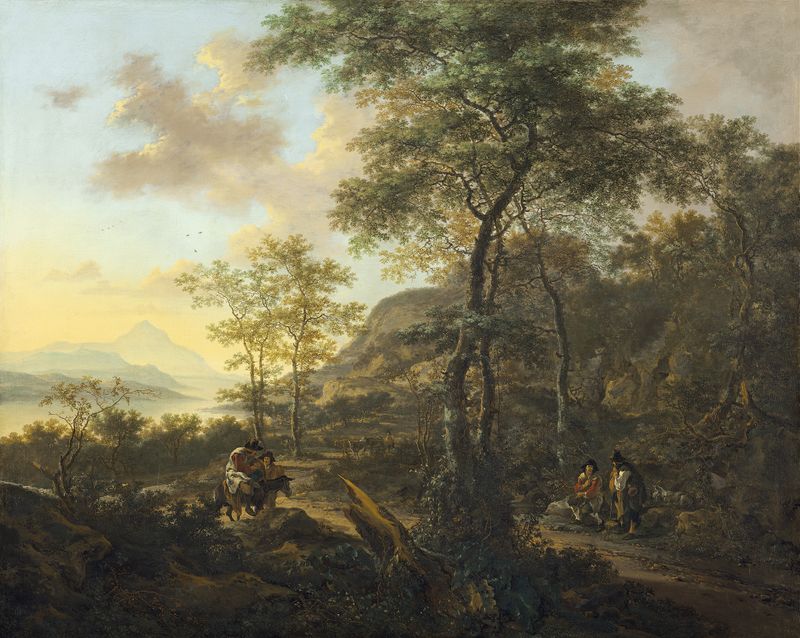
An Italianate Evening Landscape
Jan Both
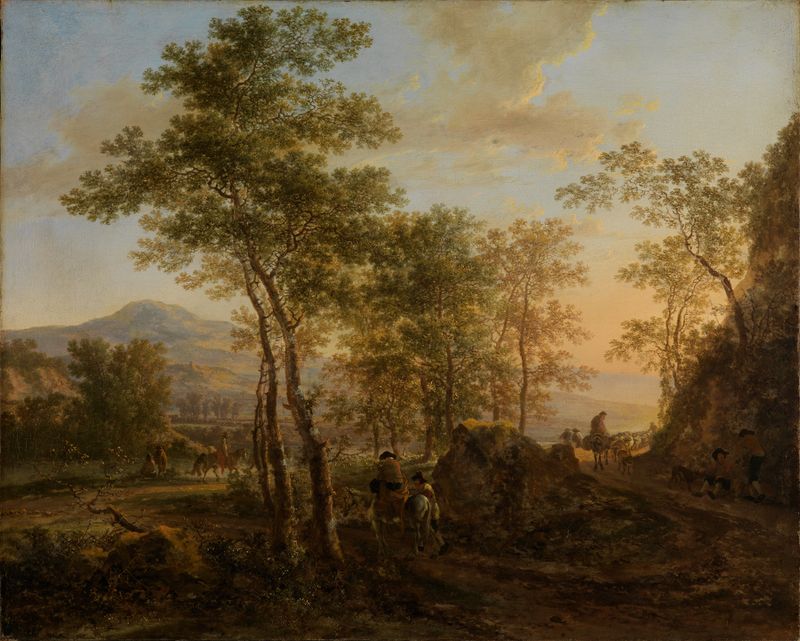
Italienische Landschaft am Abend
Jan Both
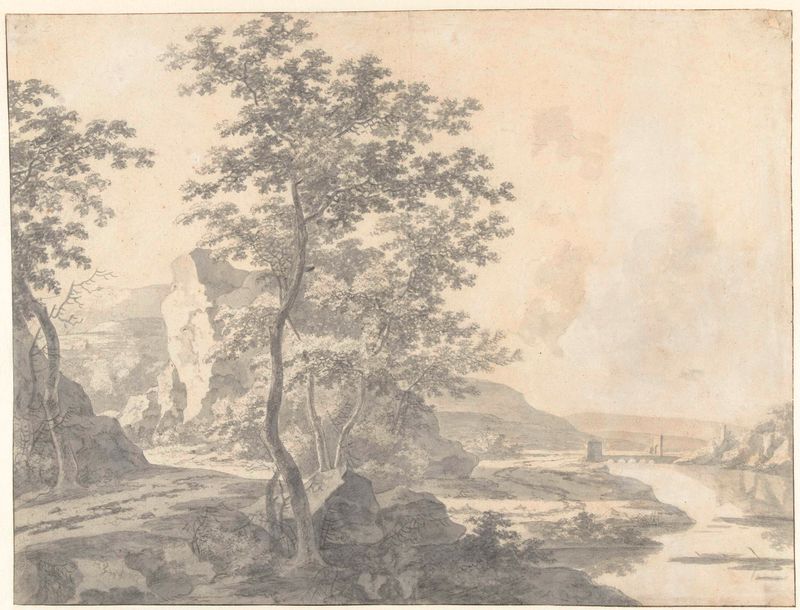
Italiaans landschap
Jan Both
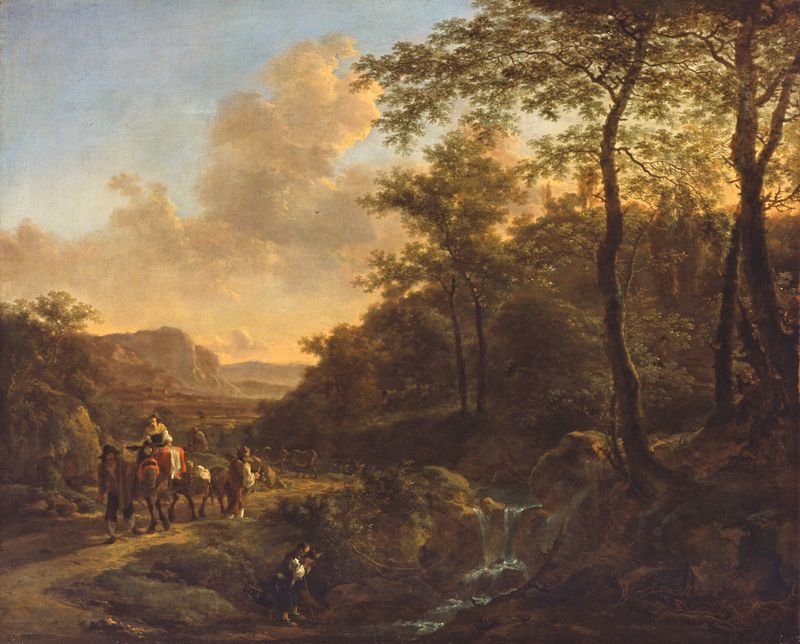
Scene of the Roman Campagna
Jan Both
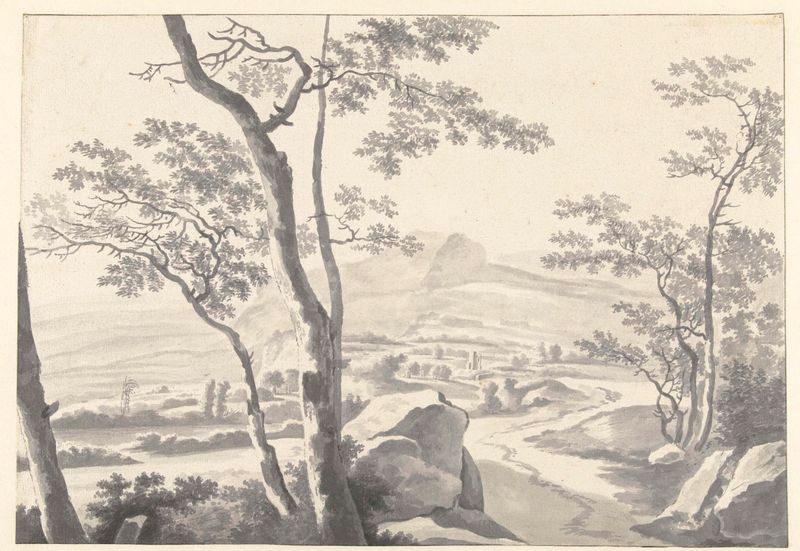
Landschap
Jan Both
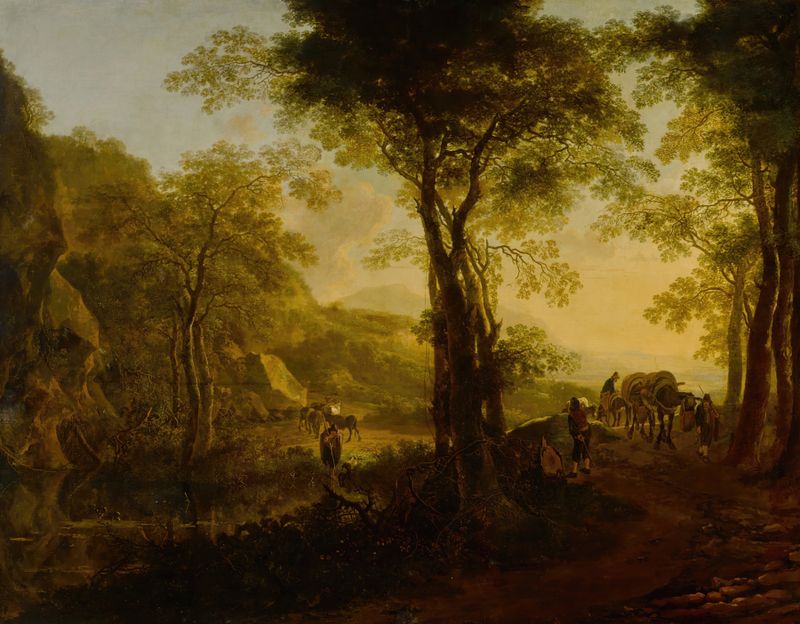
Italianate landscape at sunset, with travelers on a country road
Jan Both
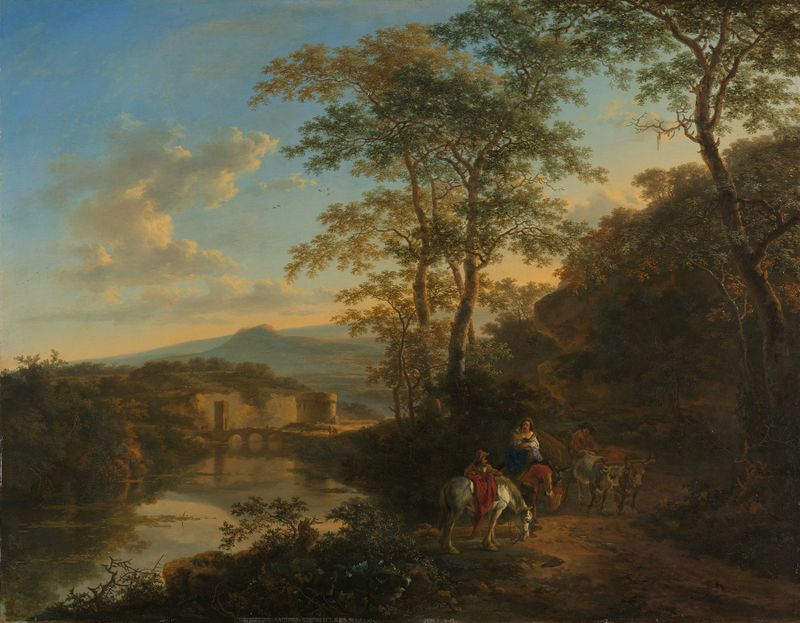
Italian Landscape with the Ponte Lucano over the Aniene River
Jan Both
A wooded landscape with travellers crossing a ford
Jan Both

Italian Landscape
Jan Both





