
Marias River — History & Facts
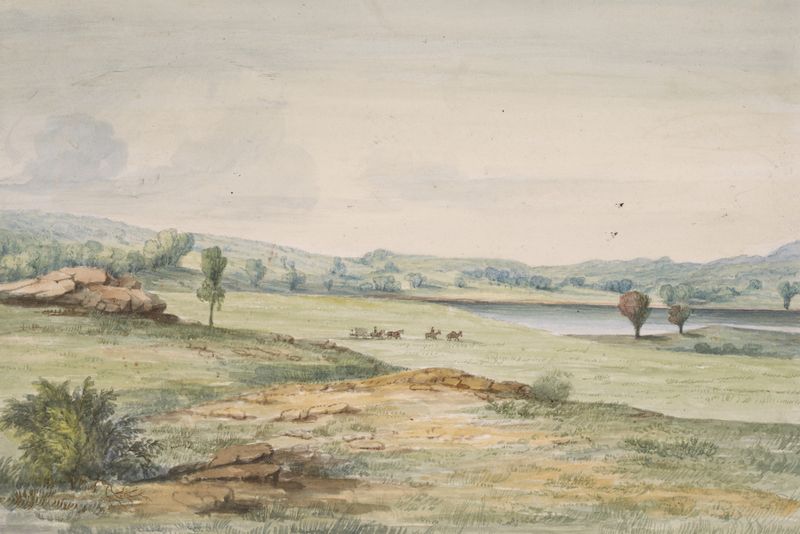
This poignant reflection resonates deeply within the landscape captured by the artist, where light dances over the water's surface, transforming raw nature into a delicate tapestry of emotions. Look to the shimmering reflections in the Marias River, where hues of verdant green and deep azure converge. The gentle brushstrokes create a rhythmic flow, guiding the viewer’s gaze from the tranquil riverbanks to the distant horizon. Notice how the light filters through the trees, casting dappled shadows that lend depth and texture to the scene, revealing the intricate balance between nature’s serenity and its latent turbulence. Beneath the idyllic surface lies a complex interplay of contrasts.
The tranquil water, emblematic of peace, is juxtaposed against the rugged terrain, evoking a sense of hidden struggle. The vibrant colors suggest life and vitality, yet they also hint at the tumultuous history of the land, a reminder of the forces that shaped it. Each detail, from the vibrant foliage to the whispering currents, encapsulates an emotional landscape that invites contemplation. In 1854, the artist painted this work during a period of exploration and expansion in the American West.
As settlers pushed further into the frontier, the tensions between nature and human ambition began to surface in the art of the time. Stanley, immersed in this transformative era, sought to capture both the beauty and the underlying complexities of the landscapes he encountered, reflecting the duality of existence itself.
More Artworks by John Mix Stanley
Browse all →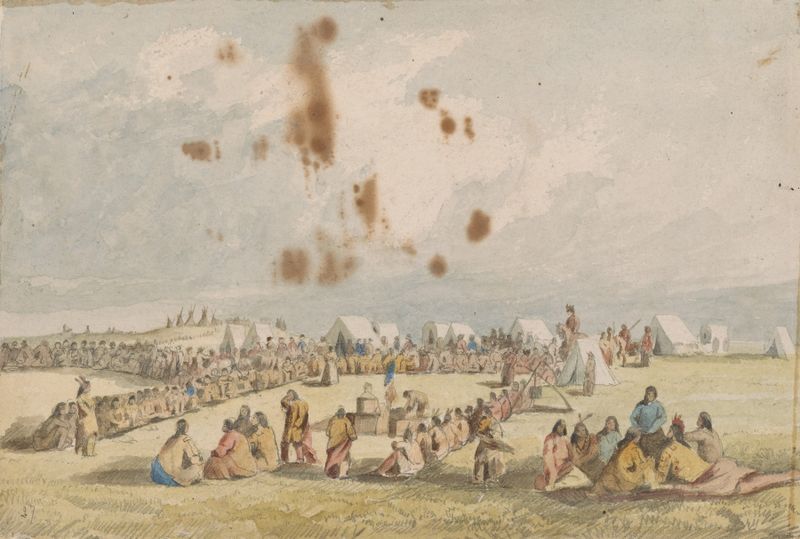
Distribution of Goods to the Assiniboins
John Mix Stanley
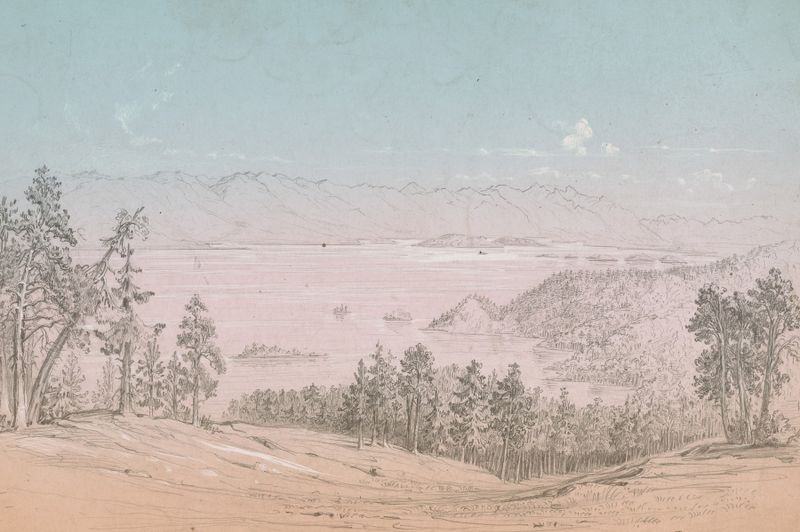
Flathead Lake, Looking toward the South
John Mix Stanley

A Morning in Milk River Valley
John Mix Stanley

Mount Rainier Viewed from Near Steilacoom
John Mix Stanley
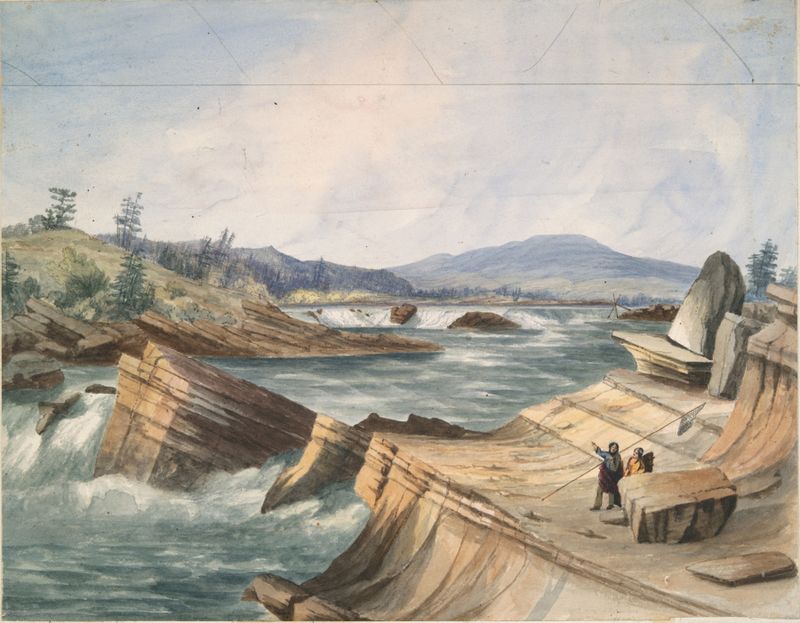
Kettle Falls, Columbia River
John Mix Stanley
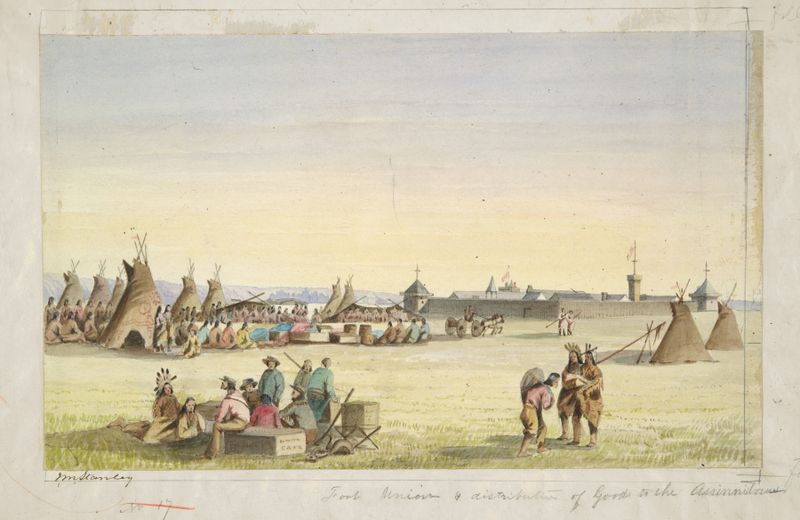
Fort Union and Distribution of Goods to the Assiniboins
John Mix Stanley

Pike Lake M.T.
John Mix Stanley
Sauk River
John Mix Stanley

Milk River – Bear’s Paw Mountain in Distance
John Mix Stanley

Fort Benton
John Mix Stanley





