
Marine par gros temps — History & Facts
In the tumult of nature, we find echoes of our deepest betrayals. The clash between man and the relentless sea speaks to something primal within us. Look to the center, where tumultuous waves rise and fall, their crests almost tangible against a brooding sky. The artist employs a palette of gray and blue that captures the ocean's fury, while swift, expressive strokes breathe life into the roiling water.
The ship, dwarfed against this natural spectacle, becomes a fragile silhouette, the embodiment of human vulnerability amidst nature's wrath. The tension lies not just in the scene but in the very composition—a diagonal line that propels our gaze toward the horizon, suggesting a journey fraught with peril. Beneath this churning surface, one can sense the emotional turmoil that Jongkind captures. The looming storm acts as a metaphor for betrayal, both of the self and the environment.
The ship, desperately battling the waves, reflects the fragility of trust, while the dark clouds above speak to the inevitable fallout of broken promises. Each brushstroke carries the weight of uncertainty, inviting viewers to confront their own moments of disillusionment. In 1871, while living in France, Jongkind created this powerful piece during a time when the Impressionist movement was starting to take shape. He was exploring the dynamic relationship between light and landscape, seeking to capture the emotional resonance of natural scenes.
This work stands as a testament to his evolving style and the broader artistic transition of his era, marking a pivotal moment in his career as he sought to express not only beauty but also the chaos of human experience.
More Artworks by Johan Barthold Jongkind
Browse all →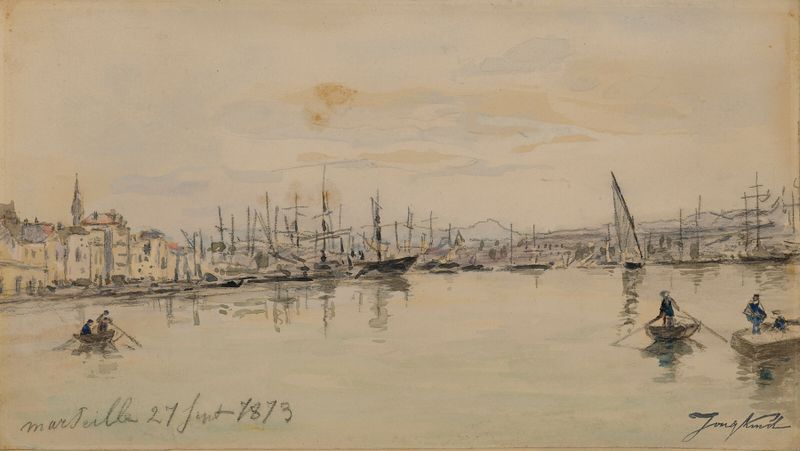
Le Port de Marseille
Johan Barthold Jongkind

Canal Saint-Martin
Johan Barthold Jongkind

Countryside near Brezins, between Grenoble and Vienne
Johan Barthold Jongkind

Notre-Dame vue du quai de la Tournelle
Johan Barthold Jongkind

Environs de Grenoble
Johan Barthold Jongkind

Clair de lune à Overschie (environs de Rotterdam)
Johan Barthold Jongkind

Port de Honfleur
Johan Barthold Jongkind
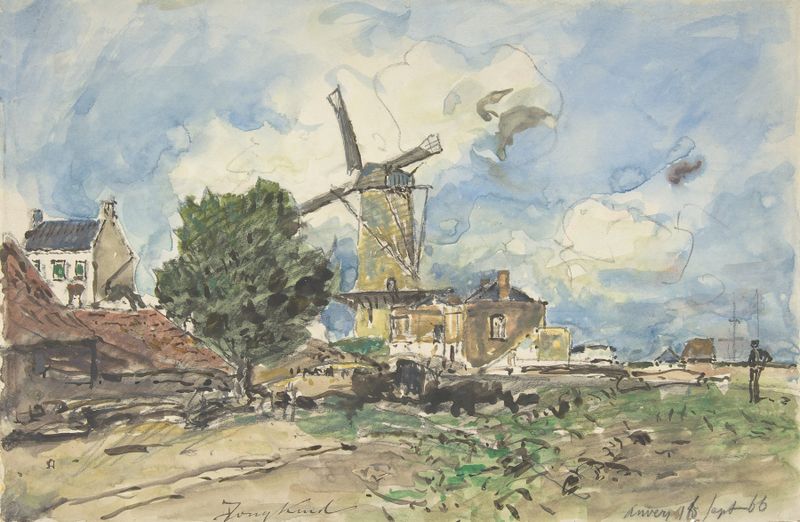
Wind Mill at Antwerp
Johan Barthold Jongkind

Le Havre
Johan Barthold Jongkind

The Church of Overschie
Johan Barthold Jongkind





