Markusplatz — History & Analysis
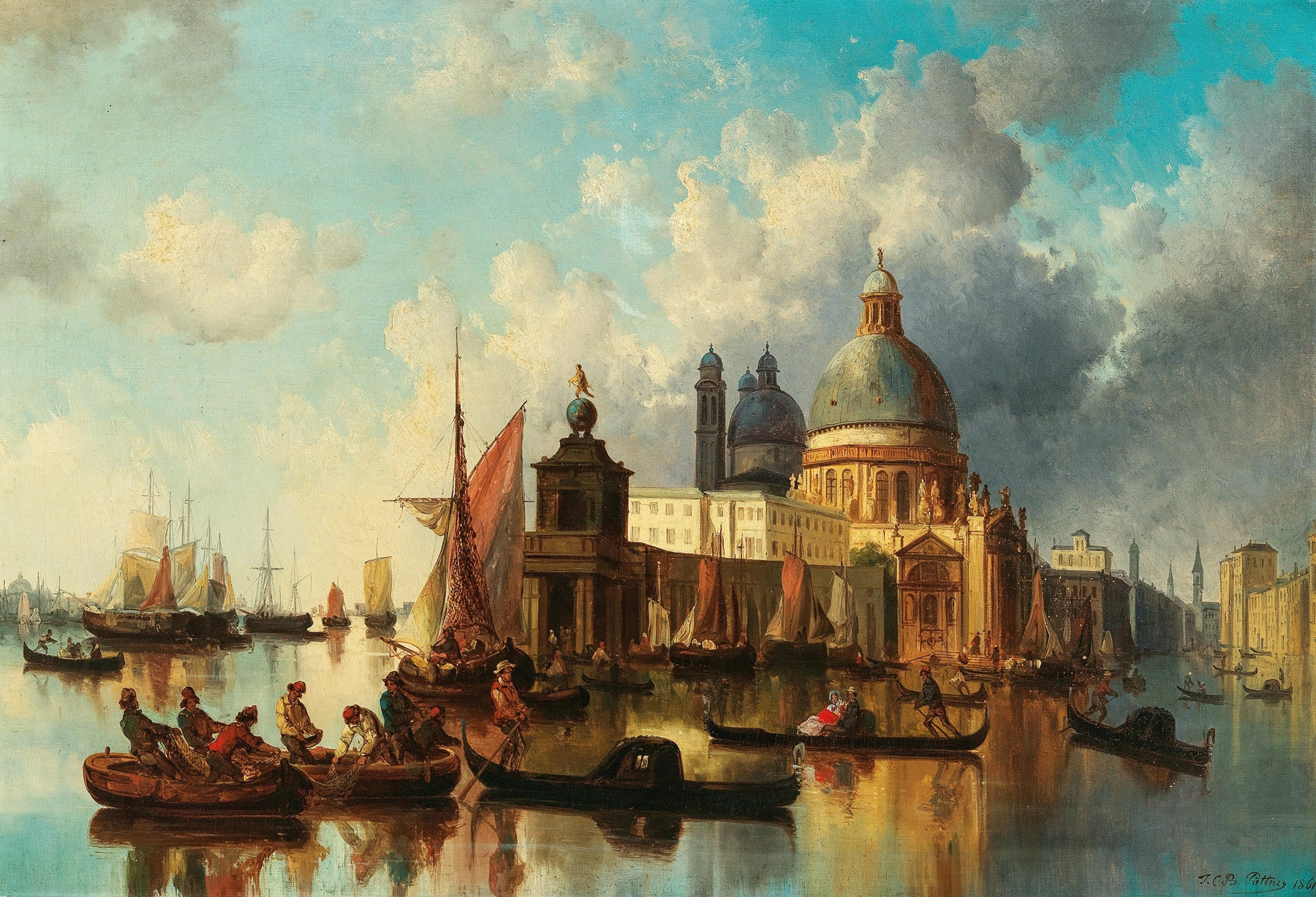
“To paint is to remember what time wants us to forget.” In the stillness of Markusplatz, a moment is seized, inviting contemplation and revelation amidst the passage of time. The viewer is drawn into a world where architecture meets nostalgia, and each brushstroke echoes a story waiting to be unearthed. Look to the left of the canvas, where the intricate details of St. Mark's Basilica rise majestically against the crisp blue sky.
The artist’s deft use of light enhances the gilded domes, while shadows play delicately across the stone, suggesting both warmth and the quiet solitude of the square. The composition draws your eye toward bustling figures below, their movements a stark contrast to the stillness of the monumental backdrop, creating a powerful dynamic that speaks of life within the frames of history. As you explore further, notice the juxtaposition of the vibrant colors illuminating the scene against the muted tones in the shadows. This contrast captures the essence of life’s fleeting moments, revealing the vibrancy and melancholy that coexist in shared spaces.
Each pair of figures, whether engaged in conversation or lost in thought, reflects the multitude of stories interwoven in this public square, emphasizing a collective human experience that transcends time. In 1859, Püttner painted this scene as a testament to the burgeoning Romantic movement, which sought to evoke emotion and individual perception. Living in Vienna during a period of great artistic exploration, he was influenced by the shifts in society, as urban life began to flourish. Capturing the essence of Markusplatz, he immortalized not just a physical space, but an emotional landscape filled with memory, reflection, and the relentless passage of time.