Matin gris sur les Alpes (Barberaz) — History & Facts
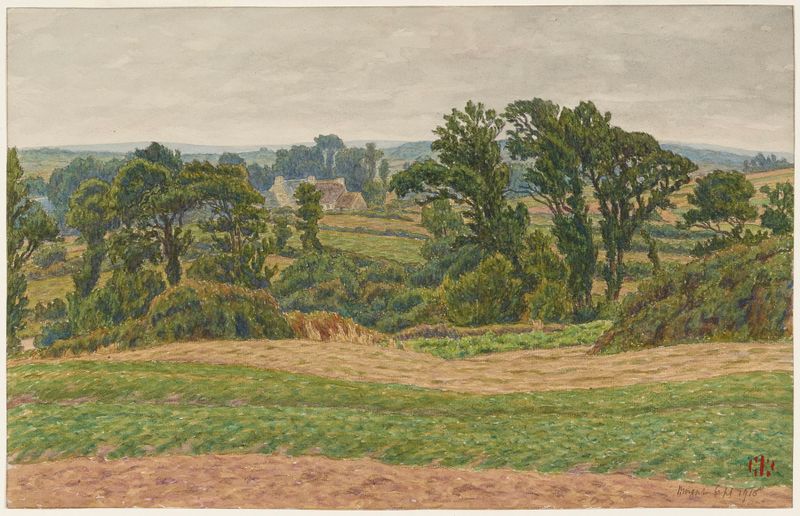
Could beauty survive in a century of chaos? Henri Rivière's Matin gris sur les Alpes invites us to ponder this question amid the serene yet melancholic landscape it presents. Look to the center of the canvas where the majestic mountains rise, shrouded in a muted gray mist that softens their jagged outlines. Notice how the palette is dominated by somber blues and grays, evoking a sense of solitude and isolation. The strokes are both deliberate and free, creating a textured surface that breathes life into the coldness of the scene.
As your gaze wanders, the subtle play of light hints at an ethereal glow, suggesting that even in stillness, there exists a quiet beauty. Delve deeper and see how the distant peaks loom like watchful sentinels, embodying both strength and vulnerability. The interplay of shadow and light symbolizes the duality of existence—hope wrapped in the blanket of despair. It captures the emotional tension of a world burdened by the aftermath of conflict, where nature endures a silent witness to human struggles.
The absence of human figures amplifies the sense of loneliness, emphasizing the disconnect between mankind and the sublime. Painted in 1919, during a tumultuous time in Europe post-World War I, Rivière's work reflects his own search for solace and meaning amidst chaos. Living in Paris, he was part of a generation grappling with the scars of war, which influenced many artists to seek refuge in nature. This painting stands as a poignant response to an era yearning for peace, encapsulating the spirit of a landscape that remains timeless despite the turmoil surrounding it.