
Meditation, the prayer — History & Facts
A face emerges from a haze of pastel color, its features reduced to the barest essentials—a cross for the eyes and brow, a bold line for the nose, and a mouth that hovers between silence and speech. The viewer is drawn first to the vertical and horizontal axes that dominate the composition, suggesting both the inward focus of meditation and the outward gesture of prayer. Circles of color—green, orange, violet—float like thoughts or prayers themselves, suspended in the calm space around the face.
The palette is gentle, yet the brushwork is decisive, giving the image both softness and structure. Here, abstraction does not erase the human; it distills presence down to its most elemental form. Painted in 1922, Meditation, the prayer by Alexej von Jawlensky belongs to a world where artists sought new languages for the spirit. In the wake of war and upheaval, many turned to abstraction as a way to express inner states and universal emotions.
Jawlensky, working in Germany and influenced by Expressionism, created series of meditative heads that were never portraits but icons for contemplation. While little is recorded about the journey of this specific work, its presence in the ermell collection today invites us to pause, as the artist intended, and look again at how color and line can become a quiet act of devotion.
More Artworks by Alexej von Jawlensky

Murnau
Alexej von Jawlensky
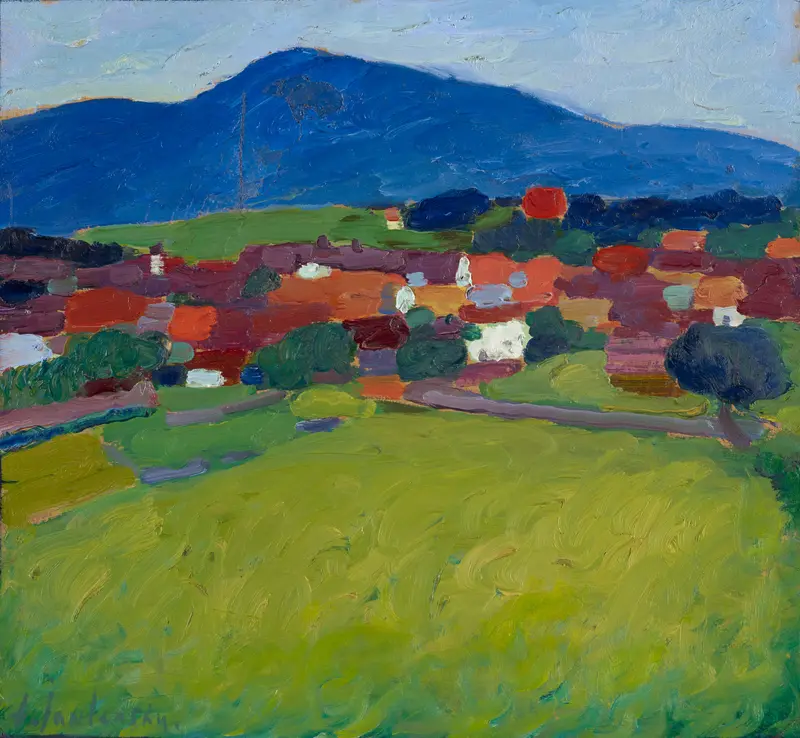
The Village Of Murnau
Alexej von Jawlensky
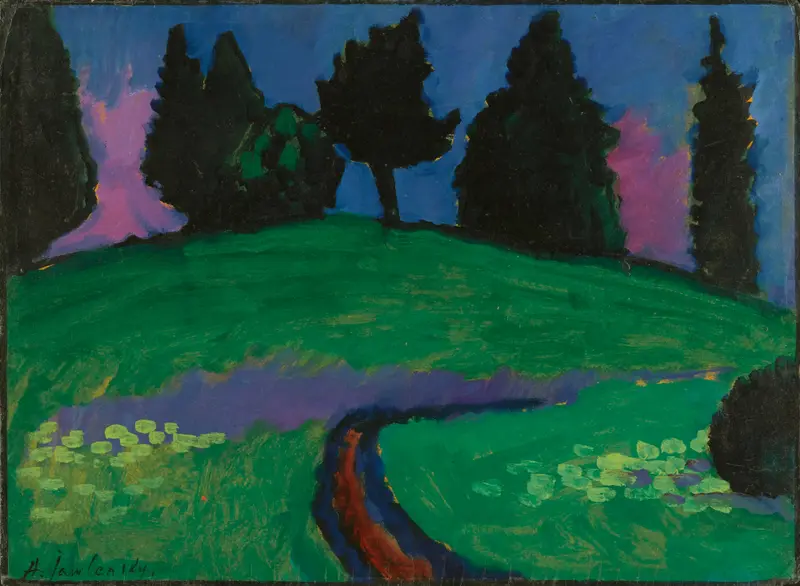
Dunkle Bäume über Grünem Hang (Dark Trees Over Green Slope)
Alexej von Jawlensky
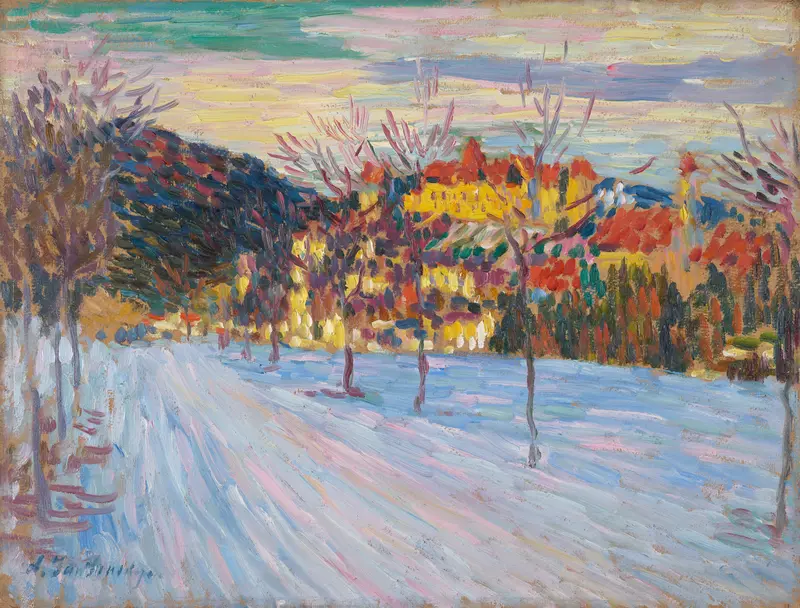
Füssen
Alexej von Jawlensky
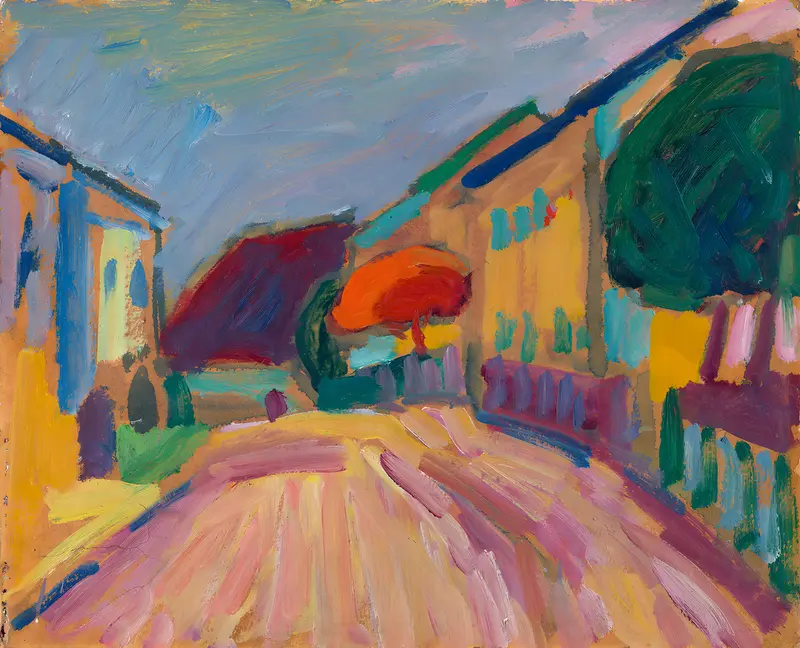
Sketch from Murnau
Alexej von Jawlensky
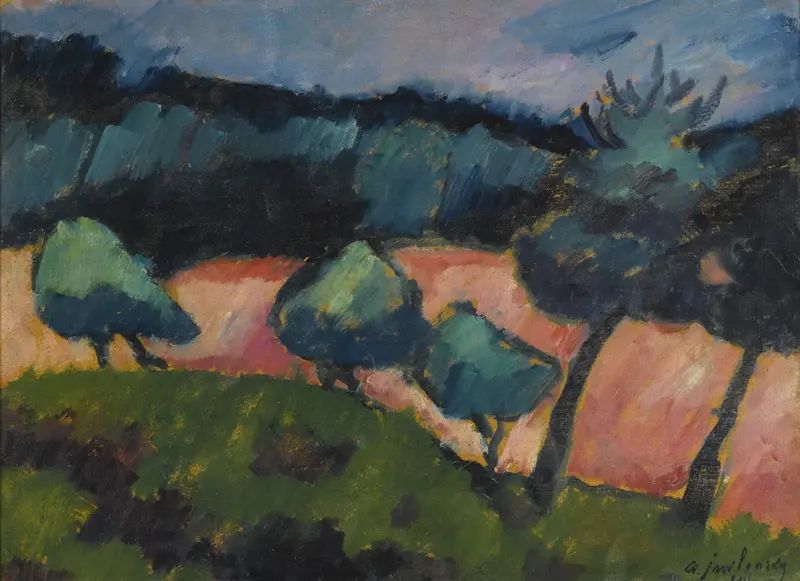
Bäume und Dünen in Prerow (Trees and dunes in Prerow)
Alexej von Jawlensky
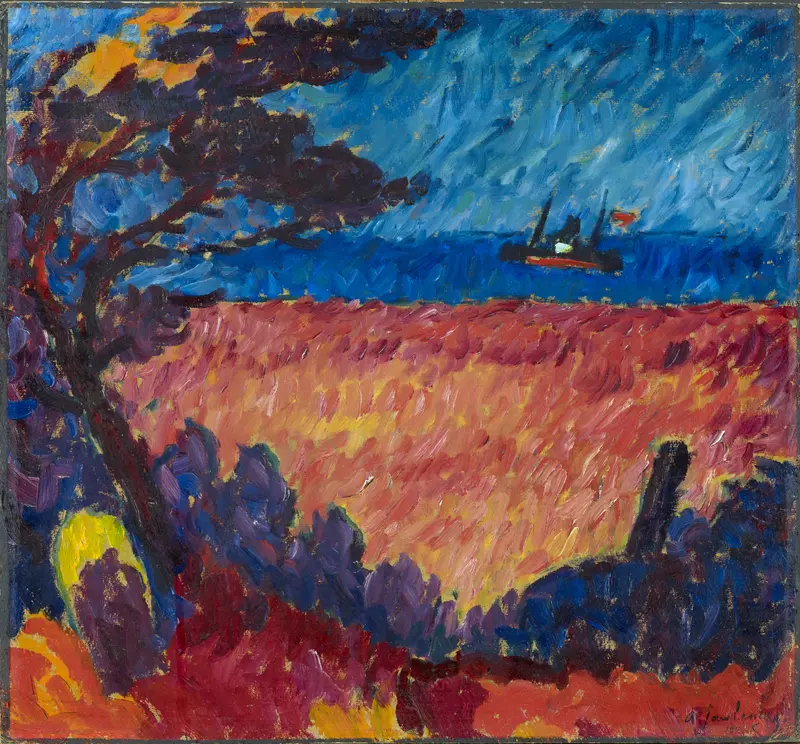
At The Baltic Sea
Alexej von Jawlensky
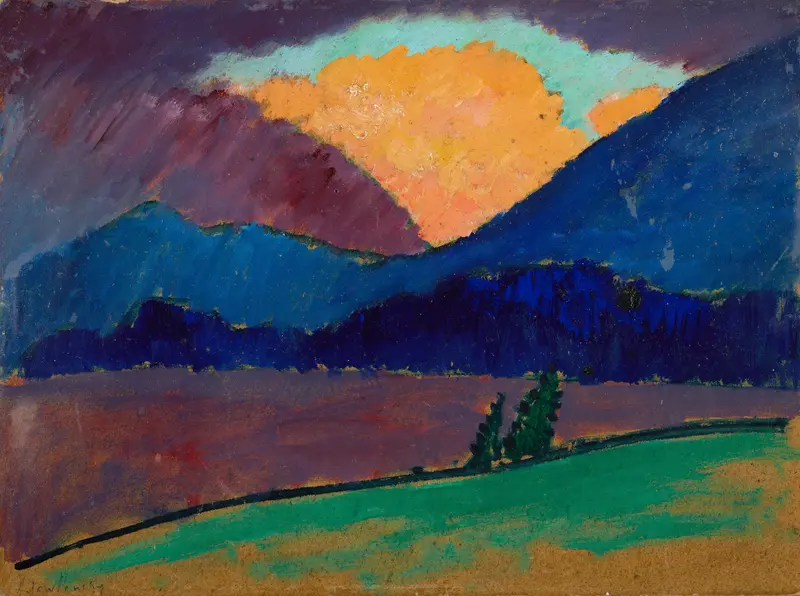
Summer evening in Murnau
Alexej von Jawlensky
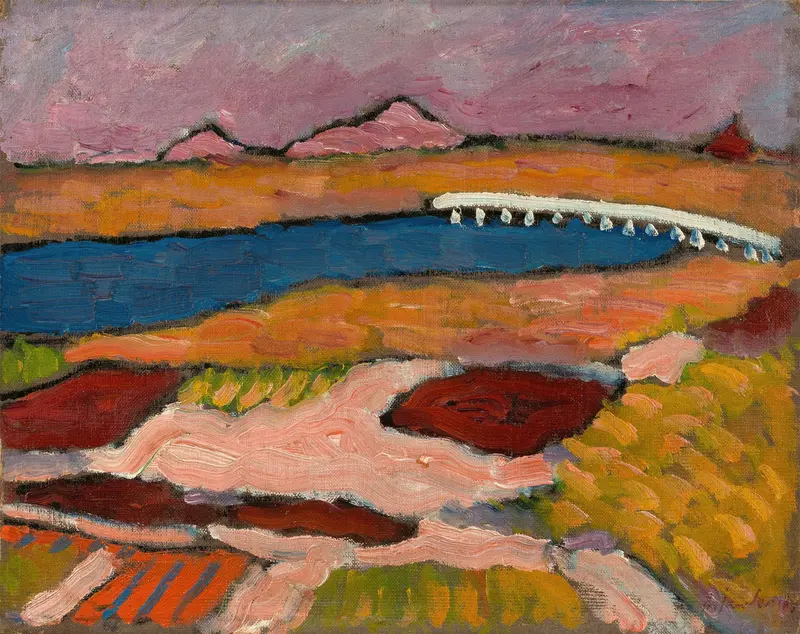
Prerow (Darß), Pommern
Alexej von Jawlensky
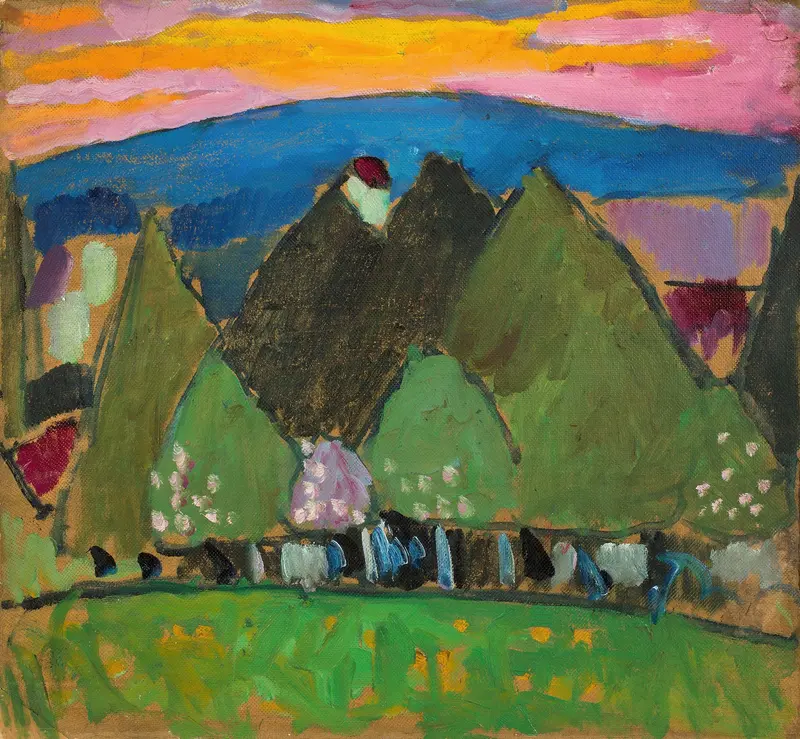
Landschaft mit Bäumen
Alexej von Jawlensky



