Merelaht paatidega — History & Facts
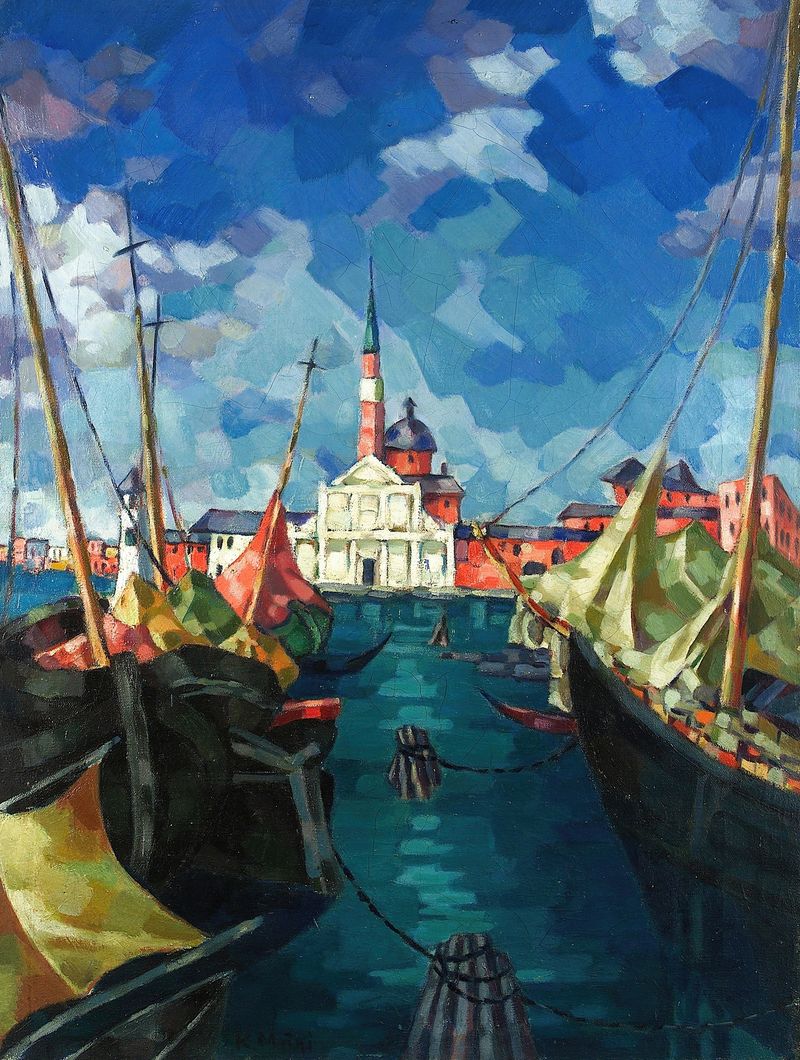
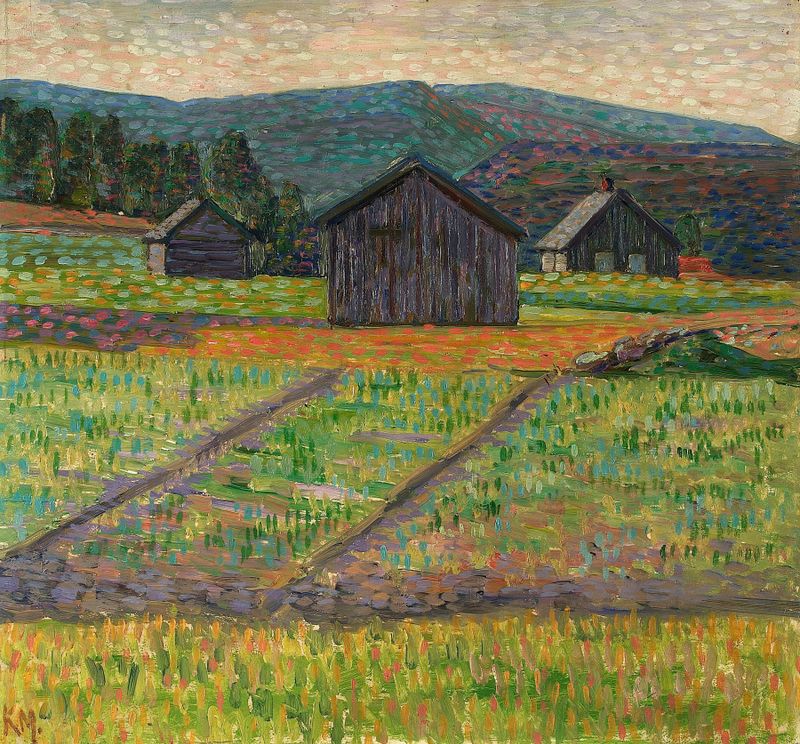
Art reveals the soul when the world turns away. It invites us to witness beauty in the simplest forms, to embrace the wonder of existence. Look to the center of the canvas where the boats float serenely across the water, their hulls softly reflecting the warm hues of twilight. Notice how the artist employs a palette of blues and ochres, blending them in delicate strokes that seem to ripple with the gentle caress of the breeze.
This interplay of colors draws the eye, guiding it from the vibrant sky above to the tranquil water's surface below. Each element harmonizes, creating a sense of peacefulness that envelops the viewer. Within this stillness lies a deeper tension—the contrast between the fleeting moment and the eternal beauty of nature. The boats, small and unassuming, remind us of our transient existence amidst the vast landscape.
The horizon, stretching endlessly, captures both the promise and the mystery of what lies beyond, evoking feelings of awe and reflection. Each detail, from the soft movement of water to the subtle play of light, invites contemplation on the intricate dance between humanity and the natural world. During the early 20th century, the painter worked in Estonia, a time marked by burgeoning national identity and artistic exploration. As a leading figure in the landscape movement, he sought to capture the essence of his homeland through impressionistic techniques.
The absence of a specific date for this piece suggests that it may represent a culmination of his evolving vision, as he embraced the profound relationship between his art and the expansive beauty around him.