
Meules — History & Facts
In the swirling colors and forms of Meules, madness dances between fleeting memories and the decay of existence. The vibrant strokes ignite a sense of urgency, urging us to confront the chaos that underlies tranquility. Focus on the left side of the canvas, where golden wheat stacks rise like sentinels against the backdrop of a tumultuous sky. The painter’s brushwork creates a textured rhythm, with vivid yellows and greens wrestling with deep blues, capturing a moment suspended in both beauty and unrest.
It’s as if the landscape itself vibrates, each stroke a pulse that draws the viewer deeper into a world both serene and frayed. Amidst this apparent calm lies a poignant contrast. The robust heaping of wheat, symbols of sustenance and life, evoke a sense of abundance, yet the disordered backdrop hints at impending chaos. Shadows loom, suggesting the weight of time pressing against the idyllic scene.
The juxtaposition of order and disorder, of nature at its peak yet on the brink of oblivion, invites contemplation of our fragile existence. Created in 1911, this work emerged during a pivotal period for Cariot, who was influenced by the post-impressionist movement while grappling with the transformation of rural landscapes amidst industrial change. As the world teetered on the brink of modernity, the artist channeled that tension into his canvases, reflecting both personal struggles and the societal upheaval surrounding him.
More Artworks by Gustave Cariot
Browse all →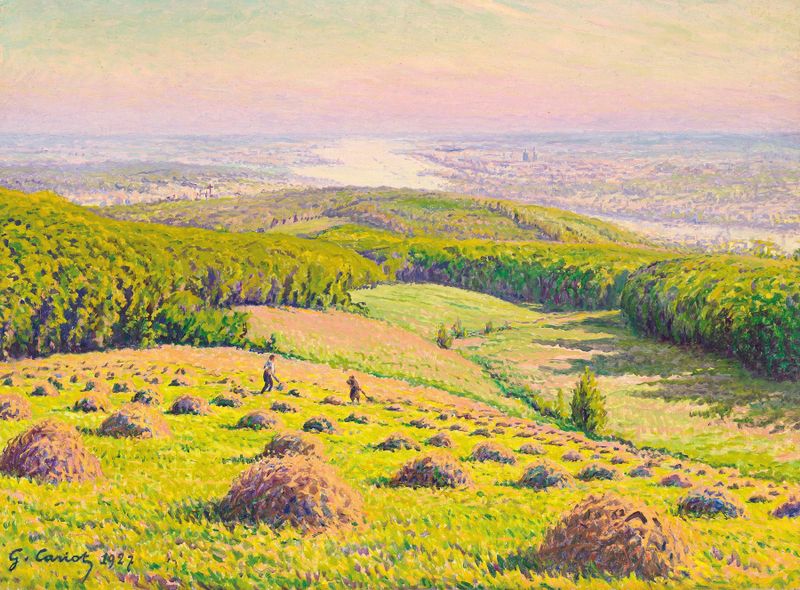
La vallée
Gustave Cariot

Le Jardin
Gustave Cariot

Les meules
Gustave Cariot
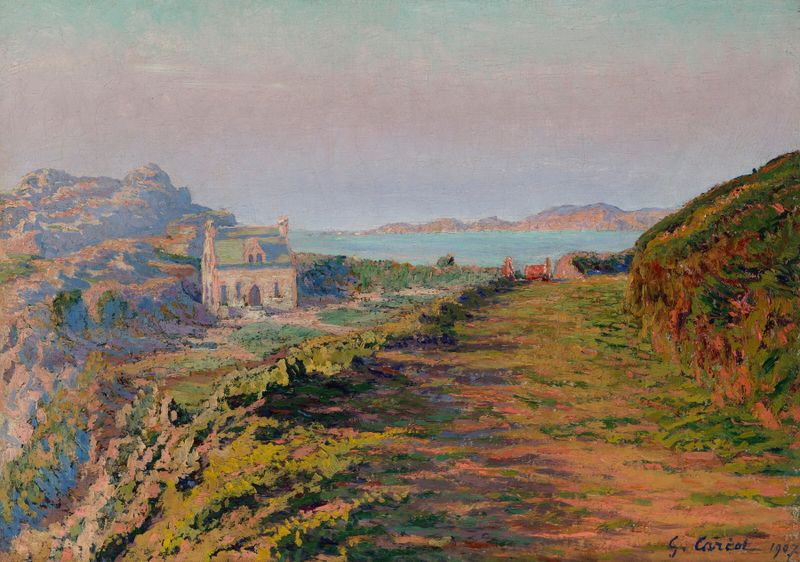
Maison Pen ar C’hastel à la pointe du Château, Perros-Guirrec
Gustave Cariot
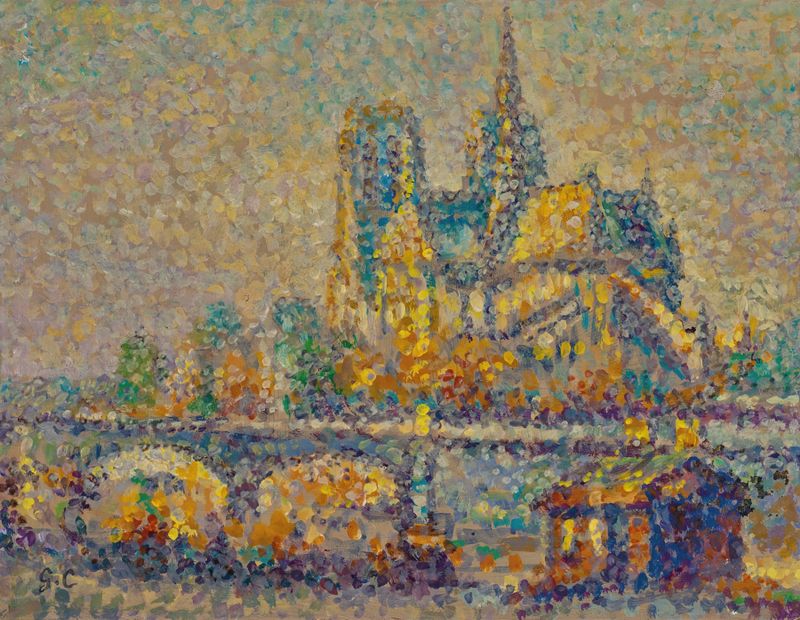
Notre-Dame de Paris
Gustave Cariot
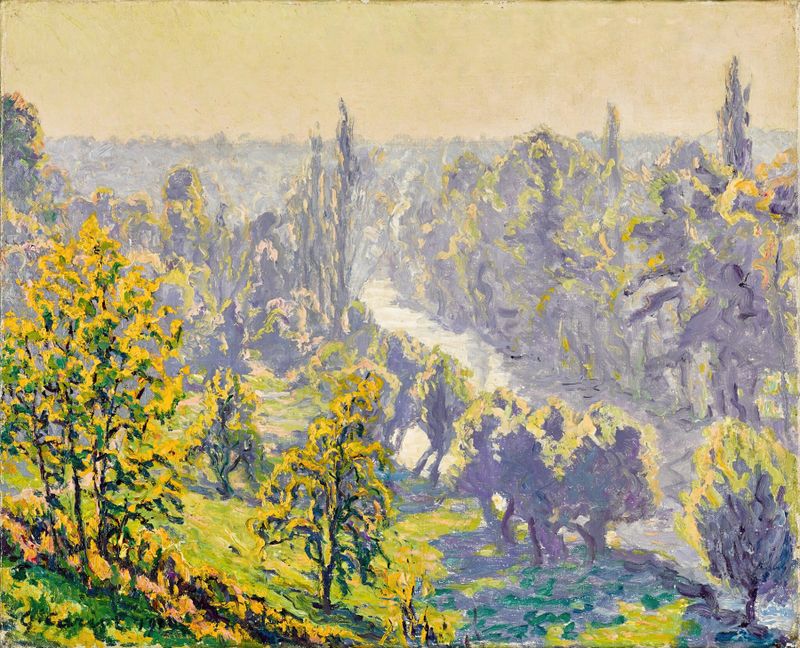
Périgny, automne, matinée sur l’Yerres
Gustave Cariot
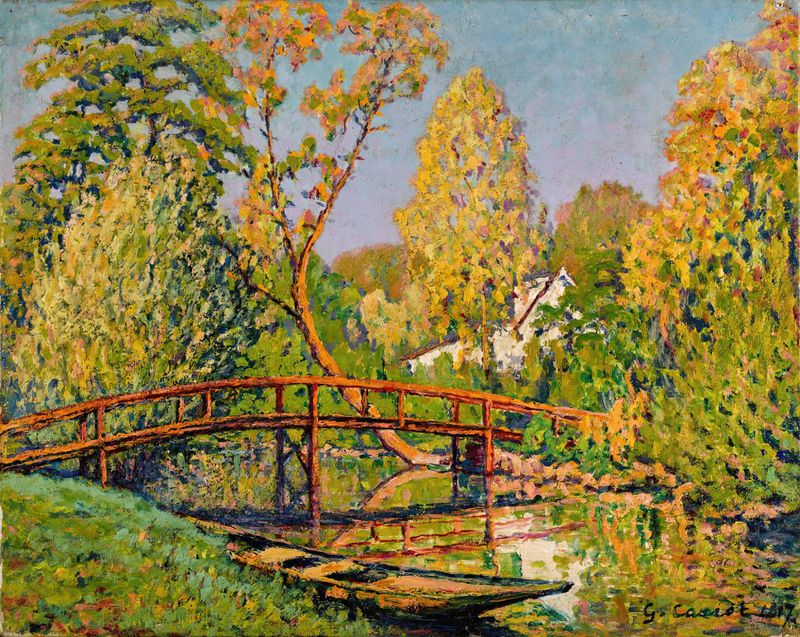
Périgny, pont sur l’Yerres
Gustave Cariot
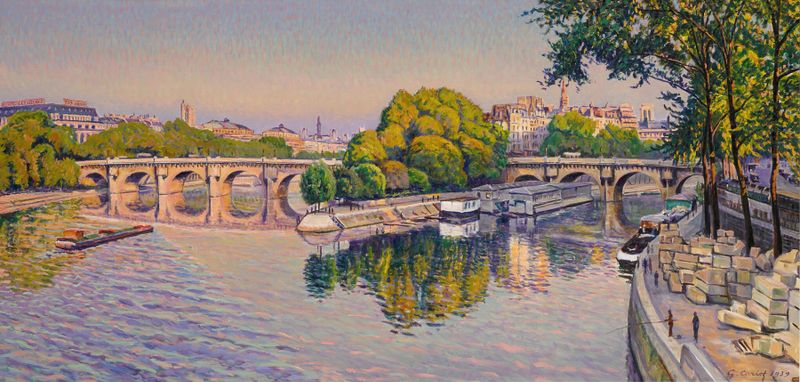
Le Pont-Neuf, eté, 20 heures
Gustave Cariot

Moulin de Périgny
Gustave Cariot

Le chemin à Mandres
Gustave Cariot





