Michel-Ange dans son atelier — History & Facts
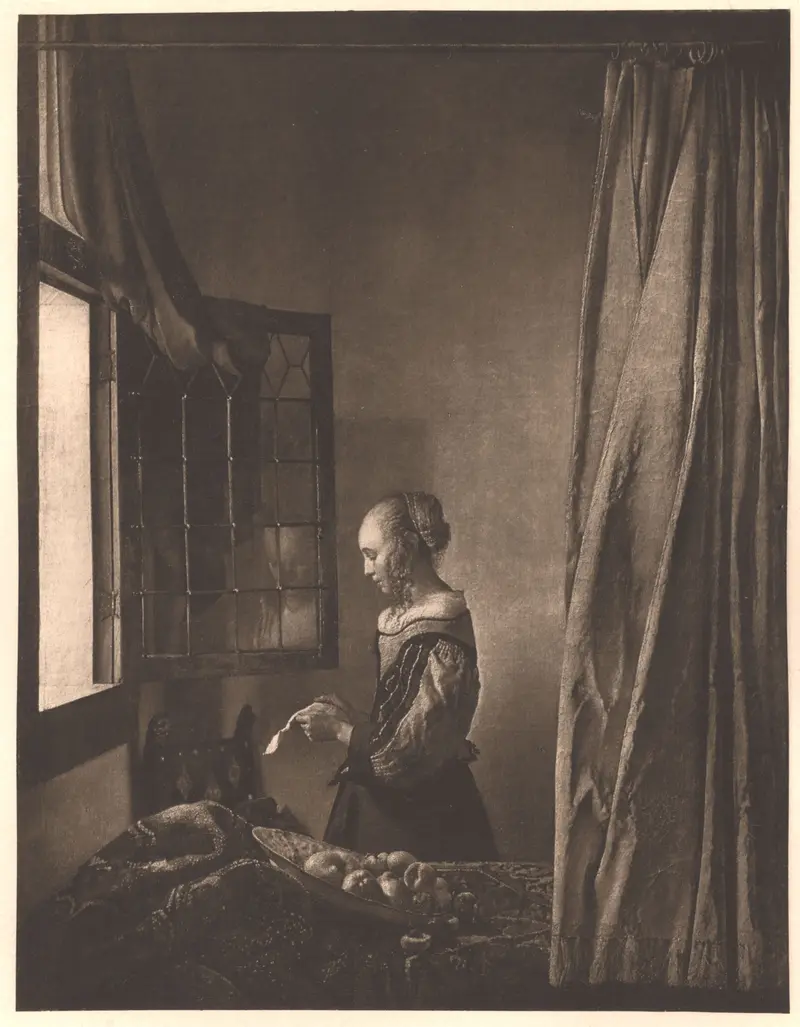
Few artists have painted their own heroes with the intimacy and reverence found in Michel-Ange dans son atelier. When Eugène Delacroix completed this work in 1850, he was not only paying homage to Michelangelo Buonarroti, but also reflecting on the nature of artistic genius itself—a subject that obsessed the Romantic generation. Delacroix’s fascination with the Italian master was well known; he once wrote, "Michelangelo is the Shakespeare of painting." The painting stands as a rare meditation by one great artist on the solitude and struggle of another. The scene Delacroix chose is not one of public triumph, but of private labor: Michelangelo, isolated in his Florentine studio, is caught in a moment of tense creation.
The sculptor sits, chisel in hand, surrounded by unfinished marble, his powerful frame hunched in concentration. Shafts of light fall across the cluttered workspace, picking out the muscular forms of his works-in-progress and the furrowed brow of the artist himself. Unlike Ingres’s idealized portraits of Michelangelo, Delacroix’s vision is raw and human, emphasizing the physical and emotional toil behind the masterpieces.
The scattered tools and rough stone remind the viewer that genius is forged in sweat and solitude. The exact history of Michel-Ange dans son atelier remains partly obscure, as the painting was not produced for a specific patron and its early provenance is uncertain. It emerged in a period when Delacroix was reflecting deeply on the role of the artist, both in his journals and in his art. Today, the work is recognized as a key statement in Delacroix’s late career, bridging his admiration for the Old Masters with the introspective mood of mid-19th-century Romanticism.
Though the medium is not definitively recorded, the painting survives as a testament to Delacroix’s lifelong dialogue with the giants of art history, and it continues to invite viewers into the creative crucible where masterpieces are born.
More Artworks by Eugène Delacroix

Femmes d'Alger dans leur intérieur
Eugène Delacroix

A Young Tiger Playing with Its Mother
Eugène Delacroix

The Massacre at Chios
Eugène Delacroix

Women of Algiers
Eugène Delacroix

Women of Algiers in Their Apartment
Eugène Delacroix

Death of Sardanapalus
Eugène Delacroix

The Barque of Dante
Eugène Delacroix

Jacob Wrestling with the Angel
Eugène Delacroix

la liberté guidant le peuple
Eugène Delacroix

Liberty Leading the People
Eugène Delacroix