
Mii no banshō — History & Facts
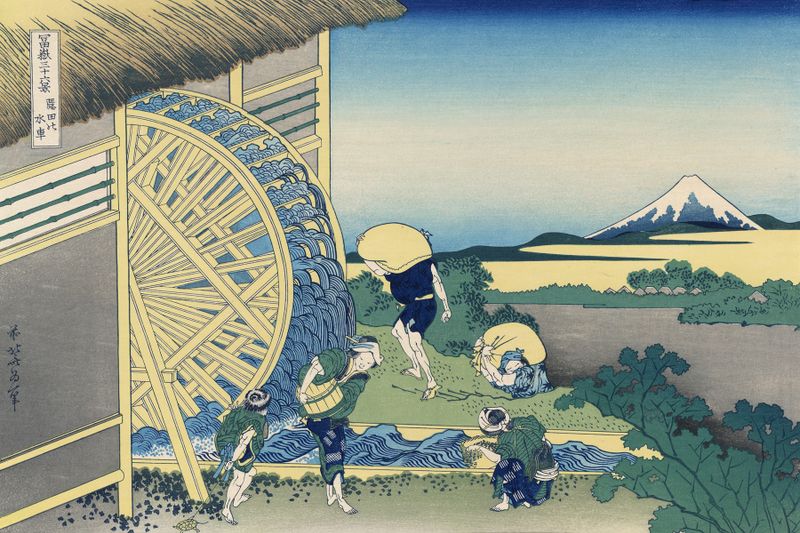
What drives an artist to capture the world around them with such fervor? In Mii no banshō, the delicate interplay of nature and humanity reveals an obsession that transcends the mere act of creation, whispering secrets of the soul. Look to the intricacies of the foreground, where delicate figures engage in daily life amidst a lush, teeming landscape. The vibrant hues of green and blue blend harmoniously, while soft brushstrokes create a rhythm of movement, drawing the eye towards each character in their intimate moments. Notice how the light dances across the scene, emphasizing the textures of the people’s garments, and creating a sense of dimensionality that invites you to peer deeper into this vibrant world. Yet beneath the surface, there lies a palpable tension between the fleeting nature of life and the artist’s relentless pursuit of permanence.
The figures appear both engaged and distant, as if caught in a moment that could easily slip away. This duality speaks to our own obsessions, the ways we grasp at fleeting experiences, hoping to immortalize them even as they dissolve into memory. Each element in the composition, from the lush backdrops to the meticulous details of facial expressions, mirrors the artist’s longing to encapsulate the essence of existence. During the period of 1804 to 1810, Hokusai painted this piece in Edo, Japan, a time when traditional art forms were increasingly blending with new ideas.
He was navigating personal struggles and artistic ambitions, pushing boundaries that defined the ukiyo-e genre. The artist’s exploration of everyday life through Mii no banshō reflects not only his personal journey but also the broader cultural shifts of his time, marking a pivotal moment in the history of Japanese art.
More Artworks by Katsushika Hokusai
Browse all →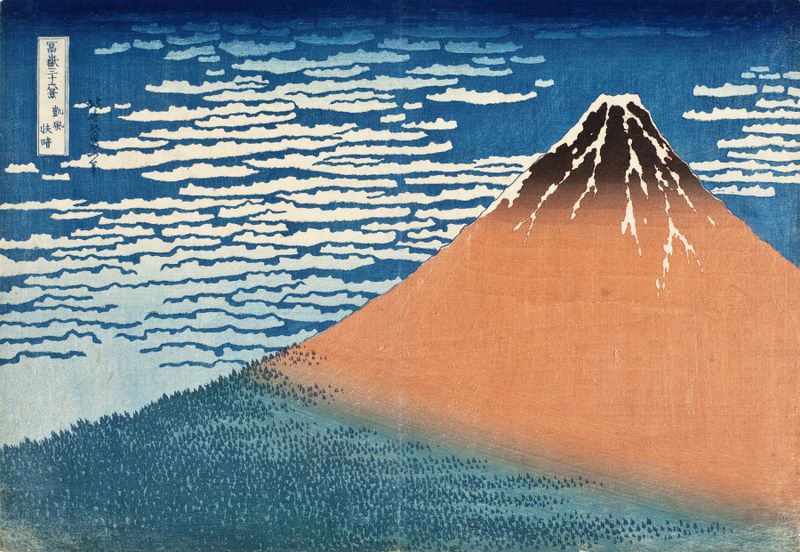
South Wind, Clear Dawn
Katsushika Hokusai

South Wind, Clear Weather
Katsushika Hokusai

Clear Weather with a Southerly Wind
Katsushika Hokusai
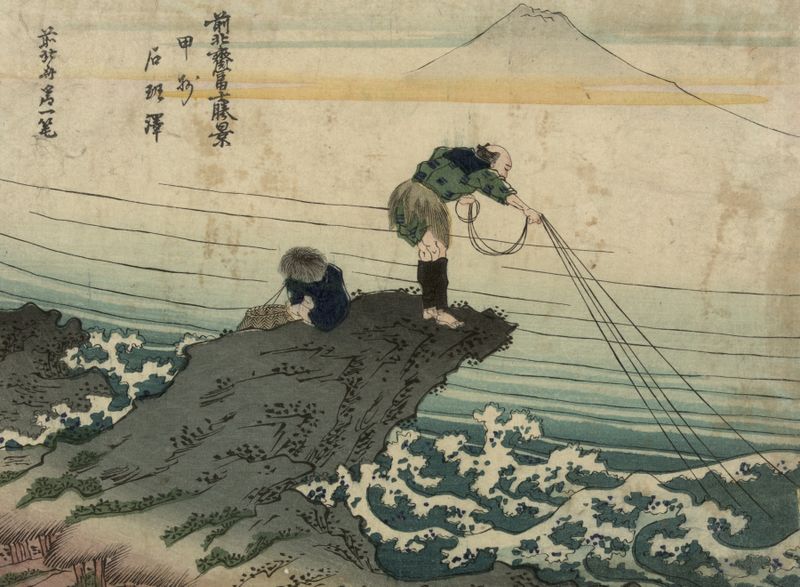
Kōshū kajikazawa
Katsushika Hokusai

Rainstorm beneath the Summit (Sanka Haku-u)
Katsushika Hokusai

Kōshū kajikazawa 2
Katsushika Hokusai
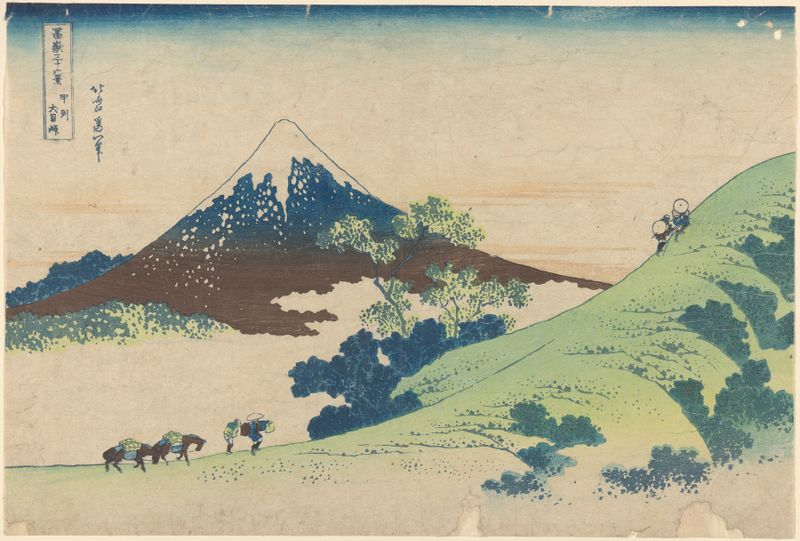
Inume Pass in Kai Province (Kôshû inume-tôge)
Katsushika Hokusai

Yoro Falls in Mino Province (Mino no Yoro no taki), from the series "A Tour of Waterfalls in Various Provinces (Shokoku taki meguri)"
Katsushika Hokusai
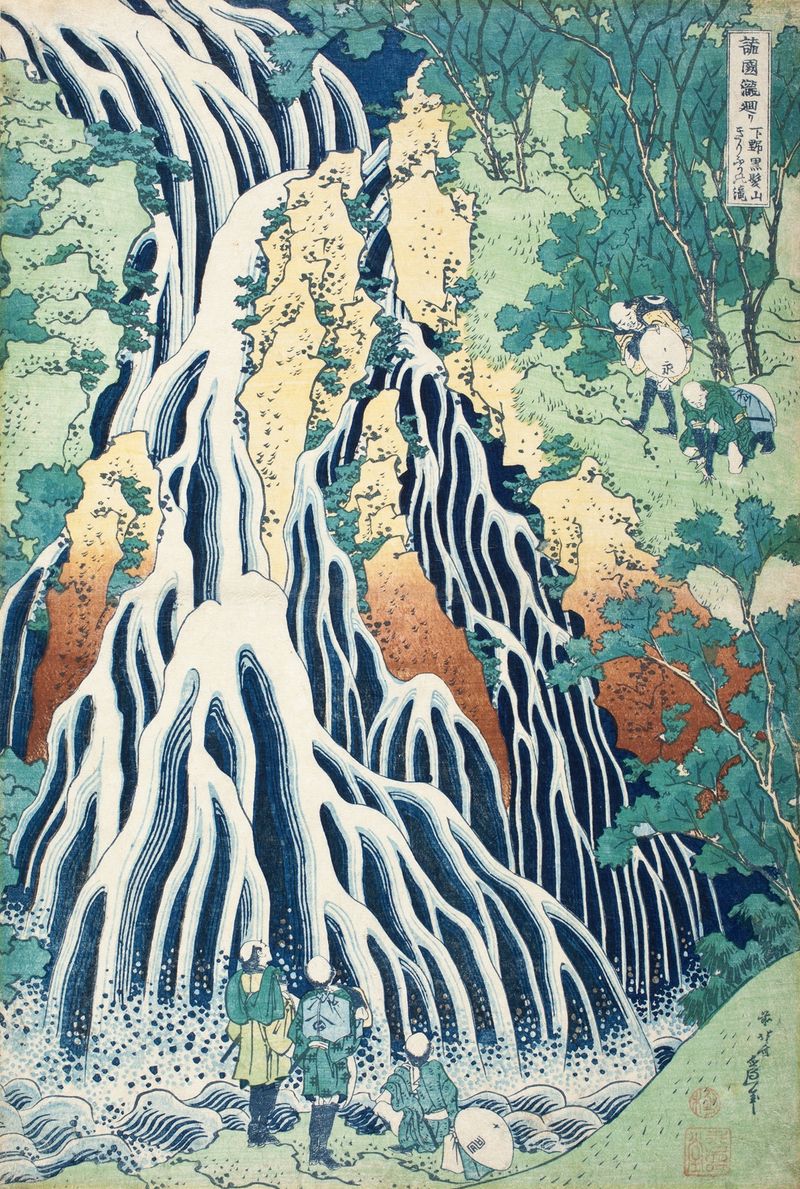
Falls of Kirifuri at Mt. Kurokami, Shimotsuke Province
Katsushika Hokusai
Onden no suisha
Katsushika Hokusai





