
Miniyeh, — History & Facts
Is this a mirror — or a memory? The delicate interplay of light and shadow suggests a fleeting moment, one that captures the fragility of existence and the transient nature of time. Look to the left at the intricate detailing of the landscape; the soft, muted colors echo a sense of nostalgia. Müller’s brushwork evokes a gentle breeze, rustling through the foliage, while the soft blue and earthy tones create a harmonious balance. The composition invites you to trace the horizon line, where the sun dips just below, casting an ethereal glow that bathes the entire scene in warmth.
Every stroke seems deliberate, yet spontaneous, capturing the essence of a world that is both real and dreamlike. As you linger, notice how the figures in the foreground appear almost spectral, their forms blending with the landscape. This subtle fusion speaks to the themes of memory and identity; the people seem to be part of the land, suggesting that our memories are as fragile as the moments we experience. The contrast between the vibrant colors of the sky and the muted earth tones evokes a tension between hope and melancholy, as if to remind us that every moment is both beautiful and ephemeral. Created during the mid-19th century in El Minya, Müller painted Miniyeh while exploring Egypt's rich cultural tapestry.
At this time, he was captivated by the landscapes and people of the region, fusing romanticism with realism. The backdrop of European interest in the East heightened the significance of his work, as artists sought to capture the allure of unfamiliar territories, making this piece a poignant reflection of Müller’s journey and artistic evolution.
More Artworks by William James Müller
Browse all →
Cleeve, Somerset, with Bridgewater Bay in the Distance
William James Müller

The Bridge at Llangollen
William James Müller

Cairo Bazaar
William James Müller
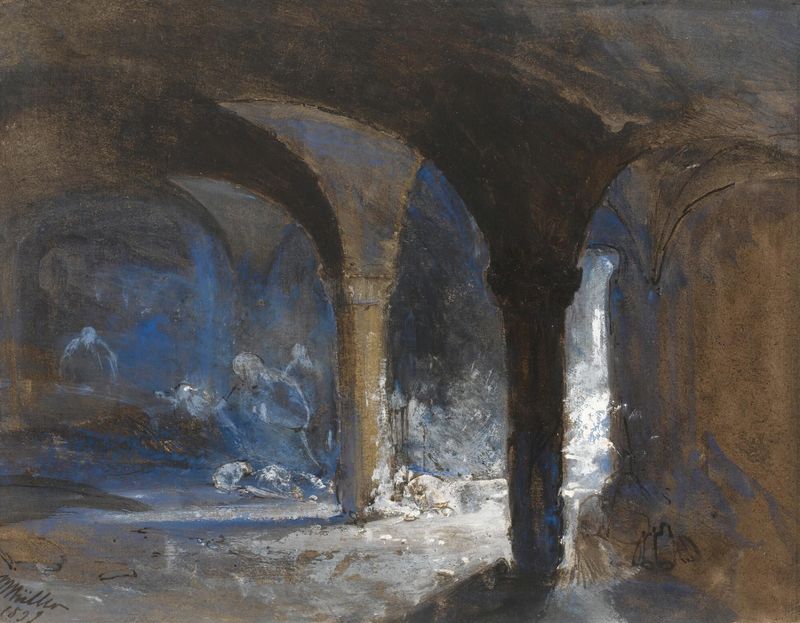
Crypt of the bishop’s palace during the Bristol riots
William James Müller

Near the Caravan Bridge, Smyrna
William James Müller
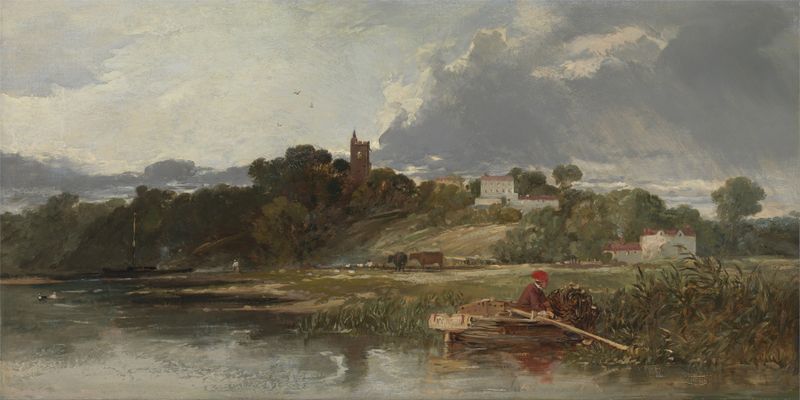
Gillingham on the Medway
William James Müller

The Church of the Holy Sepulchre
William James Müller

A View of Eton and the Fellows Eyot
William James Müller

Tripoli
William James Müller

A Mountain Torrent
William James Müller





