
molens; De Noordervaldeursloot, Oostzaandam. De Sluiswachter (ook wel Rooie-Molen ); Het Kaar; De Kwak; De Duinmaaijer; De Zeef — History & Facts
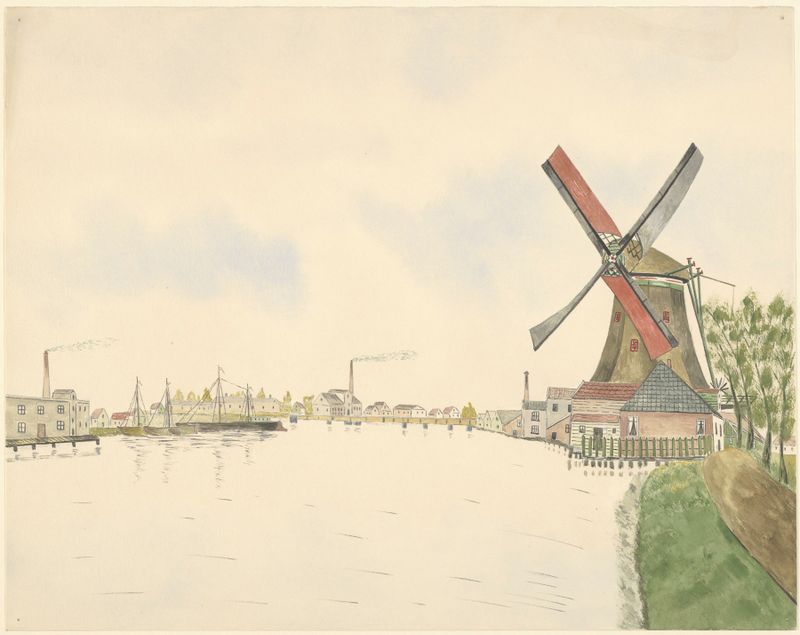
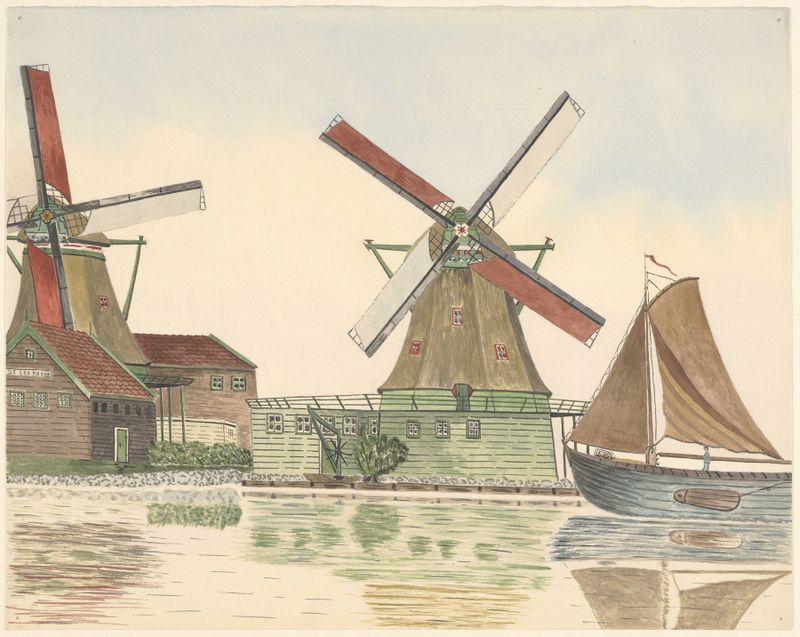
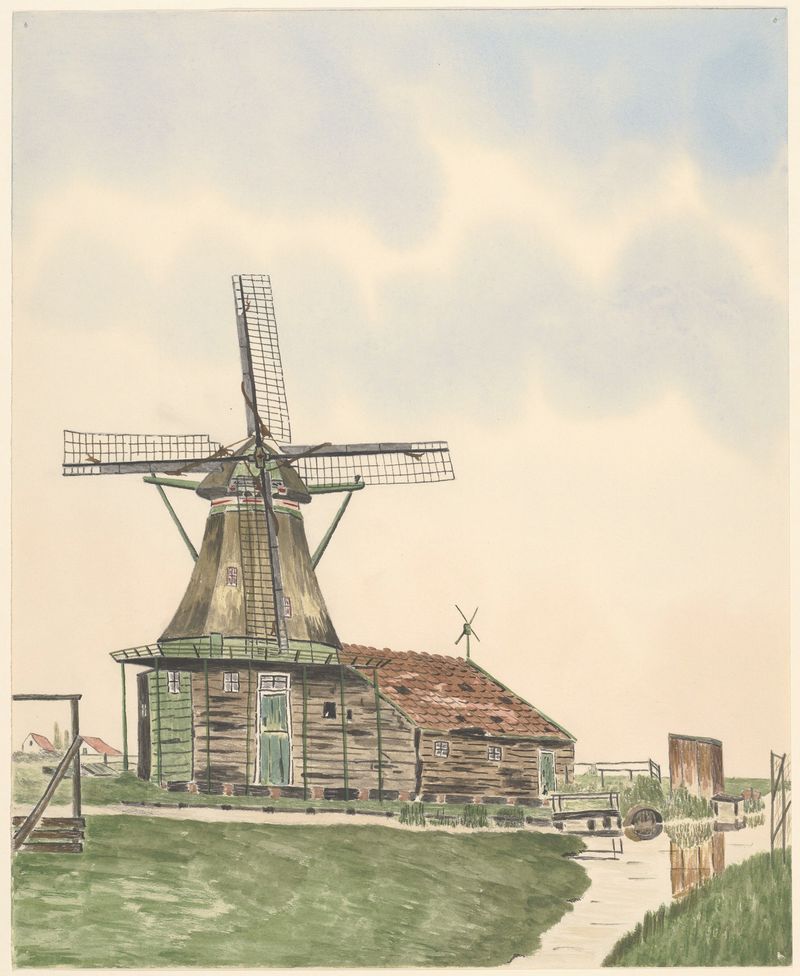
In the quiet interstice of light and shadow, a landscape breathes, reflecting the unfulfilled yearnings of its time. Look to the center of the canvas, where the windmill stands tall against a backdrop of muted hues. The blades reach outward, poised between motion and stillness, inviting you to ponder their purpose. Notice how the earth beneath is rendered with earthy tones, infused with the stillness of a moment captured, as if time itself has paused in reverence to the underlying void of the scene.
The subtle play of light on the water's surface mirrors the soft, melancholic beauty of the Dutch skies above, creating a harmonious balance that draws the viewer deeper into the composition. Hidden within the gentle curves of the landscape lies a narrative of contrast. The windmill, a symbol of industriousness, juxtaposes the quiet solitude of the surrounding water and greenery, hinting at the tension between human ambition and nature's embrace. Among the serene palette, splashes of color suggest life yet evoke a sense of emptiness, evoking the paradox of existence itself—a celebration tinged with a palpable longing for something elusive. During the late 1930s, Johannes Nicolaas Eijman painted this work amid a period of profound change in Europe.
The world was on the brink of war, and the uneasy silence permeated through society, influencing many artists of the era. Eijman focused on landscapes that conveyed both beauty and melancholy, reflecting the emotional undercurrents of a time marked by uncertainty. This work stands as a testament to his ability to transform the ordinary into a poignant exploration of existence.
More Artworks by Johannes Nicolaas Eijman
Browse all →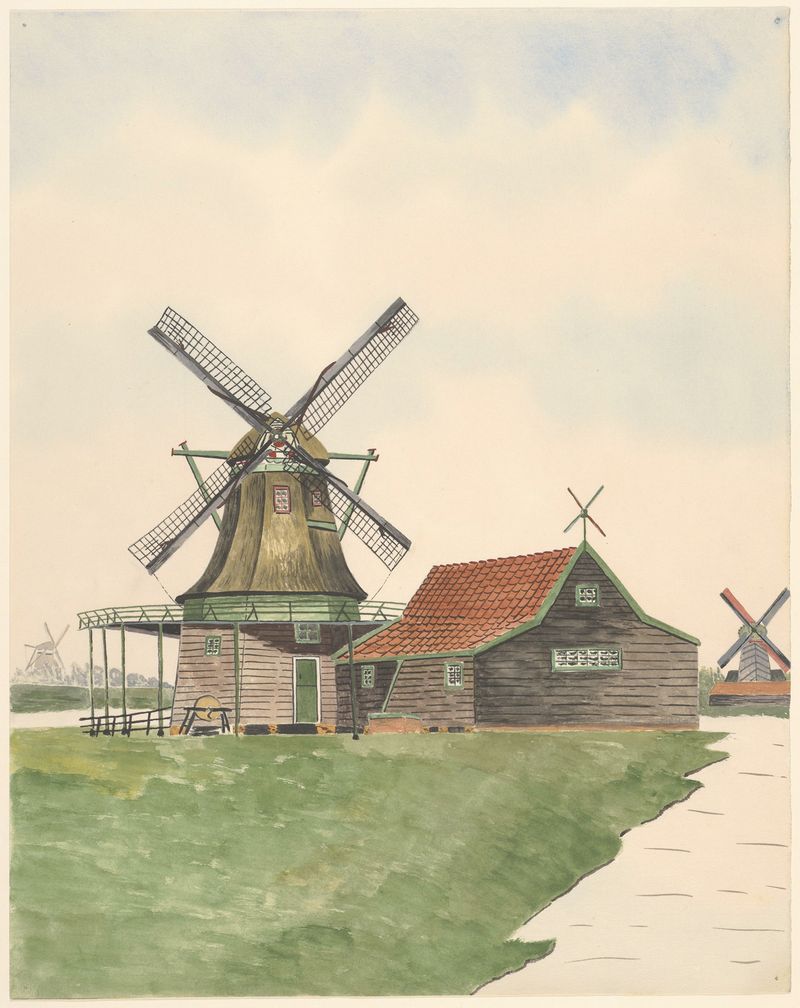
molens; oliemolen De Olievos, aan de Papenpadsloot, gesloopt 1878
Johannes Nicolaas Eijman
molens; meelmolen De Koker
Johannes Nicolaas Eijman

Papiermolen de Eendracht aan de westzijde van het Zaandammerpad, Wormer
Johannes Nicolaas Eijman
molens; oliemolen De Oude-Zwan, aan de Kalverpoel
Johannes Nicolaas Eijman
molens; oliemolen Het Oude-Honingvat, Oostzijderveld
Johannes Nicolaas Eijman
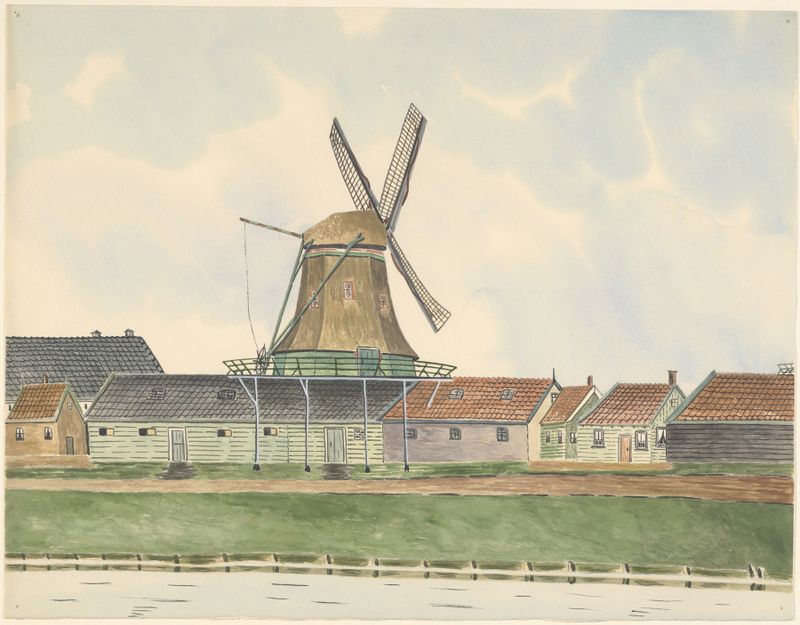
molen; oliemolen Het Witte-Paard aan het Zaandijkerwegje, 1893 gesloopt
Johannes Nicolaas Eijman

Op de voorgrond rechts doppenmolen De Prolpot aan de Hemmes, op de achtergrond links twee andere molens
Johannes Nicolaas Eijman
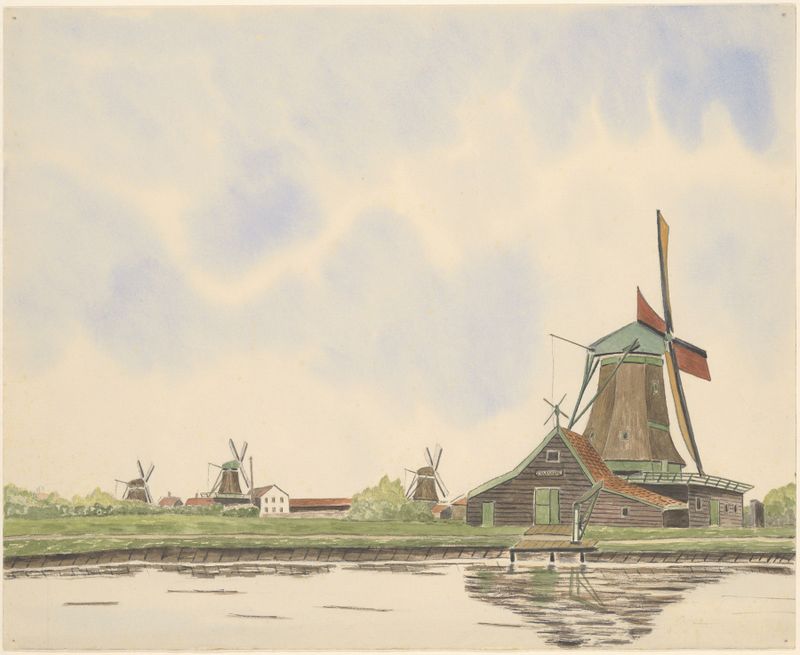
Oliemolen De Kerkuil aan de Zaan, met drie molens op de achtergrond. De Kerkuil stond binnendijks, tegenover de Wormerveerderkerk; afgebroken ca. 1892
Johannes Nicolaas Eijman
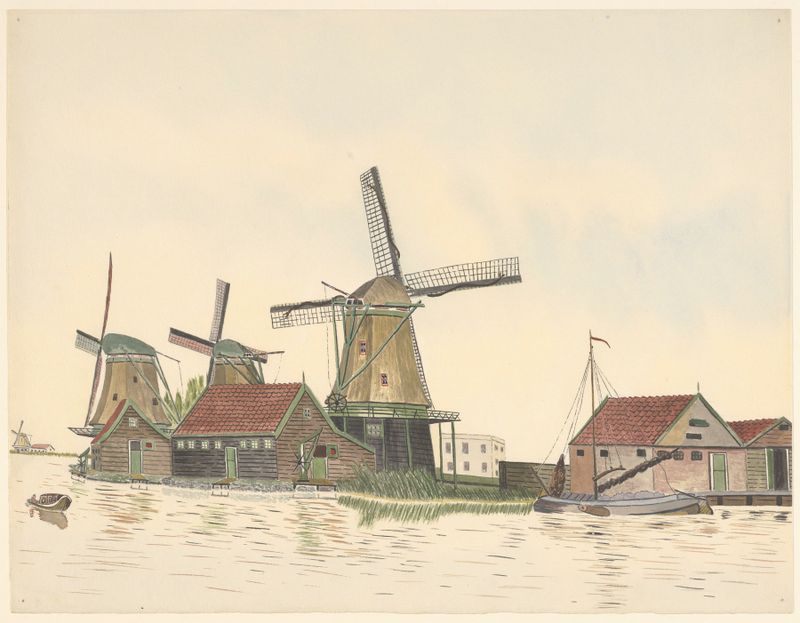
molens; De Ooievaar; De Windhond; De Gans, Kalverringdijk
Johannes Nicolaas Eijman
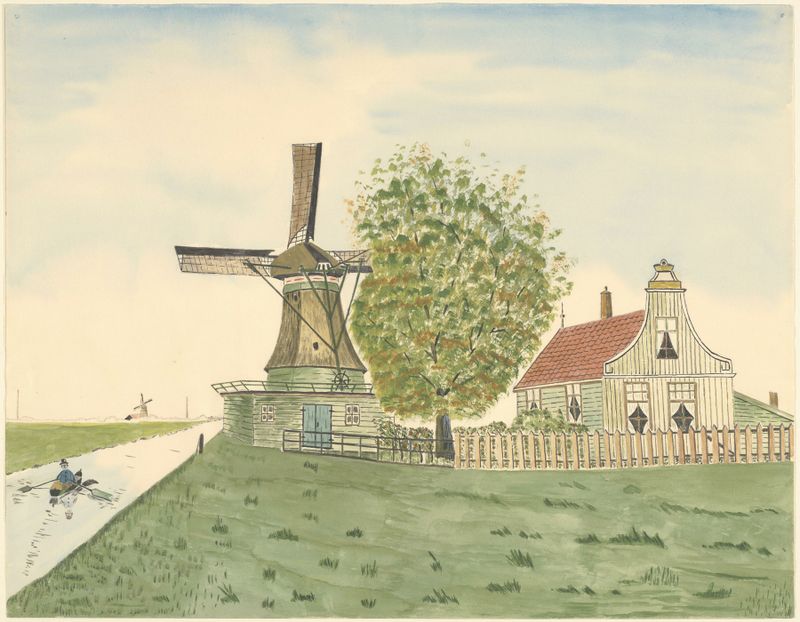
molens; houtzaagmolen De Haan
Johannes Nicolaas Eijman





