
molens; De Ooievaar; De Windhond; De Gans aan de Kalverringdijk — History & Facts
Could a single brushstroke hold eternity? In the silent expanse of molens; De Ooievaar; De Windhond; De Gans aan de Kalverringdijk, the stillness of the scene belies a deeper unrest, hinting at the fears that linger beneath the surface of serene landscapes. Focus on the sweeping horizon, where the windmills stand tall against a brooding sky. Notice how Eijman deftly employs muted tones, blending shades of gray and earthy browns to create a sense of melancholy. The textured strokes of paint capture the play of light on the water, reflecting a world both beautiful and foreboding.
As your gaze travels from the windmills to the gentle ripples of the canal, you feel the weight of history pressing down, a reminder of temporality amidst the eternal. Yet, beneath this pastoral beauty lies a tension between nature and the encroachment of modernity. The windmills, symbols of tradition, stand resolute but seem to whisper of an uncertain future. The anxious brushwork surrounding them hints at the fears of progress overshadowing the age-old rhythms of life.
Each element within the frame serves as a reminder of what is at stake — a fragile balance that hangs in the air, palpable and haunting. Eijman created this work during a time of significant societal change in the Netherlands, roughly between 1930 and 1940. The country was grappling with the aftermath of World War I and the looming shadow of World War II. As artists explored new directions, Eijman remained rooted in landscape painting, embodying the tension between honoring tradition and confronting the realities of a changing world.
More Artworks by Johannes Nicolaas Eijman
Browse all →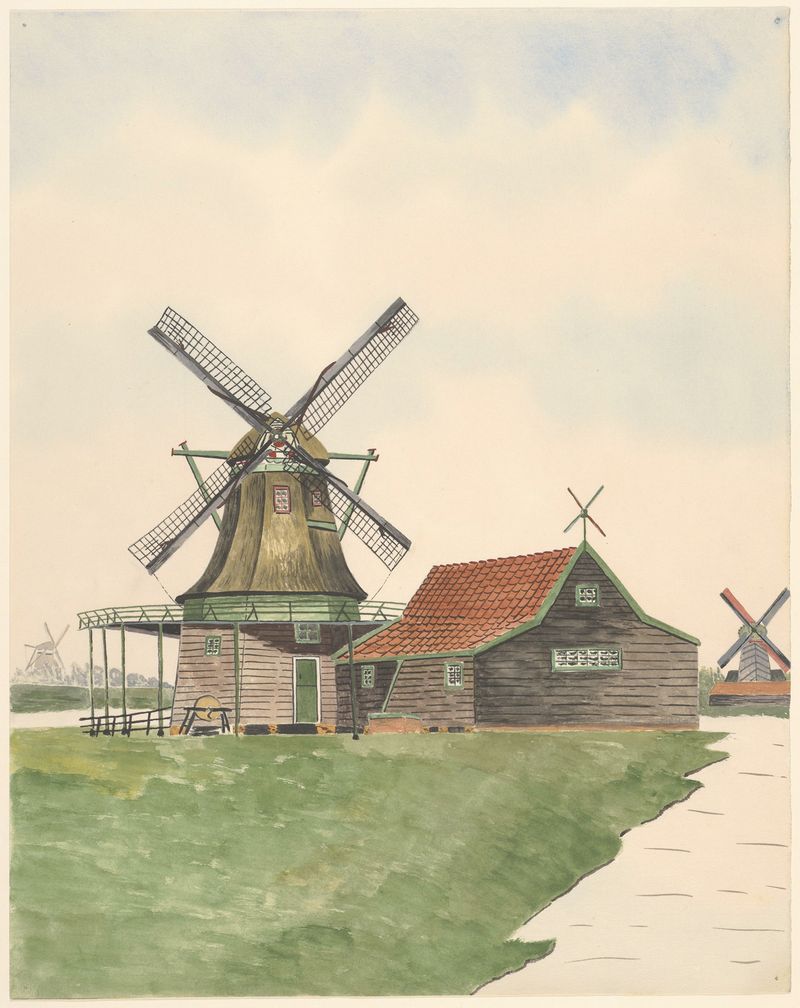
molens; oliemolen De Olievos, aan de Papenpadsloot, gesloopt 1878
Johannes Nicolaas Eijman
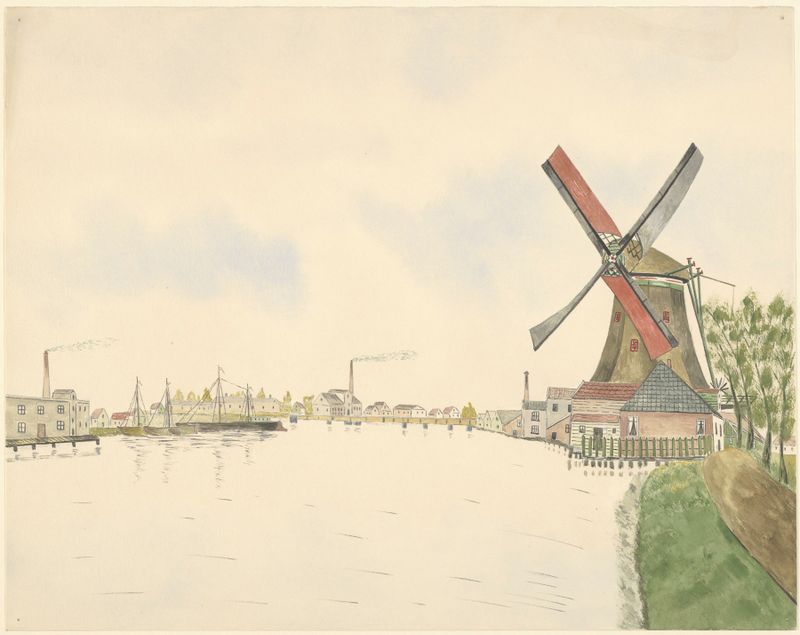
molens; meelmolen De Koker
Johannes Nicolaas Eijman

Papiermolen de Eendracht aan de westzijde van het Zaandammerpad, Wormer
Johannes Nicolaas Eijman
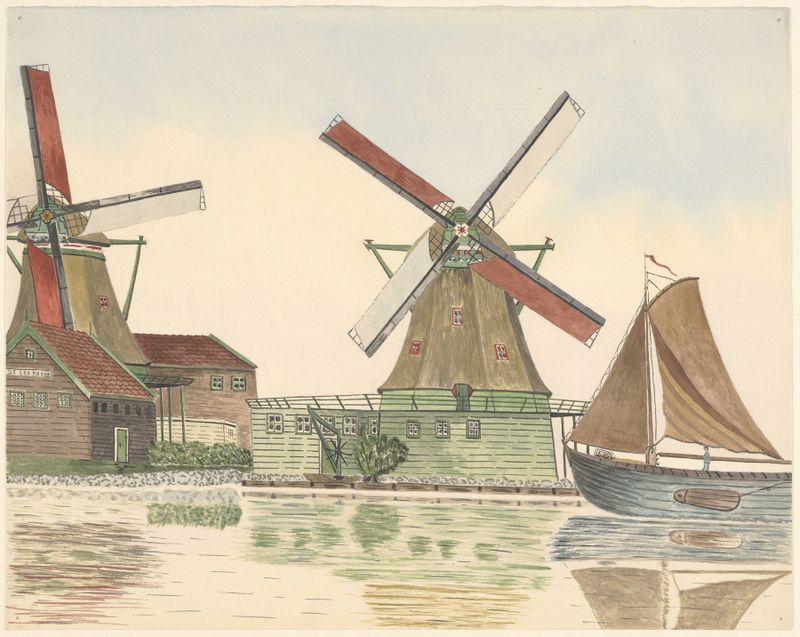
molens; oliemolen De Oude-Zwan, aan de Kalverpoel
Johannes Nicolaas Eijman
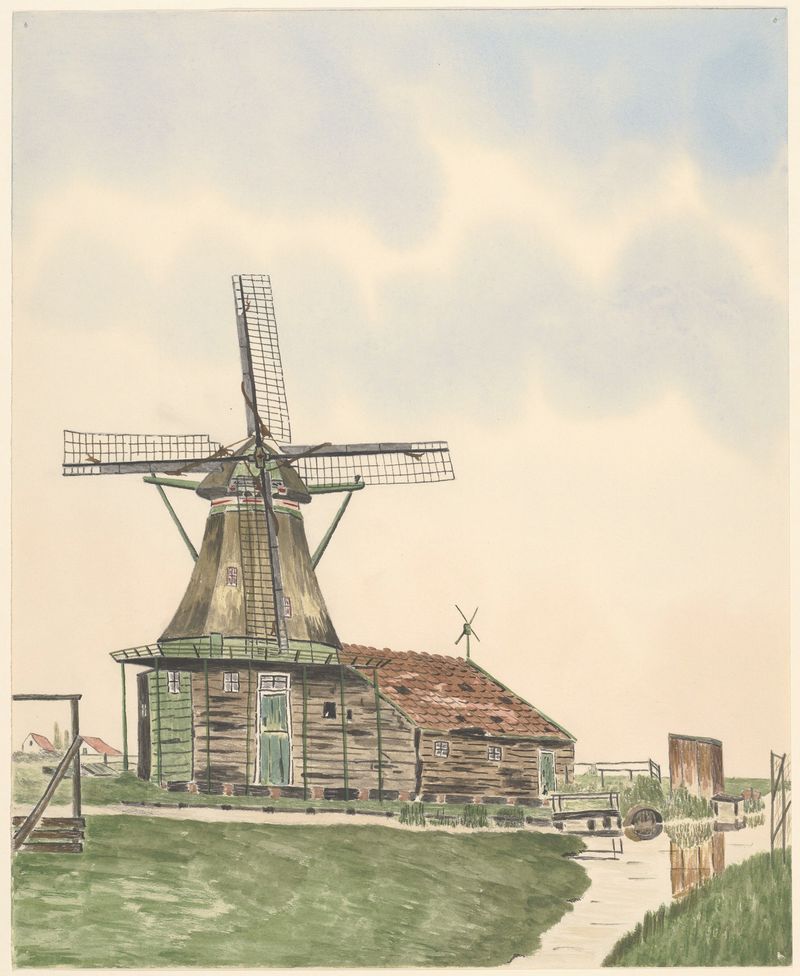
molens; oliemolen Het Oude-Honingvat, Oostzijderveld
Johannes Nicolaas Eijman
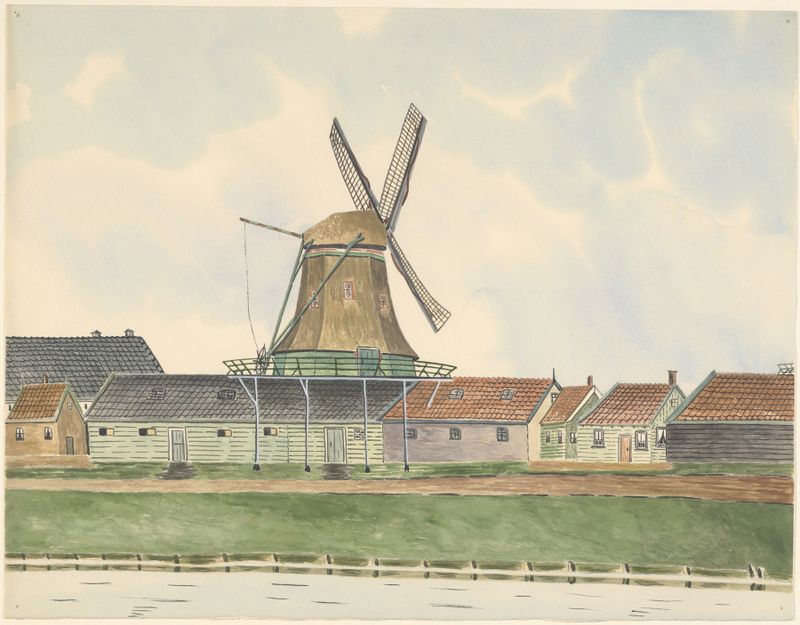
molen; oliemolen Het Witte-Paard aan het Zaandijkerwegje, 1893 gesloopt
Johannes Nicolaas Eijman

Op de voorgrond rechts doppenmolen De Prolpot aan de Hemmes, op de achtergrond links twee andere molens
Johannes Nicolaas Eijman
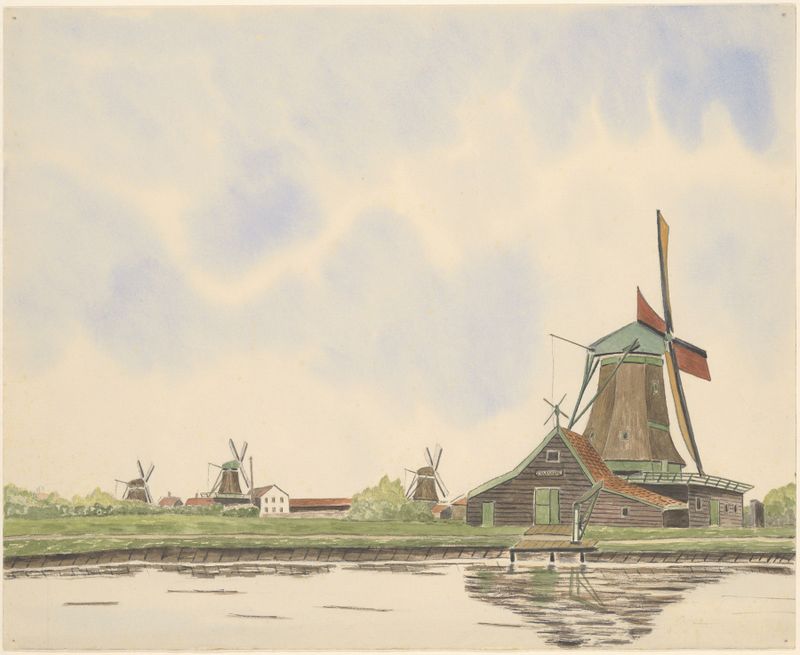
Oliemolen De Kerkuil aan de Zaan, met drie molens op de achtergrond. De Kerkuil stond binnendijks, tegenover de Wormerveerderkerk; afgebroken ca. 1892
Johannes Nicolaas Eijman
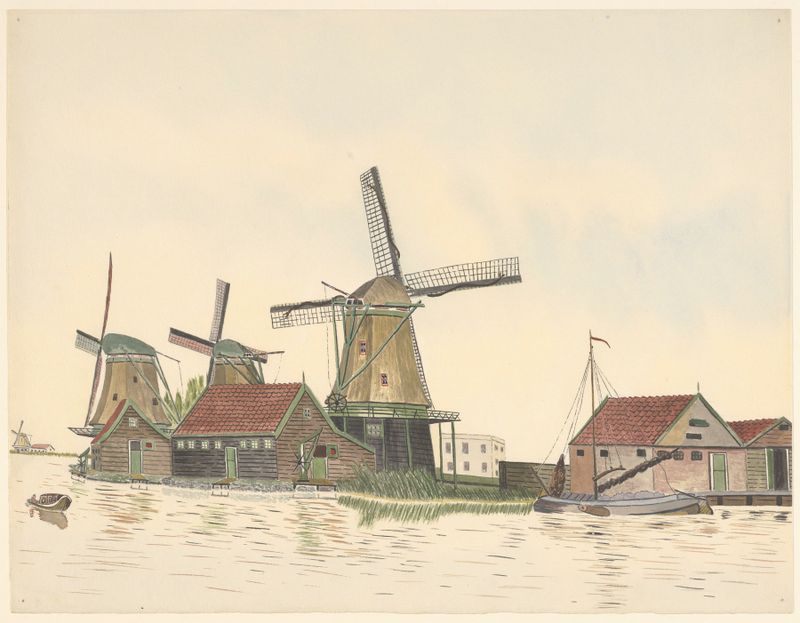
molens; De Ooievaar; De Windhond; De Gans, Kalverringdijk
Johannes Nicolaas Eijman
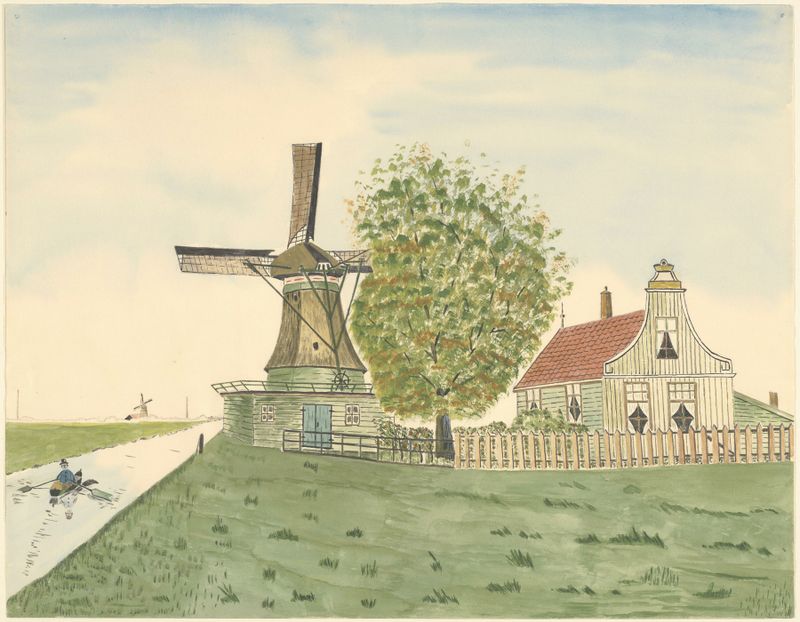
molens; houtzaagmolen De Haan
Johannes Nicolaas Eijman





