
molens; houtzaagmolen Het Jonge-Schaap, Westzaandam — History & Facts
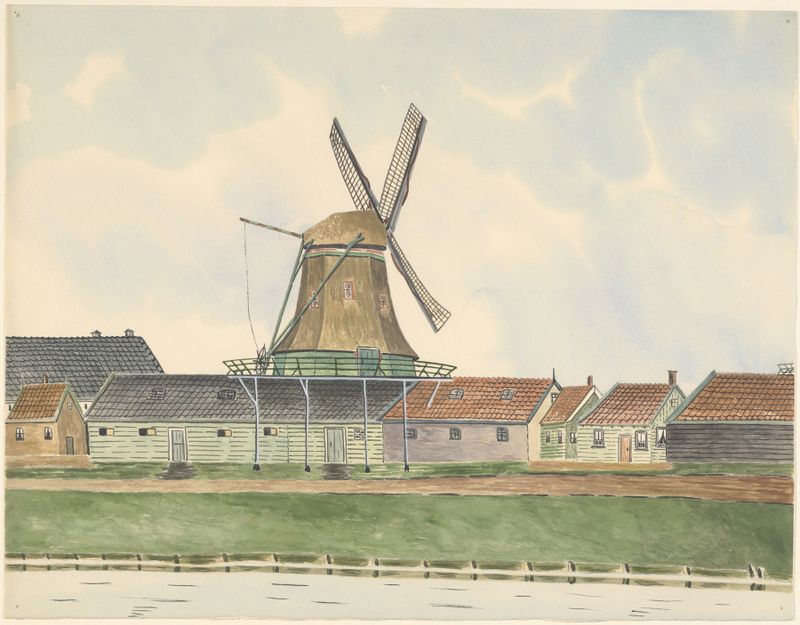
What if silence could speak through light? In molens; houtzaagmolen Het Jonge-Schaap, Westzaandam, an eloquent stillness permeates the canvas, evoking a profound sense of loneliness amidst the tranquil beauty of the landscape. Look to the center of the painting where the windmill stands, its silhouette cutting sharply against a brooding sky. Notice how the muted tones of earthy browns and deep greens cradle the structure, while the soft glow illuminating the blades contrasts with the surrounding shadows, suggesting both isolation and resilience. The composition draws the viewer’s eye upward, encouraging contemplation of the vast emptiness that envelops the scene, as if the air itself is steeped in unspoken stories. Within this quietude lies a deeper exploration of human emotion.
The windmill, a relic of industriousness, stands as a solitary sentinel, hinting at the passage of time and the inevitable decay of purpose. The interplay between light and shadow not only illuminates the physical structure but also casts a veil over its history, whispering of forgotten labors and the solitude of those who once toiled there. The surrounding landscape, though breathtaking, amplifies the feeling of isolation, as if nature itself is both a companion and an indifferent observer. Johannes Nicolaas Eijman created this piece between 1930 and 1940 during a transformative period in Dutch art.
Living in an era marked by both industrial growth and the encroachment of modernity, he sought to capture the essence of traditional landscapes that were fading into obscurity. This work reflects not only his personal artistic vision but also a collective longing for connection to a simpler, more poignant time in a rapidly changing world.
More Artworks by Johannes Nicolaas Eijman
Browse all →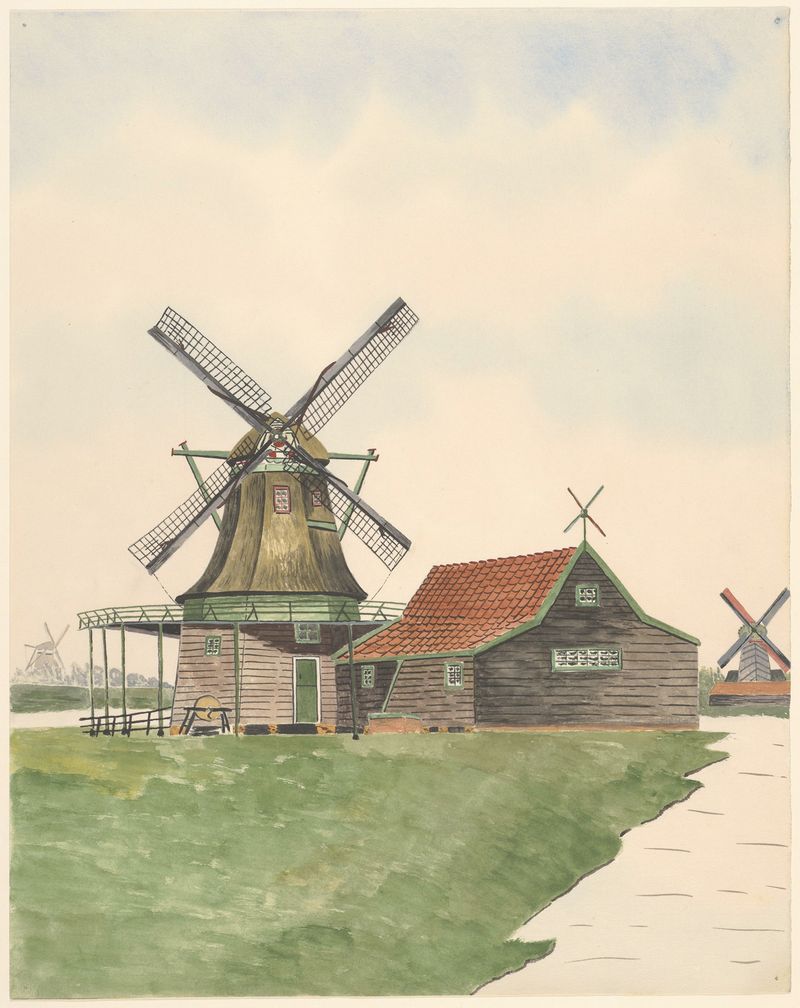
molens; oliemolen De Olievos, aan de Papenpadsloot, gesloopt 1878
Johannes Nicolaas Eijman
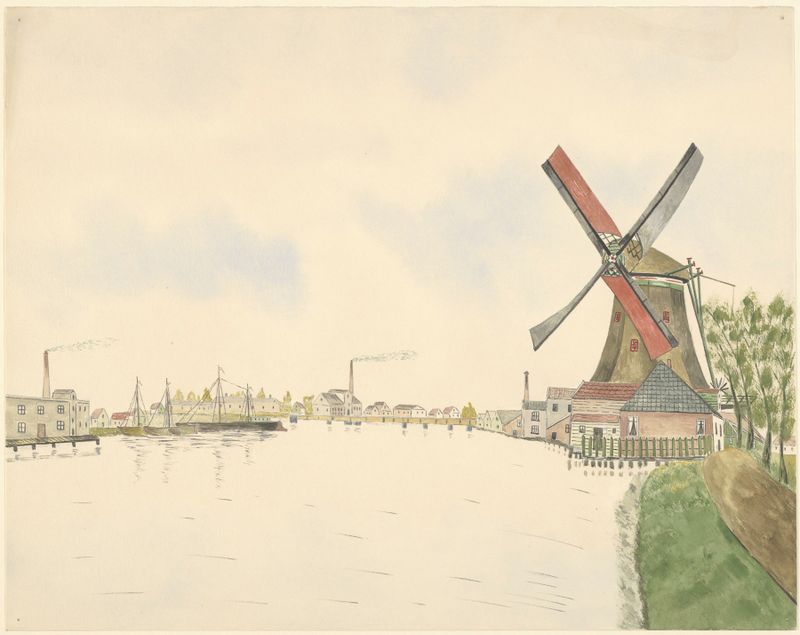
molens; meelmolen De Koker
Johannes Nicolaas Eijman

Papiermolen de Eendracht aan de westzijde van het Zaandammerpad, Wormer
Johannes Nicolaas Eijman
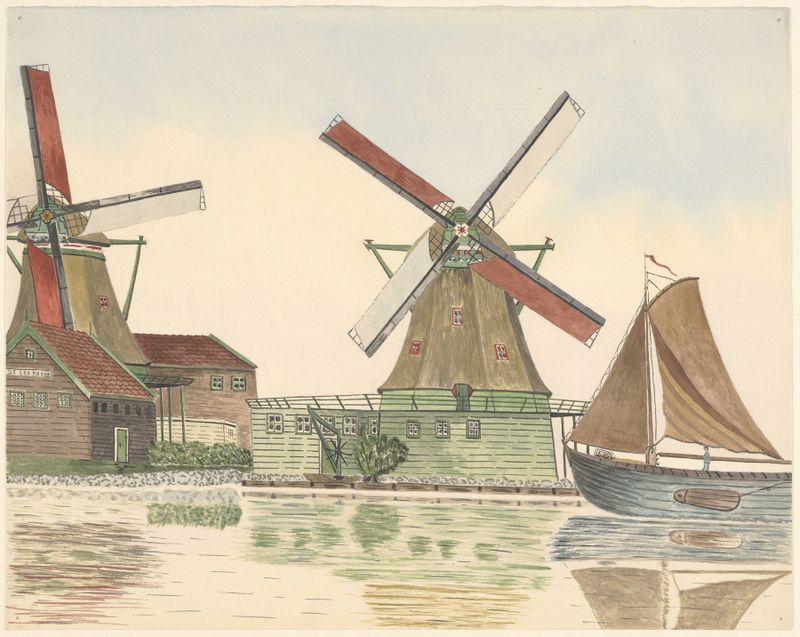
molens; oliemolen De Oude-Zwan, aan de Kalverpoel
Johannes Nicolaas Eijman
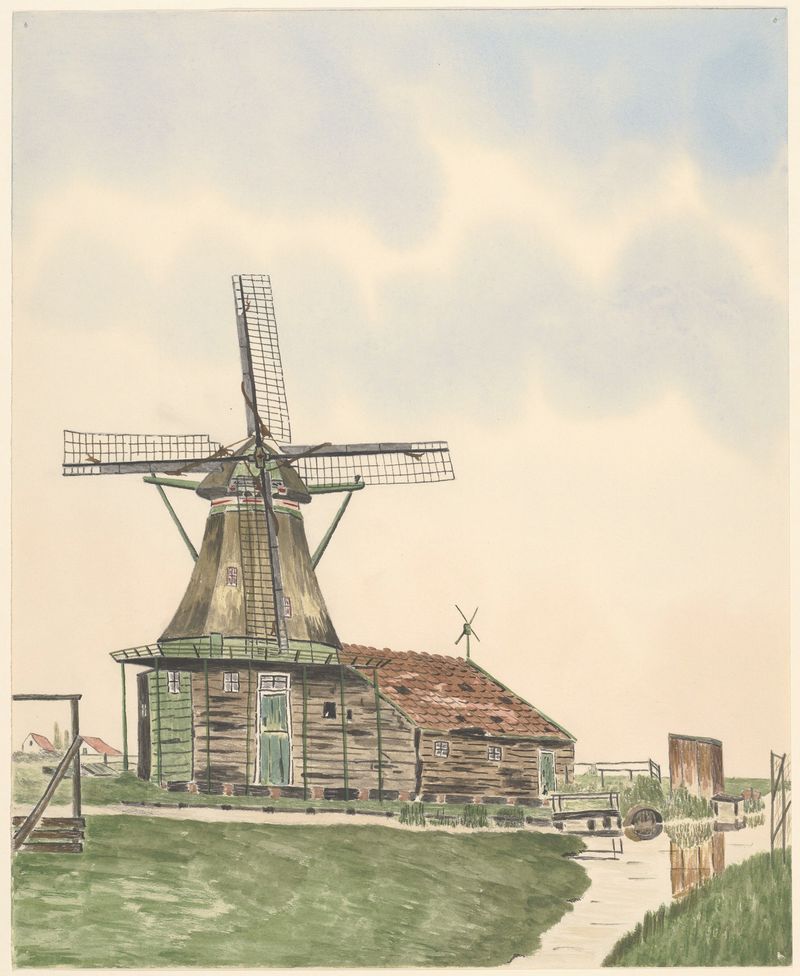
molens; oliemolen Het Oude-Honingvat, Oostzijderveld
Johannes Nicolaas Eijman
molen; oliemolen Het Witte-Paard aan het Zaandijkerwegje, 1893 gesloopt
Johannes Nicolaas Eijman

Op de voorgrond rechts doppenmolen De Prolpot aan de Hemmes, op de achtergrond links twee andere molens
Johannes Nicolaas Eijman
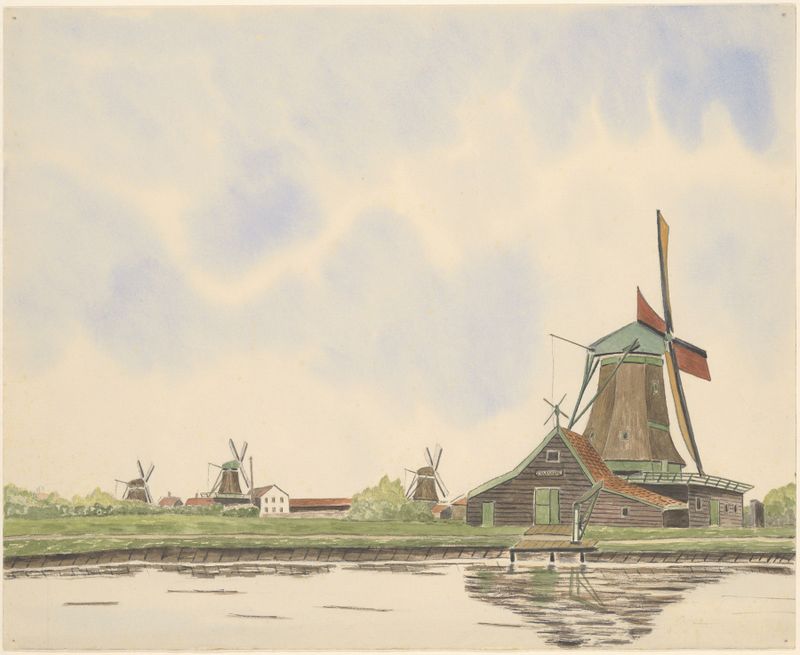
Oliemolen De Kerkuil aan de Zaan, met drie molens op de achtergrond. De Kerkuil stond binnendijks, tegenover de Wormerveerderkerk; afgebroken ca. 1892
Johannes Nicolaas Eijman
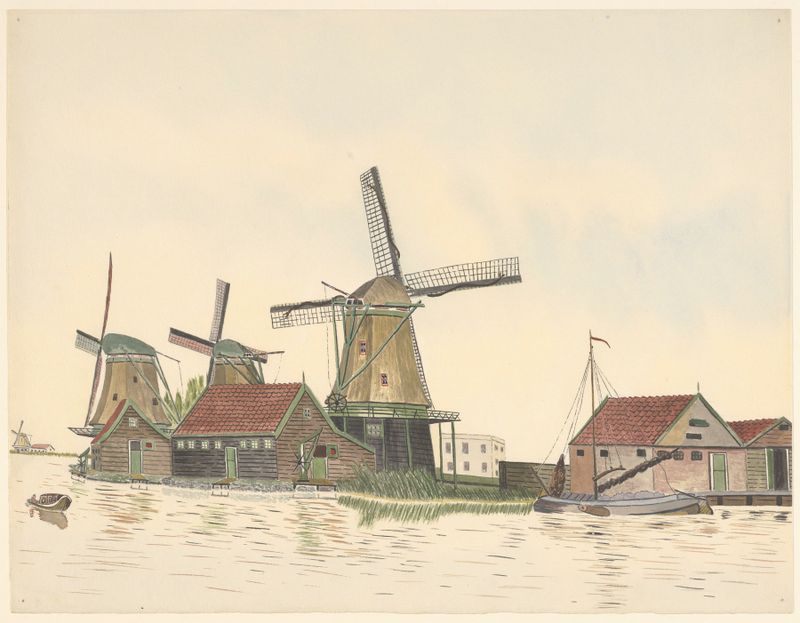
molens; De Ooievaar; De Windhond; De Gans, Kalverringdijk
Johannes Nicolaas Eijman
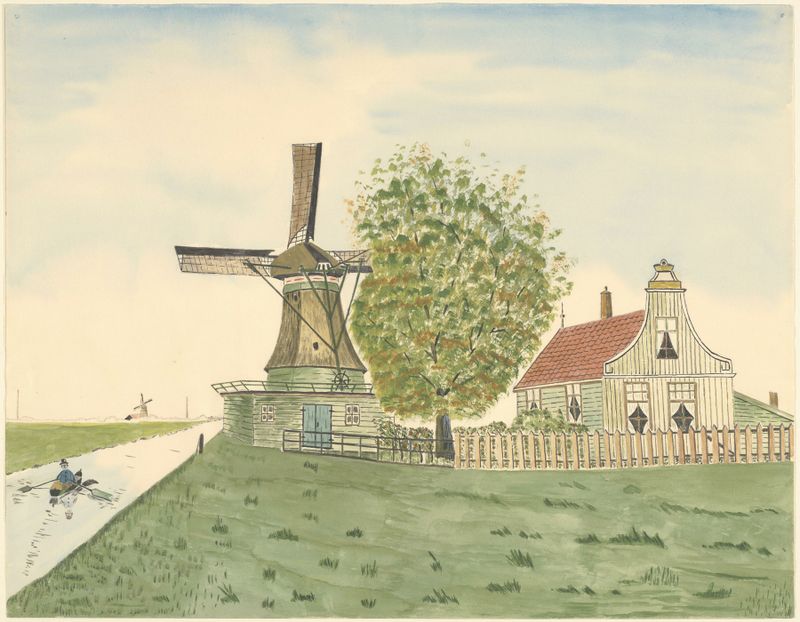
molens; houtzaagmolen De Haan
Johannes Nicolaas Eijman





