
molens; molen De Kaar; De Kwak; De Afra; en De Hondeman — History & Facts
When did color learn to lie? In a world where nothing is static, the tension between reality and perception dances vividly upon the canvas, inviting a dialogue that transcends mere observation. Look to the left at the towering silhouette of the windmill; its blades stretch out, poised against the tumultuous sky. The juxtaposition of deep blues and luminous whites creates a striking contrast that draws the eye, while the angular lines of the structures evoke a sense of movement, as if they are ready to take flight. Notice how the artist has employed varying brushstrokes to impart texture, giving the sky an almost palpable energy that simulates the rush of wind sweeping through the landscape. Amidst the vibrant colors lies a subtle tension—a whisper of revolution.
The windmills stand not just as relics of tradition but as symbols of change, their steadfast presence anchored in a world teetering on the brink of modernity. The interplay of light and shadow further emphasizes this dichotomy, suggesting both stability and the inevitable march of progress. In the distance, buildings loom, hinting at the encroachment of industrialization and the complexities it brings. During the period from 1930 to 1940, Johannes Nicolaas Eijman was immersed in the vibrant art scene of the Netherlands, responding to the rapid changes around him.
This was a time of political upheaval and cultural reinvention, as Europe grappled with the aftermath of World War I and the rise of modernist ideas. Eijman's work reflects not only his personal vision but also a larger societal shift, encapsulating a moment in history where tradition met the promise of a new era.
More Artworks by Johannes Nicolaas Eijman
Browse all →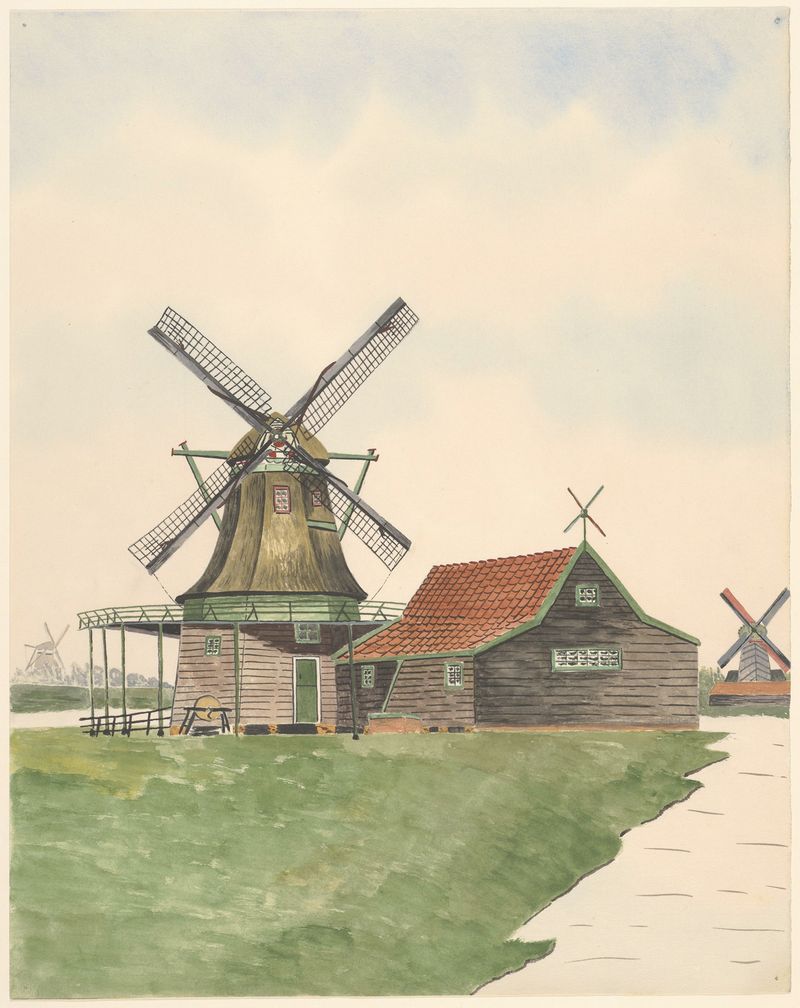
molens; oliemolen De Olievos, aan de Papenpadsloot, gesloopt 1878
Johannes Nicolaas Eijman
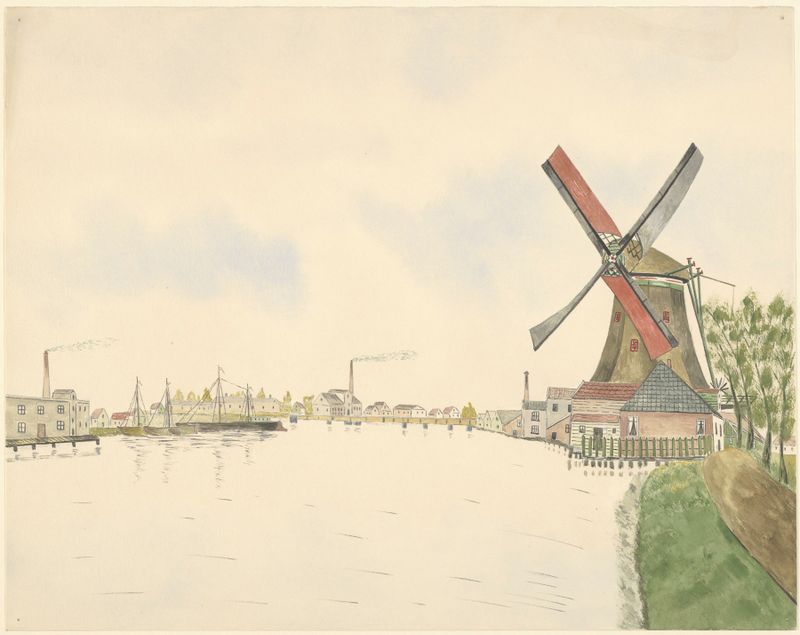
molens; meelmolen De Koker
Johannes Nicolaas Eijman

Papiermolen de Eendracht aan de westzijde van het Zaandammerpad, Wormer
Johannes Nicolaas Eijman
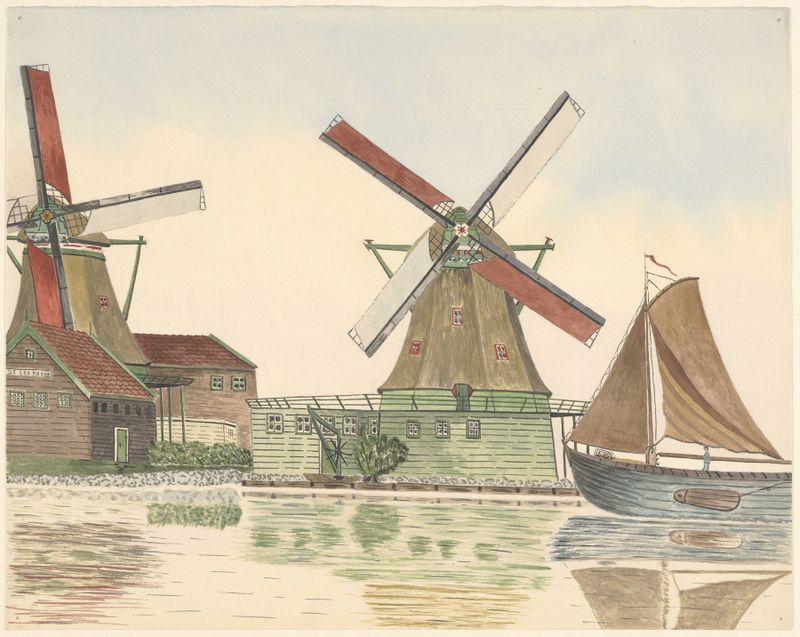
molens; oliemolen De Oude-Zwan, aan de Kalverpoel
Johannes Nicolaas Eijman
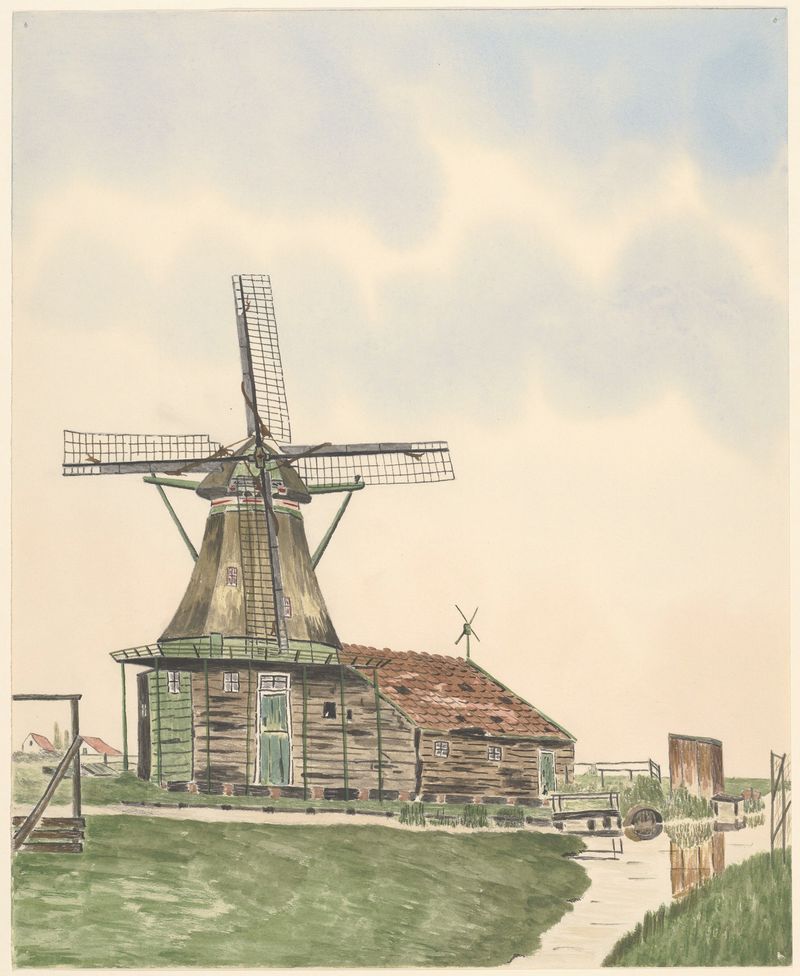
molens; oliemolen Het Oude-Honingvat, Oostzijderveld
Johannes Nicolaas Eijman
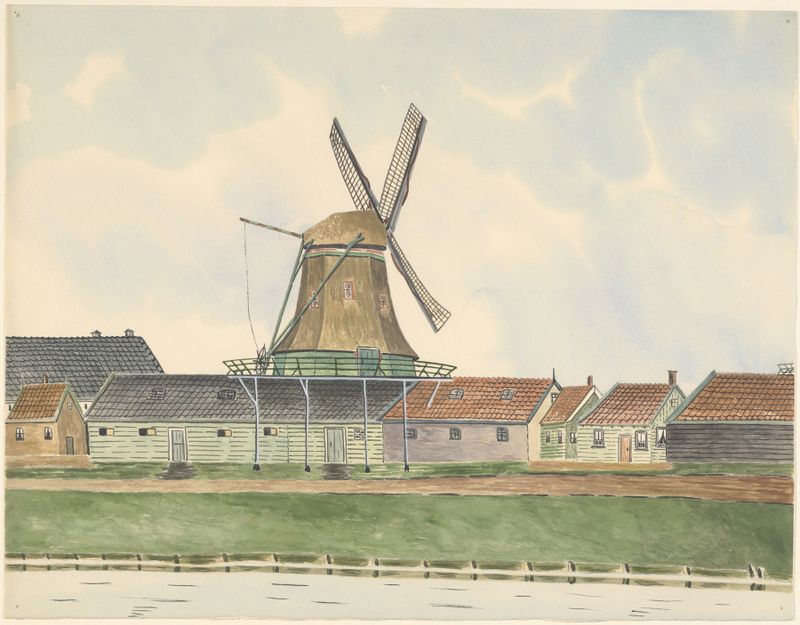
molen; oliemolen Het Witte-Paard aan het Zaandijkerwegje, 1893 gesloopt
Johannes Nicolaas Eijman

Op de voorgrond rechts doppenmolen De Prolpot aan de Hemmes, op de achtergrond links twee andere molens
Johannes Nicolaas Eijman
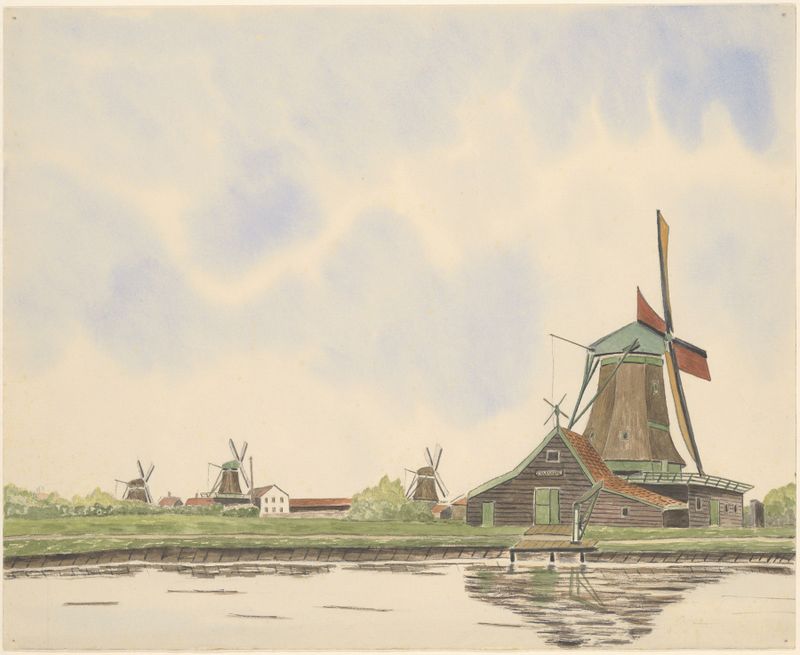
Oliemolen De Kerkuil aan de Zaan, met drie molens op de achtergrond. De Kerkuil stond binnendijks, tegenover de Wormerveerderkerk; afgebroken ca. 1892
Johannes Nicolaas Eijman
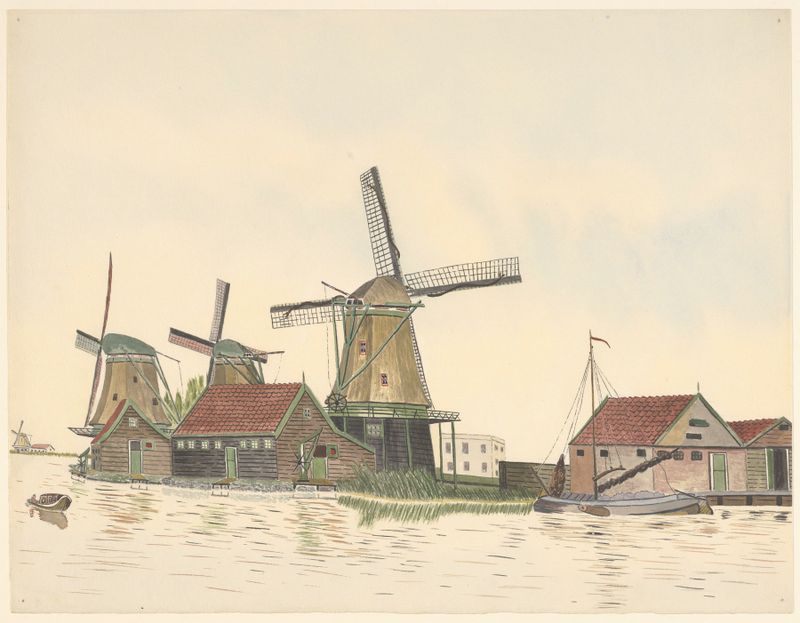
molens; De Ooievaar; De Windhond; De Gans, Kalverringdijk
Johannes Nicolaas Eijman
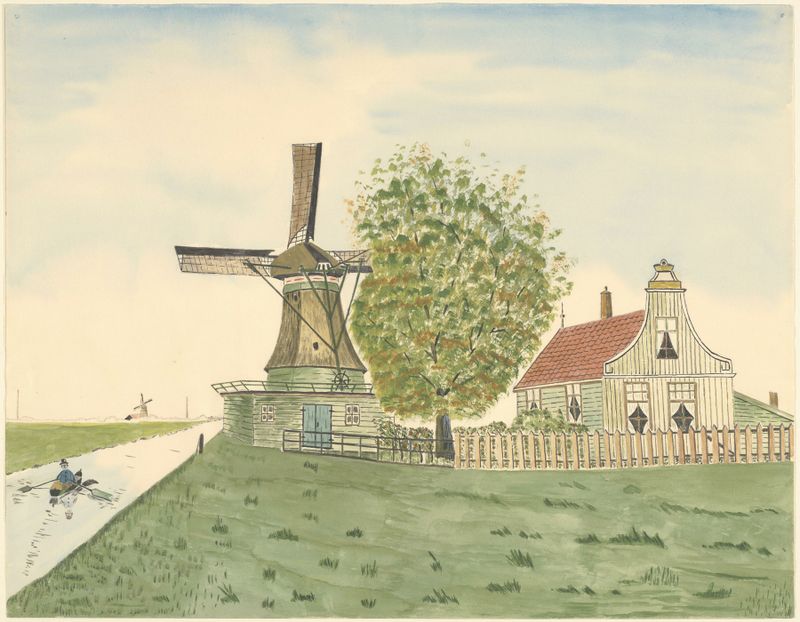
molens; houtzaagmolen De Haan
Johannes Nicolaas Eijman





