
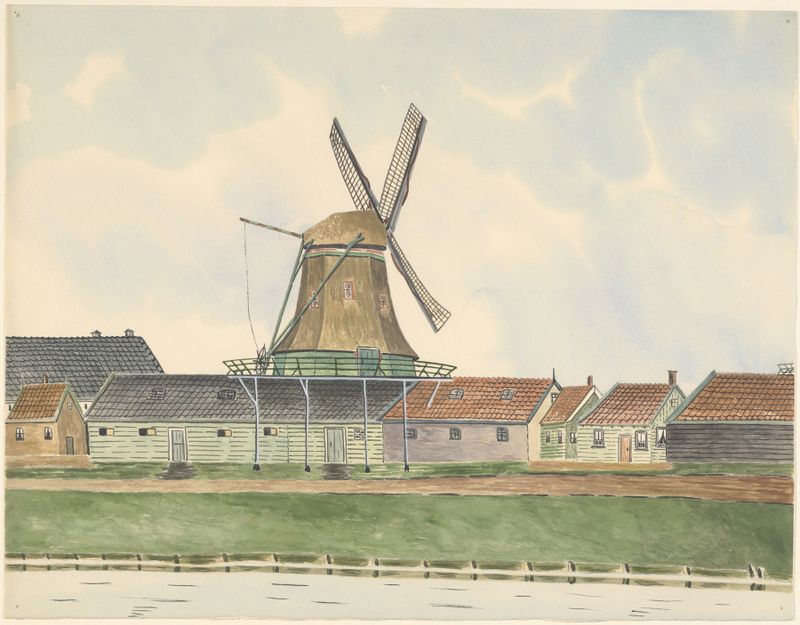
molens; oliemolen, later pelmolen Sint-Willibrordus, Oostzijde, aan ‘t Kalf, gesloopt 1938 — History & Facts
The act of creation often wrestles with obsession, revealing hidden wonders within the mundane. As you delve into the artwork, first focus on the windmill rising majestically against a backdrop of swirling clouds. Notice how the strokes of ochre and deep browns convey a sense of solidity amidst the ethereal chaos above. The artist's meticulous attention to the intricate details of the windmill’s blades draws the eye, while the surrounding landscape undulates in softer hues, instilling a feeling of movement and life. In the composition, contrasts abound.
The sturdy structure of the mill represents human industriousness, standing firm against the unpredictable nature of the elements. Look closely, and you will see the subtle interplay of light and shadow, almost as if the windmill itself is breathing, caught in a delicate dance between permanence and impermanence. The artist’s obsession with the subject illuminates deeper themes of resilience and man’s relationship with nature — a reminder that the ephemeral can be captured through the lens of dedication. During the late 1930s, Johannes Nicolaas Eijman created this piece in the Netherlands, a period marked by rapid industrial changes and looming uncertainties.
He sought to document the vanishing landscapes of his youth, as windmills — symbols of Dutch heritage — faced obsolescence. Within this context, the work serves not only as a tribute to a bygone era but also as a personal exploration of attachment and memory in a transforming world.
More Artworks by Johannes Nicolaas Eijman
Browse all →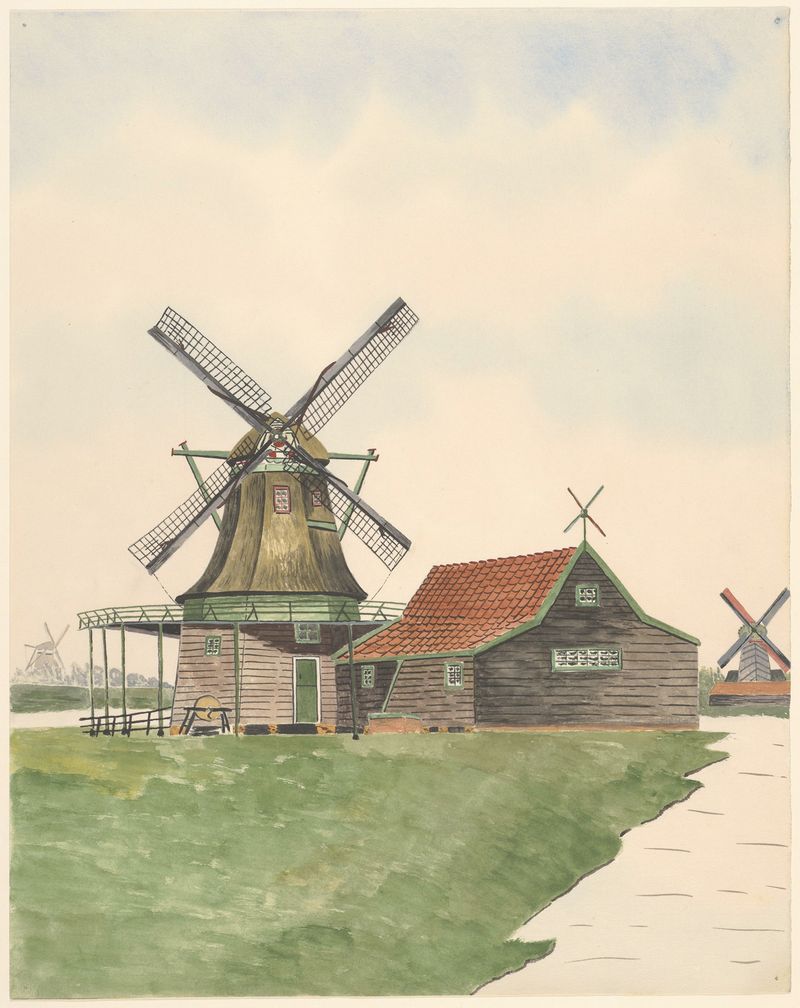
molens; oliemolen De Olievos, aan de Papenpadsloot, gesloopt 1878
Johannes Nicolaas Eijman
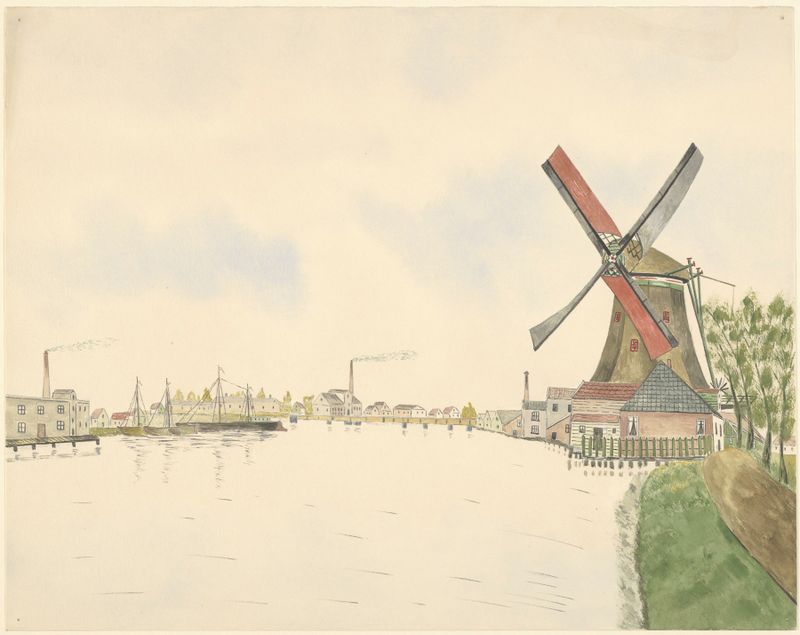
molens; meelmolen De Koker
Johannes Nicolaas Eijman

Papiermolen de Eendracht aan de westzijde van het Zaandammerpad, Wormer
Johannes Nicolaas Eijman
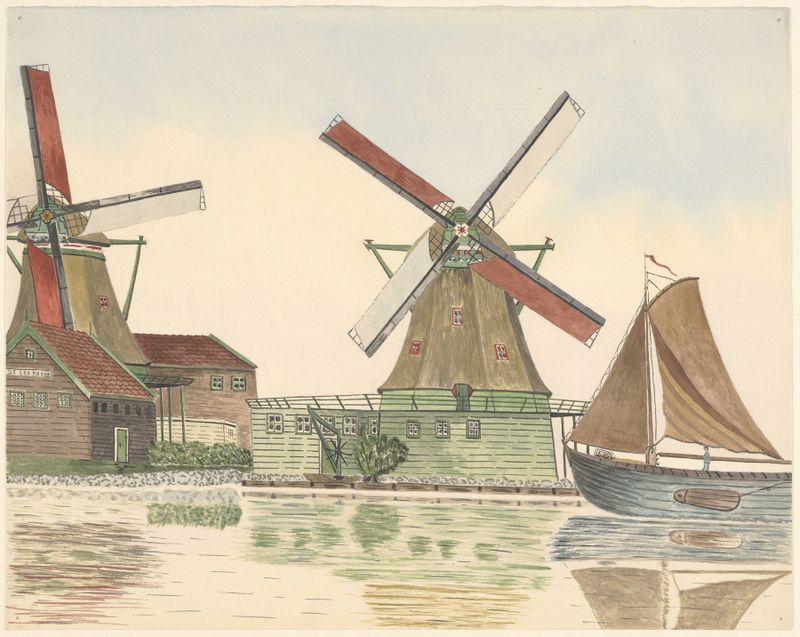
molens; oliemolen De Oude-Zwan, aan de Kalverpoel
Johannes Nicolaas Eijman
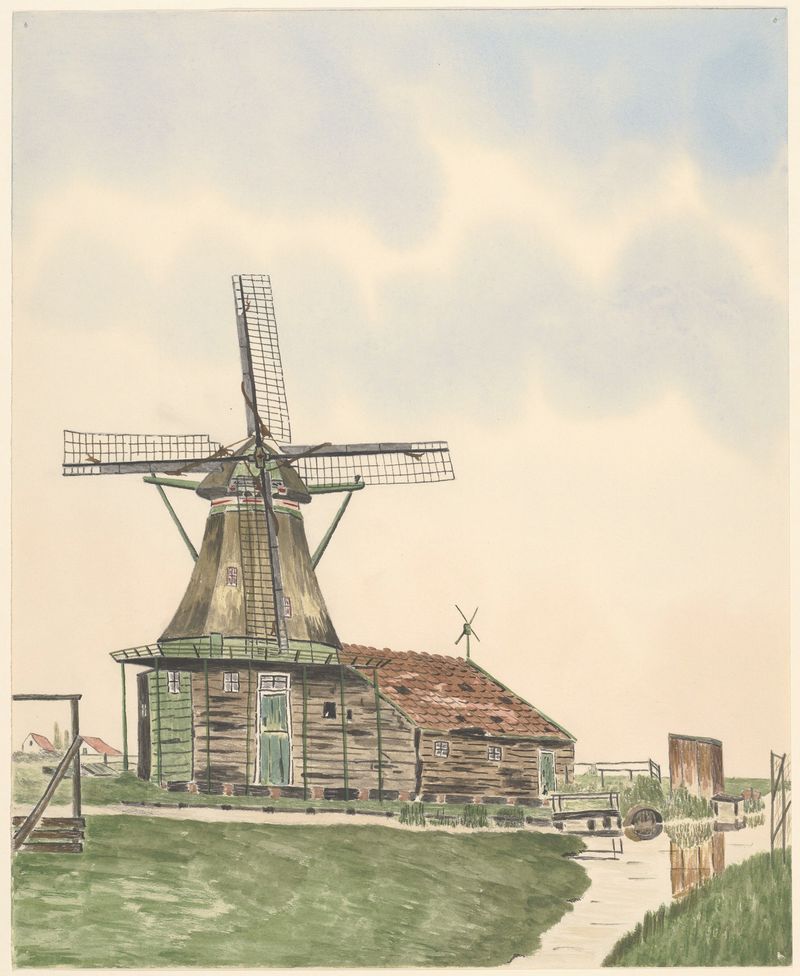
molens; oliemolen Het Oude-Honingvat, Oostzijderveld
Johannes Nicolaas Eijman
molen; oliemolen Het Witte-Paard aan het Zaandijkerwegje, 1893 gesloopt
Johannes Nicolaas Eijman

Op de voorgrond rechts doppenmolen De Prolpot aan de Hemmes, op de achtergrond links twee andere molens
Johannes Nicolaas Eijman
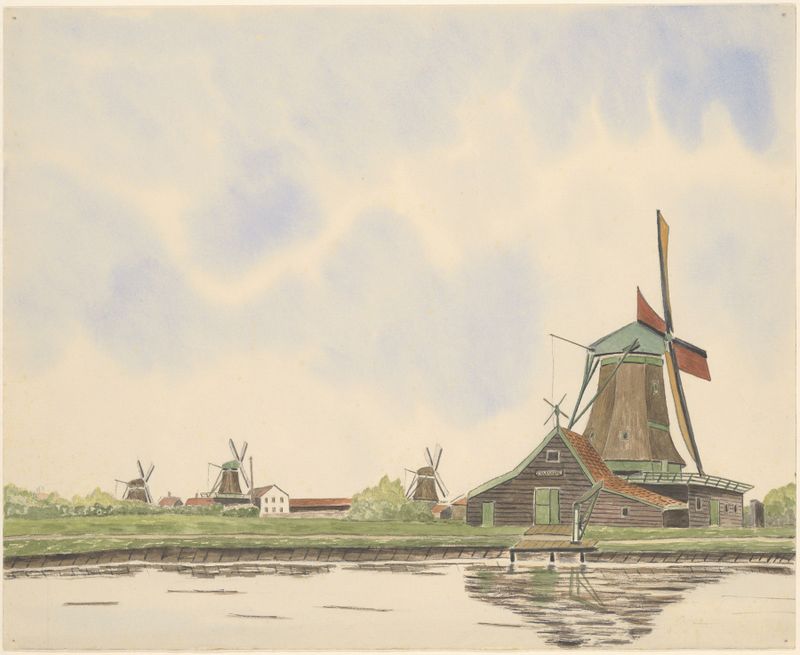
Oliemolen De Kerkuil aan de Zaan, met drie molens op de achtergrond. De Kerkuil stond binnendijks, tegenover de Wormerveerderkerk; afgebroken ca. 1892
Johannes Nicolaas Eijman
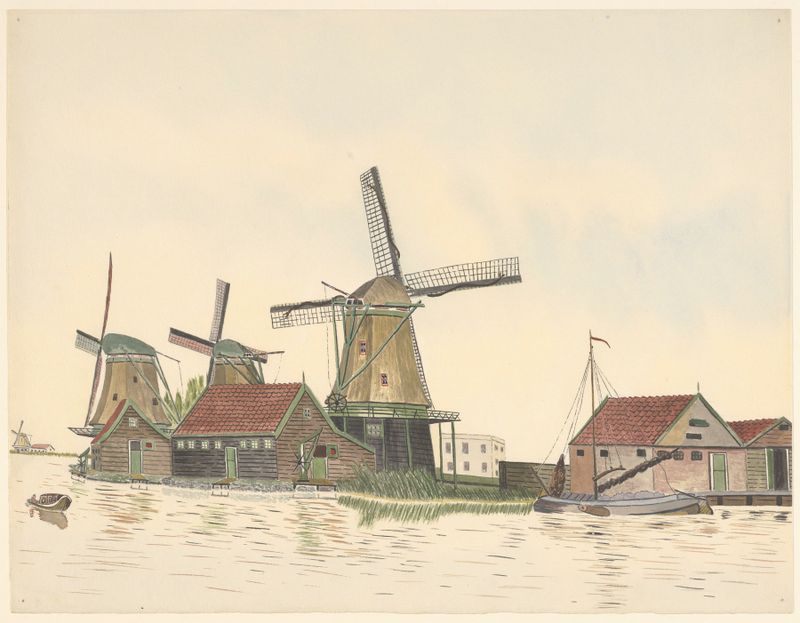
molens; De Ooievaar; De Windhond; De Gans, Kalverringdijk
Johannes Nicolaas Eijman
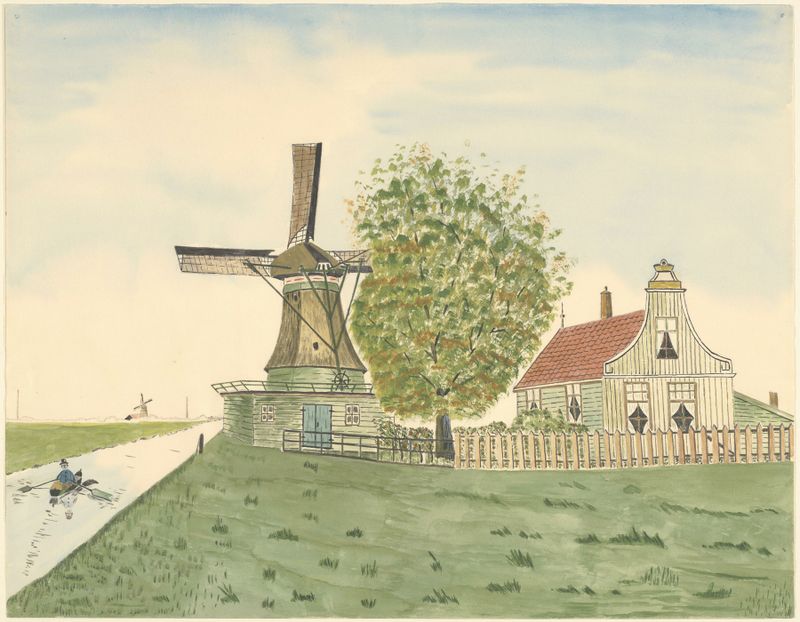
molens; houtzaagmolen De Haan
Johannes Nicolaas Eijman





