
Mondscheinlandschaft Mit Ruine (Moonlit Landscape) — History & Facts
Who listens when art speaks of silence? In the stillness of a moonlit night, longing emerges from the depths of our souls, whispering secrets known only to the stars. Look to the left, where the ruins stand solemn against a backdrop of radiant moonlight. The pale glow casts a silvery sheen over the crumbling stone, emphasizing the weight of history while evoking a tender beauty. Notice how the trees, cloaked in deep blues and greens, seem to lean toward the light, their silhouettes a delicate contrast to the luminous sky.
Böcklin’s meticulous brushwork draws the eye through the composition, creating a sense of depth and inviting the viewer to explore both the foreground and the ethereal horizon. In this tranquil landscape, one can perceive the tension between nature's beauty and the remnants of human endeavor. The ruins symbolize both decay and resilience, echoing desires that transcend time. The moon's embrace serves as a reminder of the passage of time, evoking nostalgia and an unfulfilled yearning for what has been lost.
These subtle contrasts whisper of deeper themes: the ephemeral nature of existence and our relentless pursuit of meaning amid the shadows of the past. Created in 1849, this painting emerged during a period of personal introspection for Böcklin, who was grappling with themes of life and death. Living in Switzerland, he sought to capture the enigmatic blend of nature and humanity, reflecting the Romantic spirit of the era. During this time, the art world was shifting, moving towards Symbolism, and his work resonated with these evolving ideas, cementing his place as a pivotal figure in 19th-century art.
More Artworks by Arnold Böcklin
Browse all →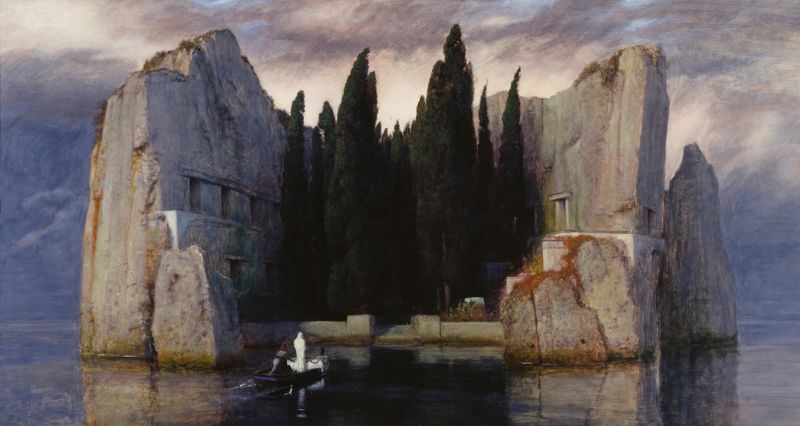
Die Toteninsel III
Arnold Böcklin
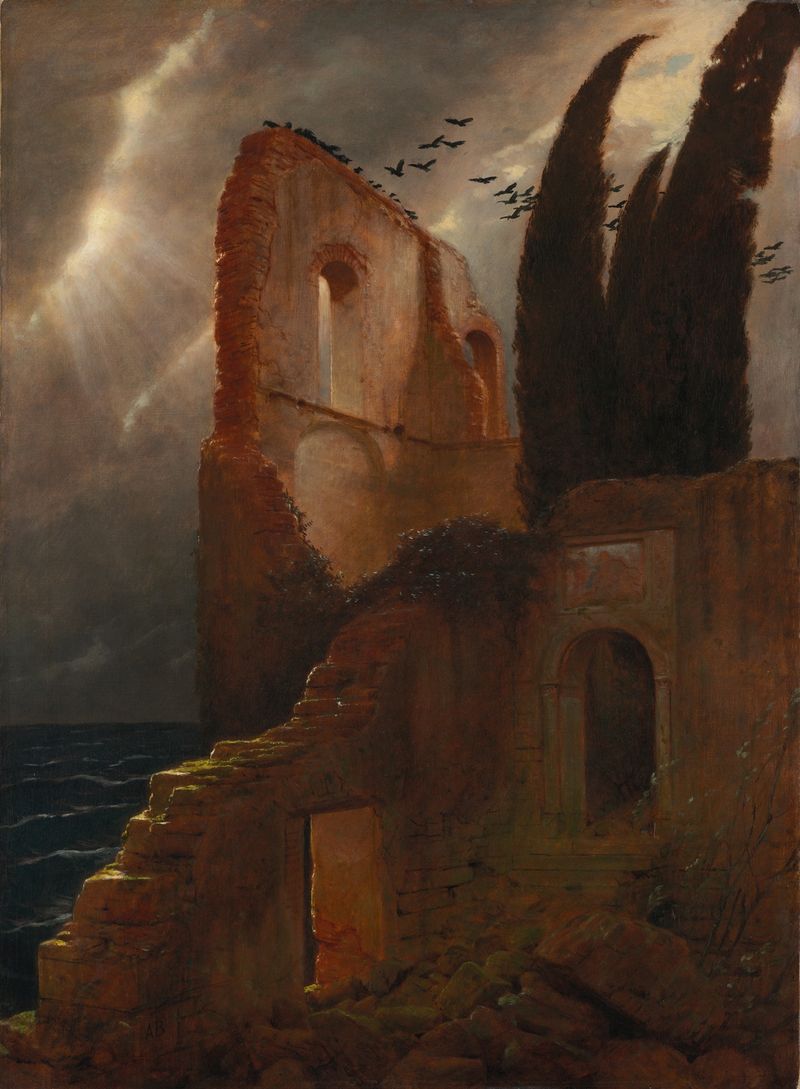
Ruin by the Sea
Arnold Böcklin
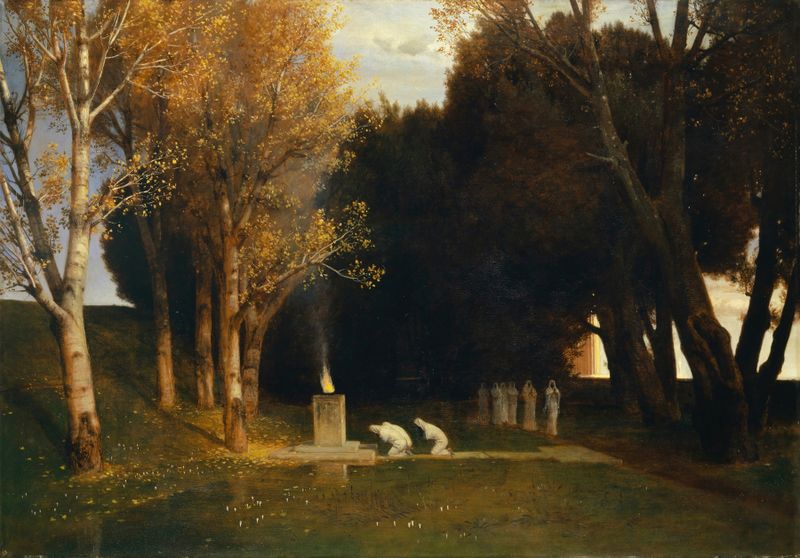
The Sacred Grove
Arnold Böcklin
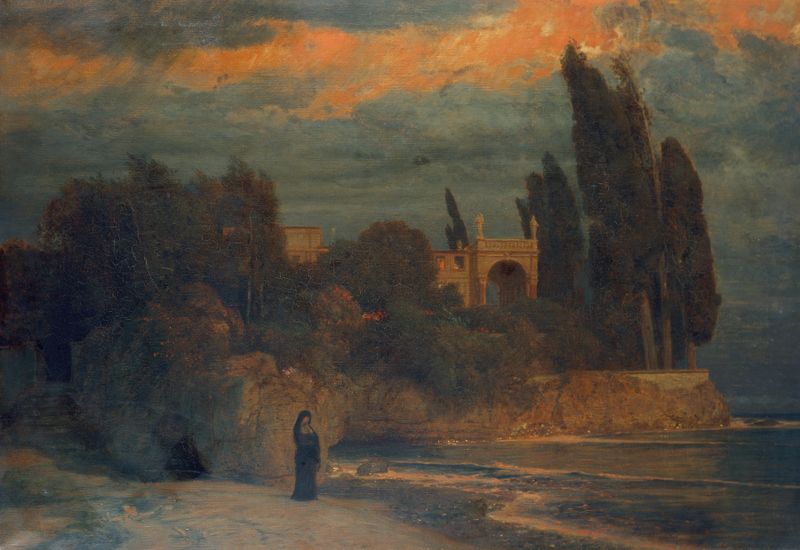
Villa by the Sea
Arnold Böcklin
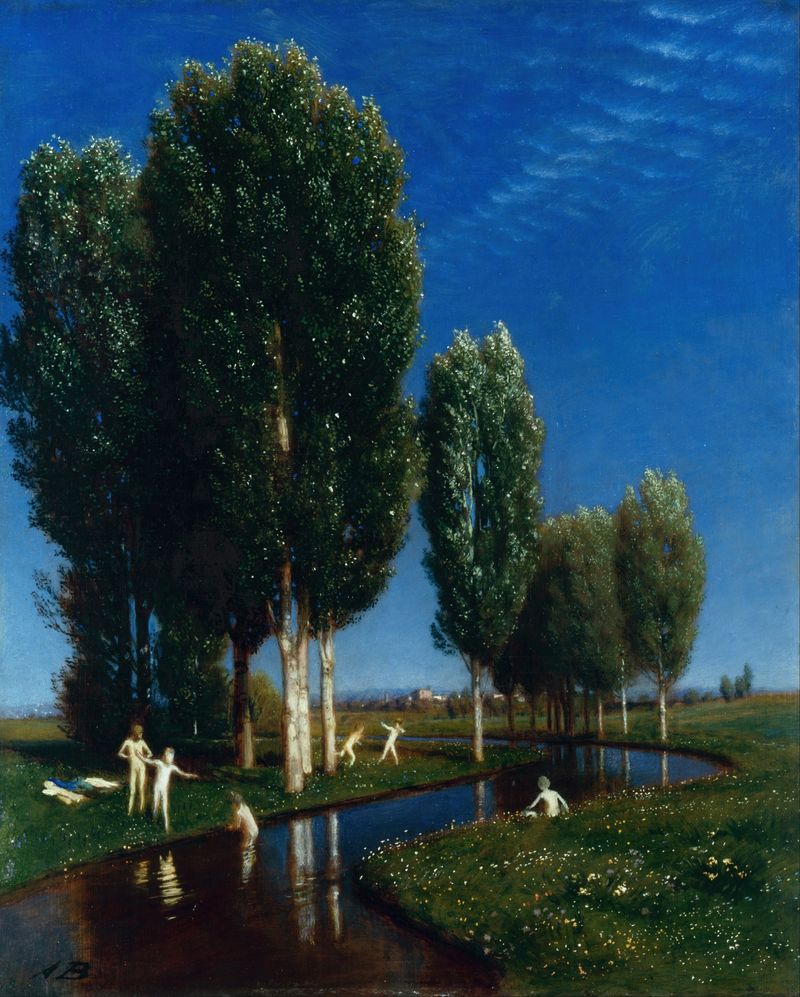
Summer Day
Arnold Böcklin
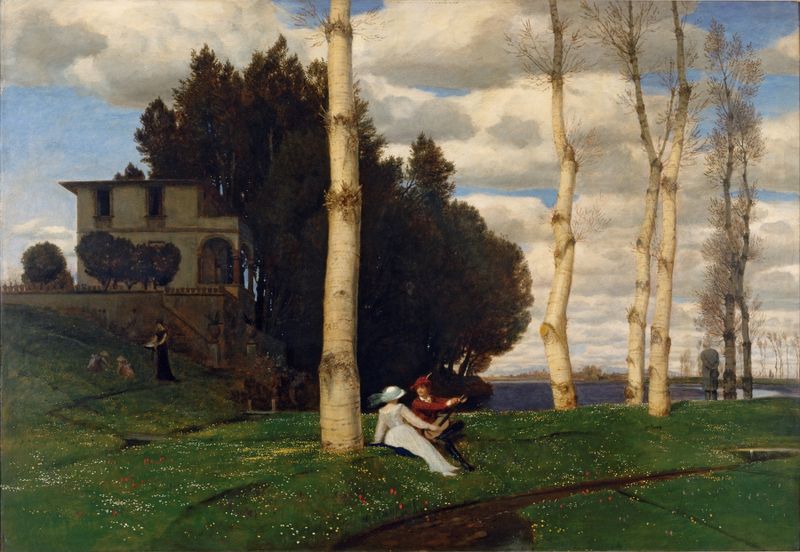
Spring Day (The Three Life Ages)
Arnold Böcklin
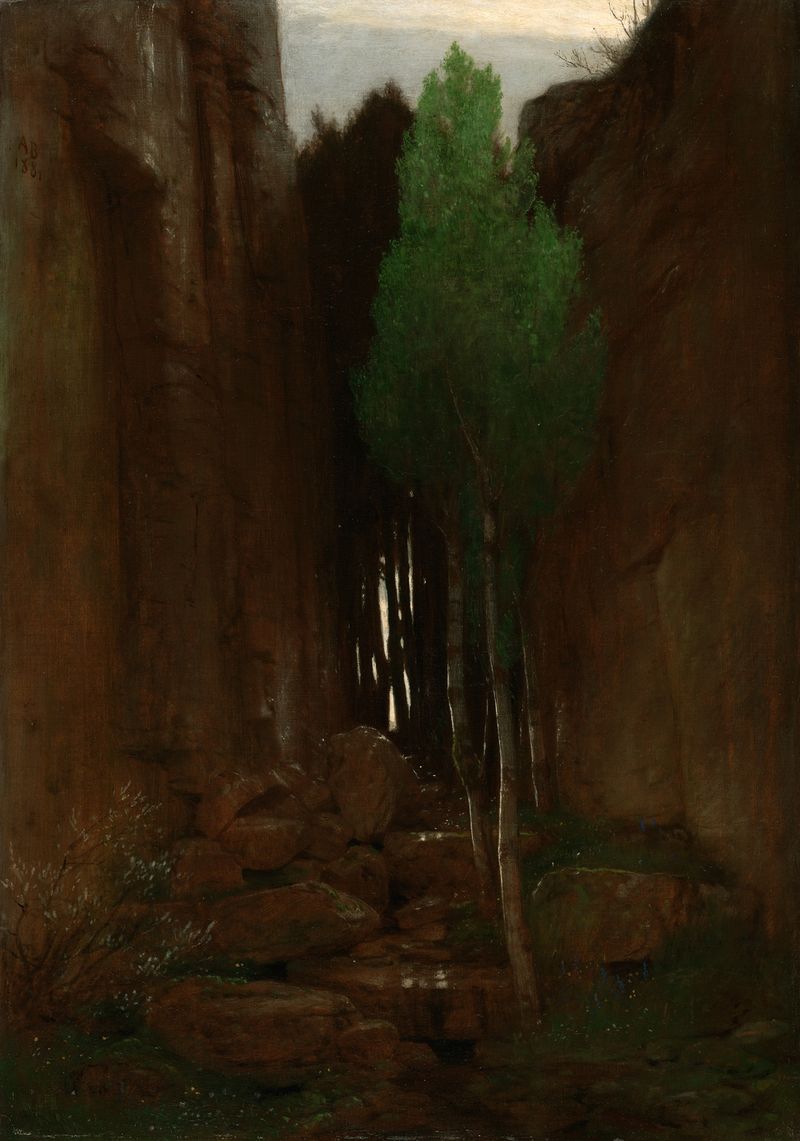
Spring in a Narrow Gorge (Quell in einer Felsschluct)
Arnold Böcklin
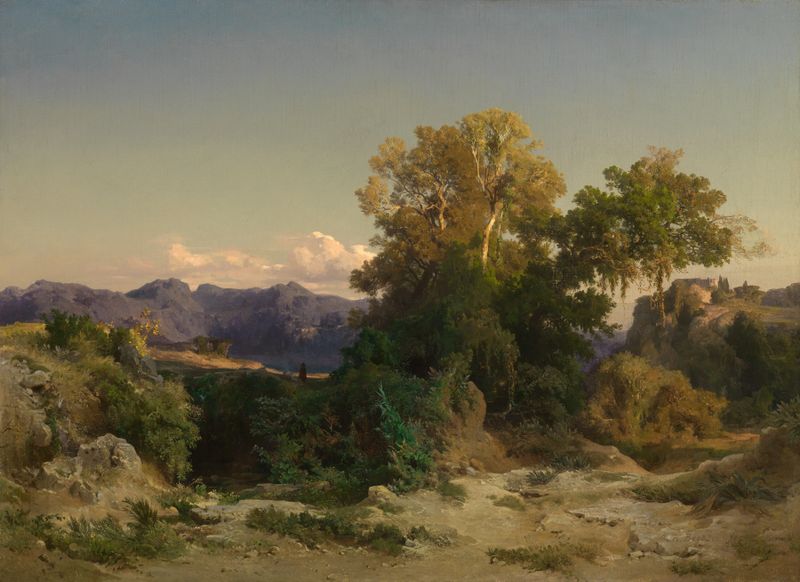
Landscape in the Roman Campagna
Arnold Böcklin
Landscape near Palestrina
Arnold Böcklin
High Mountain Landscape With Chamois
Arnold Böcklin





