
Monk Selling Ceremonial Tea Whisks — History & Facts
Where does light end, and longing begin? In the delicate interplay of shadows and highlights, Monk Selling Ceremonial Tea Whisks stirs a profound reflection on the ephemeral nature of existence. Look to the left at the monk, clad in subdued robes, his posture a blend of grace and humility. The soft yet purposeful strokes of Hokusai's brush create a harmonious balance in the composition, directing your gaze to the intricately crafted tea whisks before him, their delicate forms almost floating. Notice how the muted color palette evokes a sense of tranquility, while subtle hints of gold in the whisks catch the light, symbolizing the fleeting beauty of ritual and tradition. The scene offers layers of emotion, weaving in the tension between the monk’s serene demeanor and the bustling market life surrounding him, suggesting a moment suspended in time.
The whisks, while objects of art, also embody the transient moments of contemplation and connection through tea ceremonies — a reminder of mortality and the preciousness of each passing moment. Each element, from the monk's gentle expression to the carefully arranged whisks, speaks to the cycle of life and the rituals we cling to in its wake. Katsushika Hokusai created this piece around 1802 during a period marked by artistic innovation in Japan. Engaging in the ukiyo-e movement, he was capturing the essence of everyday life while simultaneously exploring themes of beauty and transience.
At this time, Japan was undergoing significant cultural shifts, and Hokusai's work reflected both reverence for tradition and a keen understanding of the human experience, blending the worldly with the spiritual.
More Artworks by Katsushika Hokusai
Browse all →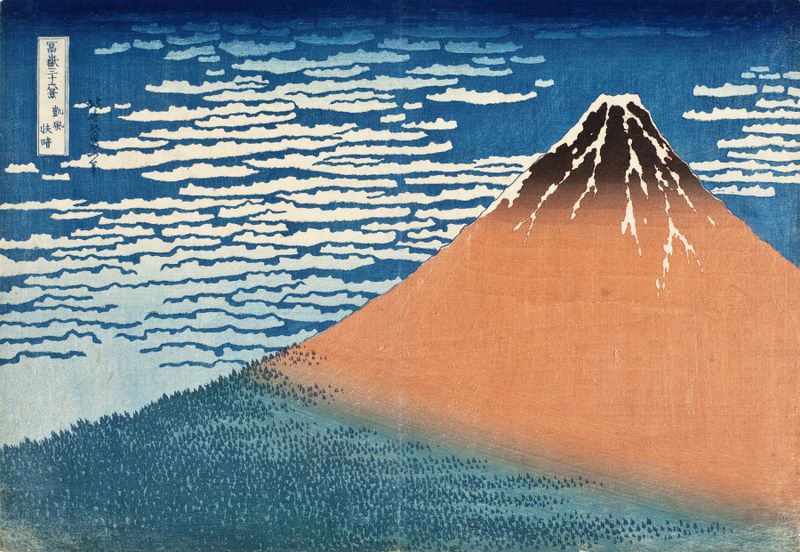
South Wind, Clear Dawn
Katsushika Hokusai

South Wind, Clear Weather
Katsushika Hokusai

Clear Weather with a Southerly Wind
Katsushika Hokusai
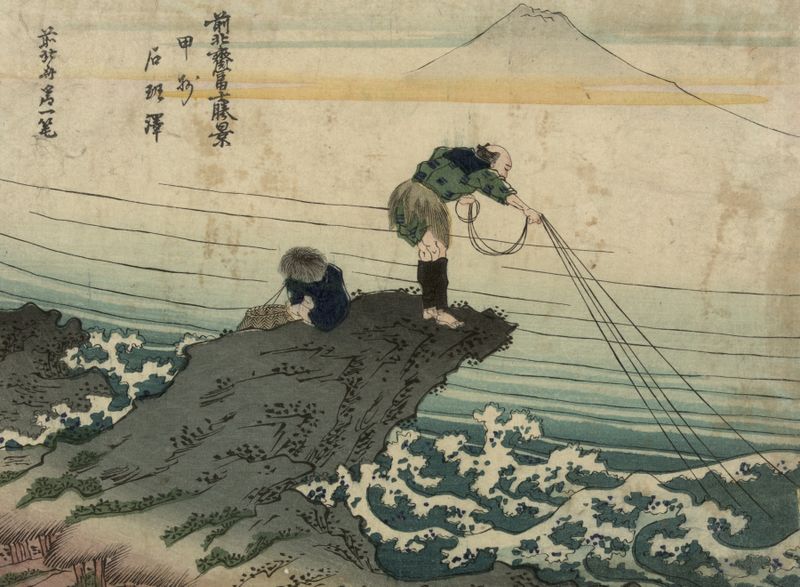
Kōshū kajikazawa
Katsushika Hokusai

Rainstorm beneath the Summit (Sanka Haku-u)
Katsushika Hokusai

Kōshū kajikazawa 2
Katsushika Hokusai
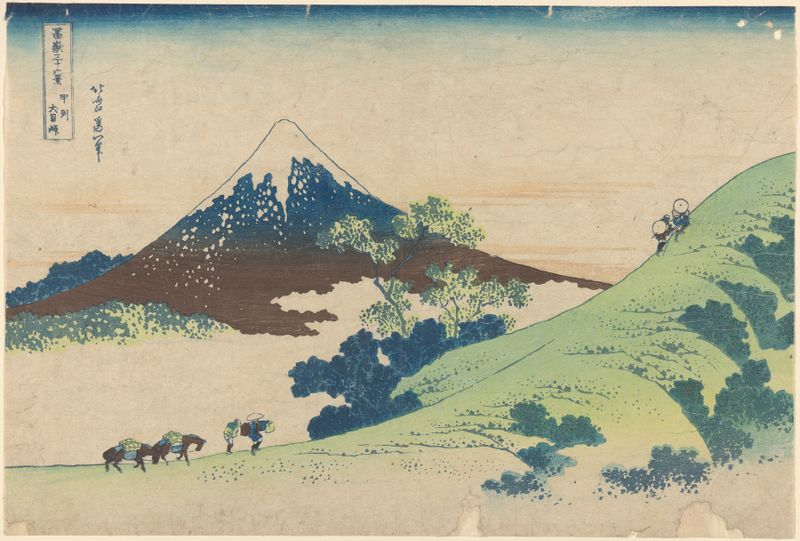
Inume Pass in Kai Province (Kôshû inume-tôge)
Katsushika Hokusai

Yoro Falls in Mino Province (Mino no Yoro no taki), from the series "A Tour of Waterfalls in Various Provinces (Shokoku taki meguri)"
Katsushika Hokusai
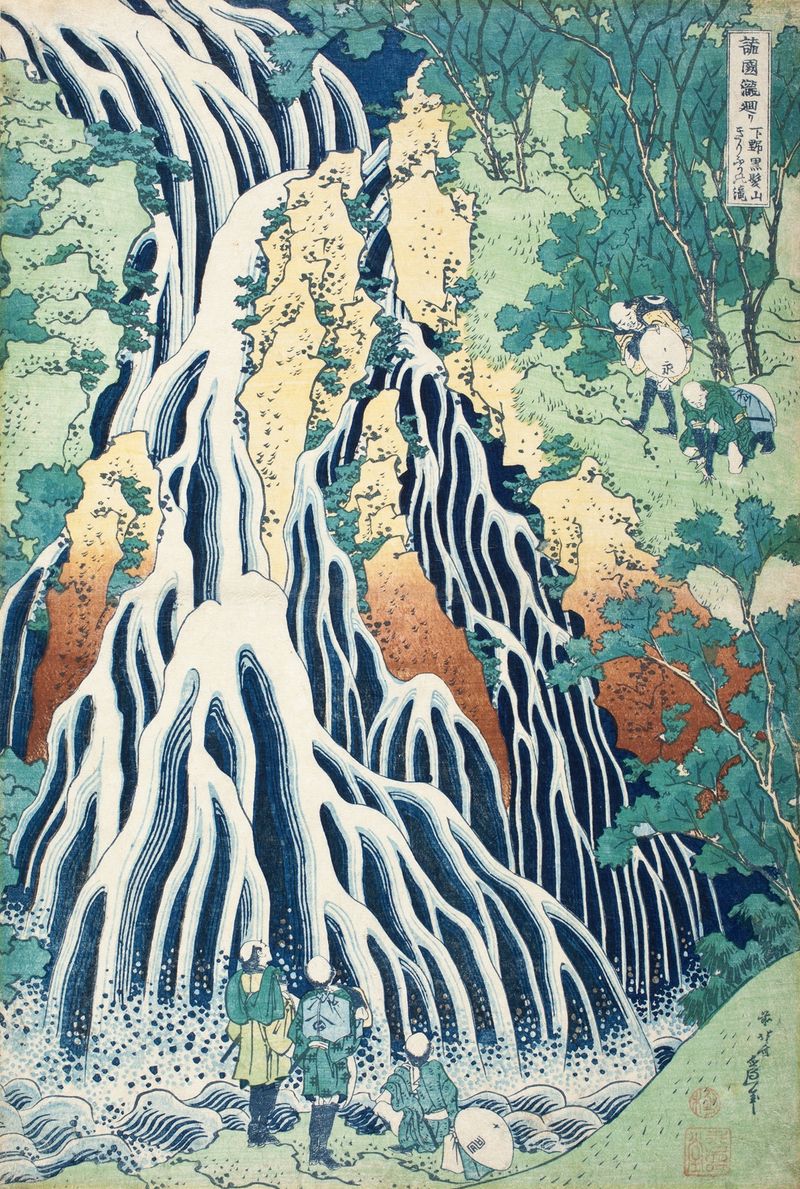
Falls of Kirifuri at Mt. Kurokami, Shimotsuke Province
Katsushika Hokusai
Onden no suisha
Katsushika Hokusai





