
Montauk Fisherman — History & Facts
In Montauk Fisherman, a moment of serenity unfurls, inviting viewers to explore the tranquil intersection of nature and labor. Look to the right at the fisherman, his figure emerging from the soft pastels of blues and greens that define the landscape. Notice how the gentle brushstrokes evoke both the fluidity of the sea and the steadfastness of the man. The light dances on the water’s surface, illuminating the scene with a warm glow, while shadows cradle the edges, creating a delicate balance between presence and absence.
The composition draws the eye naturally to the horizon, where sky and sea merge, invoking a sense of vastness and solitude. The emotional tension lies in the juxtaposition of the fisherman’s toil against the serene backdrop of Montauk’s coastline. His focused gaze hints at an inner world, where the struggle of nature meets the peace of solitude. The color palette, dominated by muted earth tones contrasted with the bright hues of the boat, reflects the duality of life — the labor that sustains and the quiet moments that replenish.
Each element invites deeper contemplation on the themes of existence and the connection between man and his environment. In 1921, Childe Hassam painted Montauk Fisherman during a period when American artists were increasingly exploring regionalism and identity. Living in New England, he found inspiration in the coastal landscapes that surrounded him, striving to capture both the beauty and the enduring spirit of the everyday life of fishermen. At this time, the art world was shifting, yet Hassam remained devoted to the impressionistic approach that defined his earlier works, bridging tradition and modernity.
More Artworks by Childe Hassam
Browse all →
Beach at Newport
Childe Hassam

Washington Arch, Spring
Childe Hassam

Thaxter’s Garden
Childe Hassam

New England Headlands
Childe Hassam

Rocks At Appledore, Morning
Childe Hassam
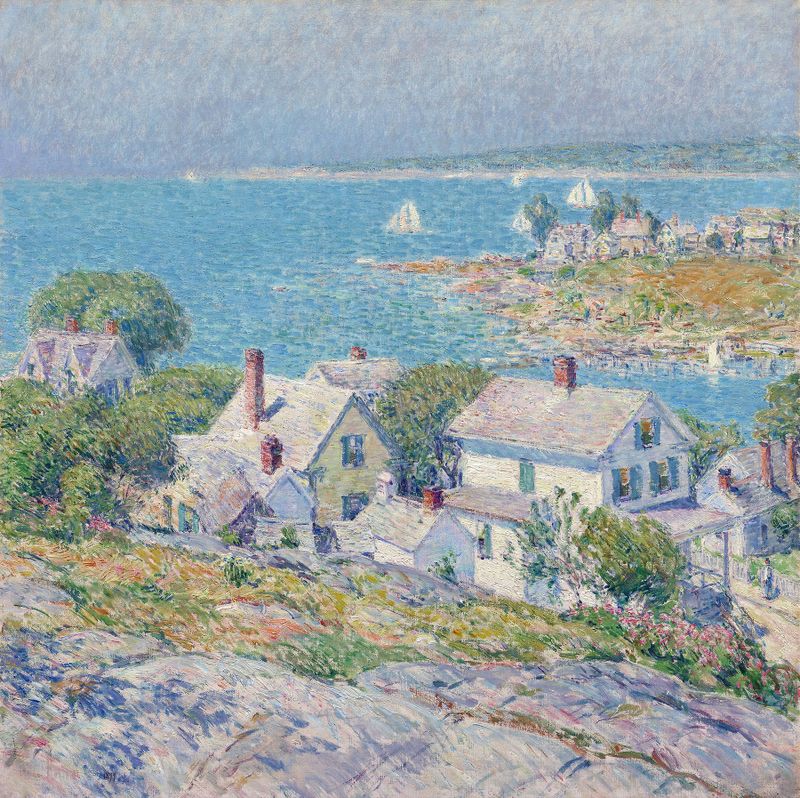
New England Headlands
Childe Hassam
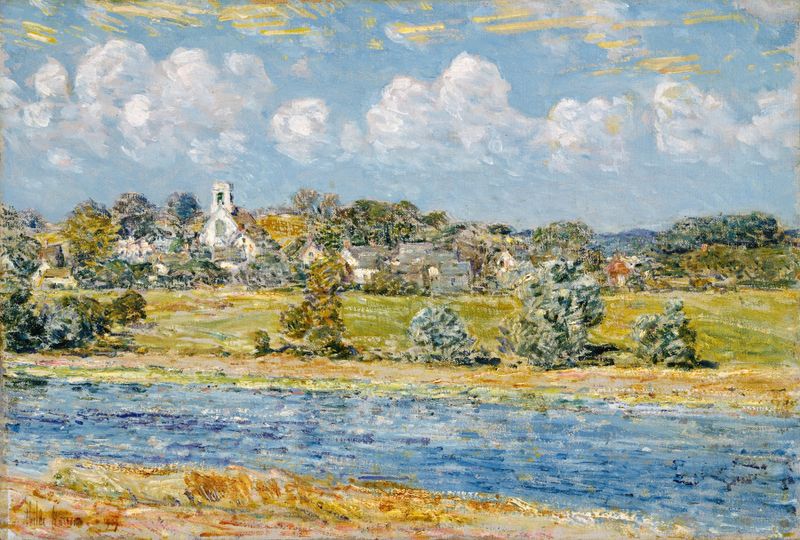
Landscape at Newfields, New Hampshire
Childe Hassam

Piazza di Spagna, Rome
Childe Hassam

The Harbor
Childe Hassam

Late Afternoon, New York, Winter
Childe Hassam





