Montmartre (angle de la rue des Saules et de la rue de l’Abreuvoir) — History & Facts
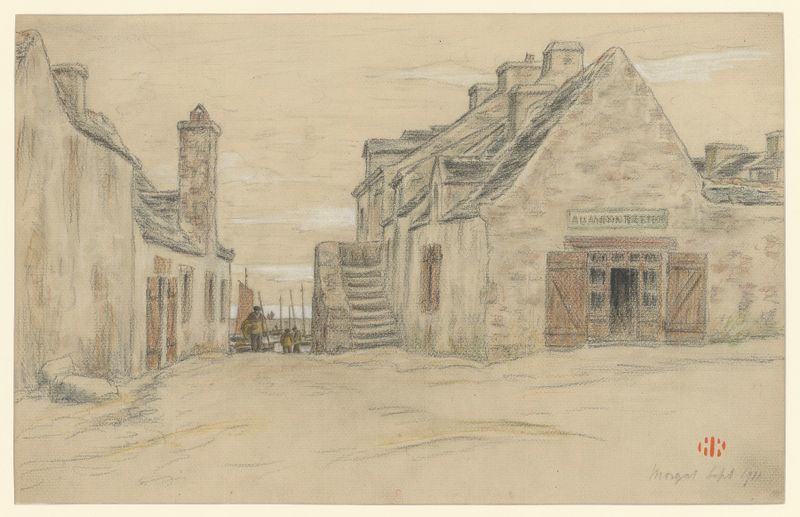
As dawn breaks, the gentle brushstrokes of Henri Rivière awaken a moment suspended in time, inviting viewers to step into a world where the vibrancy of life mingles with a sense of stillness. This intersection in Montmartre does not merely depict a locale; it captures the essence of awakening, where the city breathes softly and secrets linger in the air. Focus first on the cascading colors that define the scene—warm ochres and delicate blues coalesce in a harmonious dance. Notice how the light falls upon the cobblestones, creating fleeting reflections that suggest the promise of a new day.
The buildings, with their quaint charm, lean slightly inward, almost conspiratorially, as if sharing stories of the past whispered along the narrow streets. Rivière’s technique, a blend of impressionistic strokes and meticulous detail, invites the eye to wander, revealing the complex interplay between shadow and luminosity. In this tranquil moment, layers of meaning unfold. The juxtaposition of the rustic architecture against the ethereal sky symbolizes the coexistence of the everyday and the sublime.
The quietude of the scene speaks to the artist’s deep connection with nature and urban life, while the narrow alleyways hint at the often overlooked beauty in the mundane—a reminder of how life awakens in the most unexpected corners. Each brushstroke captures not just a place, but the emotional resonance of a city at dawn. Rivière created this work in 1921, during a time of significant artistic transition in France. Living in Montmartre, he was deeply influenced by the vibrant avant-garde movements and the lingering echoes of post-Impressionism.
As the world recovered from the ravages of war, artists sought new expressions, and Rivière’s dedication to capturing the intimate essence of his surroundings reflects a broader cultural awakening, bridging the gap between the past and the burgeoning modernity of the era.