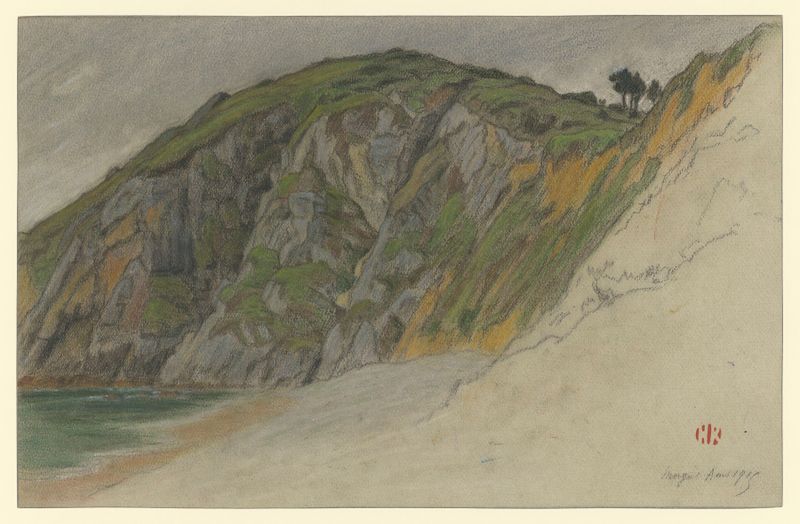
Montmartre (rue Cortot) — History & Facts
Can beauty exist without sorrow? In Montmartre (rue Cortot), this question lingers in the air, enveloped by the echoes of a vibrant yet melancholic Parisian street. It captures a moment where the allure of artistry clashes with the underlying pulse of human betrayal and loss, revealing the fragility hidden within the seemingly idyllic. Look to the left at the gentle curve of the cobblestone street, leading the eye into a world that feels both inviting and distant. Notice how the soft palette of muted blues and warm ochres creates a harmony that draws you in, while the delicate brushstrokes breathe life into the buildings.
The play of light against the facades reveals intricate shadows, suggesting stories untold and emotions unspoken. Each element is carefully positioned, inviting you to explore a quiet, yet charged atmosphere. As you delve deeper into the painting, consider the figures strolling along the street, their postures hinting at connections felt but not quite realized. The woman in a flowing dress, seemingly lost in thought, evokes a sense of longing and potential betrayal, her gaze directed elsewhere, as if she pines for something—or someone—beyond the frame.
This tension between the serene beauty of the scene and the undercurrents of inner turmoil reflects the artist's keen insight into the complexities of human relationships. Created in 1923, this work emerged during a transformative period for Henri Rivière, a time when the world was grappling with the aftermath of the First World War and the burgeoning modernist movement. Living in Paris, a city filled with aspiring artists and profound cultural shifts, Rivière’s own experiences shaped his perspective, allowing him to capture the duality of beauty and sorrow with exquisite sensitivity in his depictions of urban life.