
Moonlight on the Viga Canal) - HH (monogram) LCCN0065 — History & Facts
The hush of twilight is what first captures the eye, as silhouettes of travelers and trees parade across the banks of the Viga Canal, their forms doubled in the glassy water below. The moon hangs low, caught between the trunks, casting a pale glow that turns the sky from indigo to a faint blush. Each figure, some burdened with baskets, others simply walking, seems both part of a communal journey and lost in private thought.
The artist’s use of reflection is not just a technical feat—it draws the viewer into a world where reality and its mirror are equally weighted, blurring the line between the physical and the imagined. The hats and shawls, rendered in bold shadow, root the scene in a specific place and time, while the gentle gradation of color suggests a fleeting moment, soon to be swallowed by night. Created in 1912 as a color woodcut on delicate tissue paper, Moonlight on the Viga Canal belongs to a period when Western artists were deeply influenced by Japanese printmaking, evident in the flattened perspective and careful layering of hues. Works like this were often made for collectors eager to capture the atmosphere of distant places, at a time when travel itself was becoming newly possible for some.
The artist, Helen Hyde, was known for her sensitive depictions of everyday life, and here she turns an ordinary evening into a quiet procession, inviting the viewer to imagine the stories of each figure. History has kept few traces of this particular print, now preserved in the Library of Congress, but the sense of shared solitude it conjures remains immediate—urging us to look again at the moonlit water and the silent march along its edge.
More Artworks by Helen Hyde
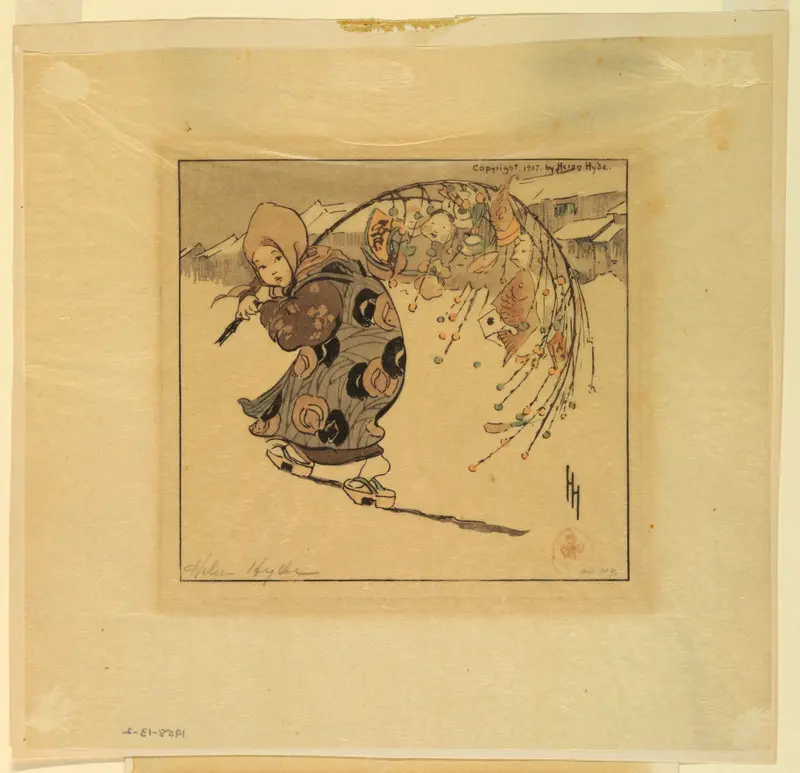
Print, The Good Luck Branch
Helen Hyde
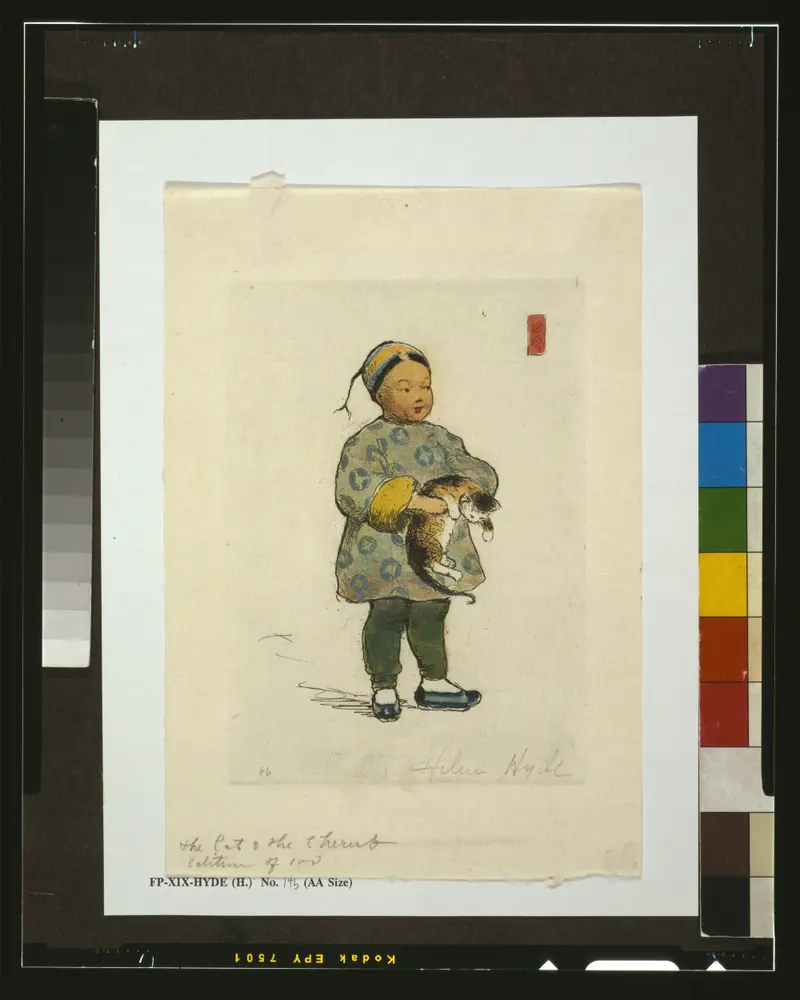
The cat and the cherub LCCN200367
Helen Hyde

Hon(orable Mr) cat - HH (monogram). LCCN200367
Helen Hyde
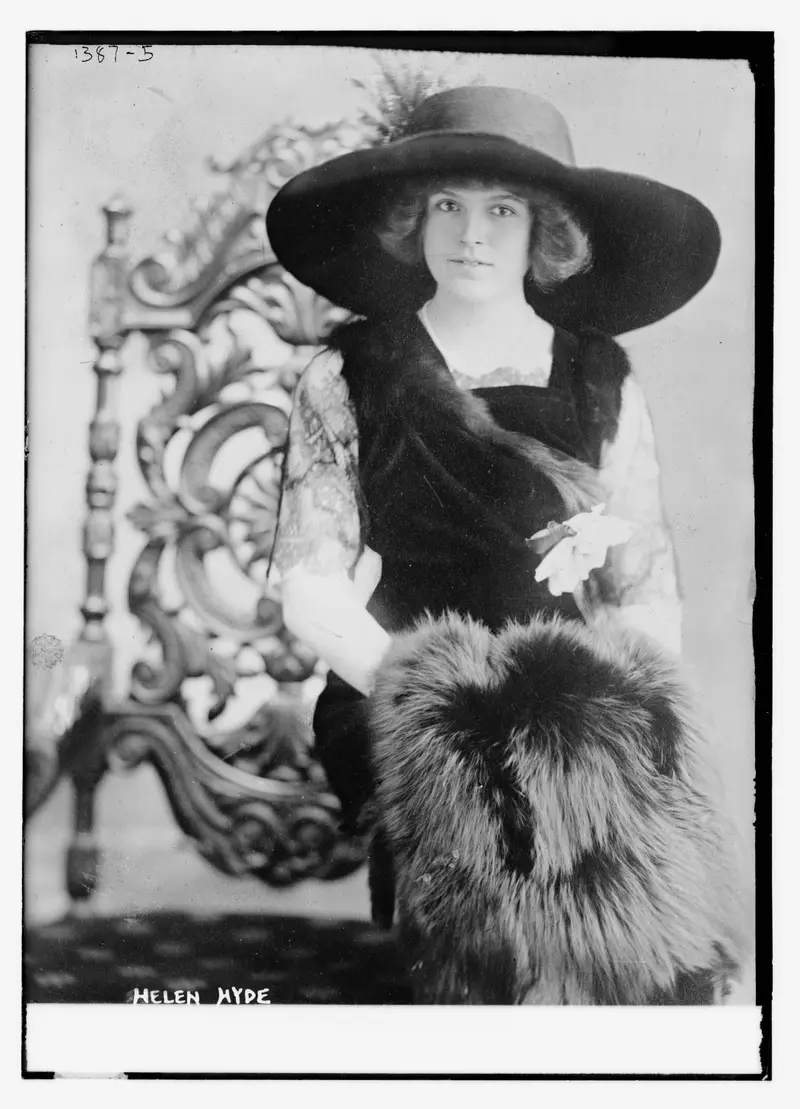
Helen Hyde LCCN201468
Helen Hyde
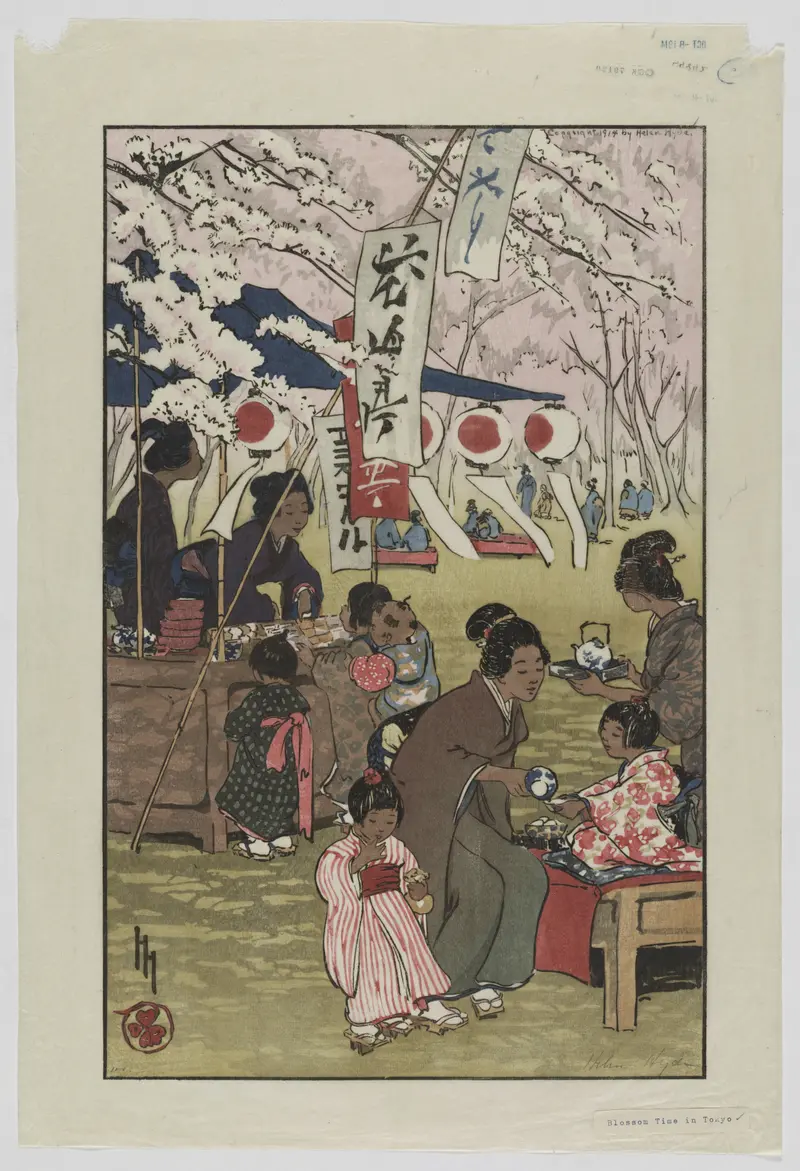
Blossom time in Tokyo) - HH (monogram) LCCN0065
Helen Hyde
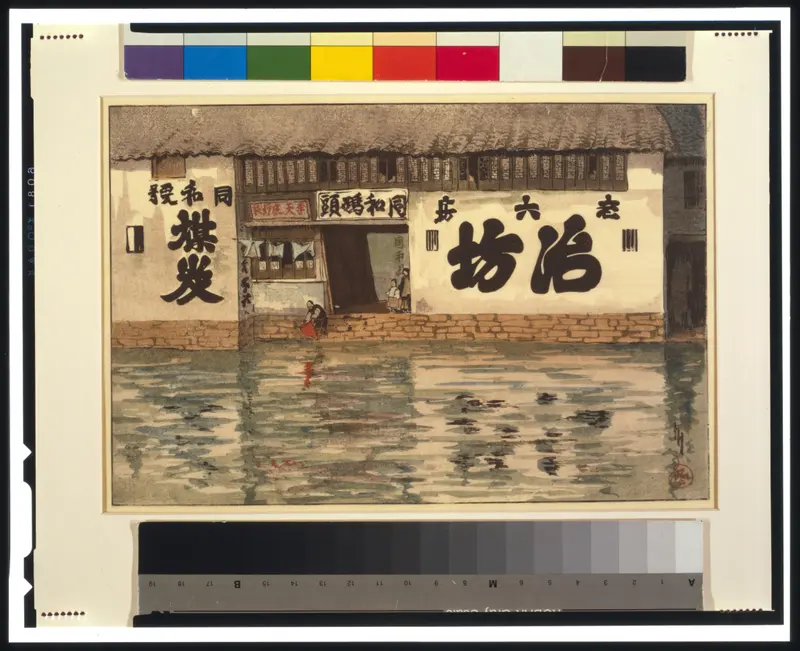
The sauce-pan shop) - HH (monogram) LCCN0065
Helen Hyde

New Year's Day in Tokyo
Helen Hyde
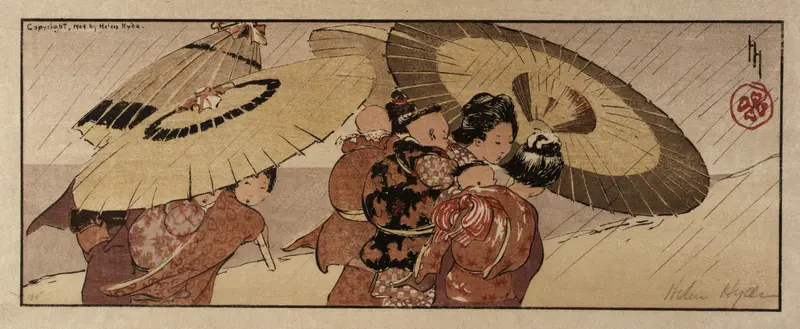
A Summer Shower
Helen Hyde
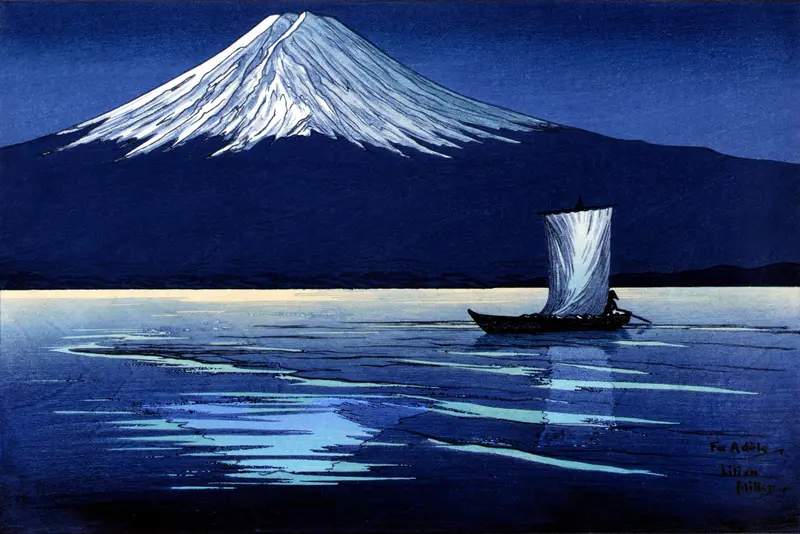
Moonlight on Mt. Fuji
Helen Hyde
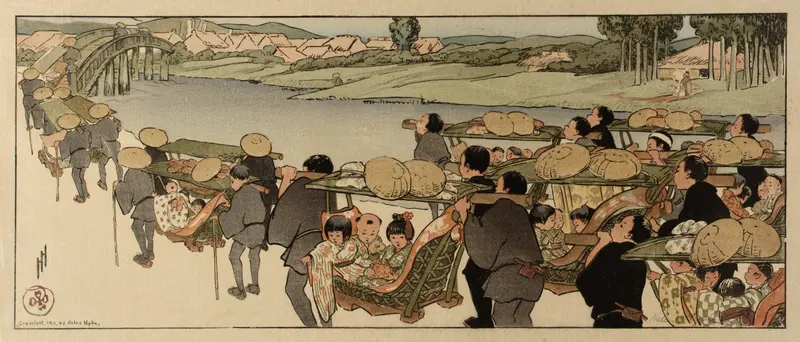
Going to the Fair
Helen Hyde
More Landscape Art

The Starry Night
Vincent van Gogh

View of Delft
Johannes Vermeer

Water Lilies
Claude Monet

The Grand Canal, Venice, looking north-west from the Ca' Corner to the Ca' Contarini degli Scrigni, with the campanile of Santa Maria della Carità
Canaletto

Windsor Castle
Canaletto

The Grand Canal looking North-East from the Palazzo Dolfin-Manin to the Rialto Bridge
Canaletto