
The sauce-pan shop) - HH (monogram) LCCN0065 — History & Facts
A shopfront stands quietly above a glassy flood, its bold black characters mirrored and blurred in the water below. The scene draws the eye not to grand drama but to the subtle choreography of everyday life interrupted: a woman in a red apron leans to fill her pail, while another figure steadies herself in the doorway, the threshold between dry safety and the encroaching flood. The muted palette—soft browns, greys, and the gentle blue-green of the water—lends a hush to the moment, while the crisp calligraphy and the careful geometry of the architecture anchor the composition.
The water’s surface, rippling with reflections, becomes a second canvas, distorting the world above and hinting at the quiet resilience of those within. Created in 1908 as a color woodcut on delicate white wove tissue paper, The sauce-pan shop by Helen Hyde belongs to a period when Western artists were captivated by Japanese printmaking and everyday urban scenes. Hyde, an American artist who lived for years in Japan, became known for her sensitive depictions of daily life, often focusing on women and children in domestic or market settings. Works like this were collected by Western admirers eager for glimpses of a rapidly changing East Asia, and by Japanese patrons who appreciated the respectful attention to their own traditions.
History has kept few traces of this specific print’s journey, but its survival in the Library of Congress invites us to linger over the quiet drama of ordinary lives, reflected and refracted through water and woodblock ink.
More Artworks by Helen Hyde

Moonlight on the Viga Canal) - HH (monogram) LCCN0065
Helen Hyde
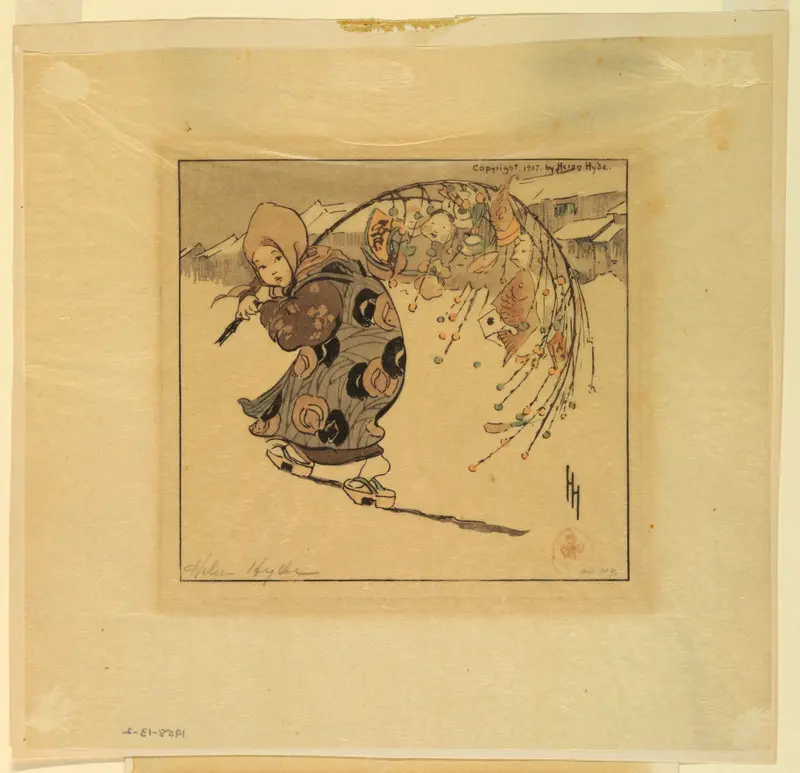
Print, The Good Luck Branch
Helen Hyde
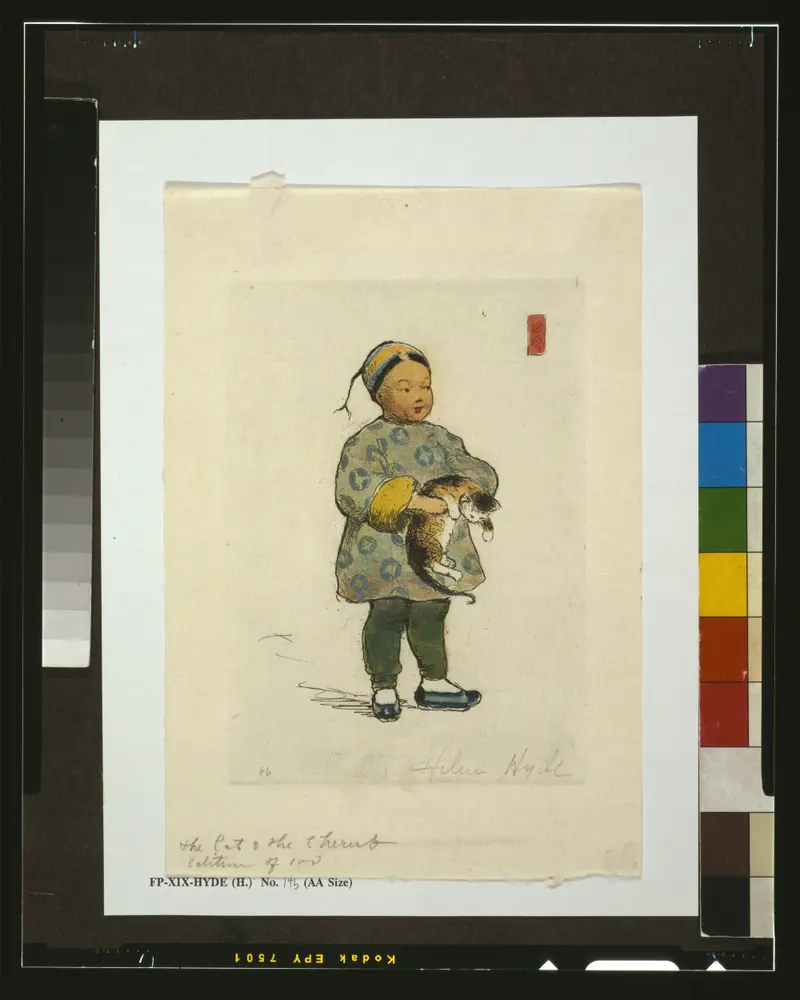
The cat and the cherub LCCN200367
Helen Hyde

Hon(orable Mr) cat - HH (monogram). LCCN200367
Helen Hyde
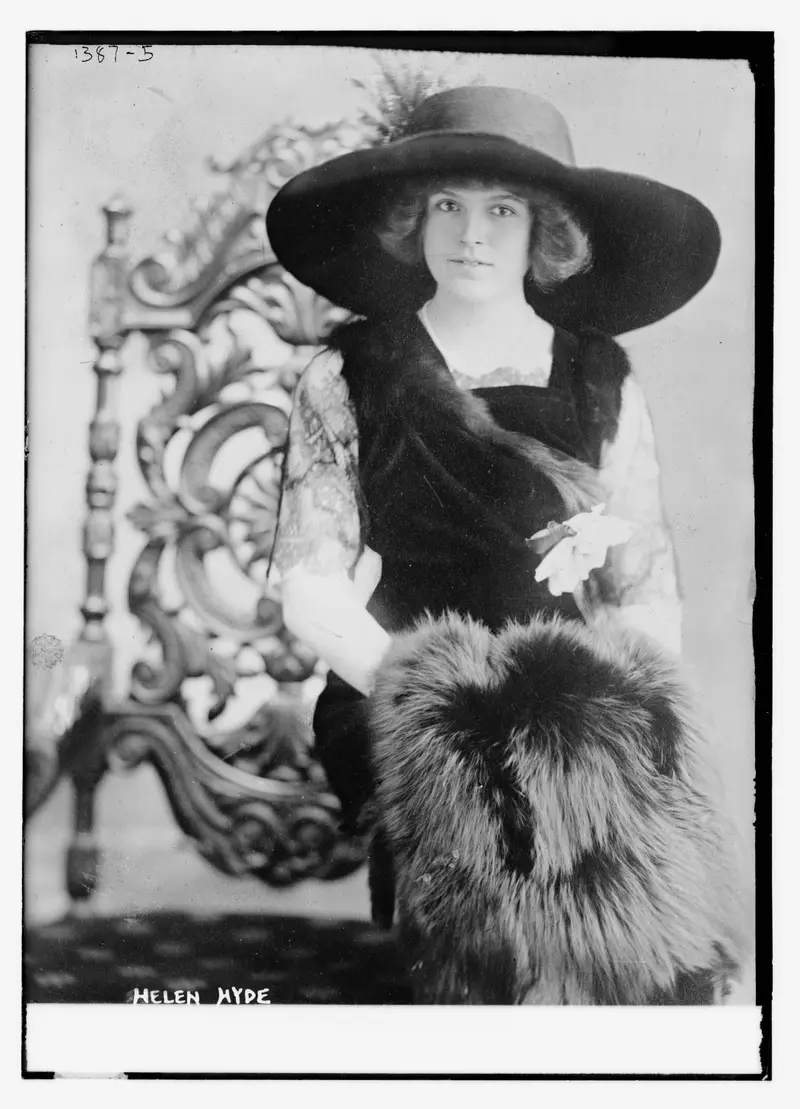
Helen Hyde LCCN201468
Helen Hyde
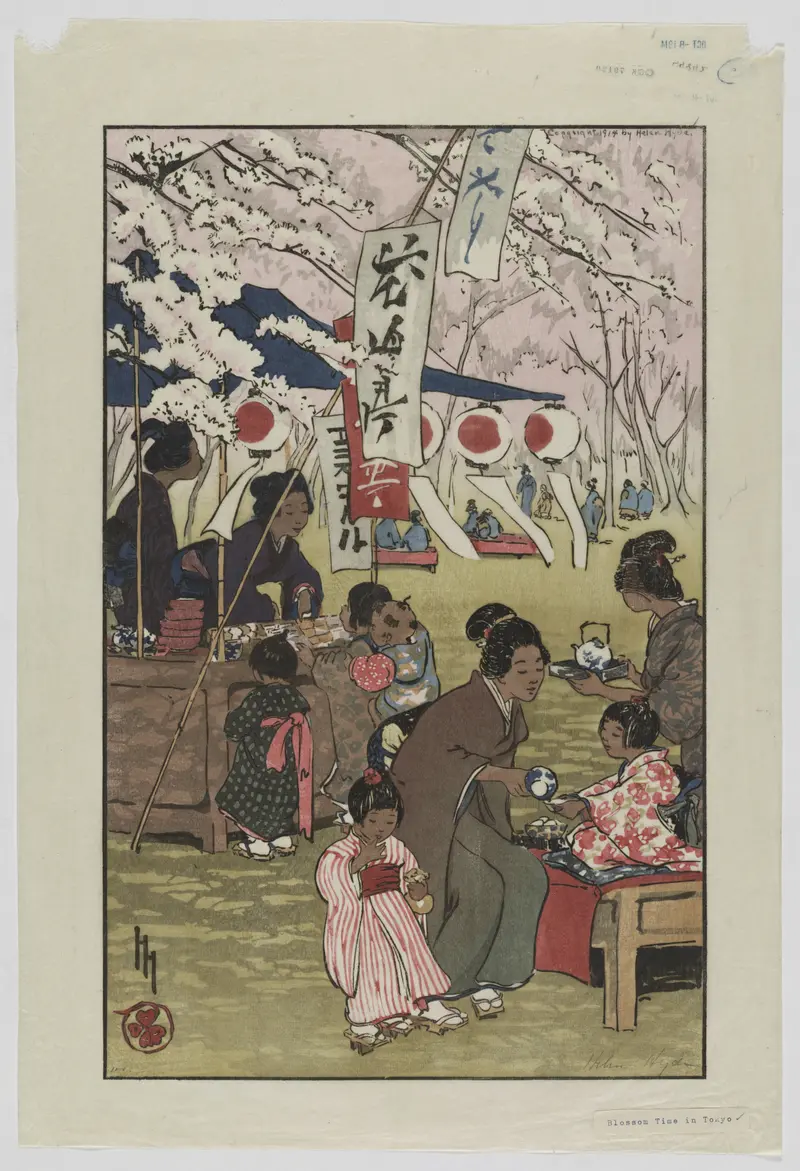
Blossom time in Tokyo) - HH (monogram) LCCN0065
Helen Hyde

New Year's Day in Tokyo
Helen Hyde
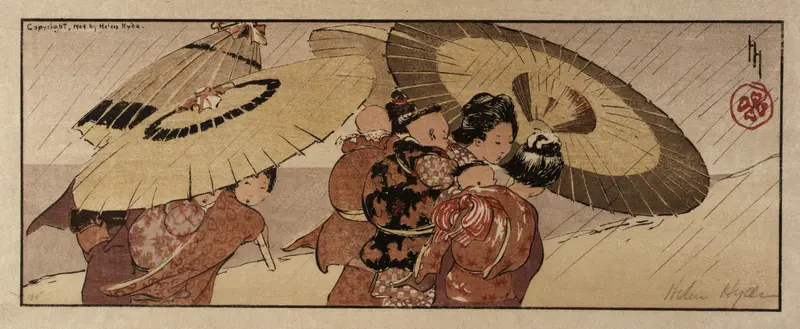
A Summer Shower
Helen Hyde
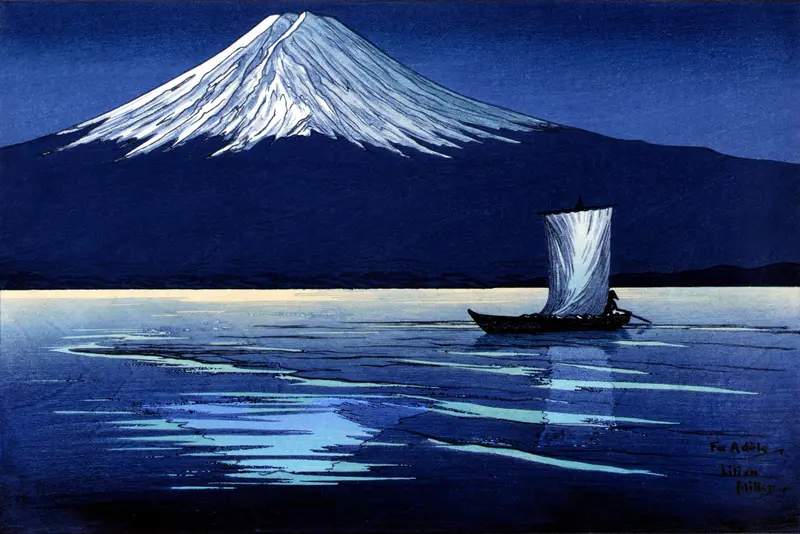
Moonlight on Mt. Fuji
Helen Hyde
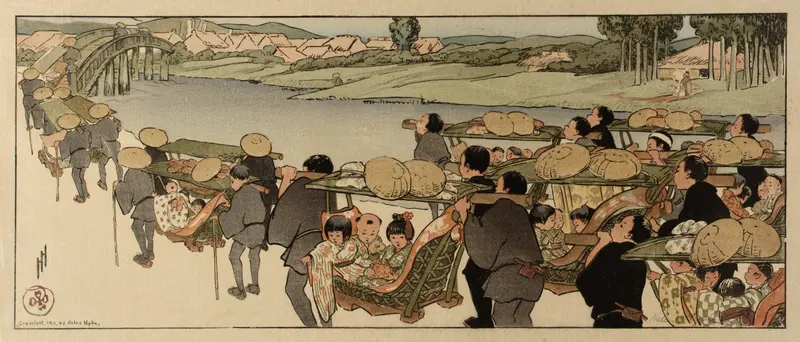
Going to the Fair
Helen Hyde
More Genre Scene Art

Banquet of the Officers of the St George Civic Guard
Frans Hals

Rembrandt and Saskia in the Scene of the Prodigal Son
Rembrandt van Rijn

Bal du moulin de la Galette
Pierre-Auguste Renoir

Quadrille at the Moulin Rouge
Henri de Toulouse-Lautrec

A Burial at Ornans
Gustave Courbet

When Will You Marry?
Paul Gauguin