
Print, The Good Luck Branch — History & Facts
A swirl of delicate color arcs through the pale winter air, and at its source stands a child bundled in a patterned kimono, clutching a slender branch festooned with ornaments. The eye is pulled immediately to the movement: the branch sweeps upward, scattering tiny, bright decorations that seem to hover in the stillness, each bead and paper fish a small promise of luck. The child’s downcast gaze and careful grip invite us into a moment of private ritual, a gesture both playful and reverent.
The muted palette—soft browns, creams, and the gentle blush of the ornaments—creates a hush, as if the world has paused to watch this simple act. Works like this by Helen Hyde—an American artist who immersed herself in Japanese printmaking at the turn of the twentieth century—capture a world in transition. By 1907, when this print was made, Western artists were eagerly learning from Japanese woodblock traditions, and Hyde was among the few women to gain recognition in that field. Such prints were often collected as tokens of fascination with Japanese customs, and they reflect a period when everyday scenes and seasonal rituals became worthy subjects for art.
Though little is recorded about the journey of The Good Luck Branch itself, its survival in a catalog photo reminds us how these quiet moments, caught on paper, continue to invite viewers into their gentle orbit.
More Artworks by Helen Hyde

Moonlight on the Viga Canal) - HH (monogram) LCCN0065
Helen Hyde
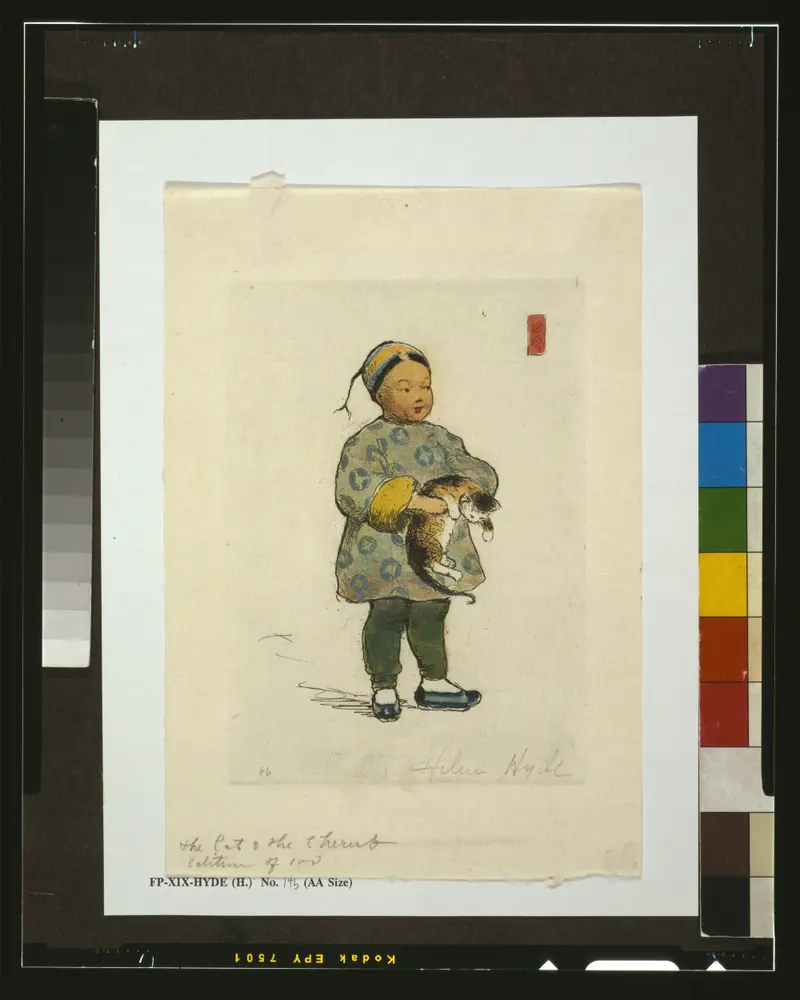
The cat and the cherub LCCN200367
Helen Hyde

Hon(orable Mr) cat - HH (monogram). LCCN200367
Helen Hyde
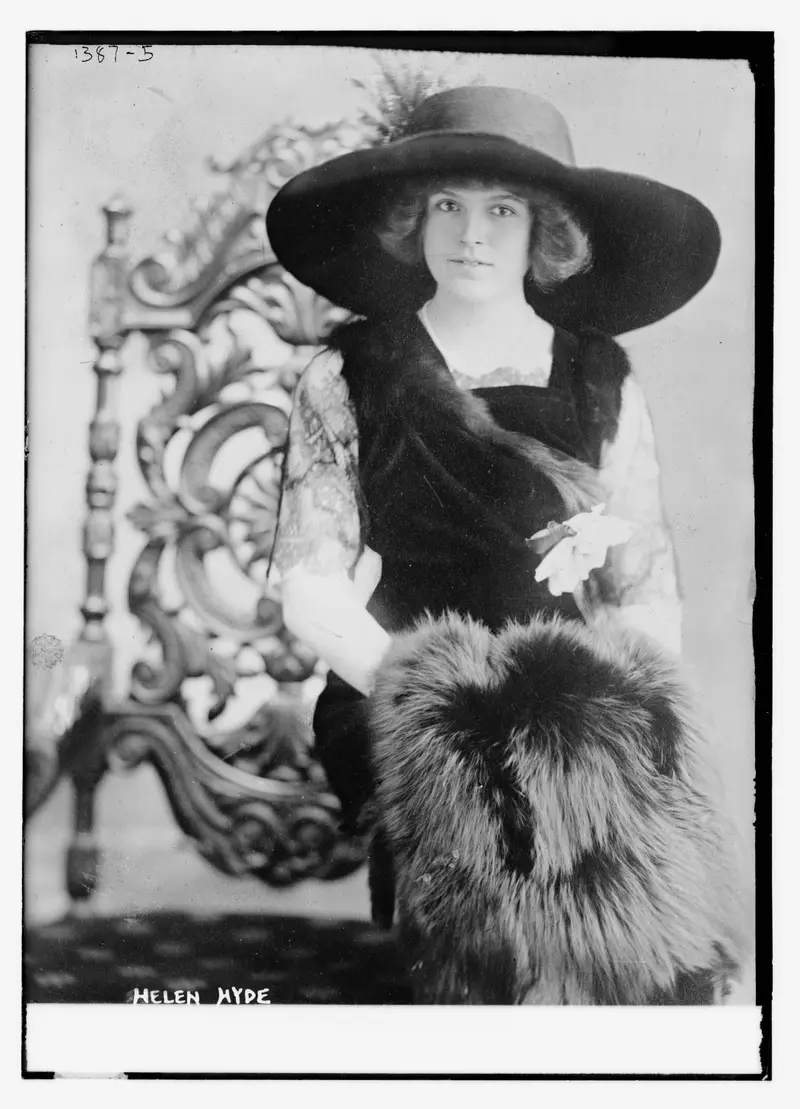
Helen Hyde LCCN201468
Helen Hyde
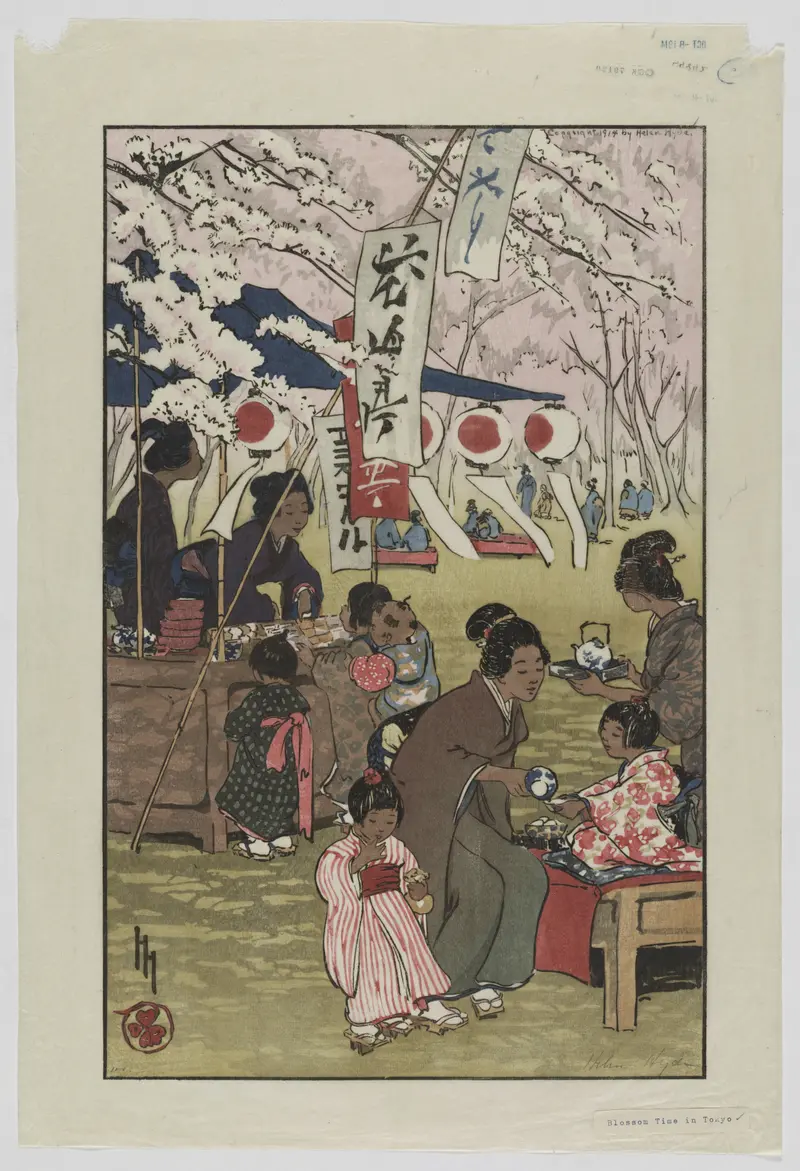
Blossom time in Tokyo) - HH (monogram) LCCN0065
Helen Hyde
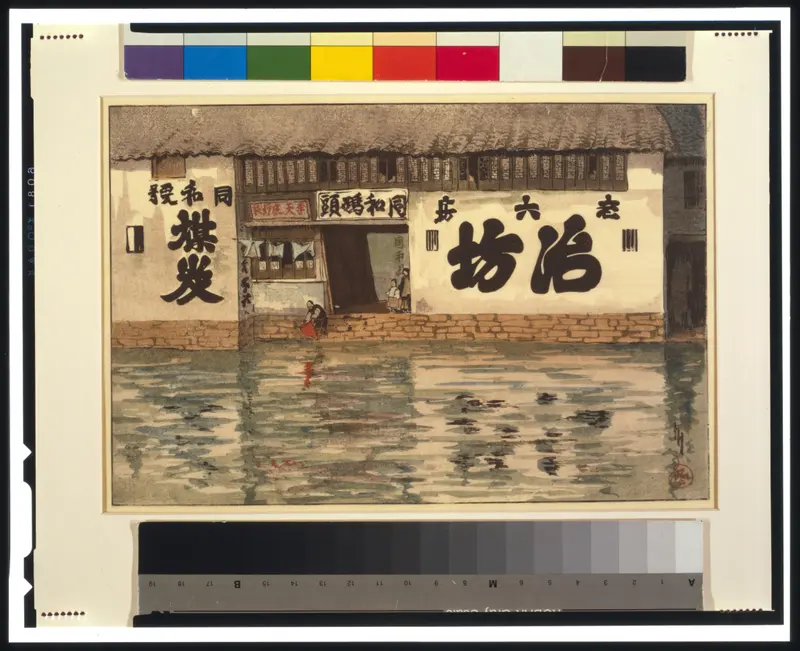
The sauce-pan shop) - HH (monogram) LCCN0065
Helen Hyde

New Year's Day in Tokyo
Helen Hyde
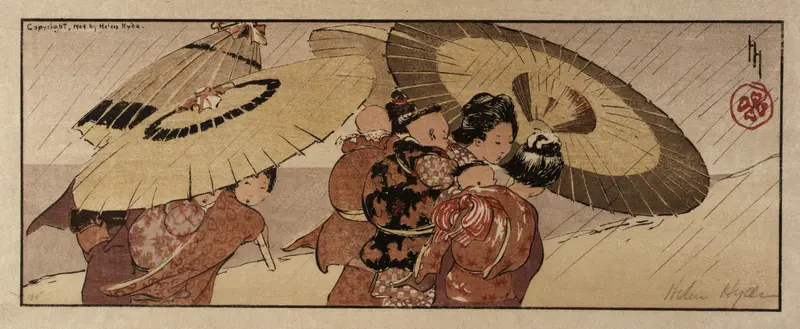
A Summer Shower
Helen Hyde
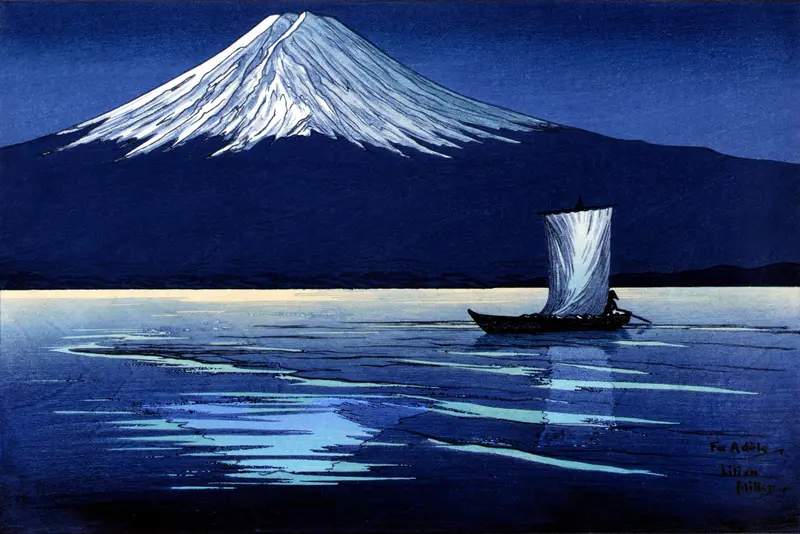
Moonlight on Mt. Fuji
Helen Hyde
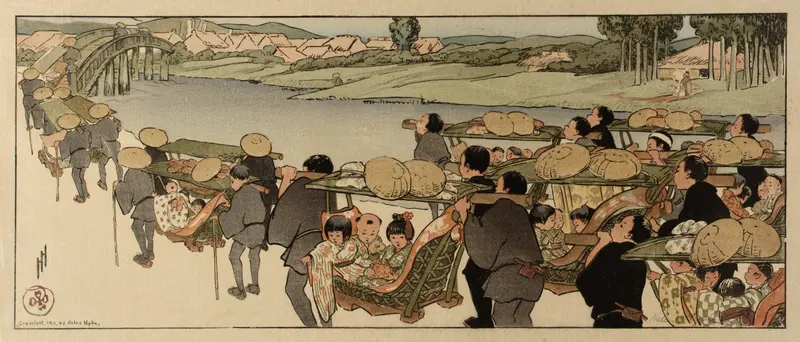
Going to the Fair
Helen Hyde
More Genre Scene Art

Banquet of the Officers of the St George Civic Guard
Frans Hals

Rembrandt and Saskia in the Scene of the Prodigal Son
Rembrandt van Rijn

Bal du moulin de la Galette
Pierre-Auguste Renoir

Quadrille at the Moulin Rouge
Henri de Toulouse-Lautrec

A Burial at Ornans
Gustave Courbet

When Will You Marry?
Paul Gauguin