
Moonlit night at the lake — History & Facts
Did the painter know this moment would outlive them? Beneath the silvery glow of the moon, timelessness envelops the tranquil lake, where nature meets the ephemeral beauty of life itself, forever captured on canvas. Look to the left at the shimmering surface of the water, where the moonlight dances and transforms it into a celestial mirror. Saal’s delicate brush strokes create a soft, almost ethereal atmosphere, diffusing the night with shades of deep blue and silvery white. Notice how the reflection of the trees stretches across the water, blurring the lines between reality and dreams, inviting the viewer to lose themselves in this serene moment. The interplay of light and dark speaks to the contrasts of existence—the serenity of the night juxtaposed with the inevitable decay that time brings.
The stillness of the lake hints at a deeper, melancholic beauty, suggesting that every reflection is a moment slipping away, a fleeting glimpse beneath the passage of time. Look closely, and you’ll see hints of decay in the subtle details of the foliage, a reminder that beauty is often laced with transience. In 1859, Saal was immersed in the Romantic era, a time when artists sought to capture the sublime essence of nature. Working in Germany, he was influenced by both the picturesque landscapes of his surroundings and the growing interest in capturing atmospheric effects.
As the art world began to shift towards Impressionism, Saal’s work remained rooted in a Romantic sensibility, embodying the tension between permanence and the ephemeral.
More Artworks by Georg Eduard Otto Saal
Browse all →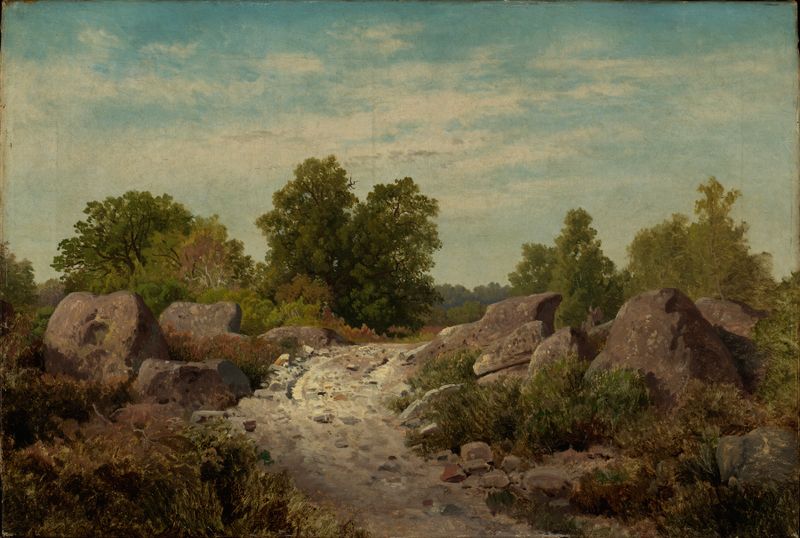
Weg bei Fontainebleau
Georg Eduard Otto Saal
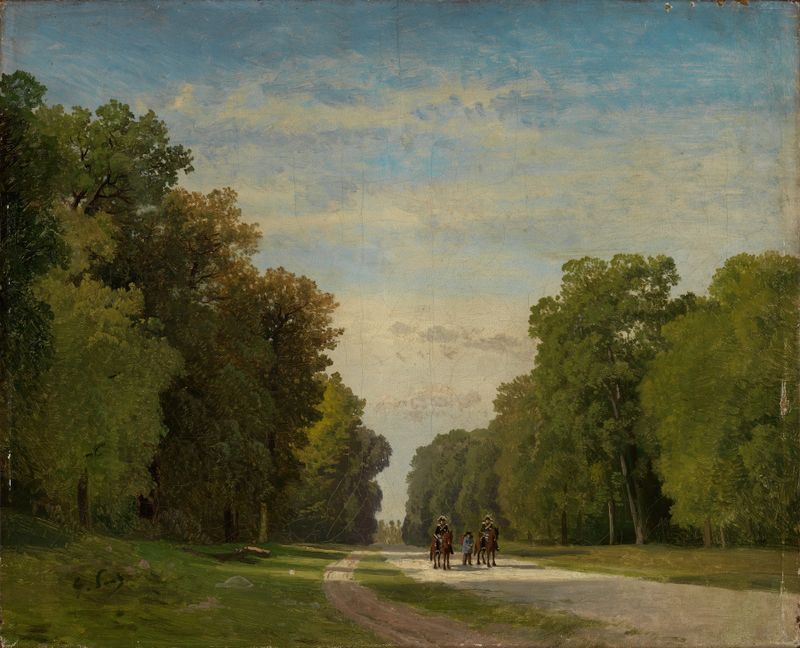
Allee bei Fontainebleau
Georg Eduard Otto Saal
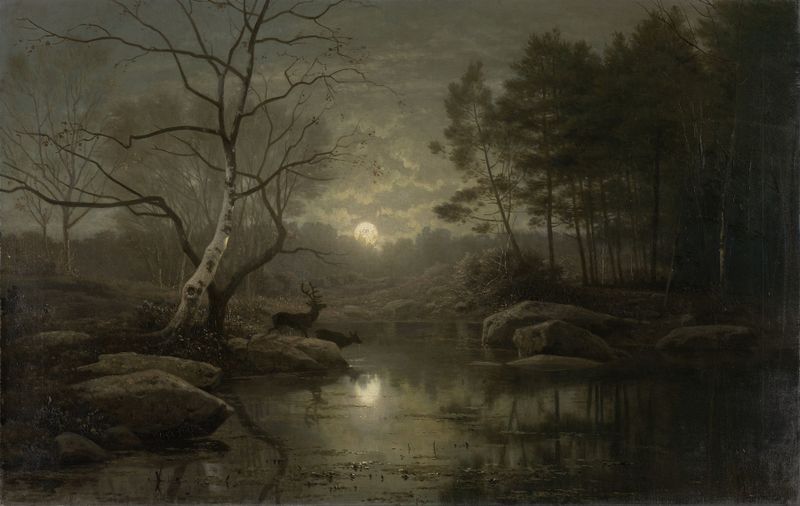
Forest Landscape in the Moonlight
Georg Eduard Otto Saal
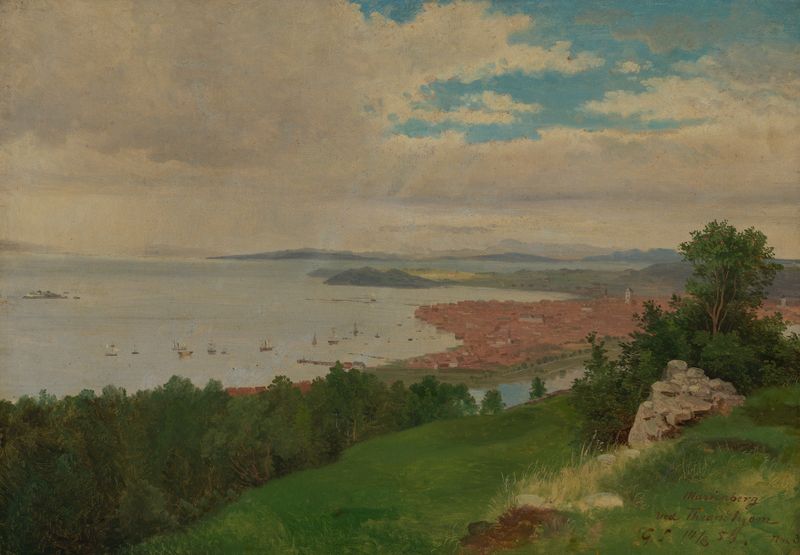
Blick auf Trondhjem
Georg Eduard Otto Saal
Norwegisches Fischerbegräbnis
Georg Eduard Otto Saal
Hunting Reindeer in the Far North
Georg Eduard Otto Saal

Der Labrafos bei Kongsberg
Georg Eduard Otto Saal





