
Moorish Tower on the Spanish coast — History & Facts
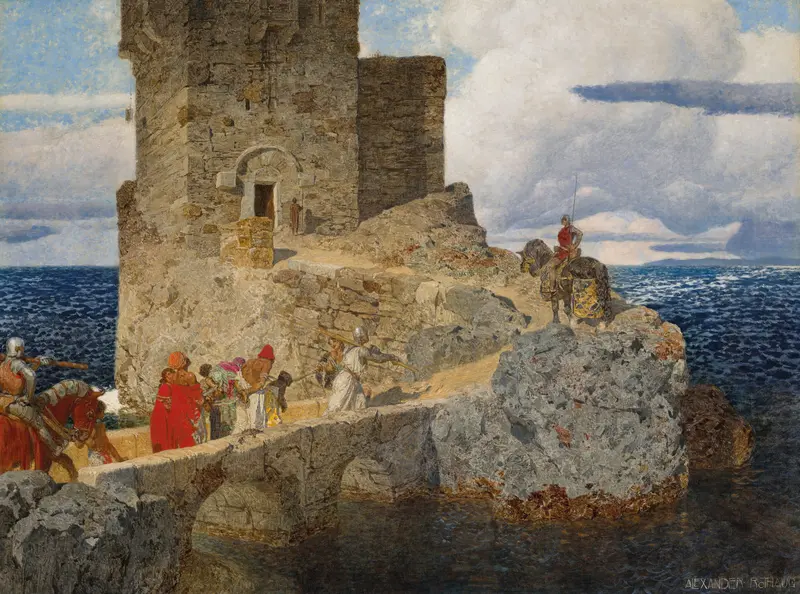
A fortress rises from the rocky coast, its weathered stones catching the shifting light, while a procession winds across a narrow bridge toward its arched doorway. The eye is drawn first to the sheer bulk of the tower, then to the vivid red and white of the figures below—soldiers, travelers, and perhaps captives—each gesture and garment hinting at a moment of tense passage. The sea churns beneath them, a restless blue expanse that sets the drama of land against the uncertainty of water.
The lone horseman at the far end, poised and watchful, turns the scene into a silent standoff, his presence both guardian and threat. Every detail—the careful masonry, the glint of armor, the careful choreography of movement—invites the viewer to imagine the stakes of this crossing. Painted by Alexander Rothaug, an Austrian artist active in the late nineteenth and early twentieth centuries, Moorish Tower on the Spanish coast conjures the fascination with exoticism and historical spectacle that shaped much of European art in his era. Such works were often commissioned for private collections or public display, feeding a taste for distant lands and dramatic narratives at a time when Europe looked both backward to its medieval past and outward to the Mediterranean world.
The painting’s presence in a Christie’s online collection today is a reminder of how these visions, once meant to dazzle or instruct, now invite us to linger, searching for stories in stone and shadow. The world Rothaug painted may be half-imagined, but the invitation to cross that bridge—to step into the painting’s uncertain moment—remains.
More Artworks by Alexander Rothaug

Centaur Abducting a Nymph
Alexander Rothaug
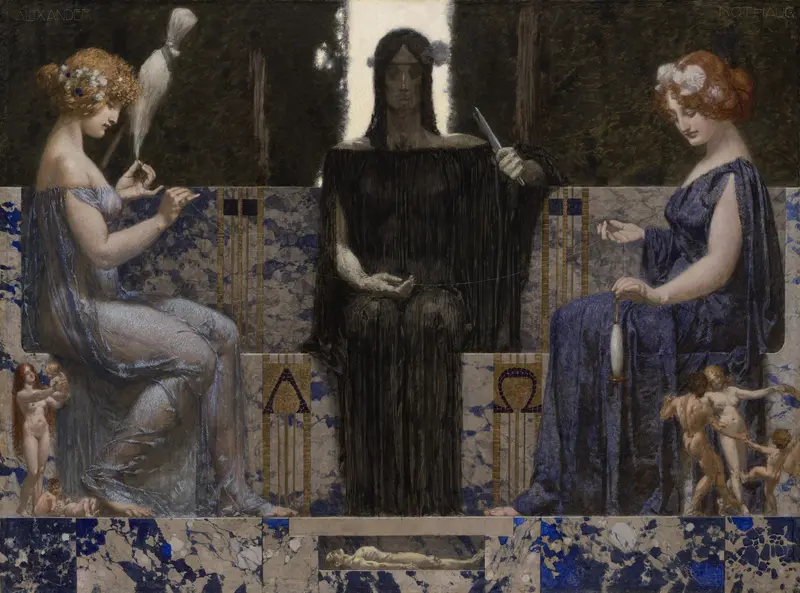
The Three Fates
Alexander Rothaug
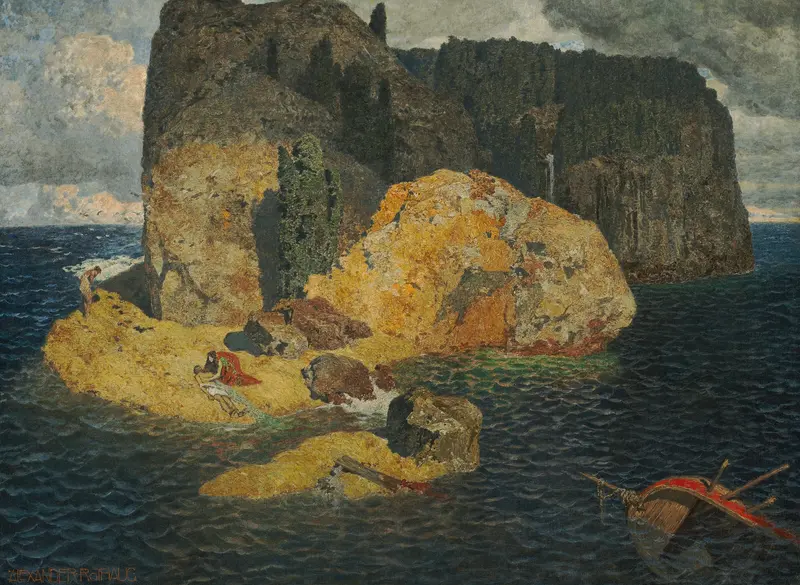
Island Shipwreck
Alexander Rothaug
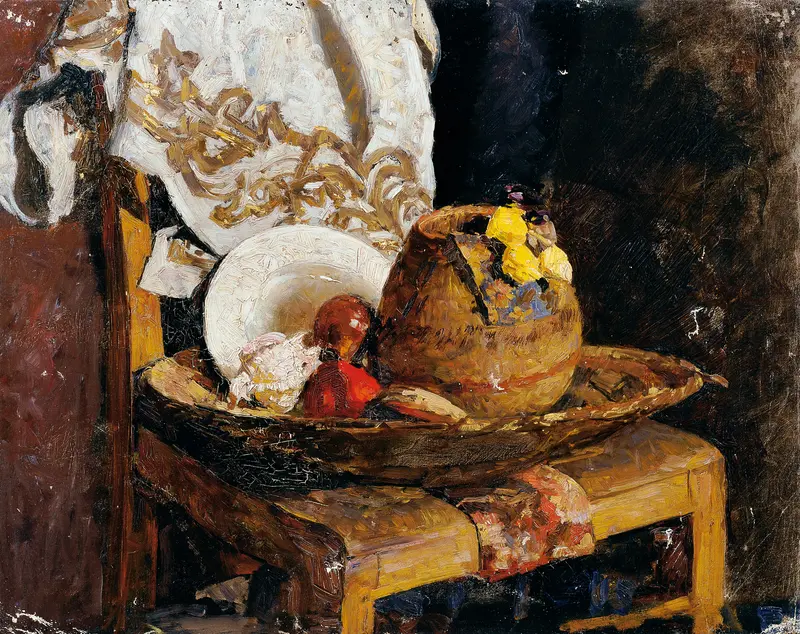
Stillleben mit Krug und Früchten 4044 Belvedere
Alexander Rothaug
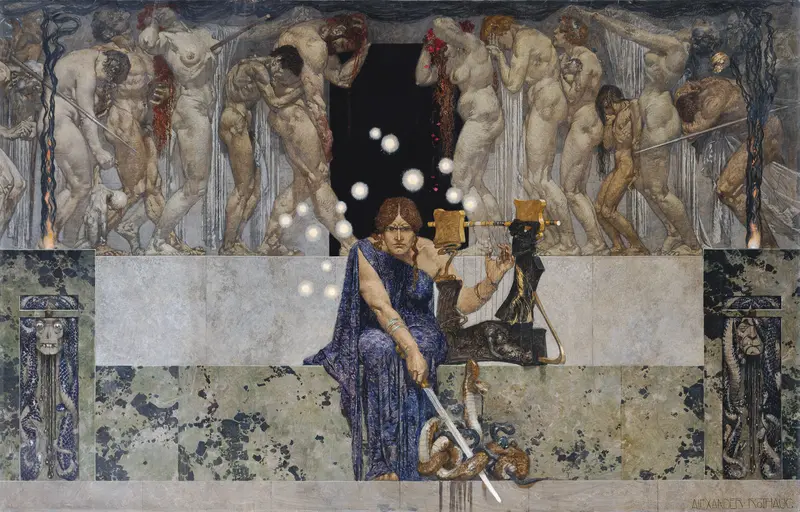
Melpomene 4046 Belvedere
Alexander Rothaug
The Death of Achilles
Alexander Rothaug
Maurenturm an der spanische Küste
Alexander Rothaug





