
Melpomene 4046 Belvedere — History & Facts
A single figure commands the stage in Melpomene 4046 Belvedere, her gaze sharp and unyielding, as if daring the viewer to step closer. The drama is heightened by the deep black void behind her, a theatrical backdrop that swallows light and draws the eye to her tense posture and the sword she wields. Around her, a frieze of pale, contorted bodies seems to press in from all sides, their gestures and expressions caught between agony and resignation, while spectral orbs float in the darkness like lost souls or distant stars.
The snakes coiling at her feet and the lyre at her side hint at mythic violence and tragic song, their forms rendered with unsettling clarity. Every detail here feels deliberate: the blue drapery, the unnatural glow, the marble-like surfaces that separate the living from the damned. Created in 1911, this work by Alexander Rothaug belongs to a world in which myth and modernity collide. The early twentieth century saw artists across Europe reimagining the ancient past, often with a psychological intensity that reflected the anxieties of their own time.
Vienna, where the Belvedere collection is housed, was a center for such experiments—home to the Secessionists and to a culture fascinated by symbolism, decadence, and the unconscious. While little is recorded about the specific commission or journey of this painting, its theatrical scale and haunted mood speak to a period when artists mined classical stories for their darkest, most ambiguous meanings. The longer you look, the more the painting’s mysteries seem to multiply, inviting you to linger in its charged silence.
More Artworks by Alexander Rothaug

Centaur Abducting a Nymph
Alexander Rothaug
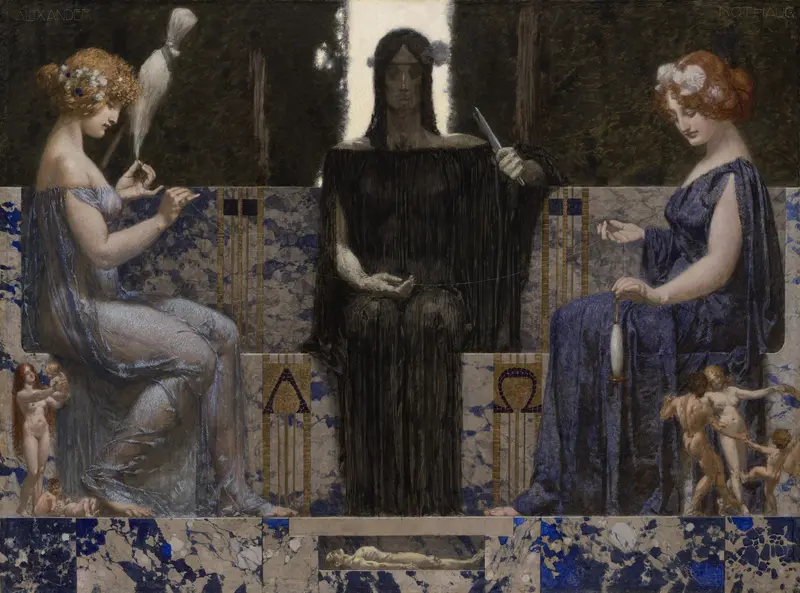
The Three Fates
Alexander Rothaug
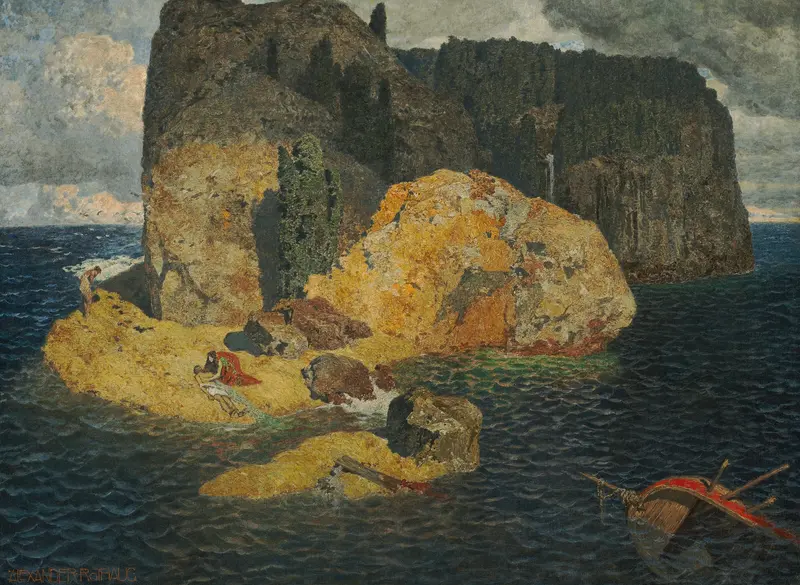
Island Shipwreck
Alexander Rothaug
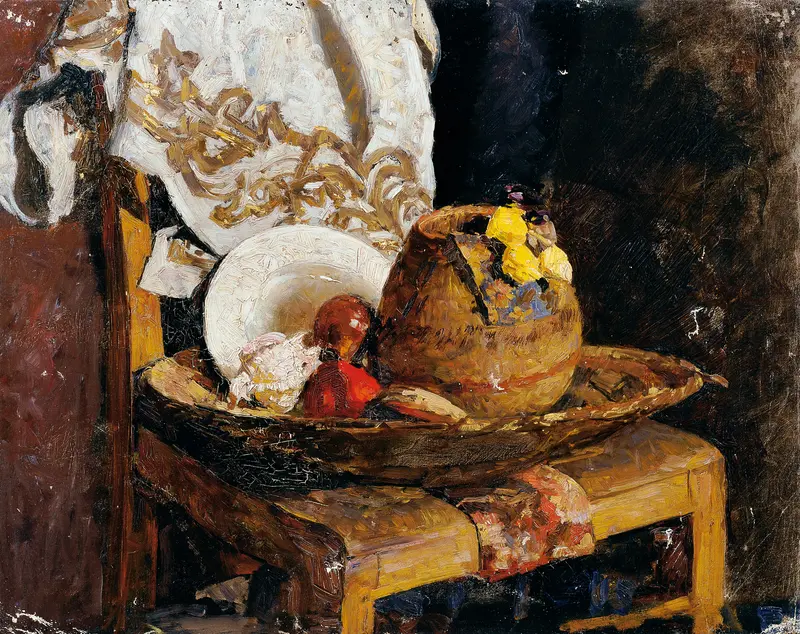
Stillleben mit Krug und Früchten 4044 Belvedere
Alexander Rothaug
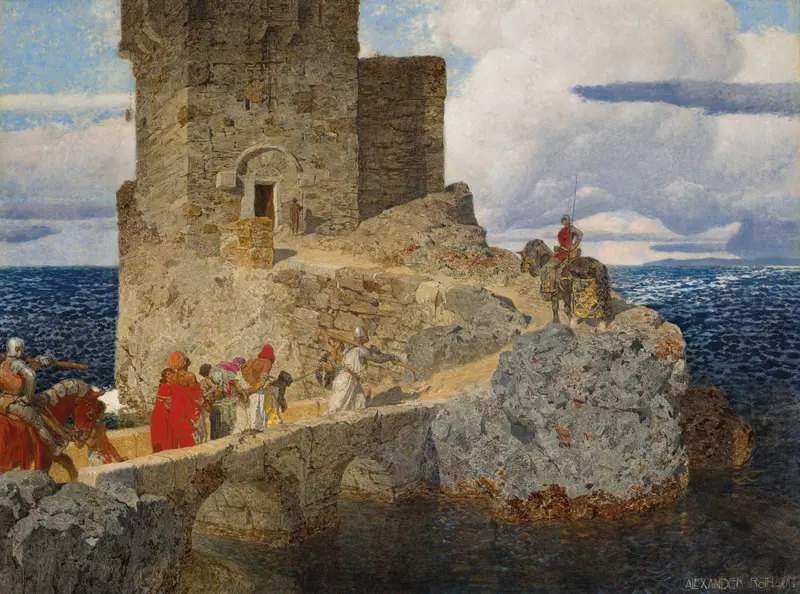
Moorish Tower on the Spanish coast
Alexander Rothaug
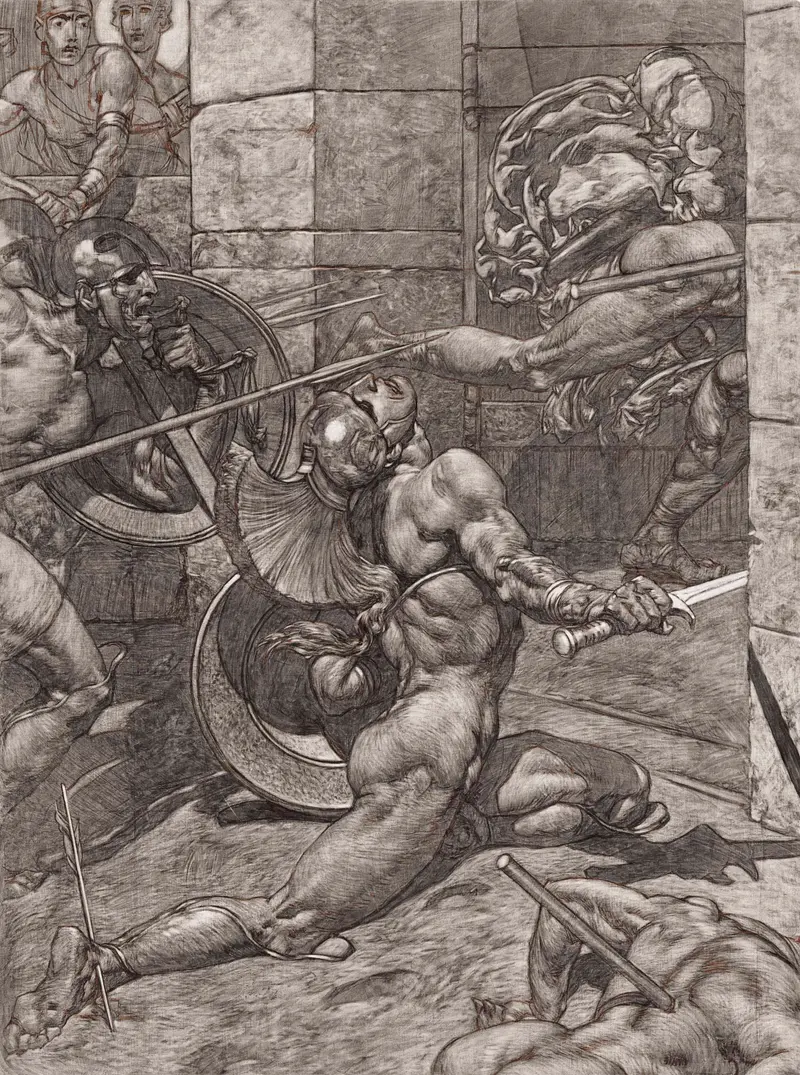
The Death of Achilles
Alexander Rothaug
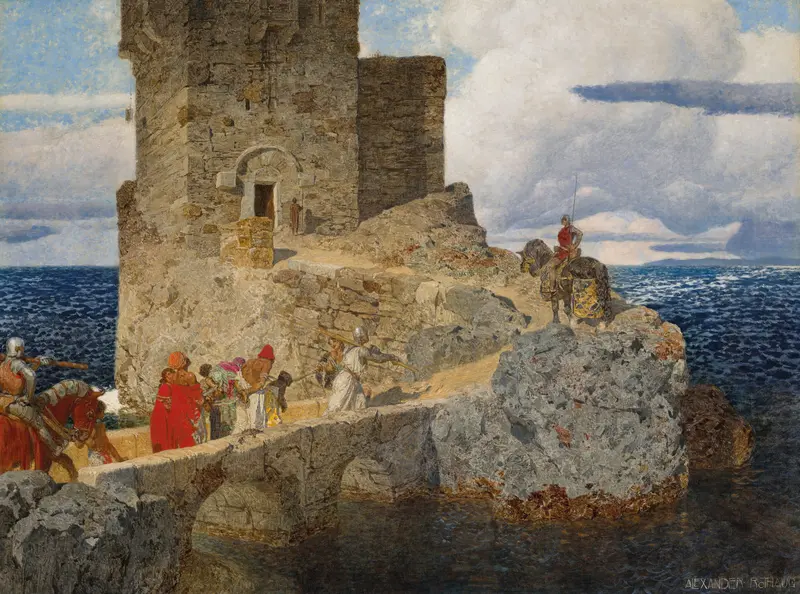
Maurenturm an der spanische Küste
Alexander Rothaug





