
The Death of Achilles — History & Facts
A single shaft pierces the heel of a warrior whose body still coils with energy, frozen at the very instant of collapse. In The Death of Achilles, Alexander Rothaug channels the tension of myth into a tightly wound scene: the eye is drawn first to the muscular figure at the center, his torso twisting in a last surge of defiance, even as fate has already marked him. The sharp diagonal of the spear, the glint of his helmet, and the swirling lines of his shield all converge on that fatal wound, making the moment of vulnerability inescapable.
Around him, the chaos of battle is compressed into a few figures—some recoiling, others frozen in anticipation or horror—while the looming stone walls hem the action in, heightening the sense of inevitability. Works like this, rendered in brown ink and oil en grisaille over black chalk, belong to a tradition that stretches back to the academic and historicist movements of nineteenth- and early twentieth-century Europe, when artists mined ancient legend for scenes of heroism and tragedy. Rothaug, active in the German-speaking world before 1946, draws on the visual language of classical reliefs and Renaissance draftsmanship, but with a modern edge: the anatomy is exaggerated, the violence unflinching, the composition claustrophobic. Such paintings were often commissioned for private collectors or public institutions eager to claim a share of antiquity’s grandeur.
History has kept few traces of this particular canvas beyond its technical bravura and its passage through the hands of collectors, but its intensity invites the viewer to linger, tracing the lines of myth and mortality across every muscle and stone.
More Artworks by Alexander Rothaug

Centaur Abducting a Nymph
Alexander Rothaug
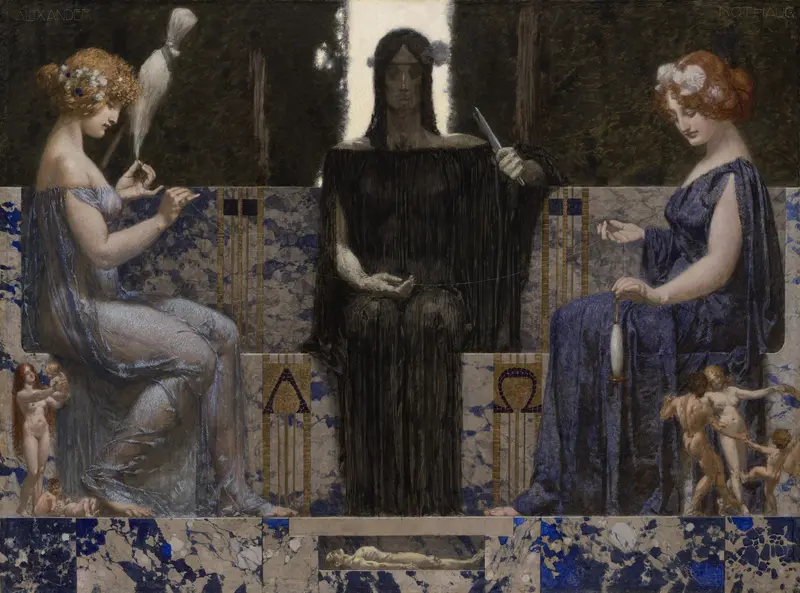
The Three Fates
Alexander Rothaug
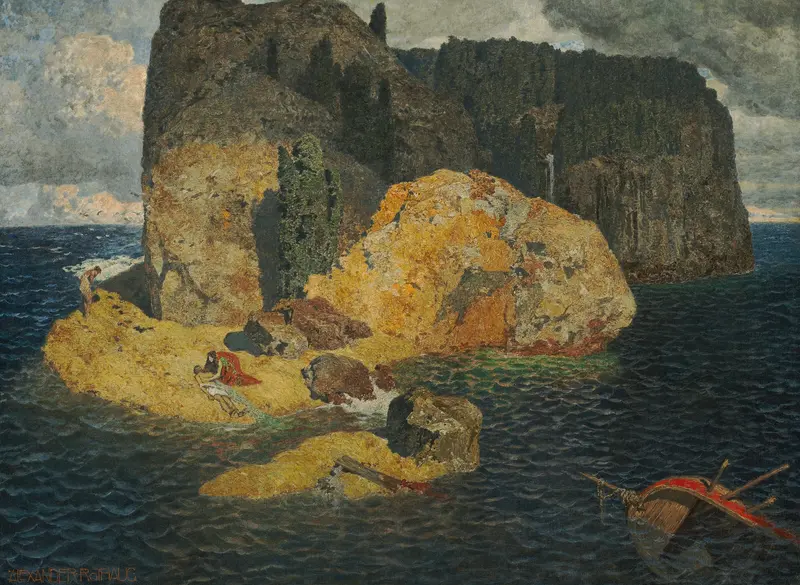
Island Shipwreck
Alexander Rothaug
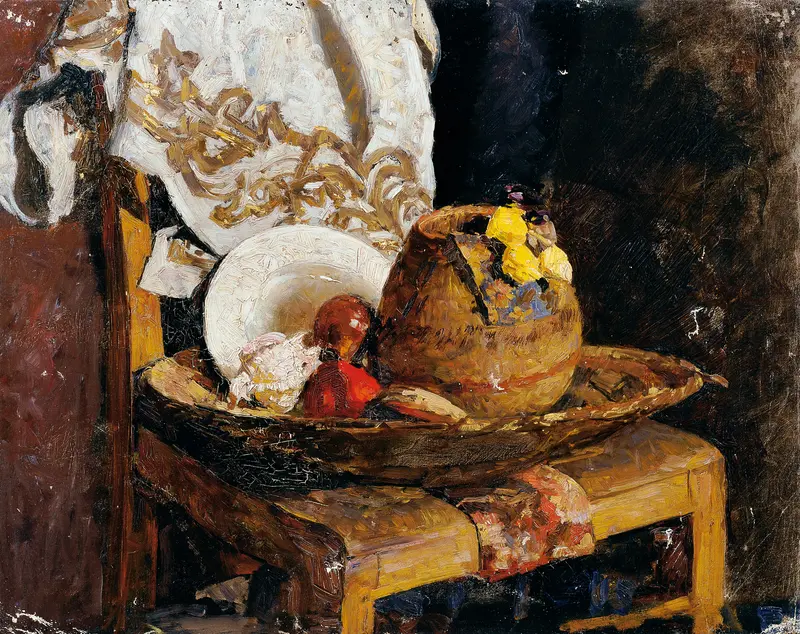
Stillleben mit Krug und Früchten 4044 Belvedere
Alexander Rothaug
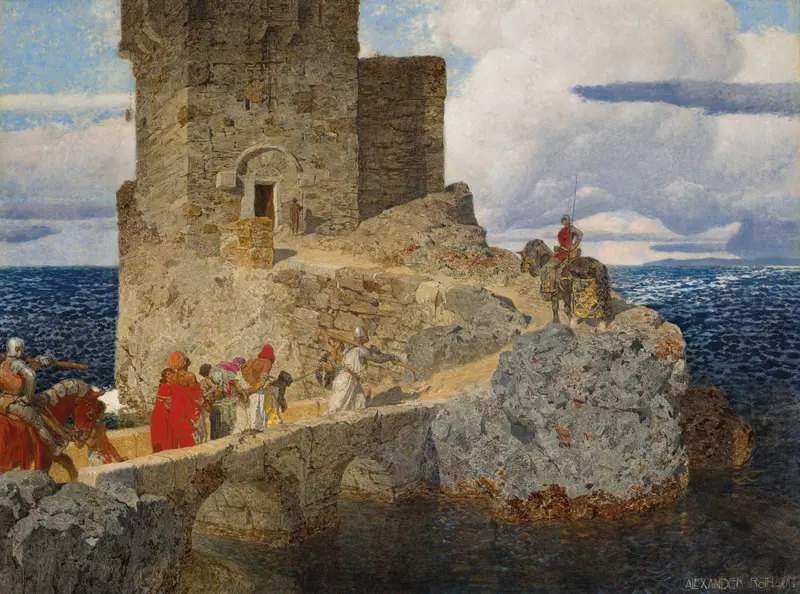
Moorish Tower on the Spanish coast
Alexander Rothaug
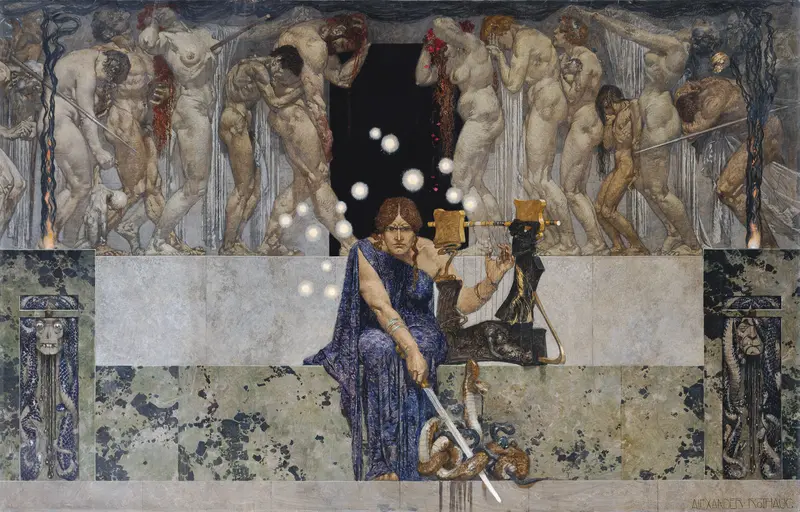
Melpomene 4046 Belvedere
Alexander Rothaug
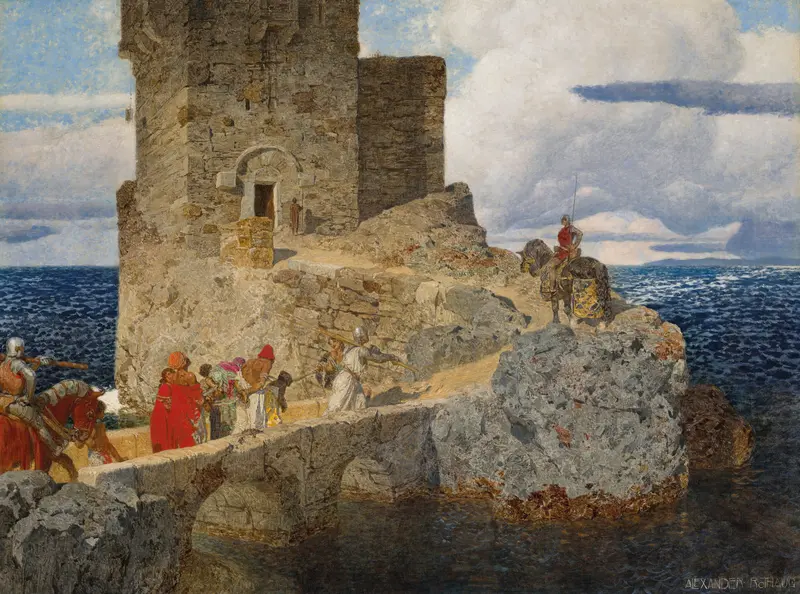
Maurenturm an der spanische Küste
Alexander Rothaug





