
Centaur Abducting a Nymph — History & Facts
What first seizes the eye in Centaur Abducting a Nymph is the raw, almost unsettling energy of the centaur’s grin—a wild, toothy display that seems to slice through the dappled shade of the woods. The nymph’s pale figure is caught mid-struggle, her arm thrown up to shield her face, her golden hair gripped tight in the centaur’s fist. The contrast is immediate: her exposed vulnerability against his brute force, her soft curves against the rough, animal bulk beneath her.
Sunlight glances across her skin, making her the focal point even as the centaur’s muscular form dominates the right half of the canvas. In the distance, three more nymphs flee across the meadow, their flight echoing the violence in the foreground and leading the viewer’s gaze deeper into the painted world. Painted around 1905, this work by Alexander Rothaug belongs to a period when mythological scenes were a favored playground for artists seeking to explore the boundaries between nature, desire, and the unconscious. Such paintings, often commissioned for private salons or as statements of erudition and taste, drew on the visual language of both Symbolism and the waning academic tradition.
The myth of the centaur and the nymph—ancient, yet endlessly adaptable—offered a stage for exploring the tensions between civilization and wildness, consent and force. Little is recorded about the specific journey of this painting, now in the Kilgore Gallery collection, but its bold palette and theatrical composition speak to a turn-of-the-century appetite for both spectacle and psychological depth. The longer one looks, the more the painting’s uneasy balance between beauty and menace reveals itself.
More Artworks by Alexander Rothaug
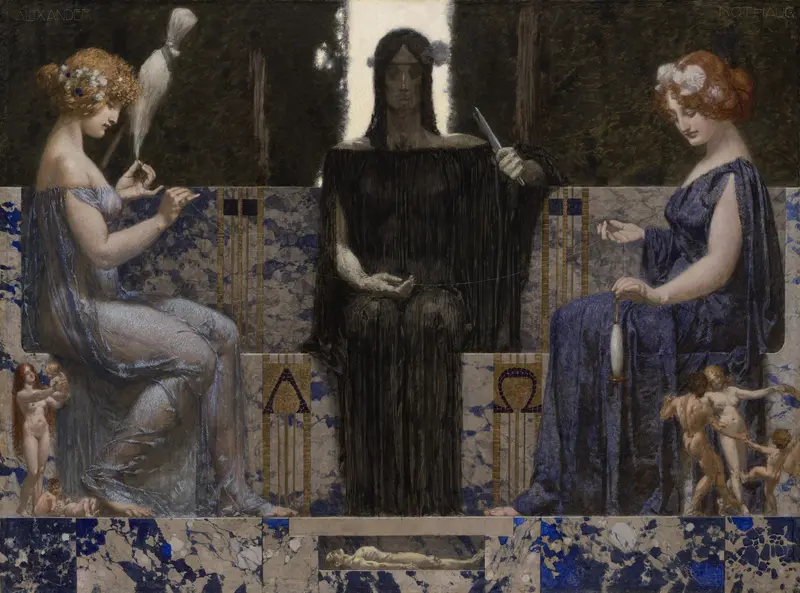
The Three Fates
Alexander Rothaug
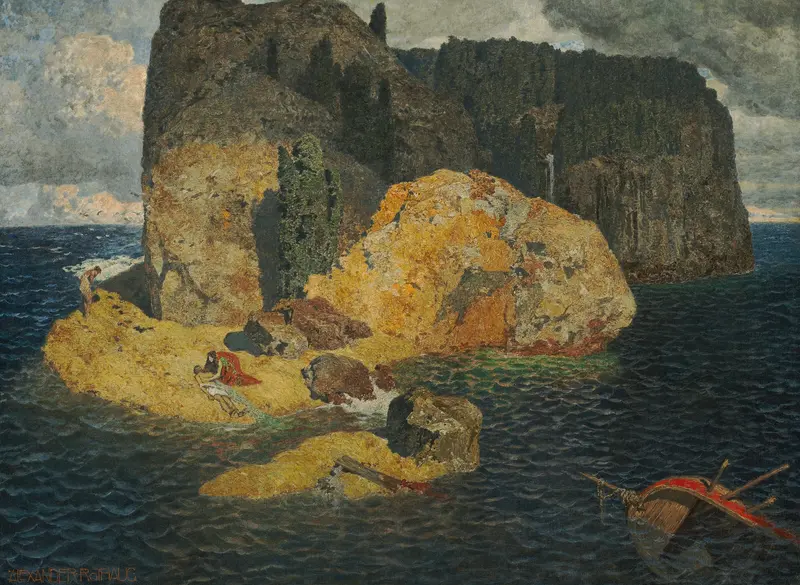
Island Shipwreck
Alexander Rothaug
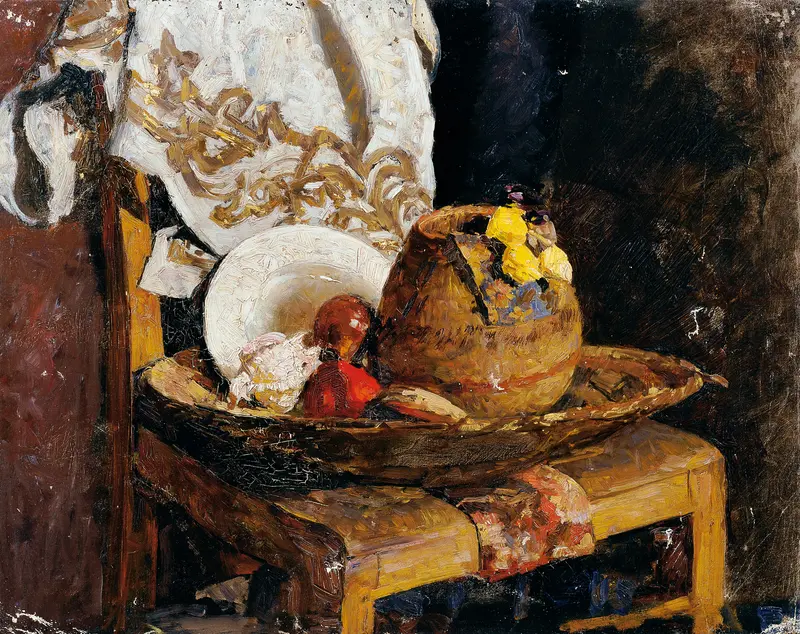
Stillleben mit Krug und Früchten 4044 Belvedere
Alexander Rothaug
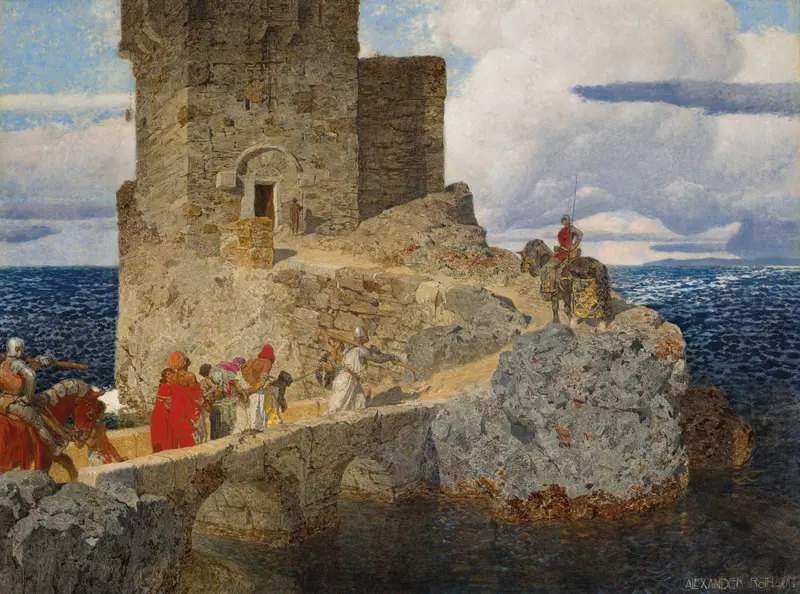
Moorish Tower on the Spanish coast
Alexander Rothaug
Melpomene 4046 Belvedere
Alexander Rothaug
The Death of Achilles
Alexander Rothaug
Maurenturm an der spanische Küste
Alexander Rothaug





