
The Three Fates — History & Facts
What first seizes the eye in The Three Fates is the sense of ceremony and inevitability: three monumental women preside over a marble-blue dais, each absorbed in her task, their gestures measured and grave. The central figure, shrouded in black, holds a blade poised above a thread, while her companions—one spinning, the other measuring—are draped in translucent robes that catch the light with a chill, silvery sheen. The thread itself, stretched taut between their hands, becomes the axis of the scene, its fragility underscored by the heavy, geometric throne and the deep, lapis hues that surround them.
The small, mythic tableaux at their feet—nude figures in miniature—hint at the cycle of life and fate, while the Greek letters alpha and omega anchor the story in beginnings and endings. Every element in the image draws the viewer into a world where destiny is both crafted and cut, and where beauty and doom are inseparable. Painted around 1910, The Three Fates by Alexander Rothaug emerges from a period when Symbolism and mythological revival flourished in European art. Works like this, often commissioned for private salons or ambitious exhibition halls, were designed to provoke contemplation on the mysteries of existence, fate, and time itself.
The artist’s choice of marbleized patterning and classical motifs reflects the era’s fascination with antiquity, while the somber palette and theatrical composition speak to the anxieties and aspirations of the early twentieth century. Today, this painting resides in the collection of Kilgore Gallery, a reminder that history has kept few traces of Rothaug’s personal intentions, leaving us to return, again and again, to the silent drama unfolding on the dais.
More Artworks by Alexander Rothaug

Centaur Abducting a Nymph
Alexander Rothaug
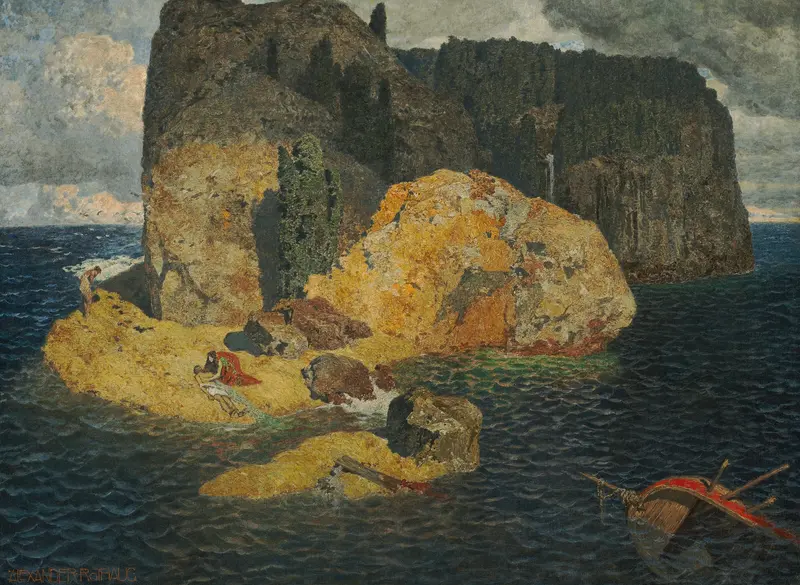
Island Shipwreck
Alexander Rothaug
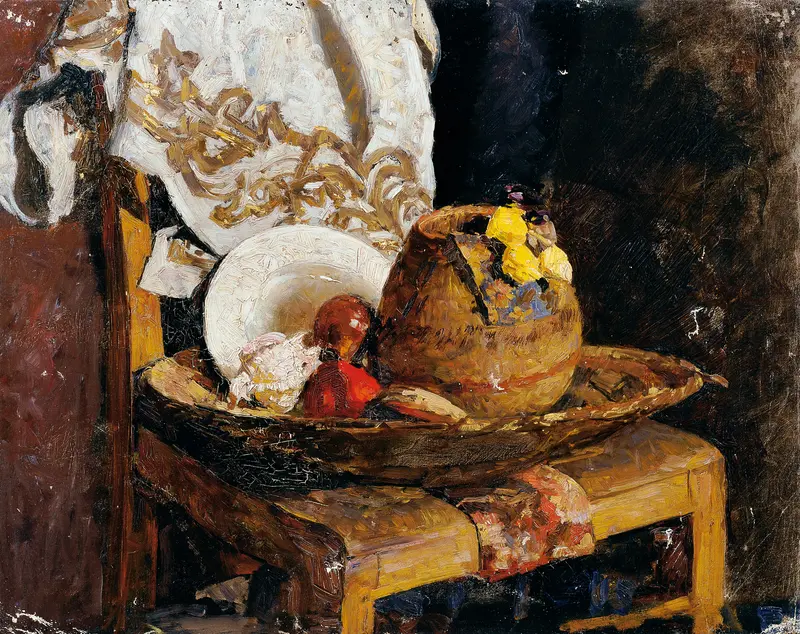
Stillleben mit Krug und Früchten 4044 Belvedere
Alexander Rothaug
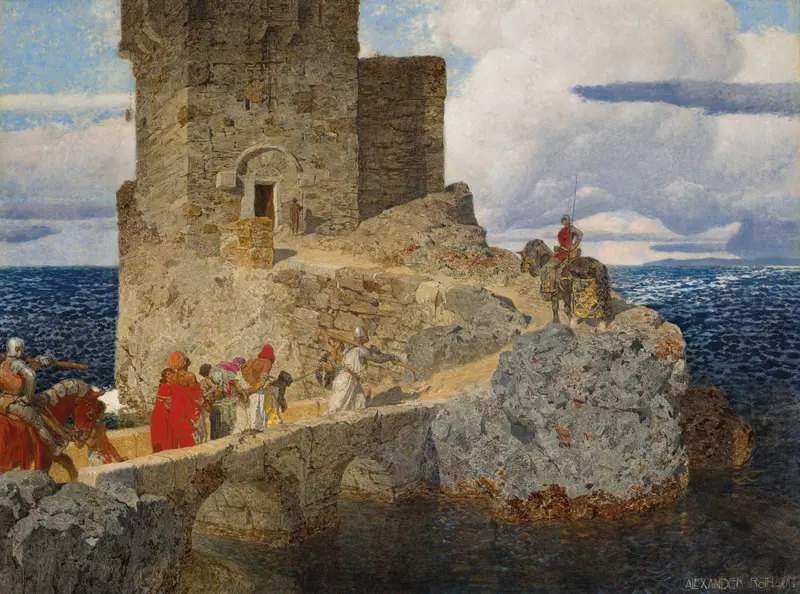
Moorish Tower on the Spanish coast
Alexander Rothaug
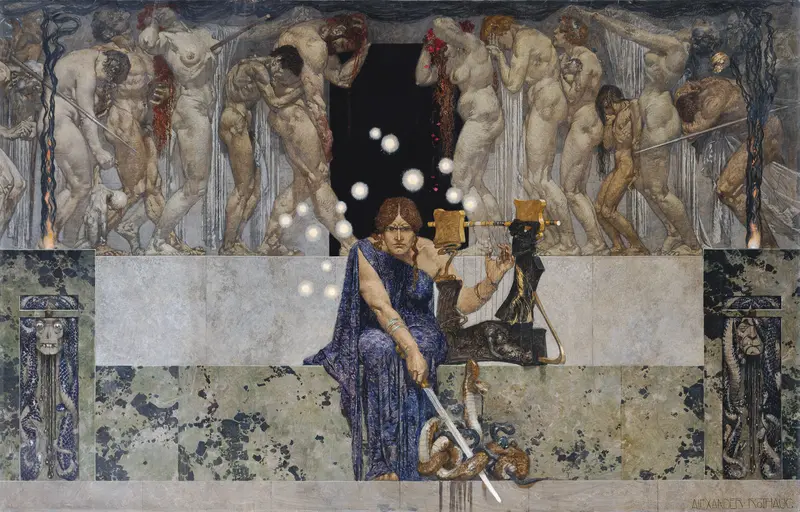
Melpomene 4046 Belvedere
Alexander Rothaug
The Death of Achilles
Alexander Rothaug
Maurenturm an der spanische Küste
Alexander Rothaug





