Morgat — History & Facts
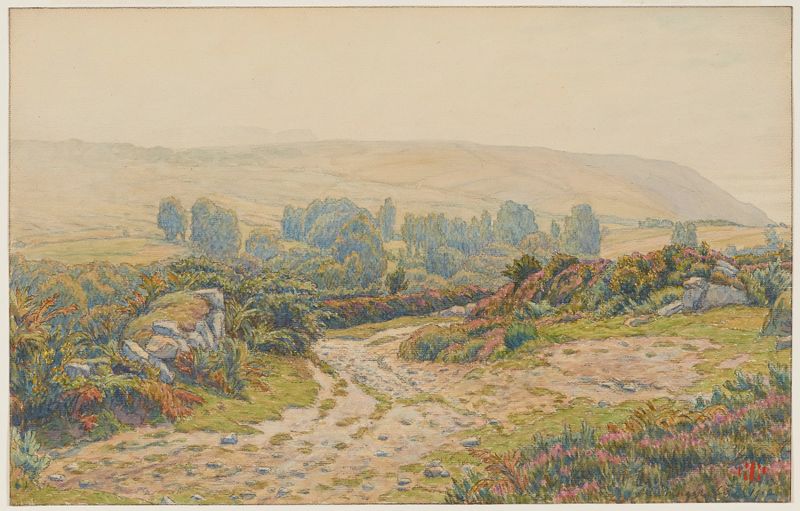
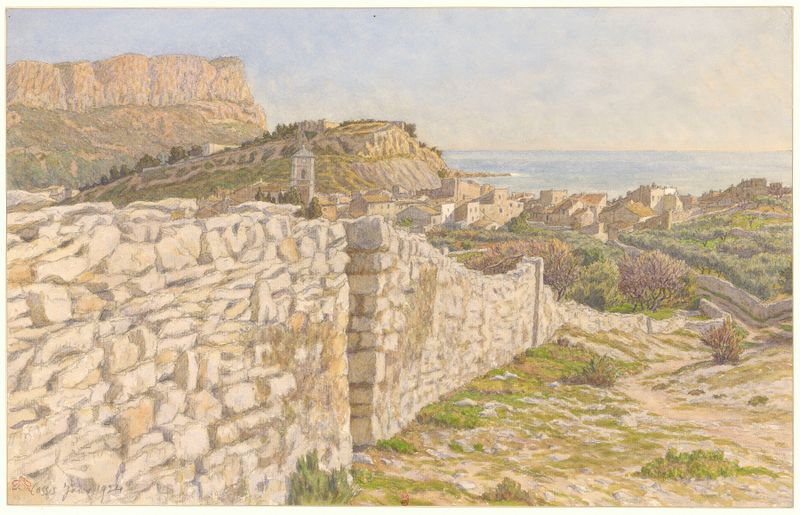
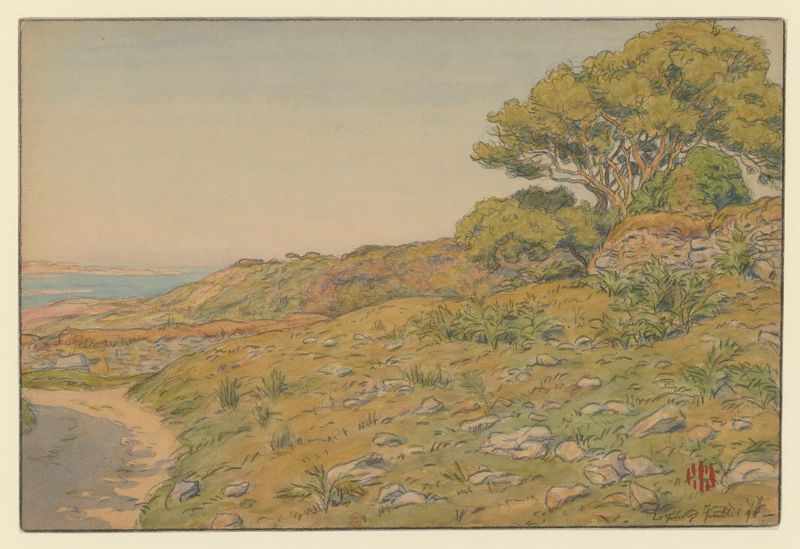
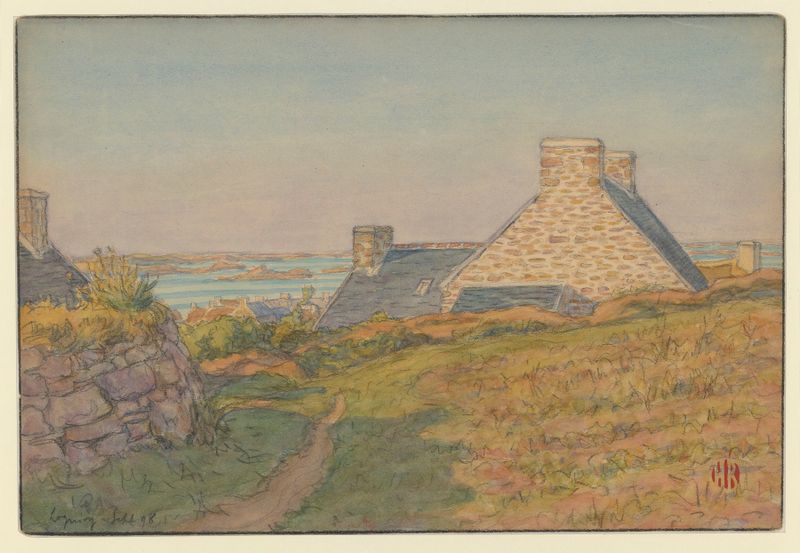
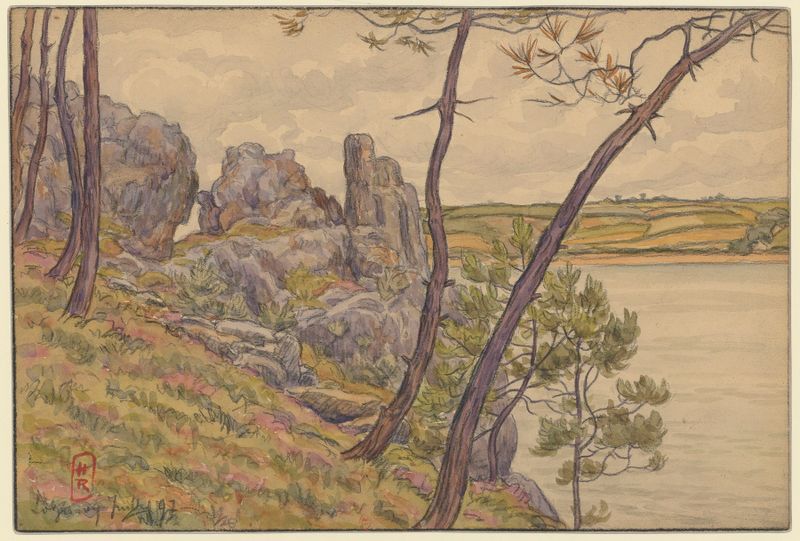
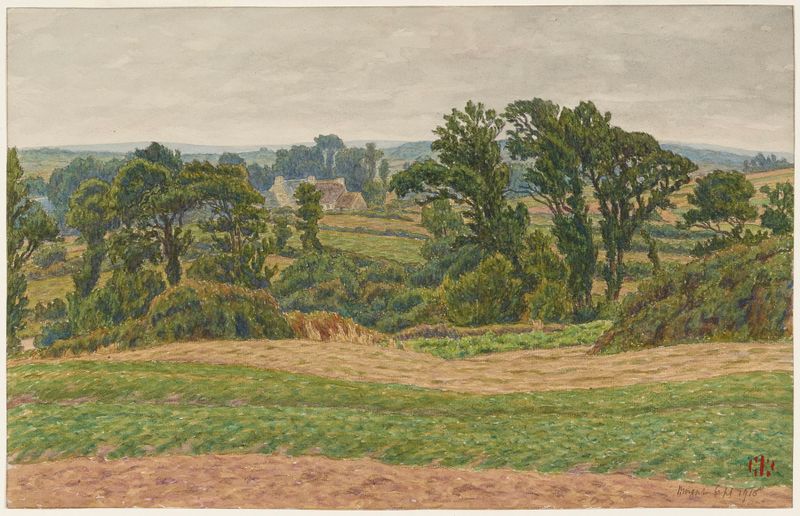
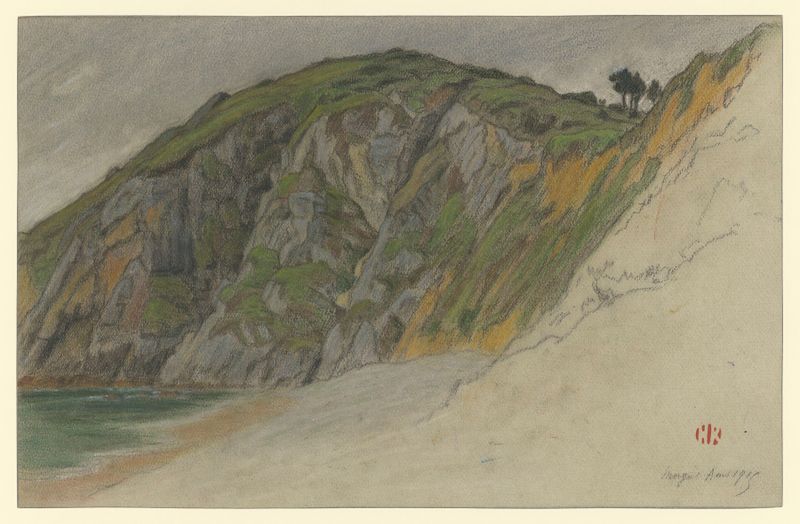
Could beauty survive in a century of chaos? This question lingers as we gaze upon the haunting tranquility captured by the artist. Focus on the gentle undulations of the coastline; the silhouette of cliffs rises majestically against a brooding sky. Notice how the muted palette, dominated by shades of gray and blue, evokes a sense of melancholy that washes over the scene. The brushstrokes, both delicate and forceful, create a rhythm that draws the viewer into the ongoing dance of land and sea, whispering secrets of nature's resilience amidst uncertainty. At first glance, the stark contrast between the tumultuous sea and the solid cliffs suggests a struggle, yet there's an underlying harmony that speaks of permanence.
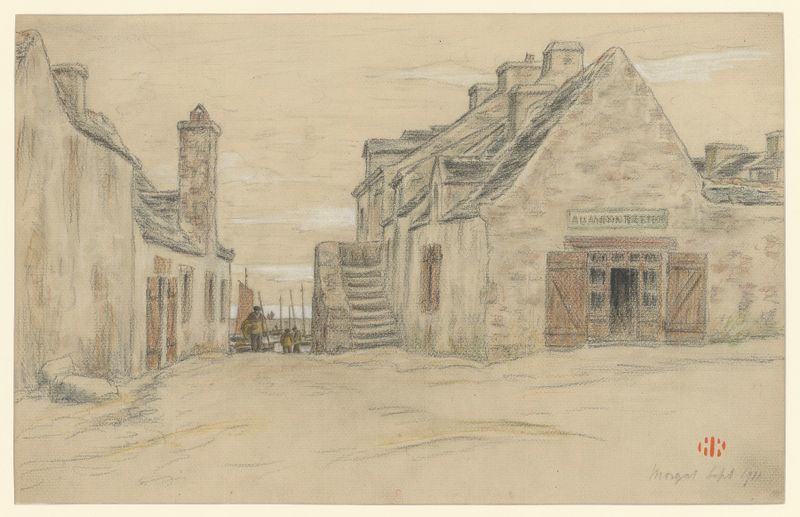
The subtle interplay of light and shadow, particularly where the waves meet the rocky shore, embodies the tension between chaos and serenity. Each brushstroke tells a story of beauty enduring, even when the world around it seems mired in turmoil. Created in 1911, this work emerged during a period of artistic experimentation and societal upheaval. Rivière was influenced by the Symbolist movement, which sought to convey deeper meanings through evocative imagery.
While Europe teetered on the brink of World War I, the artist found solace and inspiration in the natural landscapes around Morgat, reflecting a desire to capture the essence of beauty amidst an uncertain future.