
Mother and Child — History & Facts
What first catches the eye in Mother and Child is the quiet gravity of the mother’s gaze—calm, direct, almost challenging the viewer to look closer. The child, nestled on her lap, clutches a pale rose and leans into the protective arc of her mother’s arms. The mother’s dark dress and the child’s light garment set up a gentle contrast, the blue shawl falling over her shoulder like a painter’s deliberate brushstroke to guide us from her steady face down to the child’s uncertain, wide-eyed expression.
Every detail—the mother’s hand splayed protectively, the child’s bare feet, the softly battered dress—serves to anchor the scene in a sense of lived, everyday intimacy rather than idealized sentiment. Painted in 1886, this work stands at a crossroads of American portraiture, when artists like Abbott Handerson Thayer were turning to domestic themes with new seriousness. In an age when portraits of mothers and children were often commissioned to mark family pride or social standing, Thayer’s approach feels unusually direct and unsentimental. The muted palette and the rough, unfinished edges speak to a late nineteenth-century realism, a world in which the bonds of family were both shield and burden.
Now in the collection of the RISD Museum, Mother and Child invites us to linger on the small, telling gestures that make a private world visible.
More Artworks by Abbott Handerson Thayer
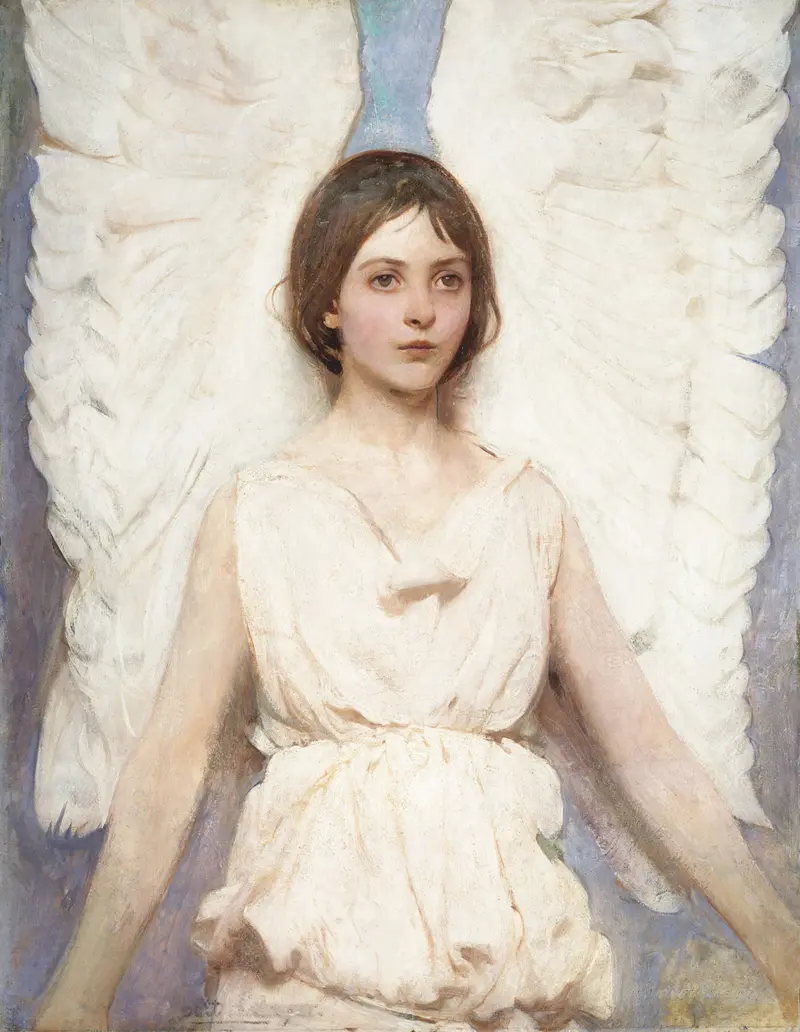
Angel
Abbott Handerson Thayer

Mount Monadnock
Abbott Handerson Thayer
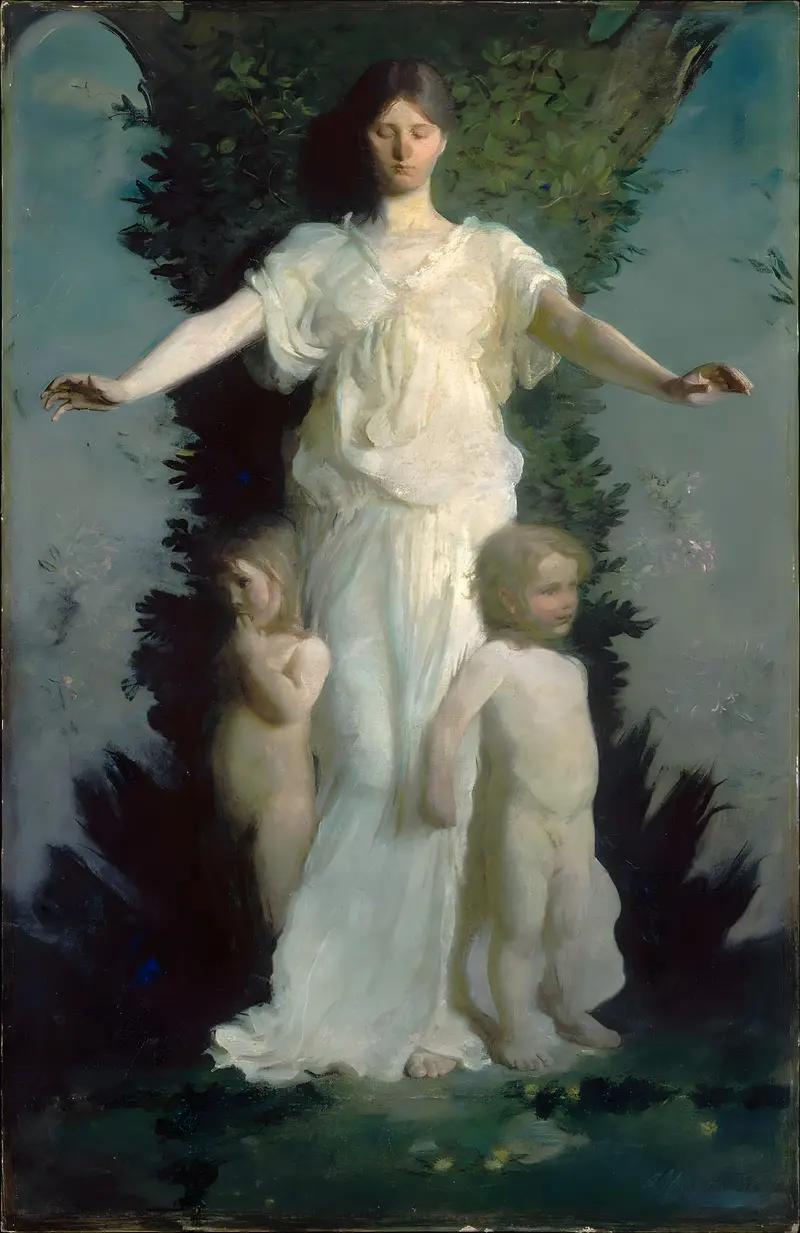
Caritas
Abbott Handerson Thayer

Winter, Monadnock
Abbott Handerson Thayer

Mount Monadnock
Abbott Handerson Thayer

Mount Monadnock
Abbott Handerson Thayer
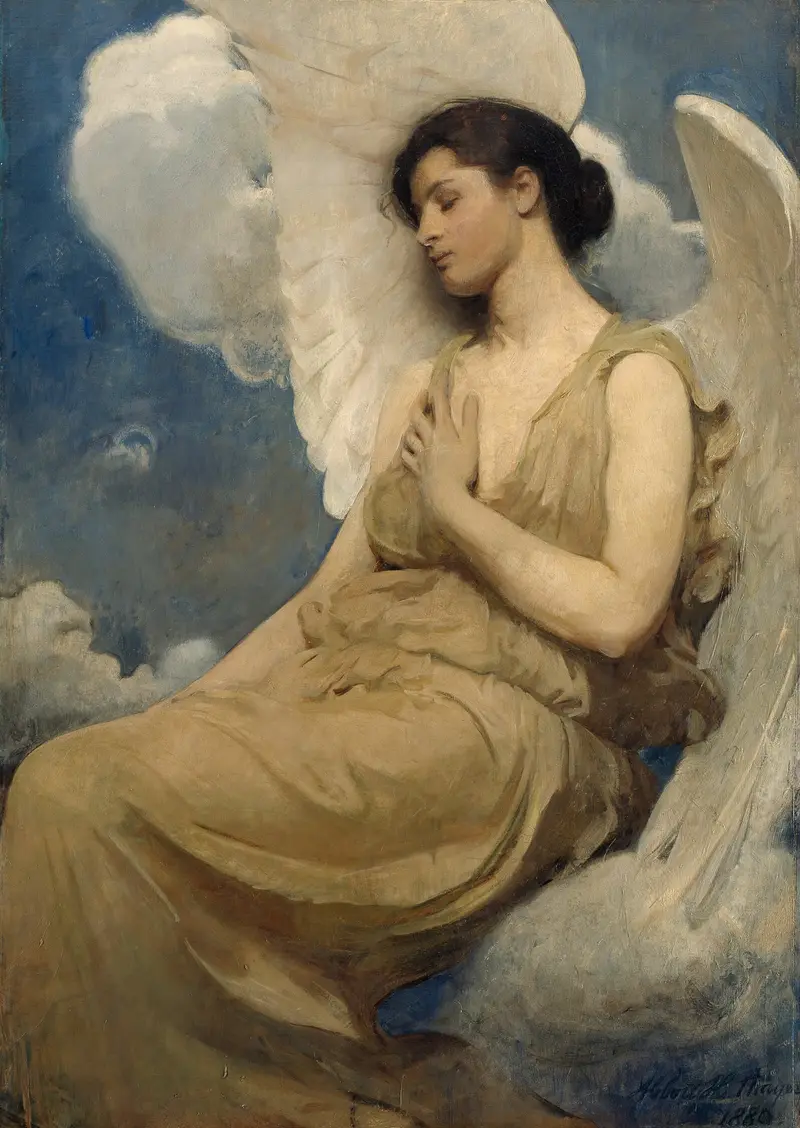
Winged Figure
Abbott Handerson Thayer
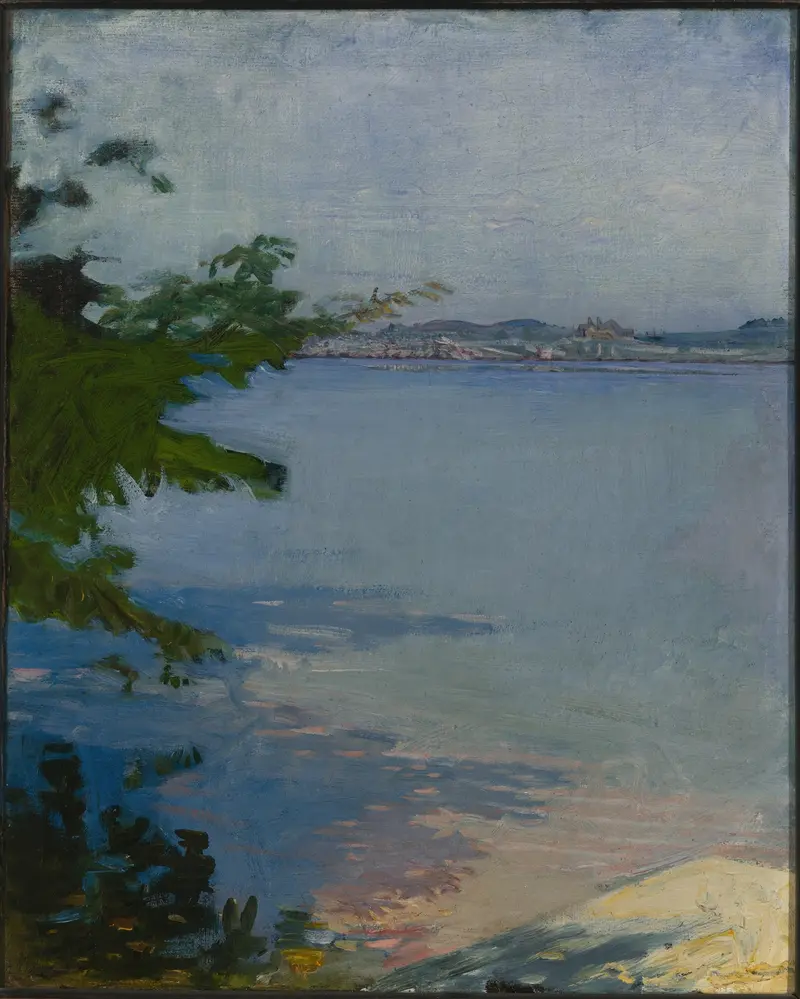
Dublin Pond, New Hampshire
Abbott Handerson Thayer
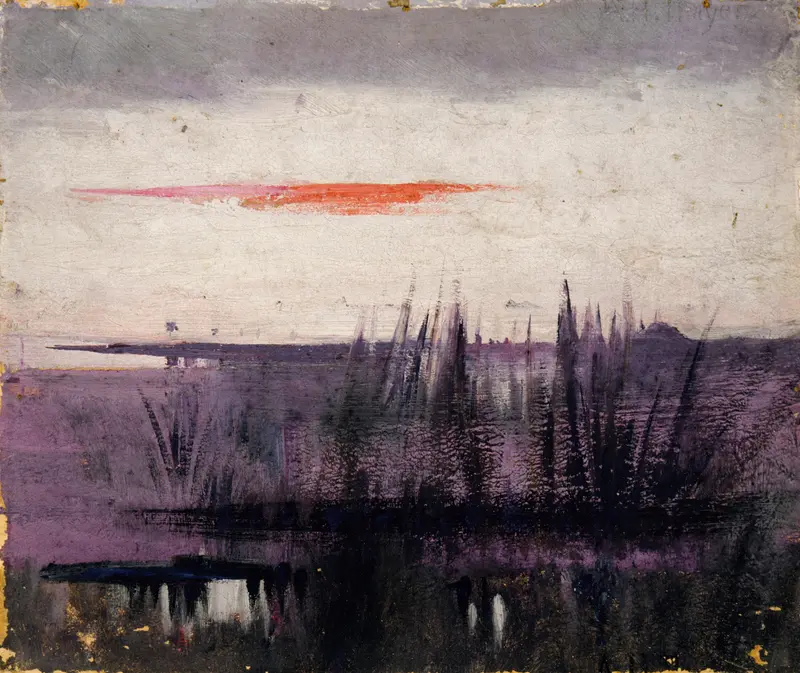
The Sky Simulated By White Flamingoes Study For Book, Concealing Coloration In The Animal Kingdom
Abbott Handerson Thayer
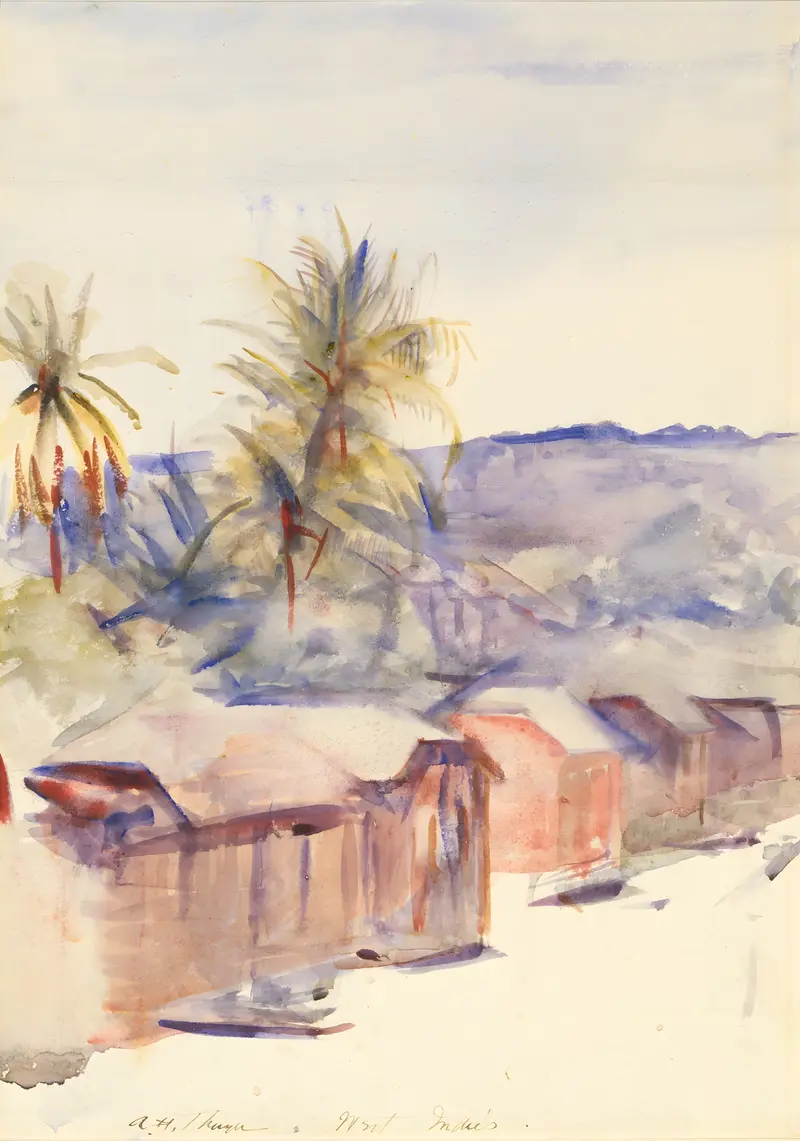
Village Street, Dominica
Abbott Handerson Thayer





