
Motiv aus dem Süden — History & Facts
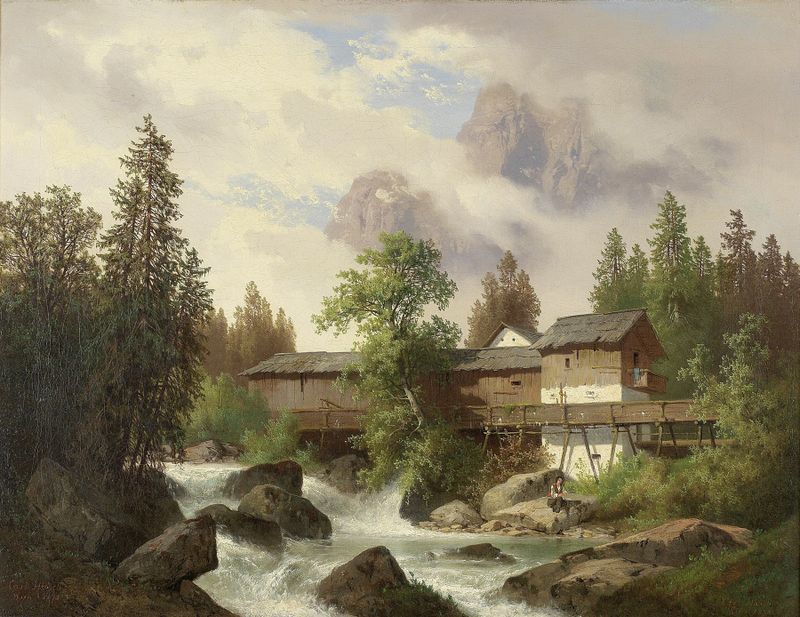
Is this a mirror — or a memory? A moment captured in time, where the essence of a landscape transcends the boundaries of mere representation, inviting viewers to reminisce and reflect. Look to the foreground, where gentle hills rise like whispers of forgotten tales. The rich greens and warm ochres blend seamlessly, drawing the eye towards a serene village nestled among the valleys. Notice how the light falls upon the rooftops, their warm hues glowing against the cool, distant mountains.
Each brushstroke weaves a narrative, revealing Hasch’s masterful technique that balances realism with an ethereal quality that captivates the senses. Delve deeper into the subtle interplay of light and shadow that hints at the passage of time. The villagers, though absent, seem palpably present in this idyllic haven, suggesting a life lived in harmony with the land. The horizon, both expansive and intimate, evokes the promise of new beginnings and the bittersweet nature of nostalgia.
This landscape holds secrets, a testament to the artist's vision of a world where the ordinary transcends into the extraordinary. In 1880, Hasch painted this work during a period of personal exploration and artistic growth. Living in Germany amidst an evolving art scene that embraced naturalism, he sought to capture the idyllic beauty of southern landscapes. It was a time when artists strived to connect profoundly with nature, and through Motiv aus dem Süden, he expressed a yearning for transcendence, inviting viewers to find solace within the realms of memory and imagination.
More Artworks by Carl Hasch
Browse all →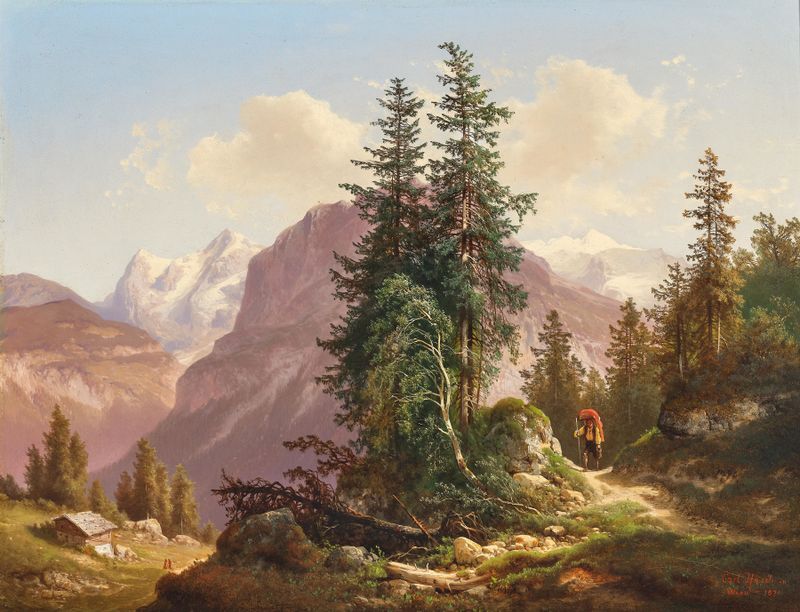
Der Eiger, der Mönch und der Silberhorn in der Schweiz
Carl Hasch

Gebirgsbach in der Ramsau
Carl Hasch

Jäger im Hochgebirge
Carl Hasch
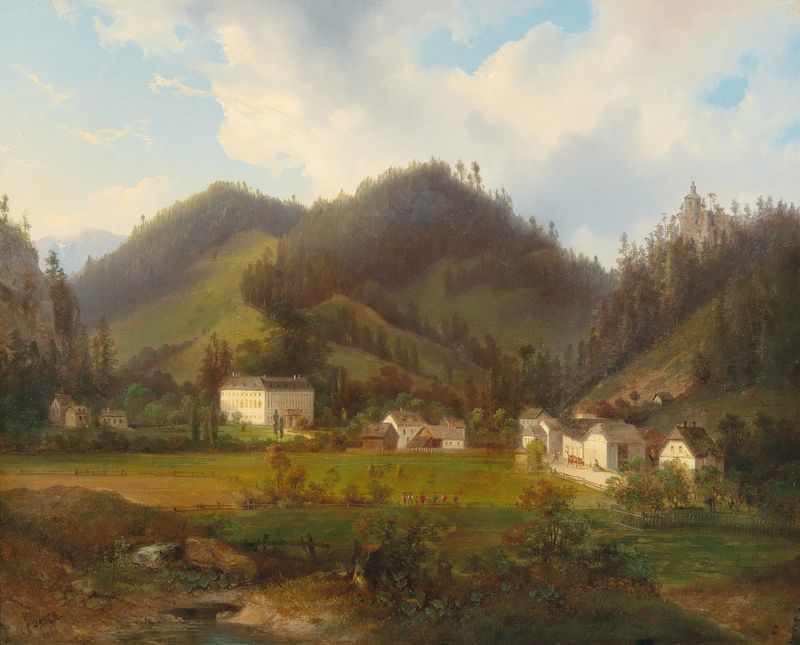
View of Schloss Gutenstein
Carl Hasch
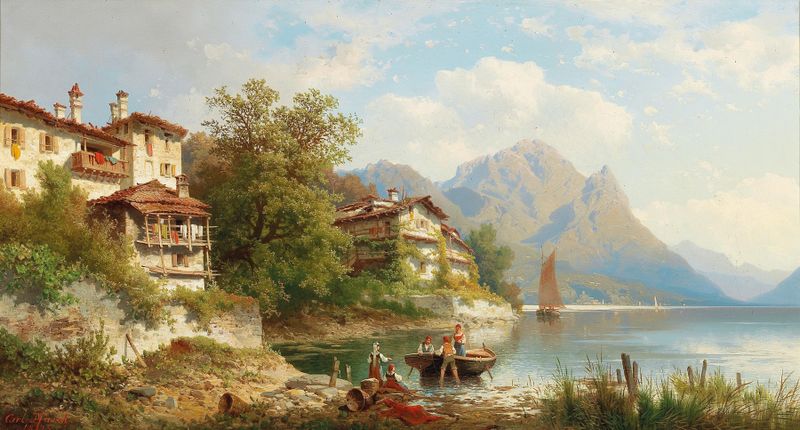
Motiv aus Gandria am Lago di Lugano
Carl Hasch

Waldmühle bei Windischgarsten
Carl Hasch

Waterfall
Carl Hasch

Am Seebach in Prag
Carl Hasch
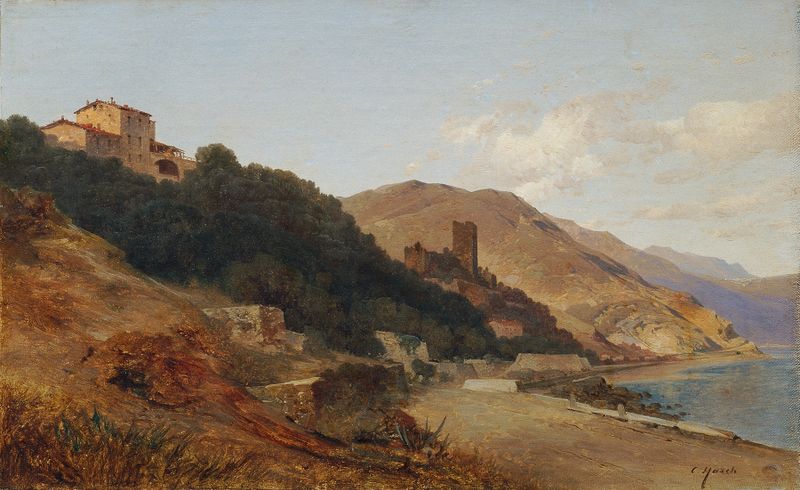
Italienische Abendlandschaft
Carl Hasch
Landschaft mit Sägemühle
Carl Hasch





