
Mountain landscape in Bohemia — History & Facts
A single, rounded mountain rises quietly from a procession of darkened ridges, its silhouette held beneath a sky streaked with pale gold and drifting cloud. The eye is drawn first to that central summit, but it is the sweep of luminous green meadow in the foreground that anchors the scene—an expanse brushed with sunlight, yet edged by shadow where the hills begin. The painter’s choice to keep the horizon low gives the sky a commanding presence, and the gentle gradation from deep shadow to soft light across the land suggests a moment of calm after rain, or the hush before evening.
There are no figures, no dwellings, nothing to break the spell of stillness; the landscape itself is the subject, inviting the viewer to linger in its quiet. Works like this from the 1830s, especially by artists such as Caspar David Friedrich, belong to a moment when landscape painting was charged with new meaning. In the age of Romanticism, painters turned from grand historical narratives to the drama of nature itself, often seeking out remote or wild places for inspiration. While little is recorded about the specific journey of this painting—documented here from a scanned book and preserved in the Bildindex der Kunst und Architektur—the mood and structure are unmistakably of their time: a meditation on solitude, and the vastness of the world beyond human reach.
Let your gaze rest on the shifting light and shadow, and consider what it meant to see the land not as backdrop, but as the main event.
More Artworks by Caspar David Friedrich
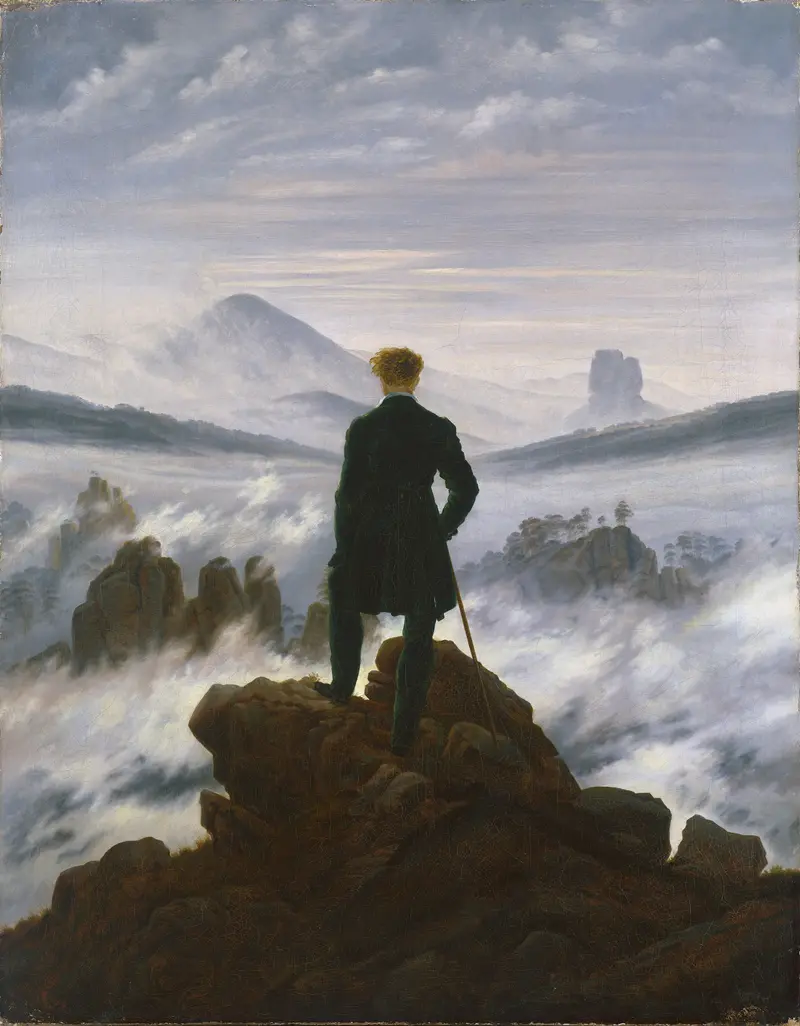
Wanderer above the Sea of Fog
Caspar David Friedrich

The Sea of Ice
Caspar David Friedrich
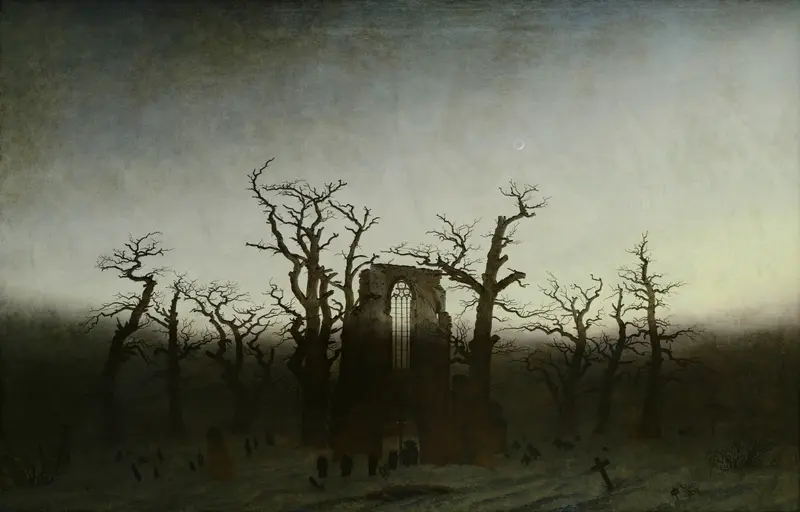
The Abbey in the Oakwood
Caspar David Friedrich
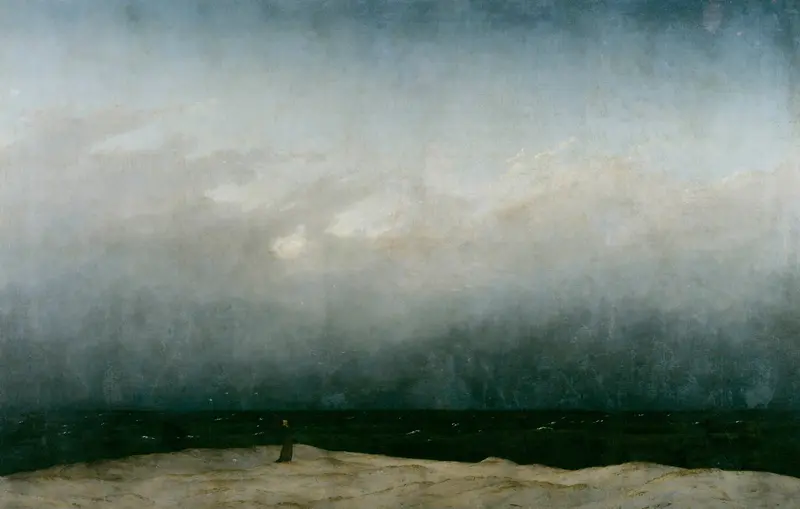
The Monk by the Sea
Caspar David Friedrich
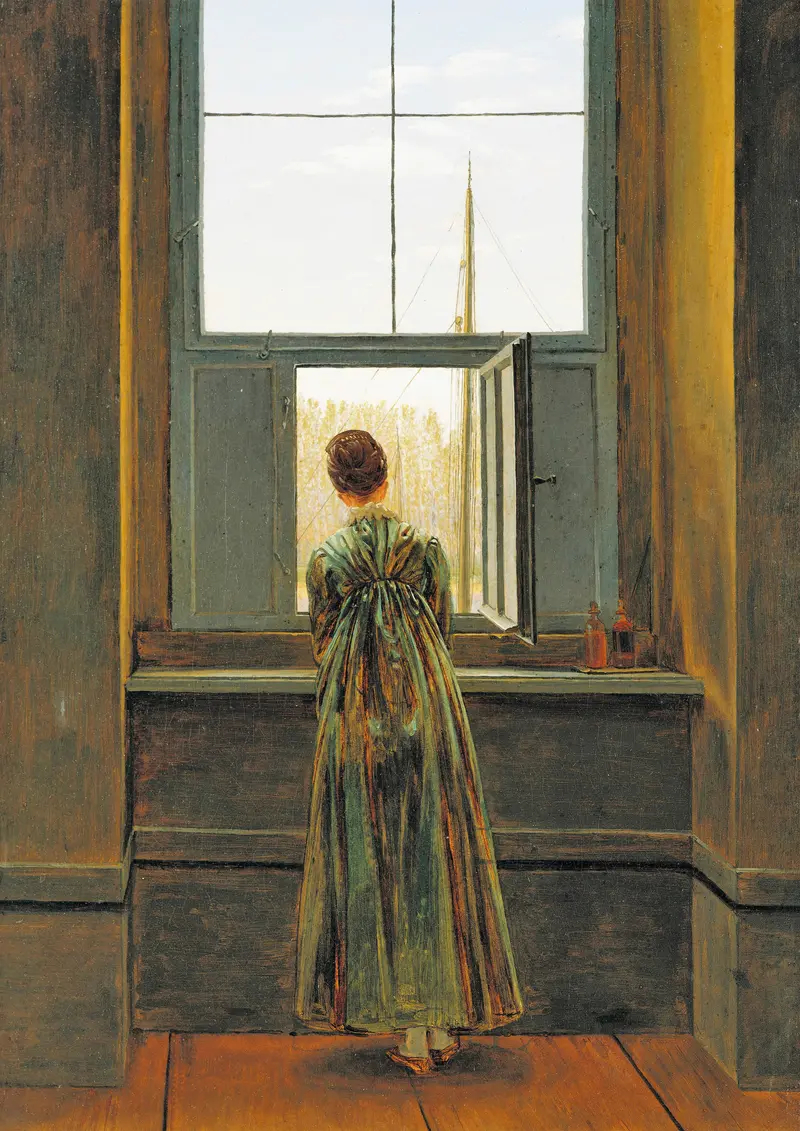
Woman at a Window
Caspar David Friedrich
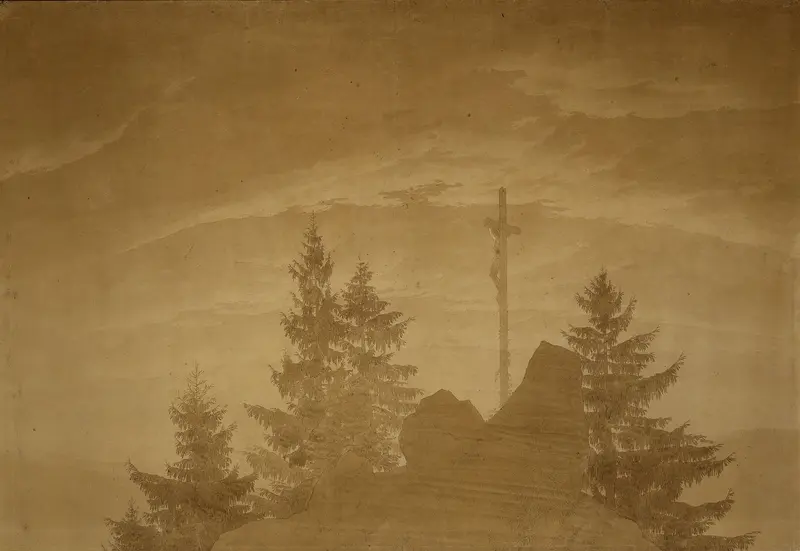
Cross in the Mountains
Caspar David Friedrich
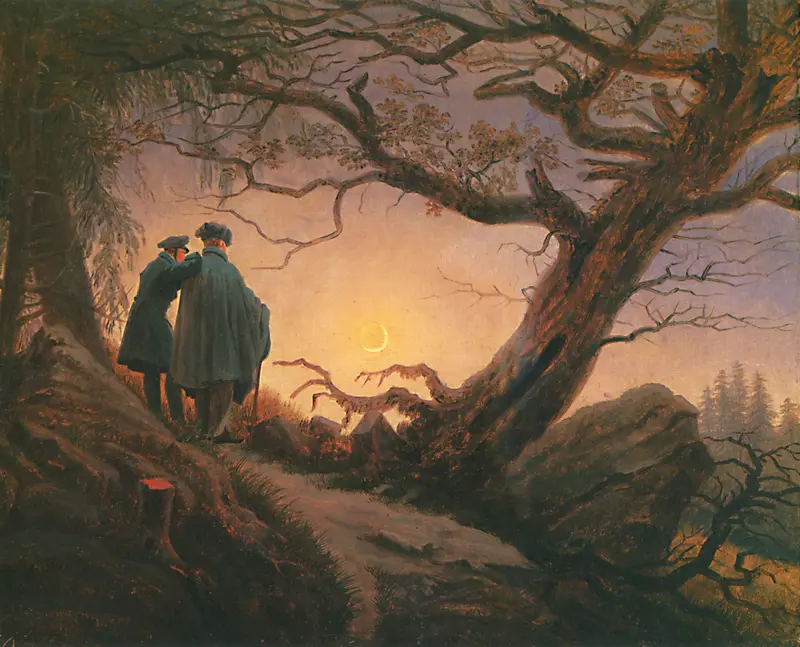
Two Men Contemplating the Moon
Caspar David Friedrich
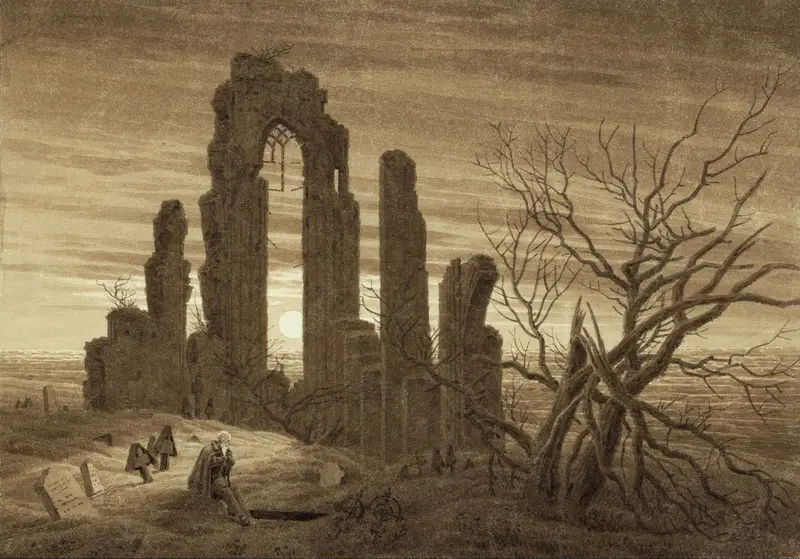
Winter – Night – Old Age and Death (from the times of day and ages of man cycle of 1803)
Caspar David Friedrich
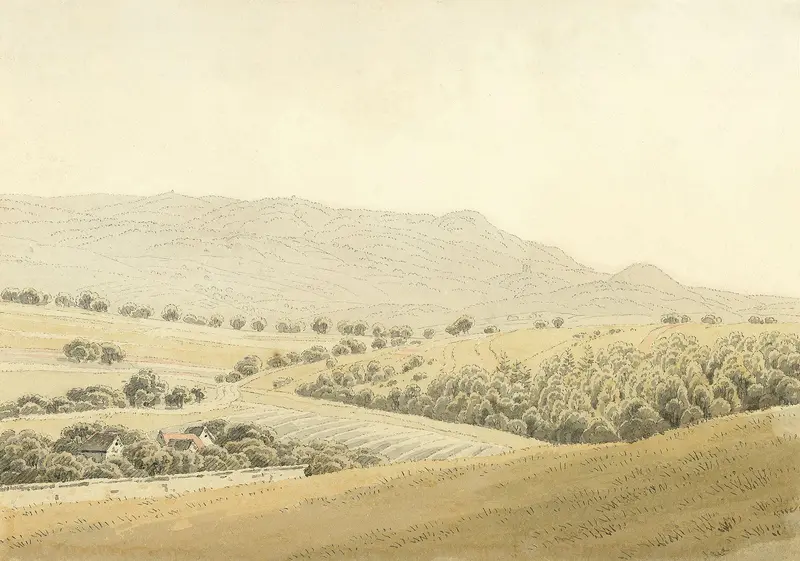
Mittelgebirgslandschaft
Caspar David Friedrich

Landschaft mit gebirgsee, morgen
Caspar David Friedrich
More Landscape Art

The Starry Night
Vincent van Gogh

View of Delft
Johannes Vermeer

Water Lilies
Claude Monet

The Grand Canal, Venice, looking north-west from the Ca' Corner to the Ca' Contarini degli Scrigni, with the campanile of Santa Maria della Carità
Canaletto

Windsor Castle
Canaletto

The Grand Canal looking North-East from the Palazzo Dolfin-Manin to the Rialto Bridge
Canaletto