
Mountain Landscape with Chamois — History & Facts
It holds within it the power to evoke awe, inviting us to step into a world where nature reveals its most sublime truths. Look to the foreground at the rugged mountain cliffs, where a lone chamois stands poised, its delicate form contrasting against the grandeur of towering peaks. The rich greens and browns of the forest below meld seamlessly with the cool, ethereal blues of the sky and distant mountains, creating a harmonious balance. Notice how the light filters through the clouds, illuminating the chamois with a gentle glow that emphasizes its vitality and grace, while shadowy contours suggest both mystery and depth. Within this serene tableau, an emotional tension arises from the coexistence of vulnerability and strength.
The chamois, a symbol of resilience, embodies the struggle for survival in a vast and often unforgiving landscape. The mountains, stoic and eternal, remind us of nature's indifference to individual lives. This dialogue between the fleeting moment of the creature's life and the permanence of the majestic scenery invites contemplation about our place within the natural world. In 1849, Arnold Böcklin created Mountain Landscape with Chamois during a period of artistic exploration influenced by Romanticism.
This was a time when artists sought to depict not only the beauty of nature but also its power and mystery. Working in Switzerland, he found inspiration in the dramatic landscapes that surrounded him, and his fascination with the emotional impact of nature would define his legacy within the art world.
More Artworks by Arnold Böcklin
Browse all →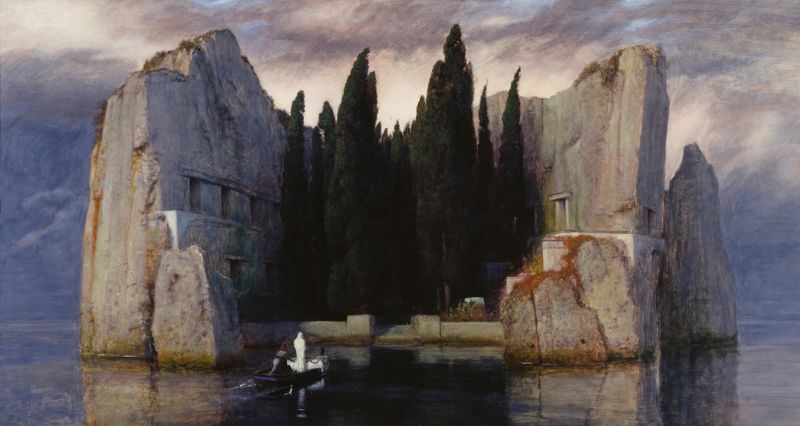
Die Toteninsel III
Arnold Böcklin
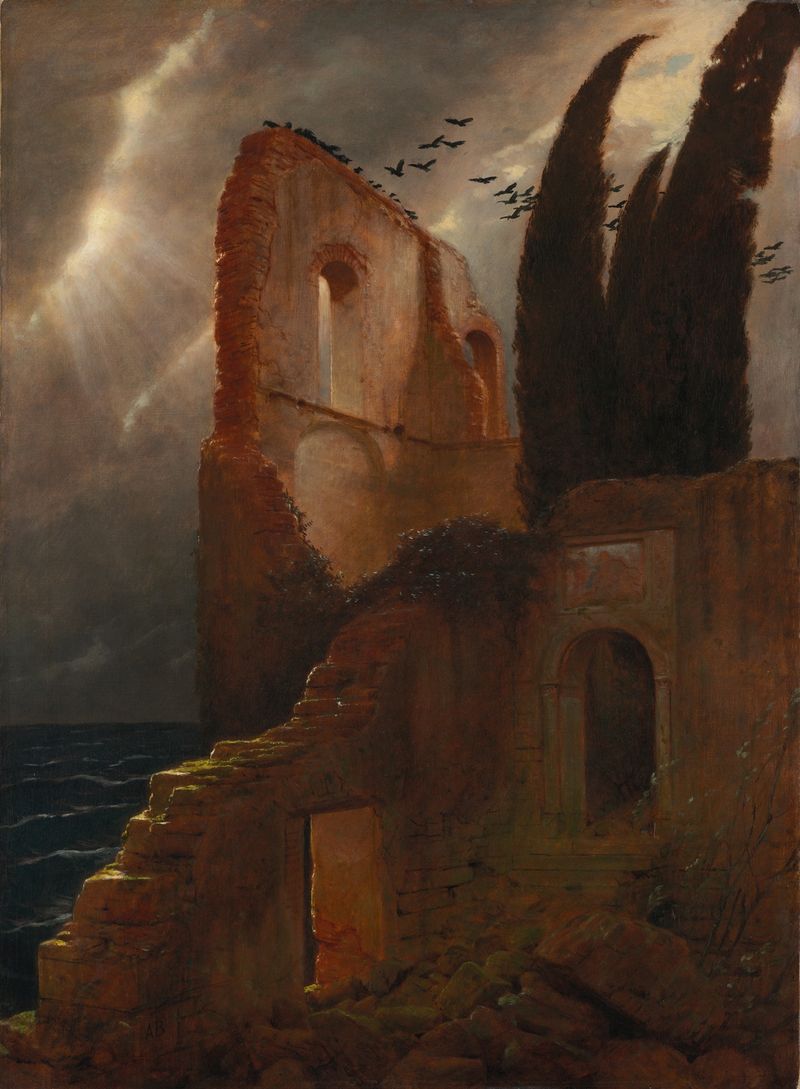
Ruin by the Sea
Arnold Böcklin
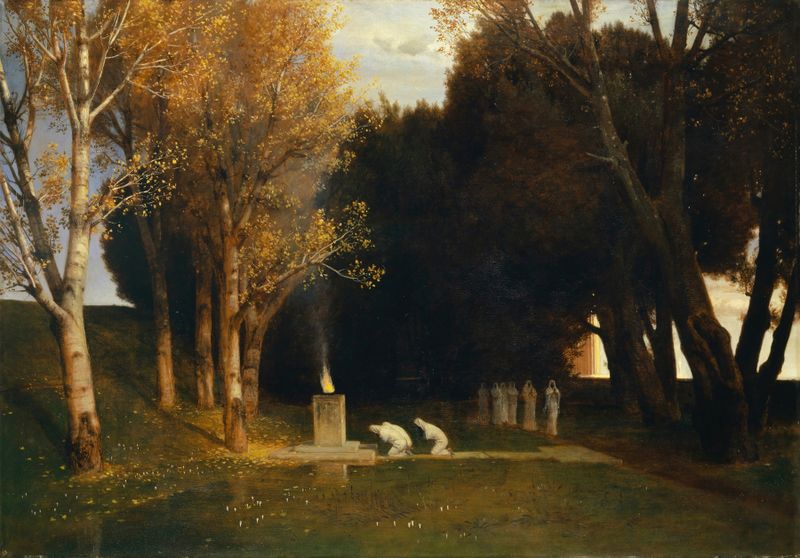
The Sacred Grove
Arnold Böcklin
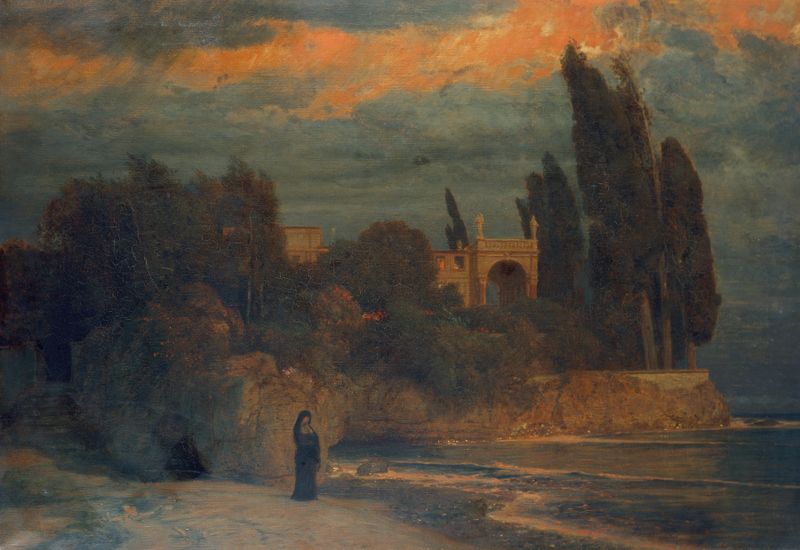
Villa by the Sea
Arnold Böcklin
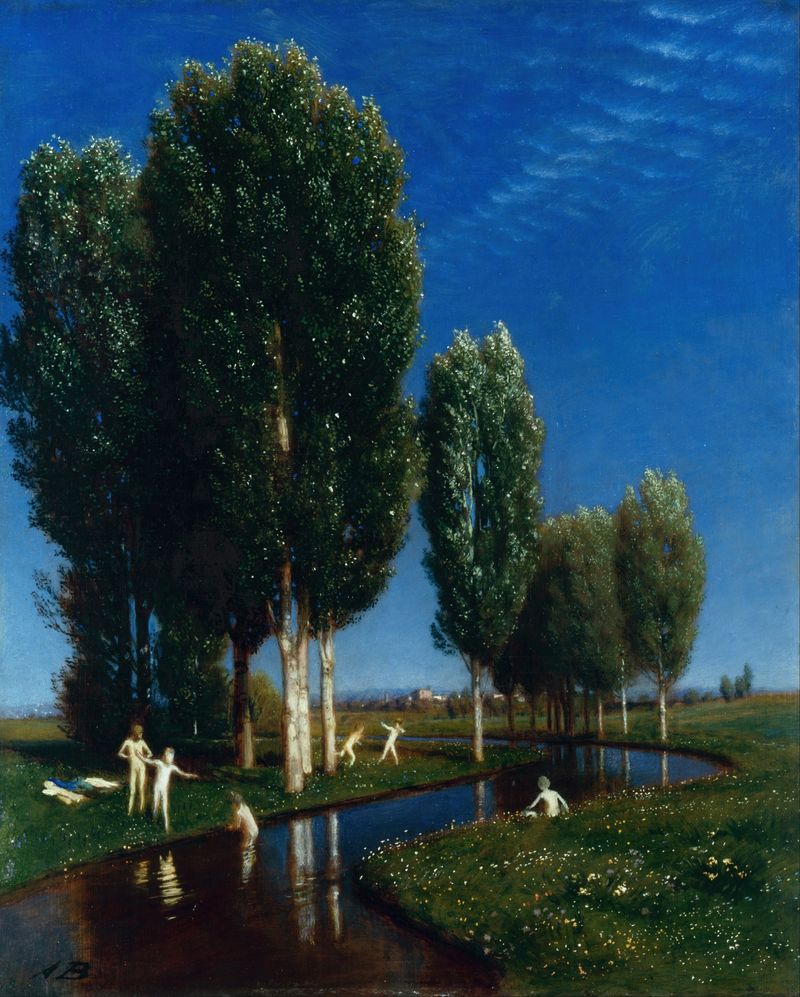
Summer Day
Arnold Böcklin
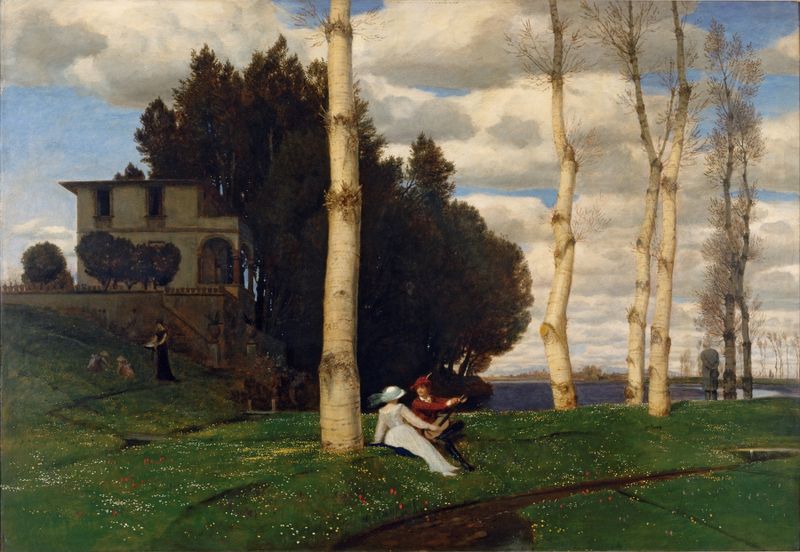
Spring Day (The Three Life Ages)
Arnold Böcklin
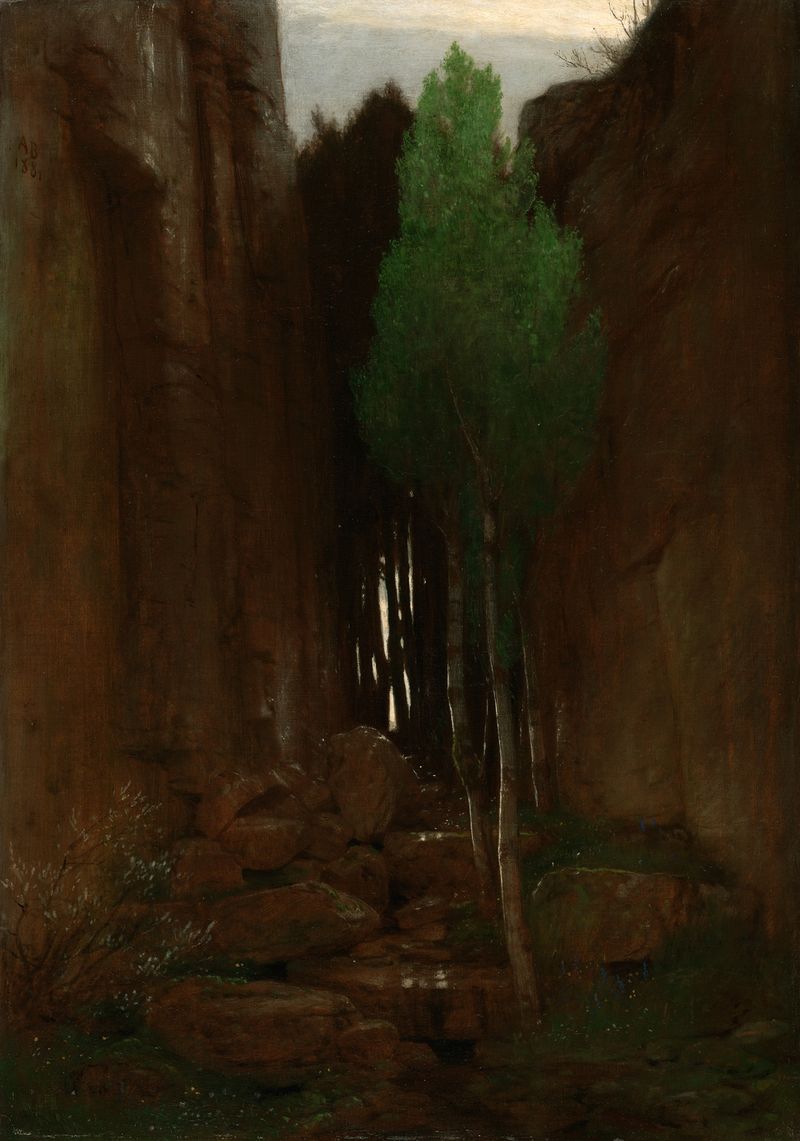
Spring in a Narrow Gorge (Quell in einer Felsschluct)
Arnold Böcklin
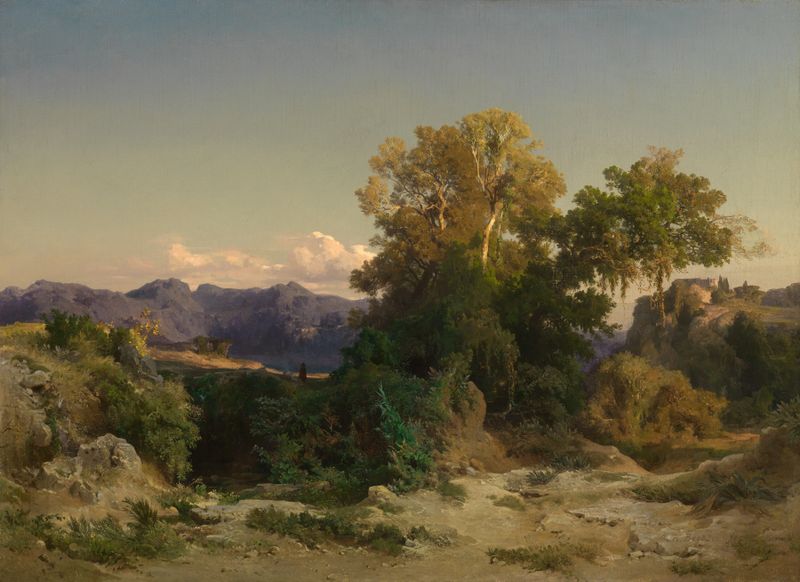
Landscape in the Roman Campagna
Arnold Böcklin
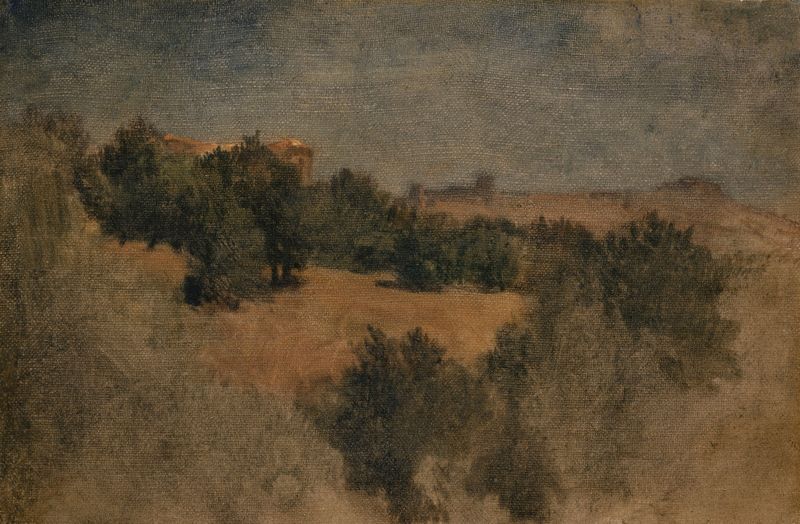
Landscape near Palestrina
Arnold Böcklin
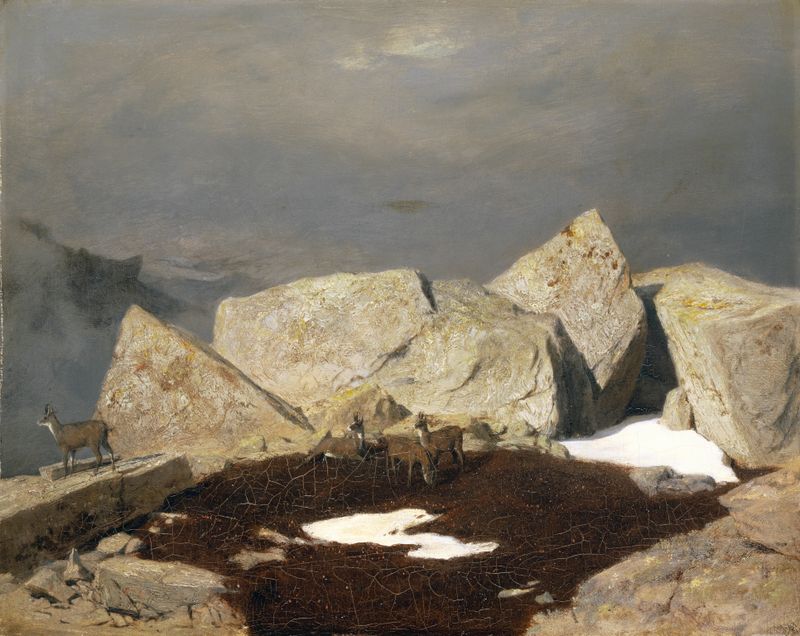
High Mountain Landscape With Chamois
Arnold Böcklin





