
Mountain Landscape with Waterfall — History & Facts
In the shadows of towering peaks, a delicate world teeters on the edge of reality, whispering secrets of fragility and transience. Focus on the soft cascade of water tumbling down the rocky cliff in the foreground, where light plays with the crystal droplets, illuminating them with an otherworldly glow. The mountains loom in the background, their rugged surfaces contrasting against the serene beauty of the waterfall. Notice how the cool blues and greens dominate the palette, evoking a sense of calm yet underscoring the perilousness of nature’s splendor.
The composition draws the eye upward, suggesting an elevation both literal and metaphorical, as if beckoning the viewer to explore deeper realms of thought and emotion. Amidst the tranquil beauty lies a tension between the serene and the sublime. The interplay of light and shadow hints at the duality of existence—a reminder of the transient nature of beauty and life itself. The looming mountains symbolize strength and permanence, yet the waterfall’s fleeting nature reminds us of fragility.
This juxtaposition evokes a profound sense of introspection, urging the viewer to consider their own place within the vastness of the natural world. In 1849, Arnold Böcklin painted this work during a period of personal and artistic exploration in Switzerland. Emerging from the Romantic movement, he sought to portray nature's majesty and mystery while grappling with existential themes. This painting reflects his fascination with the sublime, a hallmark of his evolving style, as he infused landscapes with emotional depth and symbolic resonance that resonated with the challenges of his time.
More Artworks by Arnold Böcklin
Browse all →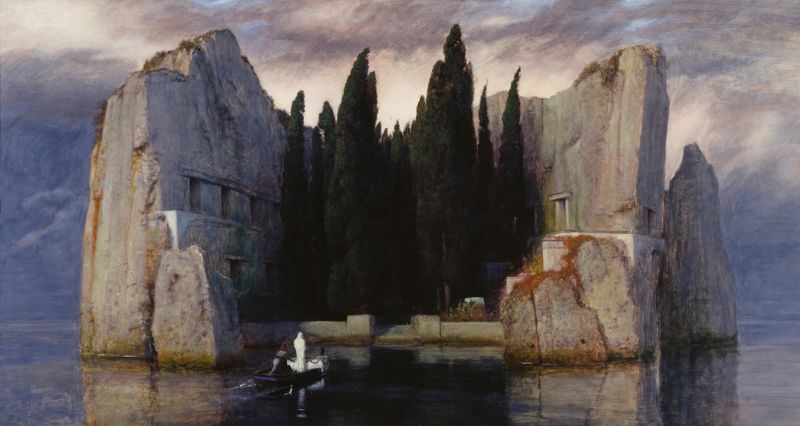
Die Toteninsel III
Arnold Böcklin
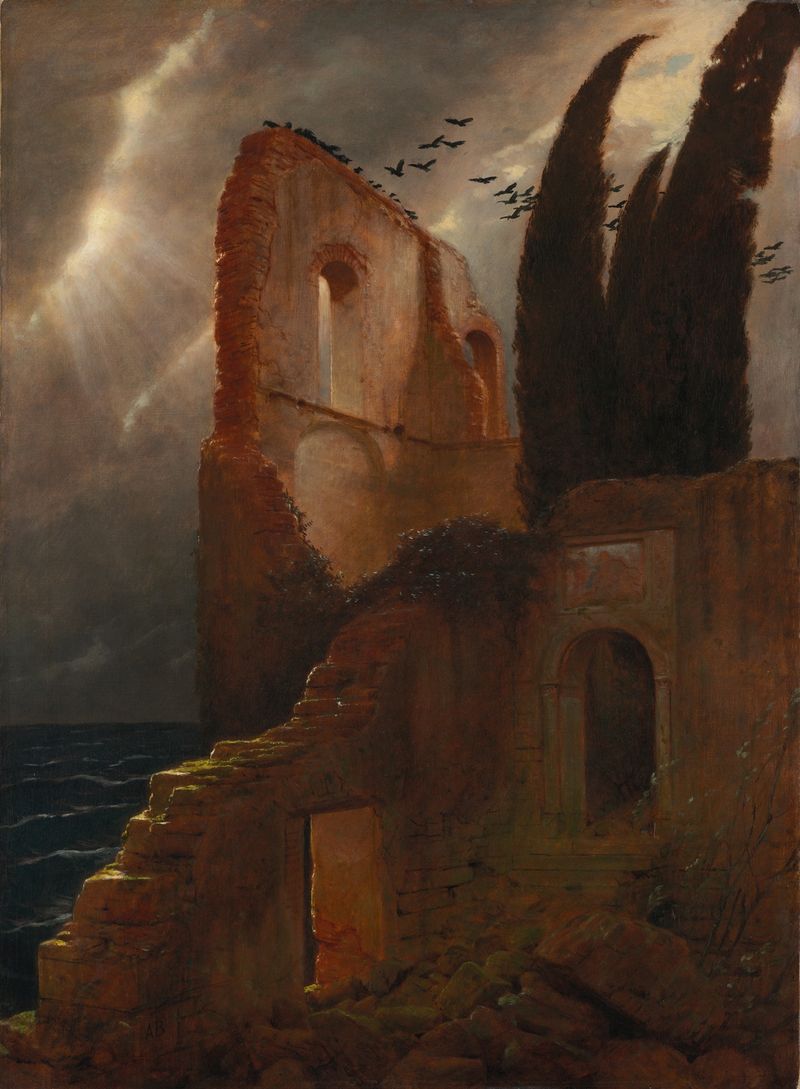
Ruin by the Sea
Arnold Böcklin
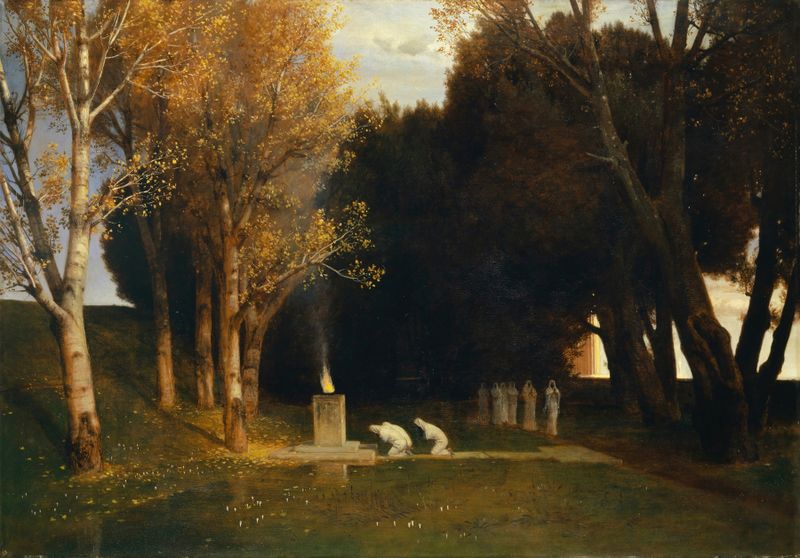
The Sacred Grove
Arnold Böcklin
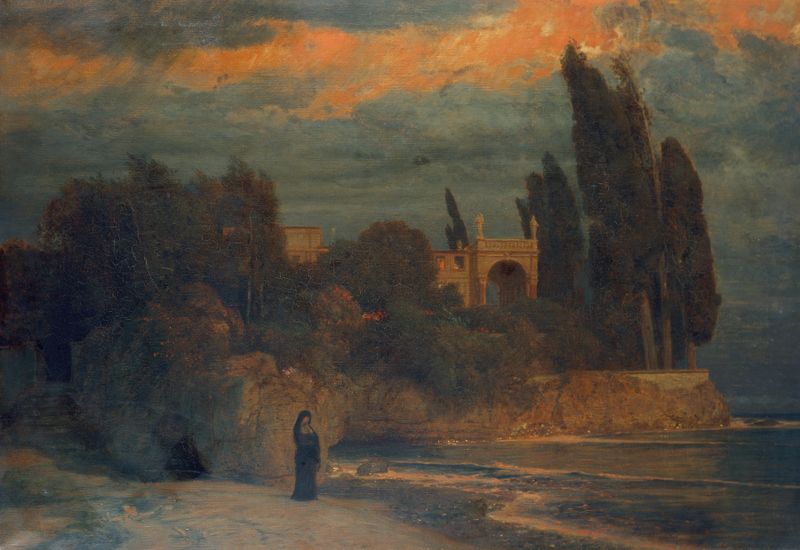
Villa by the Sea
Arnold Böcklin
Summer Day
Arnold Böcklin
Spring Day (The Three Life Ages)
Arnold Böcklin
Spring in a Narrow Gorge (Quell in einer Felsschluct)
Arnold Böcklin
Landscape in the Roman Campagna
Arnold Böcklin
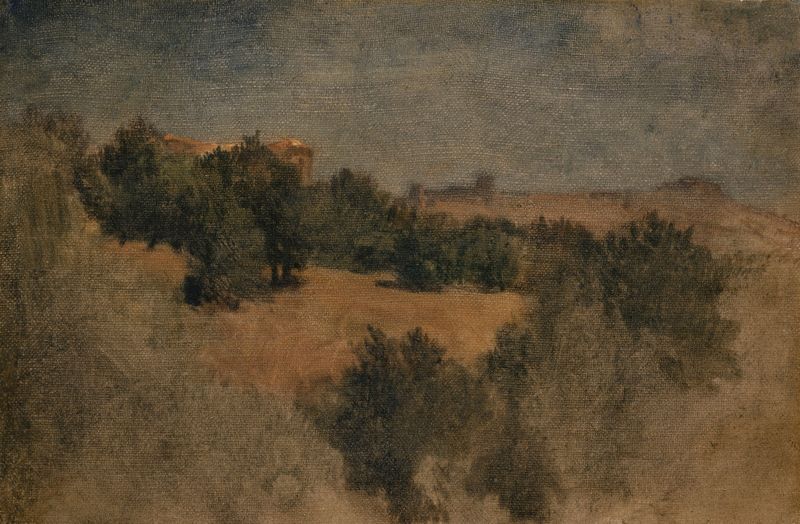
Landscape near Palestrina
Arnold Böcklin
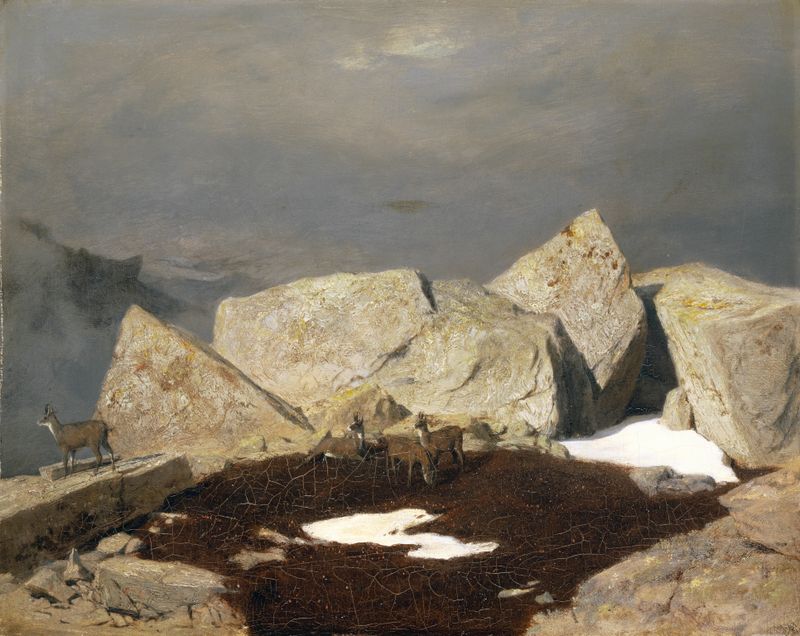
High Mountain Landscape With Chamois
Arnold Böcklin





