
Mountainous Landscape with Waterfall — History & Facts
A single shaft of golden light slices through the dense trees, catching on the upraised arm of a child who teeters on the edge of a rocky pool. The scene is a careful balancing act: wild, ancient trunks frame the foreground, their bark rendered with a tactile precision, while the distant mountains dissolve into a haze of blue. Every element leads the viewer’s gaze deeper—from the tangled roots at your feet, past the waterfall, to the luminous sky that promises a world beyond.
The figures, small and absorbed in their own pursuits, are dwarfed by the grandeur of nature, their presence a fleeting note in the vast orchestration of land, water, and air. Painted between circa 1665 and 1670, this work belongs to a moment in Dutch art when landscapes became more than mere settings—they were invitations to wander, to lose oneself in imagined journeys. Artists like Adam Pijnacker drew on the Italianate tradition, conjuring vistas that mingled northern detail with southern light, often for patrons eager to bring a sense of adventure and cultivated taste into their homes. Today, Mountainous Landscape with Waterfall resides in the Mauritshuis, a quiet testament to a time when the world seemed both immense and intimately knowable.
The longer you look, the more the painting reveals: a story not of heroes or battles, but of the endless fascination with the land itself.
More Artworks by Adam Pijnacker

Italianate River Landscape
Adam Pijnacker
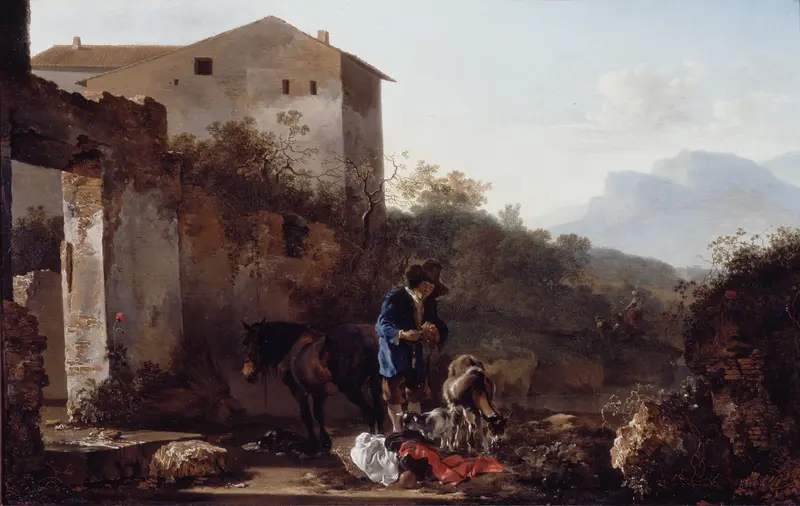
Landscape with a Goatherd
Adam Pijnacker
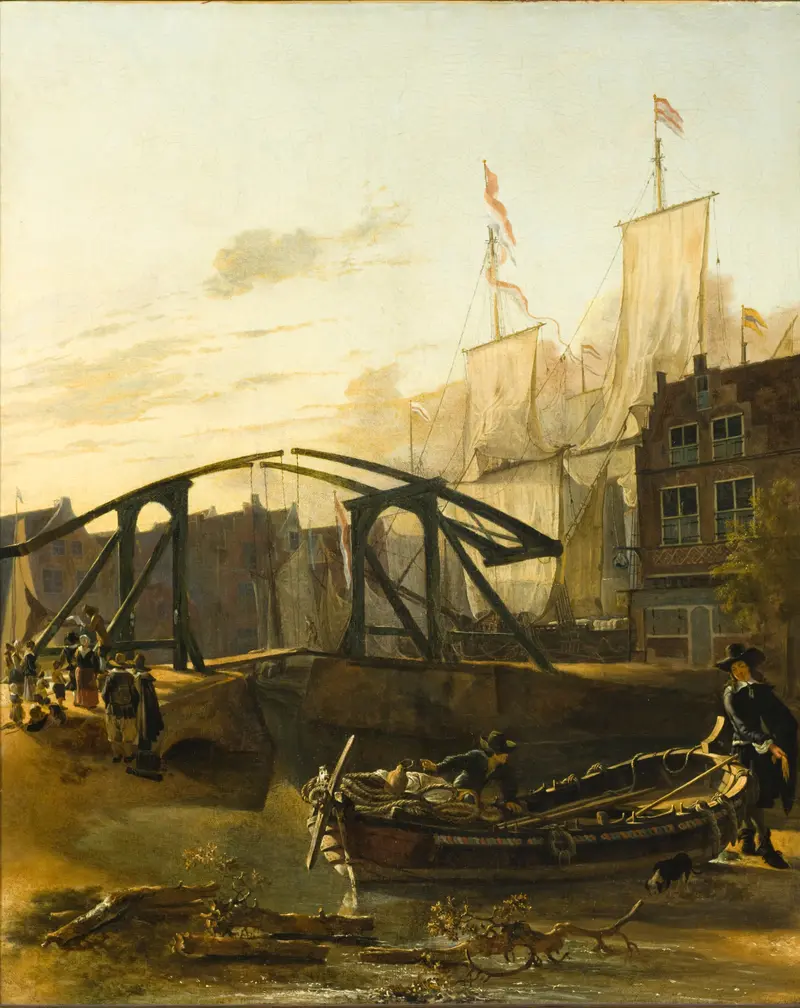
View of a Harbor in Schiedam
Adam Pijnacker
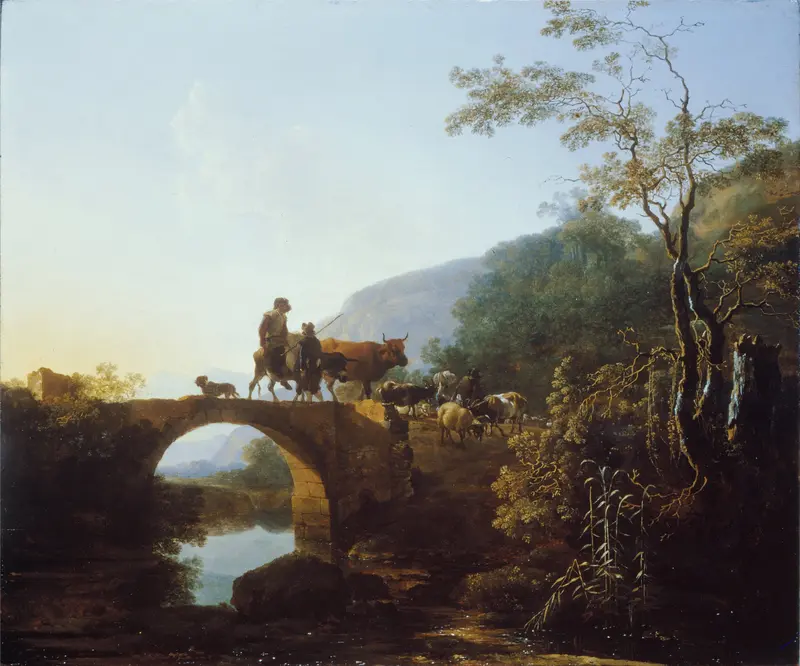
Bridge in an Italian Landscape
Adam Pijnacker
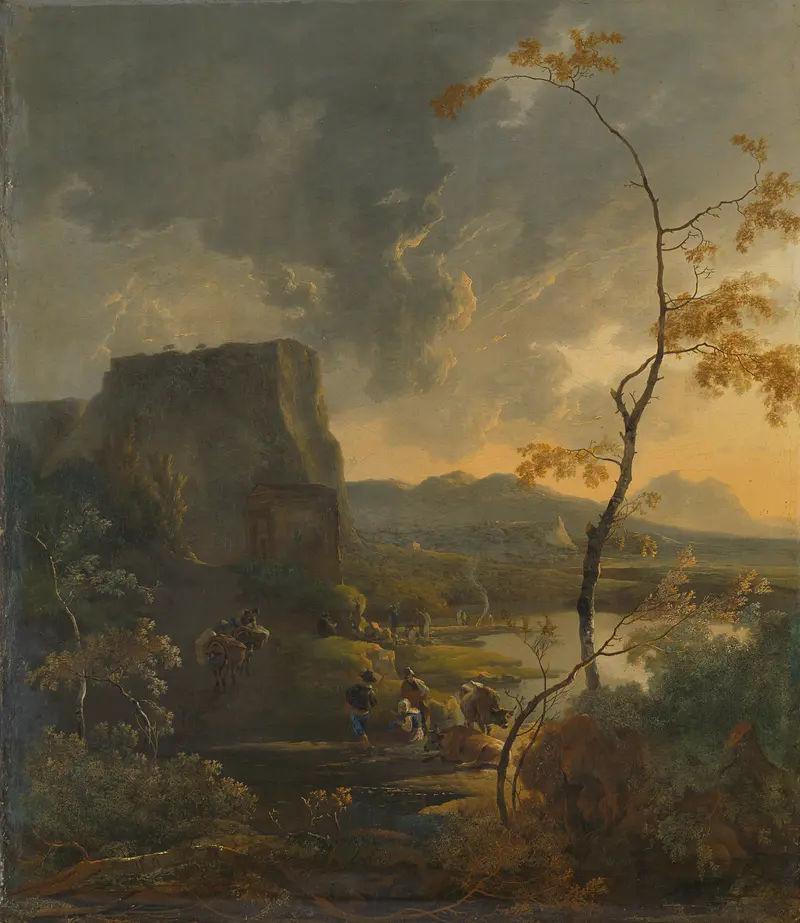
Italian Landscape with Ancient Tempietto
Adam Pijnacker
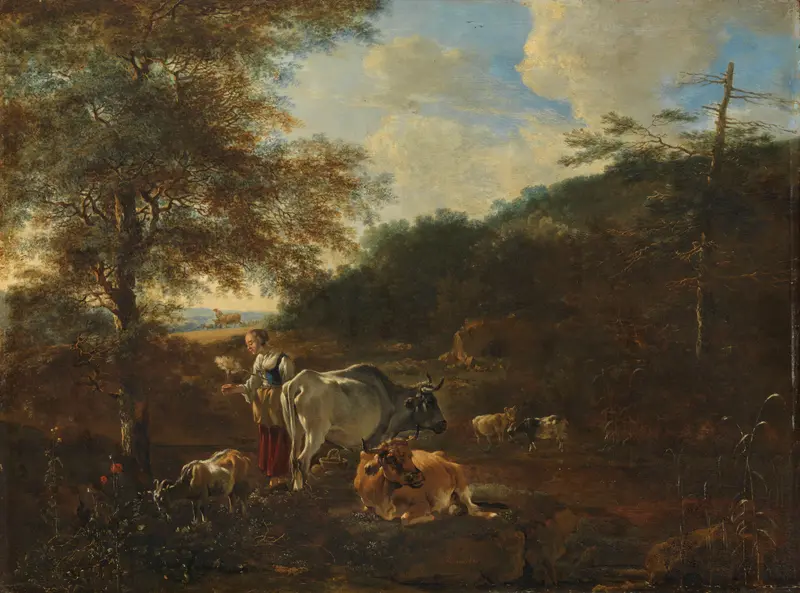
Landscape with cattle
Adam Pijnacker
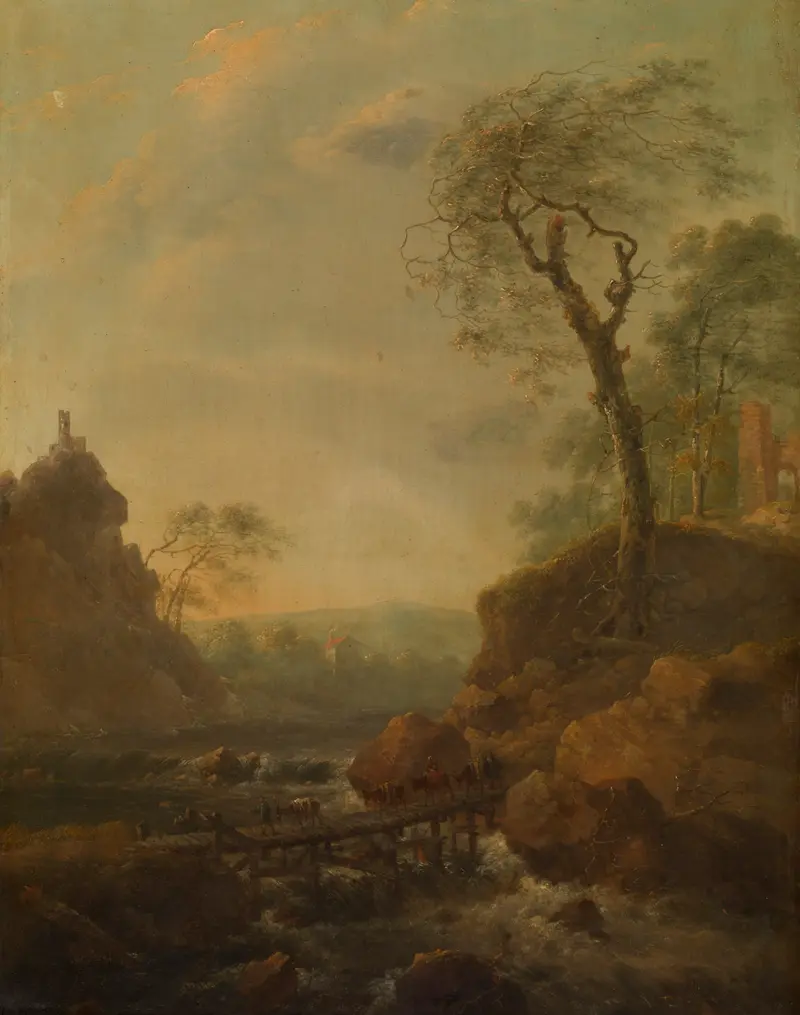
Landscape
Adam Pijnacker
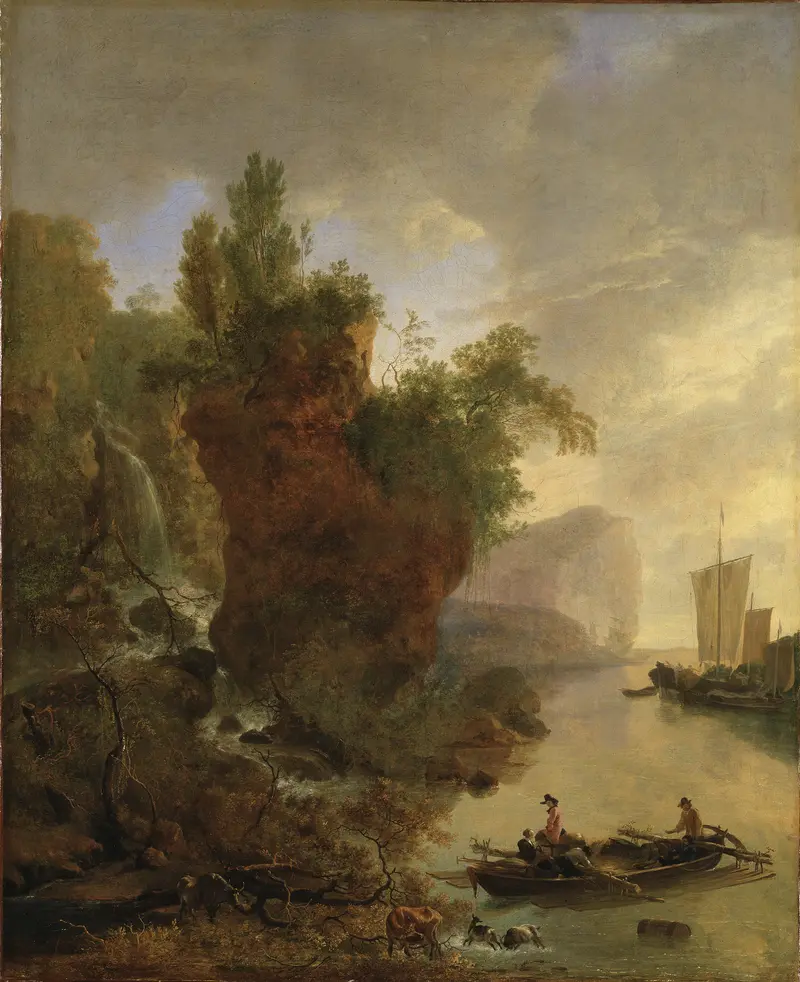
Bay with a Rocky Coast
Adam Pijnacker
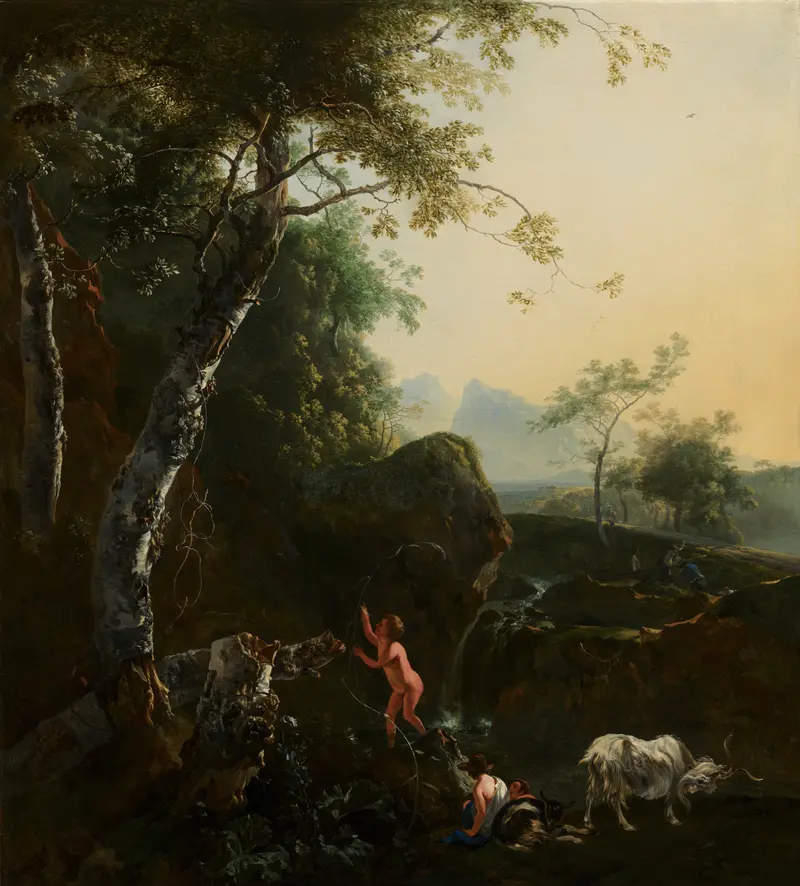
Mountainous Landscape with Waterfall
Adam Pijnacker
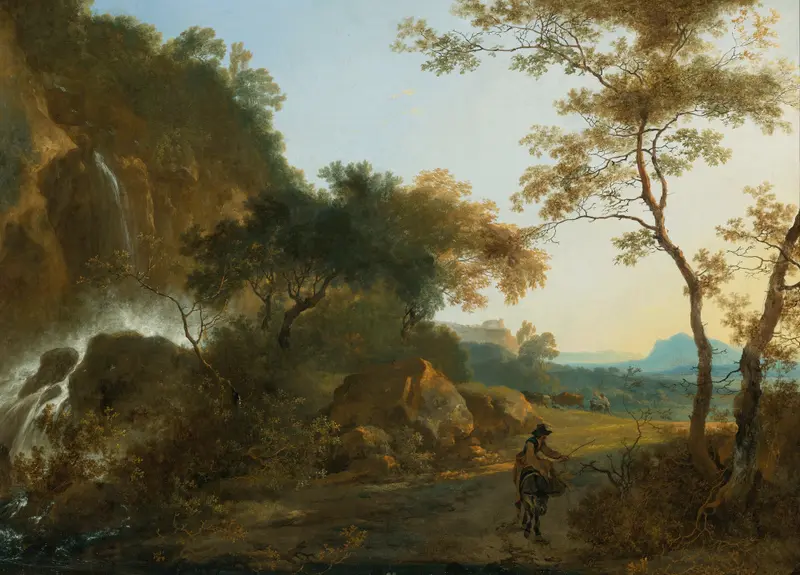
An Italianate Landscape With A Traveller On A Path By A Waterfall
Adam Pijnacker
More Landscape Art

The Starry Night
Vincent van Gogh

View of Delft
Johannes Vermeer

Water Lilies
Claude Monet

The Grand Canal, Venice, looking north-west from the Ca' Corner to the Ca' Contarini degli Scrigni, with the campanile of Santa Maria della Carità
Canaletto

Windsor Castle
Canaletto

The Grand Canal looking North-East from the Palazzo Dolfin-Manin to the Rialto Bridge
Canaletto