
Mrs. Grace Dalrymple Elliott (1754?–1823) — History & Facts
What immediately draws the eye is the sweep of golden silk, caught mid-motion as if its wearer has just turned to greet an unseen guest. The figure stands poised against a backdrop that shifts from the suggestion of a garden to the cool shadow of a grand interior, her profile lit with a gentle clarity that picks out the powdered blue of her towering hair and the delicate flush in her cheek. Every fold of her gown is rendered with a tactile richness, the shimmering fabric gathered in her hand both a shield and a flourish.
The artist’s touch lingers on the lace at her sleeves, the glint of a bracelet, and the subtle arch of her brow, inviting the viewer to read confidence and calculation in her stance. Light pools at her feet and shoulders, guiding attention to the interplay between her composed face and the restless energy of her dress. Painted in 1778, this portrait belongs to the world of late eighteenth-century Britain, when society portraits were both status symbols and statements of identity. Figures like the sitter—often from the ranks of the fashionable elite—commissioned such works to assert their place in a rapidly shifting social order, where wit, beauty, and reputation could be as valuable as lineage.
Thomas Gainsborough was renowned for capturing not just the likeness but the presence of his sitters, blending the traditions of the grand manner with a new informality and psychological depth. Now in the collection of the Metropolitan Museum of Art, this painting stands as a testament to both the ambitions of its era and the enduring fascination of a single, unforgettable pose. Look again at the hand gathering the silk: it is both a gesture of elegance and a clue to the sitter’s inner life, forever suspended between display and concealment.
More Artworks by Thomas Gainsborough
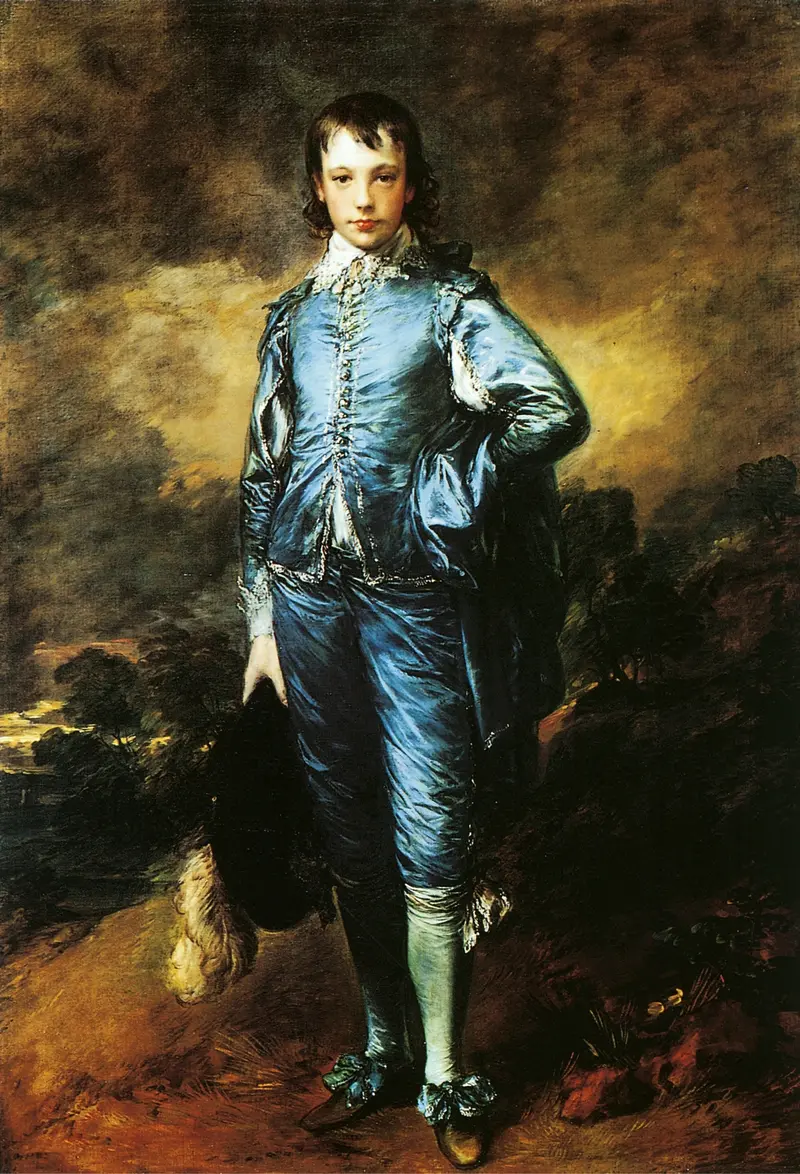
The Blue Boy
Thomas Gainsborough
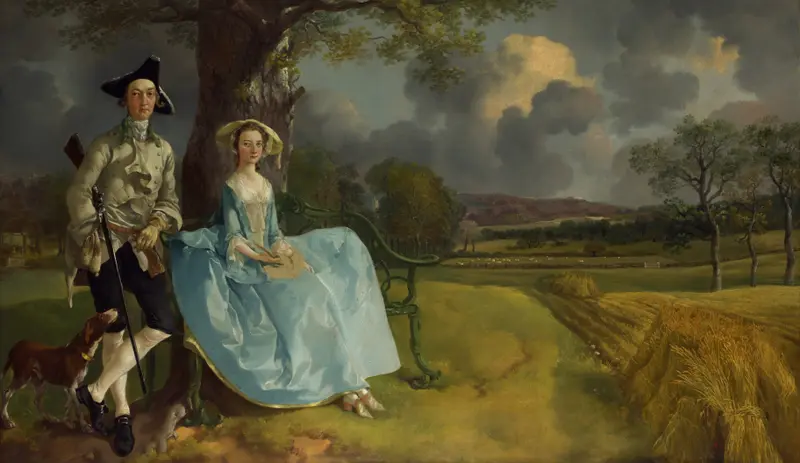
Mr and Mrs Andrews
Thomas Gainsborough

Wooded Landscape with Figures
Thomas Gainsborough

Sir Benjamin Thompson, later Count Rumford (1753-1814)
Thomas Gainsborough
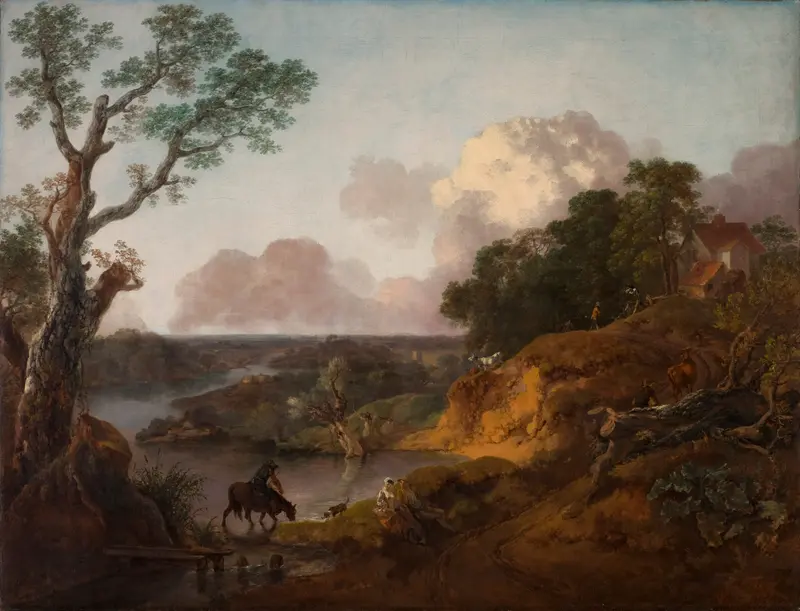
View in Suffolk
Thomas Gainsborough
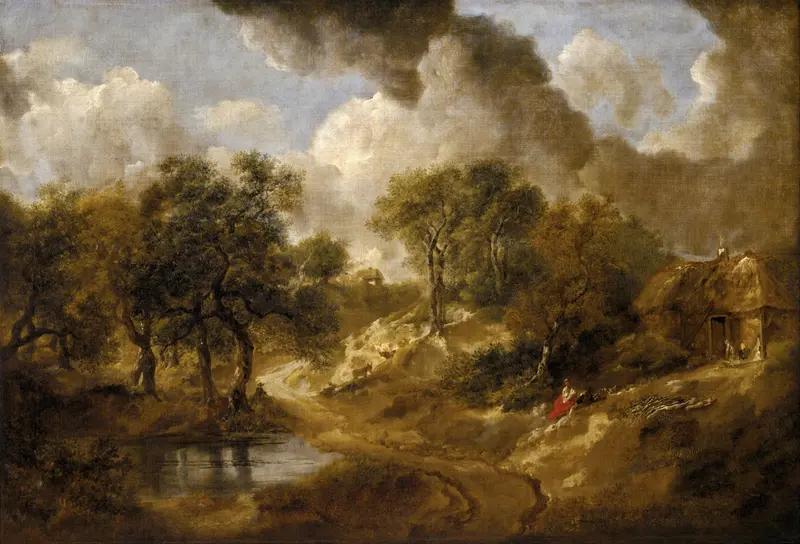
Landscape in Suffolk
Thomas Gainsborough
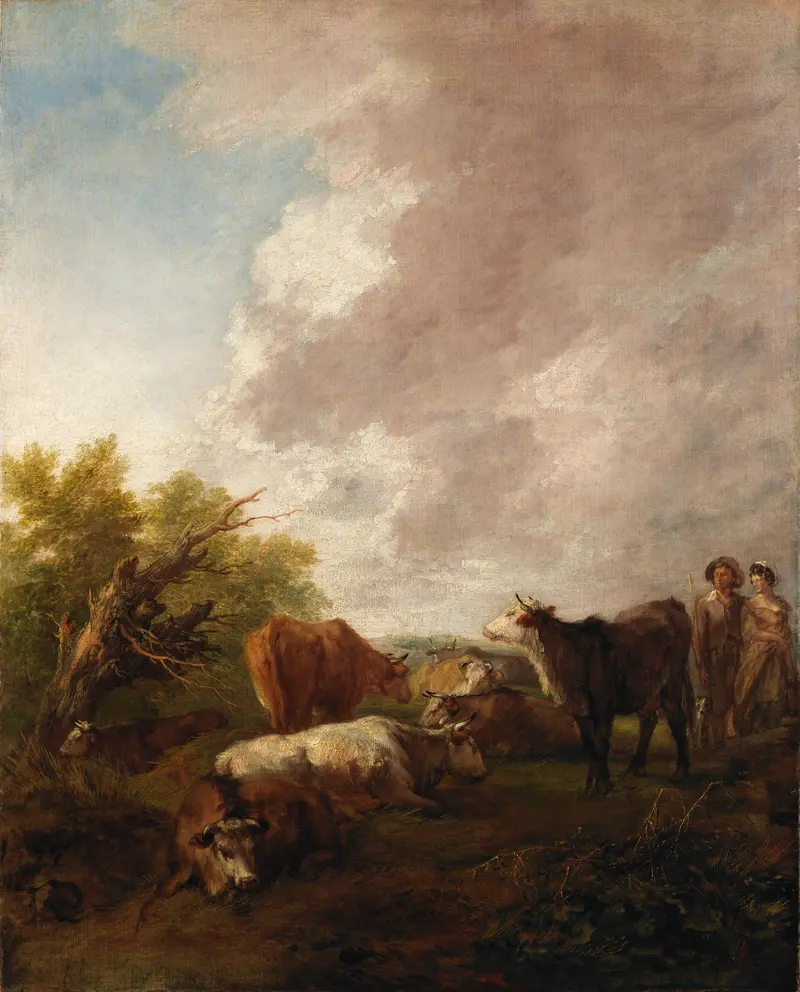
Landscape with Cattle
Thomas Gainsborough
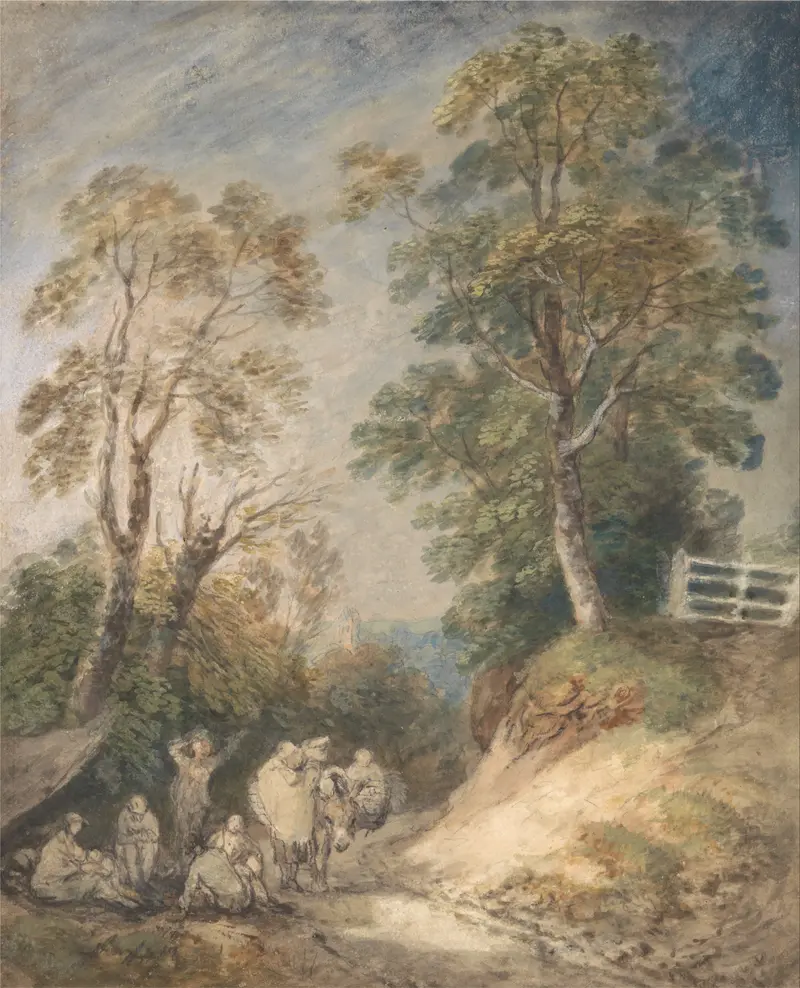
Country Lane with Gypsies Resting
Thomas Gainsborough
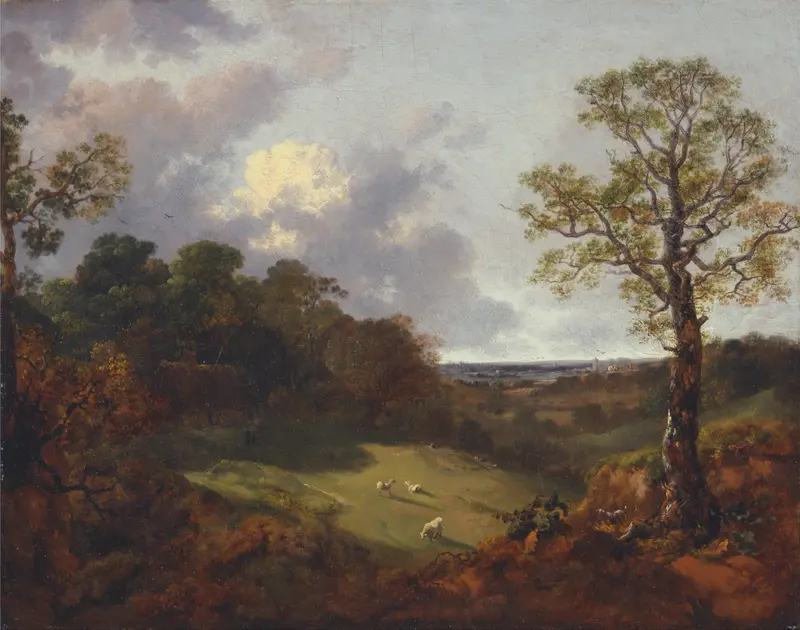
Wooded Landscape with a Cottage and Shepherd
Thomas Gainsborough
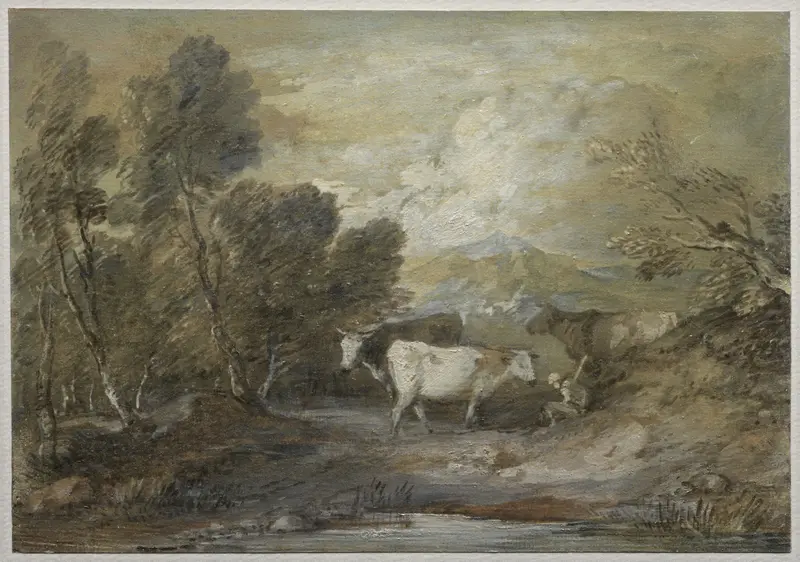
A Herdsman with Three Cows by an Upland Pool
Thomas Gainsborough





