
Mrs. Richard Brinsley Sheridan — History & Facts
A woman pauses in a woodland, her gaze turned not toward us but into the distance, as if listening for a voice just out of reach. The wind stirs her gauzy shawl and the ribbons in her hair, catching the same light that glimmers on her luminous skin. The painter has chosen a moment of movement — her body angled, one hand clutching her wrap, the other relaxed in her lap — so that stillness and motion seem to balance on a knife’s edge.
The landscape is no mere backdrop: it wraps around her, echoing the gentle turbulence of her pose and the shifting weather of her thoughts. The palette is cool and silvery, with the blue-green shadows of the woods drawing our eyes to her face, which glows with a gentle melancholy. Painted between 1785 and 1787, this portrait belongs to a world in which images of society women were both personal tributes and public statements. In late eighteenth-century Britain, artists like Thomas Gainsborough transformed the genre of portraiture, moving away from rigid formality toward a looser, more poetic style that suggested the sitter’s inner life as much as her social standing.
Such works were often commissioned to mark marriages or social ascents, and their settings — real or imagined — spoke volumes about taste and aspiration. Today, this painting resides in the National Gallery of Art, a quiet testament to an age when the boundaries between portrait and landscape, public image and private self, were being redrawn. Look again at the way the light plays across the folds of her dress: it is as if the painter has caught not just a likeness, but a fleeting mood, suspended in paint.
More Artworks by Thomas Gainsborough
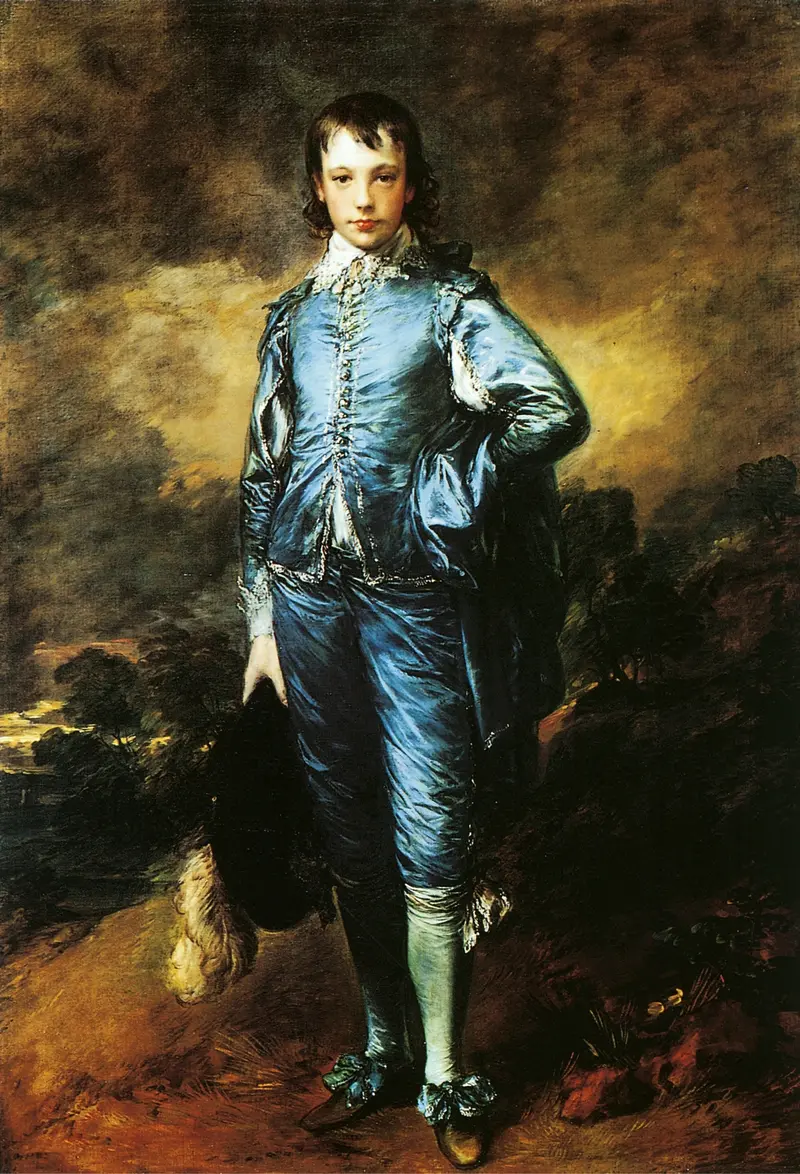
The Blue Boy
Thomas Gainsborough
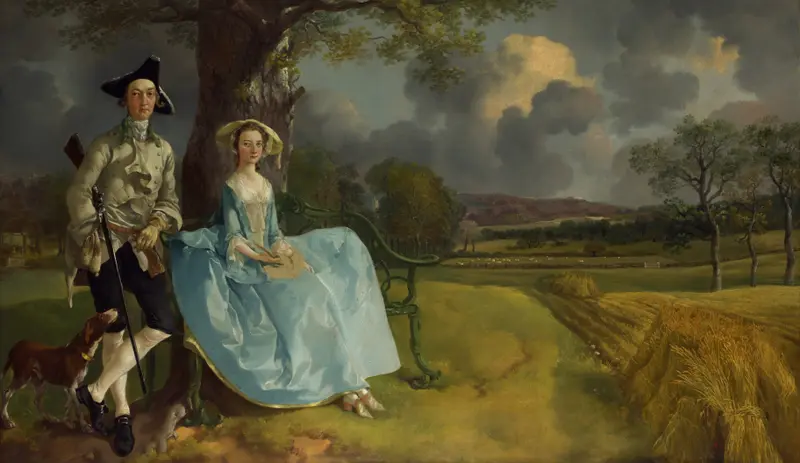
Mr and Mrs Andrews
Thomas Gainsborough

Wooded Landscape with Figures
Thomas Gainsborough

Sir Benjamin Thompson, later Count Rumford (1753-1814)
Thomas Gainsborough
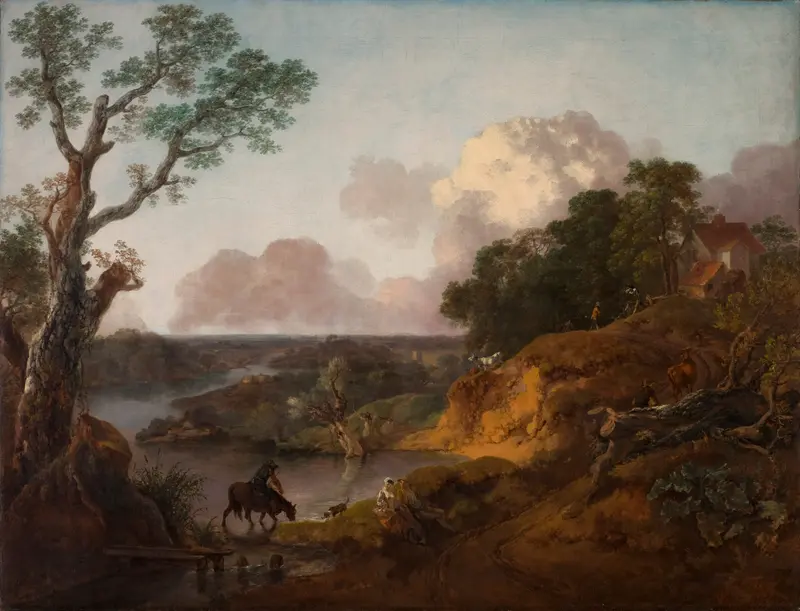
View in Suffolk
Thomas Gainsborough
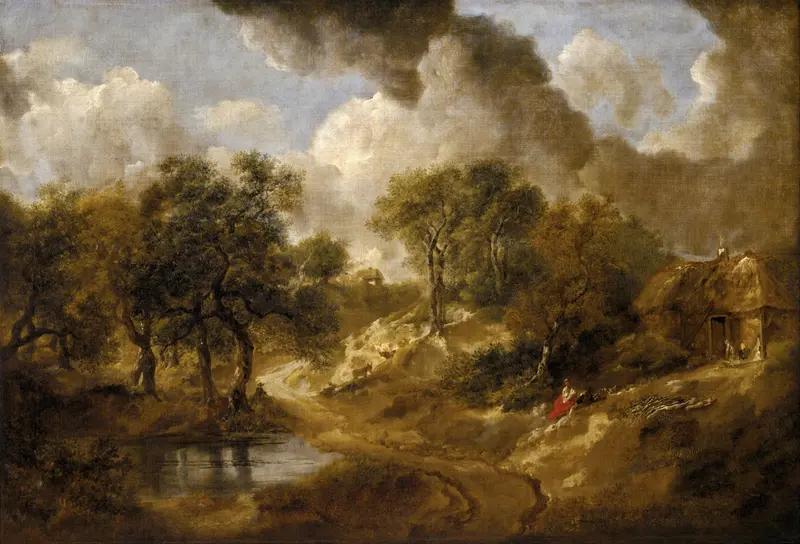
Landscape in Suffolk
Thomas Gainsborough
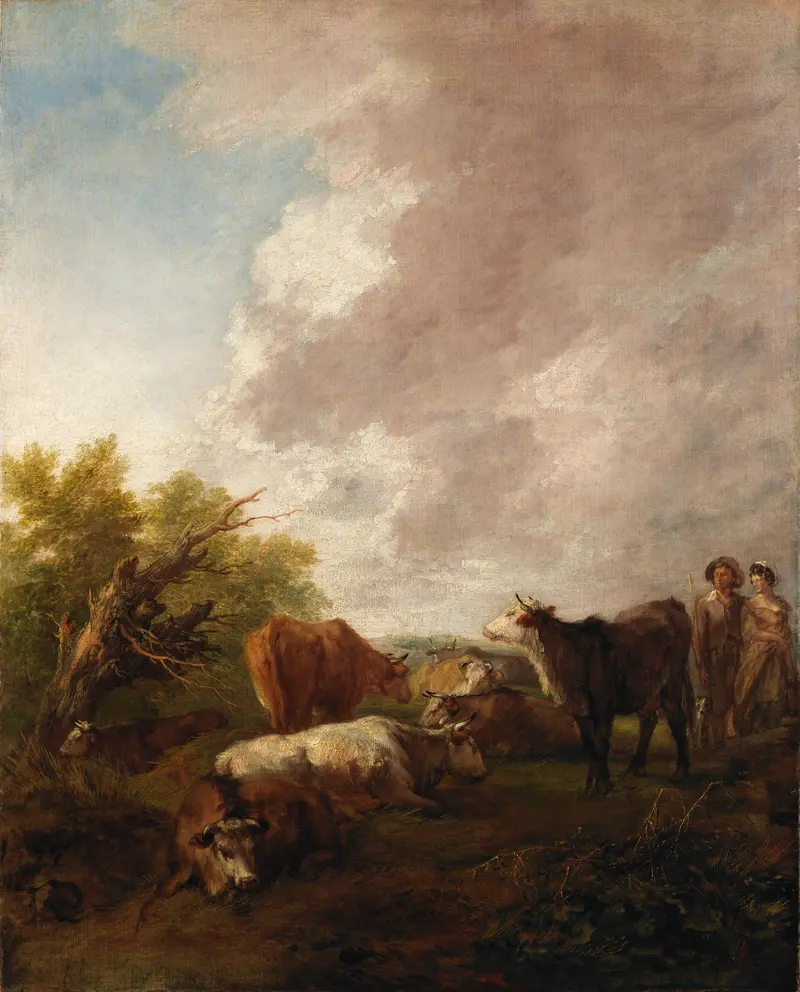
Landscape with Cattle
Thomas Gainsborough
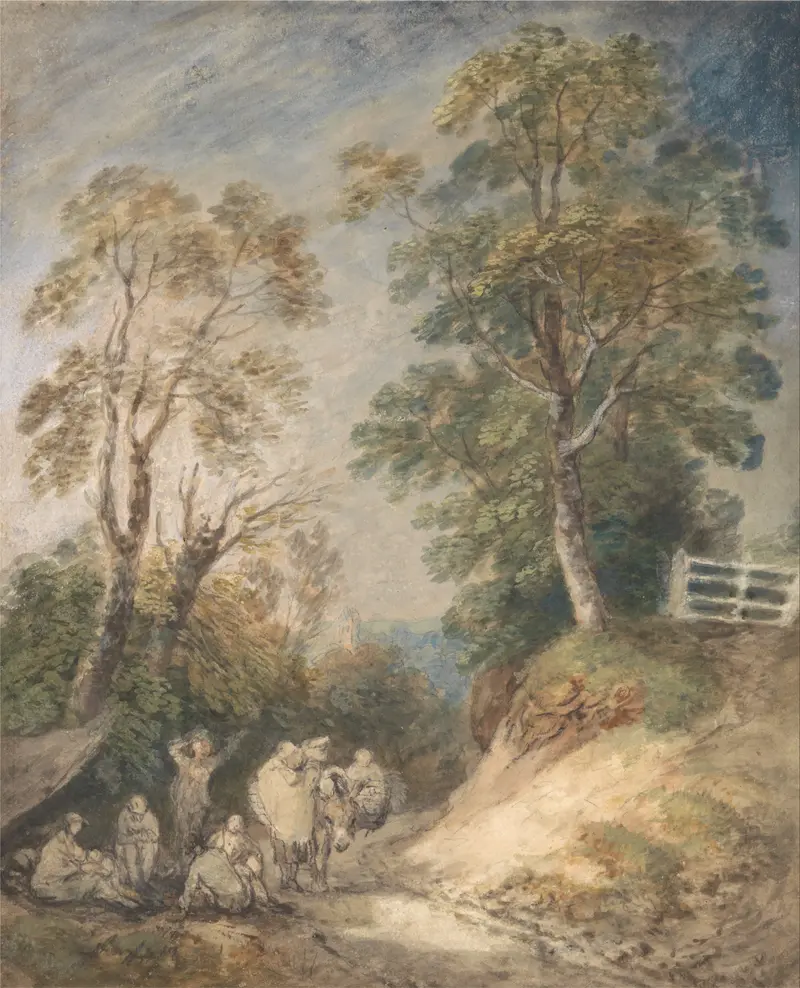
Country Lane with Gypsies Resting
Thomas Gainsborough
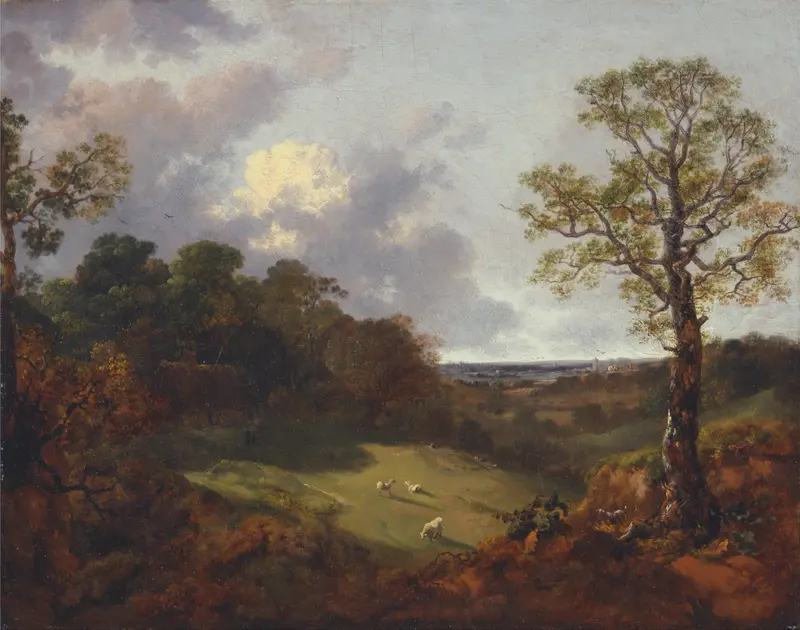
Wooded Landscape with a Cottage and Shepherd
Thomas Gainsborough
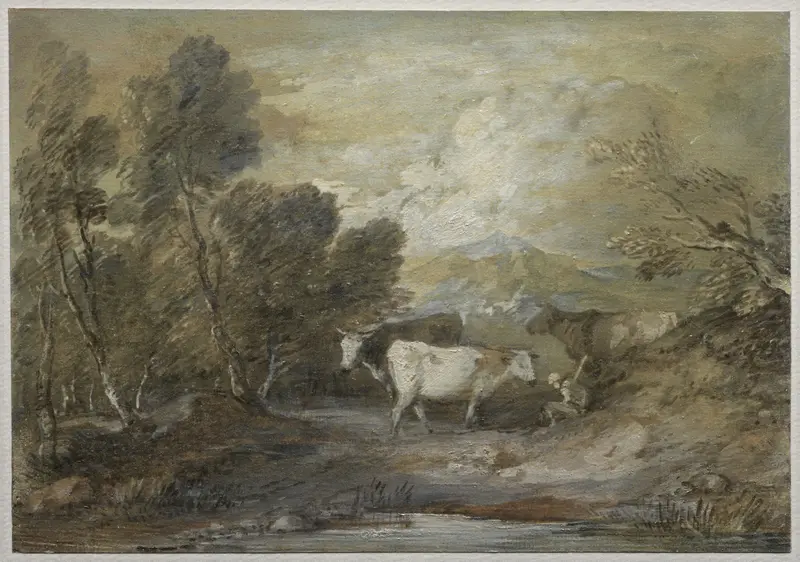
A Herdsman with Three Cows by an Upland Pool
Thomas Gainsborough





