
Mukhino village — History & Facts
A zigzag fence slices across the foreground, its pale rails catching the last cool light of the day and drawing the viewer’s gaze into the rolling green beyond. The brushwork is brisk, almost impatient, as if Apollinari Mikhailovich Vasnetsov wanted to capture the fleeting mood of the land before it changed again. The trees cluster in the middle distance, their dark forms standing guard over a patchwork of meadows and distant fields, while the sky presses low with streaks of lavender and blue, hinting at the unsettled weather of Russia’s heartland.
Every element feels provisional, as if the scene is both eternal and about to slip away. Painted in 1900, this landscape belongs to a moment when Russian artists were turning from grand historical canvases to the poetry of their native countryside. Works like this, now held in Russian collections such as the one catalogued at http://goskatalog.ru/portal/#/collections?id=4429650, were often made for collectors or as studies for larger compositions, but they also served as quiet acts of devotion to place. The fence, so prominent here, is both a barrier and a guide, leading the eye and spirit across the land.
In the era of Vasnetsov, such scenes were a gentle assertion of national identity—an invitation to linger, to look again, and to find meaning in the ordinary sweep of fields and sky.
More Artworks by Apollinari Mikhailovich Vasnetsov

Landscape With Lake
Apollinari Mikhailovich Vasnetsov
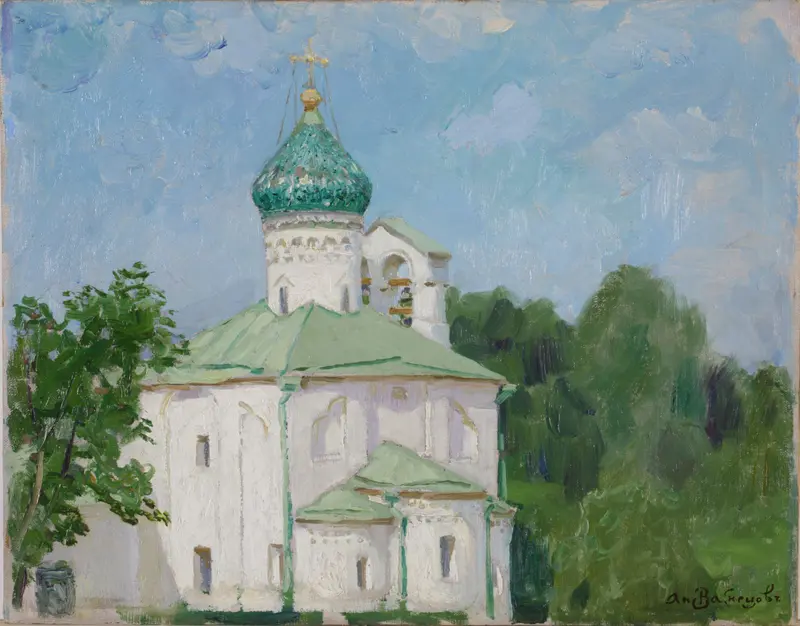
Sergius Luzhki
Apollinari Mikhailovich Vasnetsov
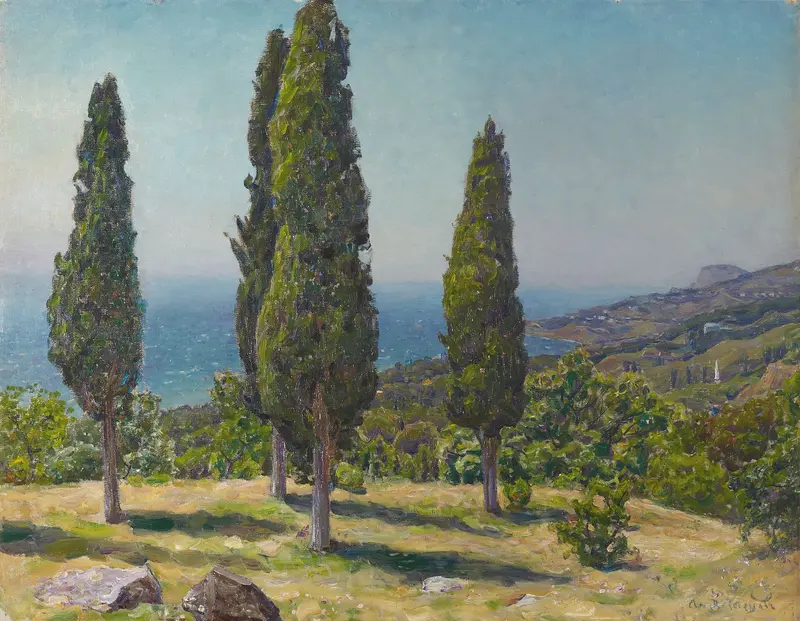
cypresses. Crimea
Apollinari Mikhailovich Vasnetsov
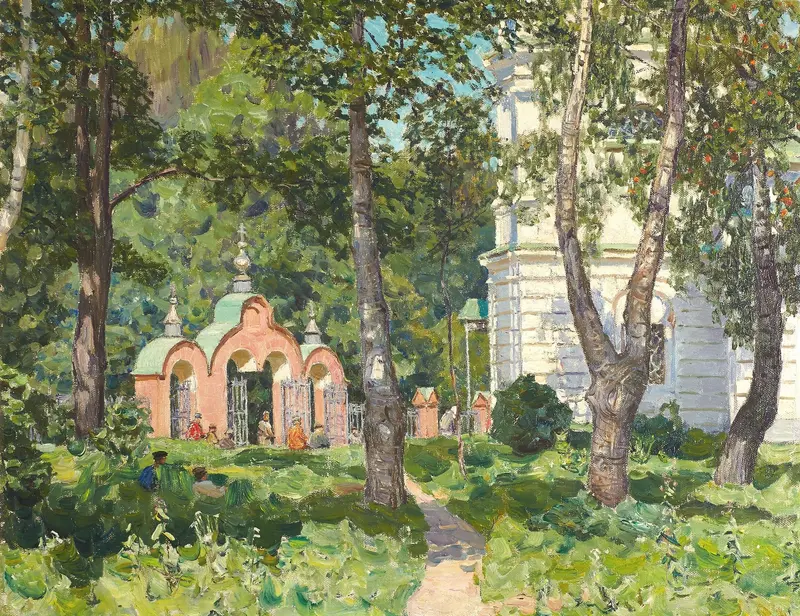
Demyanovo. At the churchyard
Apollinari Mikhailovich Vasnetsov
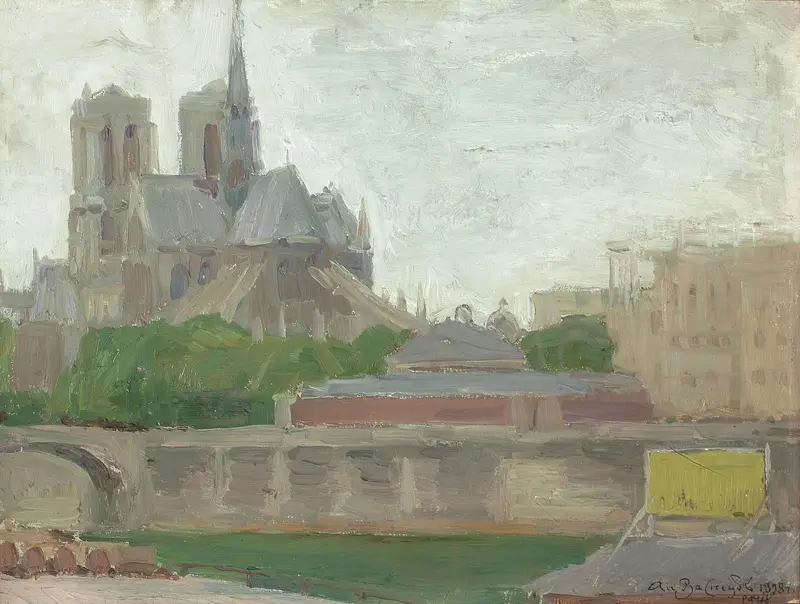
Notre Dame de Paris
Apollinari Mikhailovich Vasnetsov
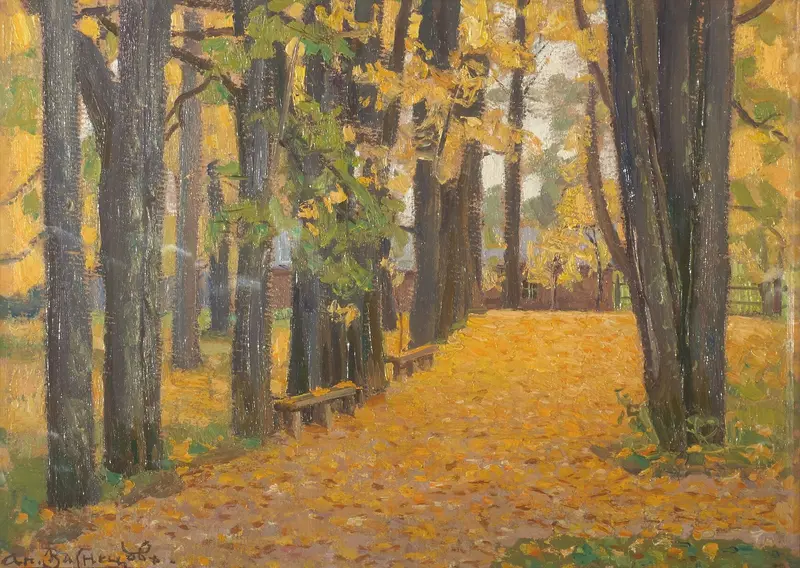
Autumn park
Apollinari Mikhailovich Vasnetsov
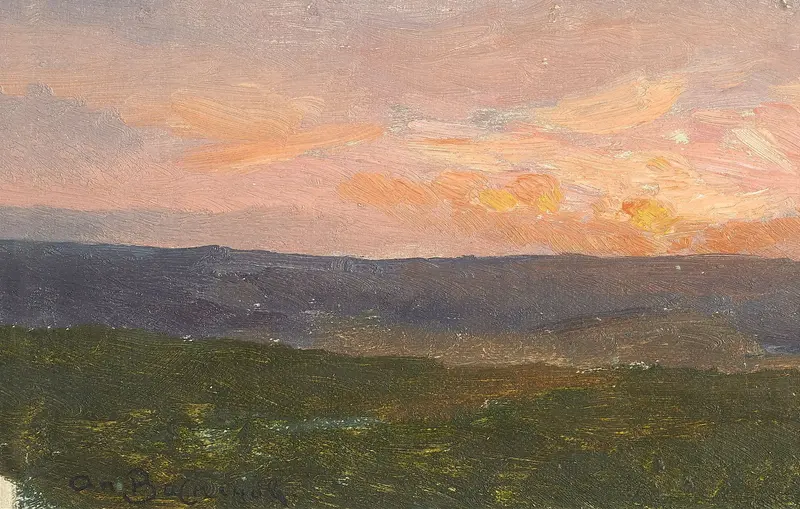
Sunset. Shurma
Apollinari Mikhailovich Vasnetsov

Via delle Tombe Pompeii
Apollinari Mikhailovich Vasnetsov
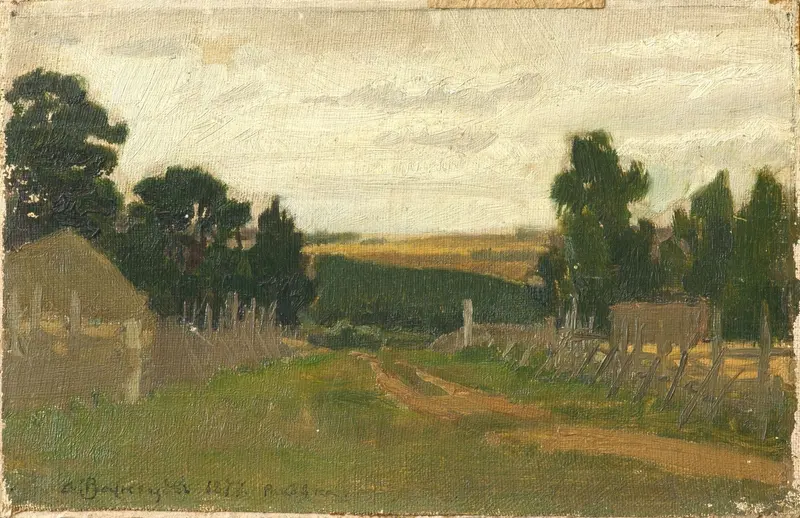
Rakovka
Apollinari Mikhailovich Vasnetsov
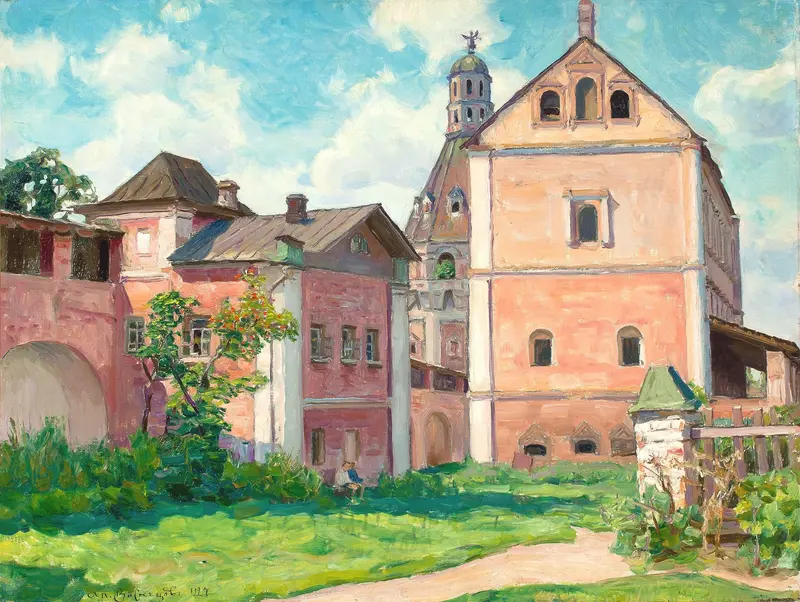
Simonov tower
Apollinari Mikhailovich Vasnetsov
More Landscape Art

The Starry Night
Vincent van Gogh

View of Delft
Johannes Vermeer

Water Lilies
Claude Monet

The Grand Canal, Venice, looking north-west from the Ca' Corner to the Ca' Contarini degli Scrigni, with the campanile of Santa Maria della Carità
Canaletto

Windsor Castle
Canaletto

The Grand Canal looking North-East from the Palazzo Dolfin-Manin to the Rialto Bridge
Canaletto