Nach der Jagd — History & Facts
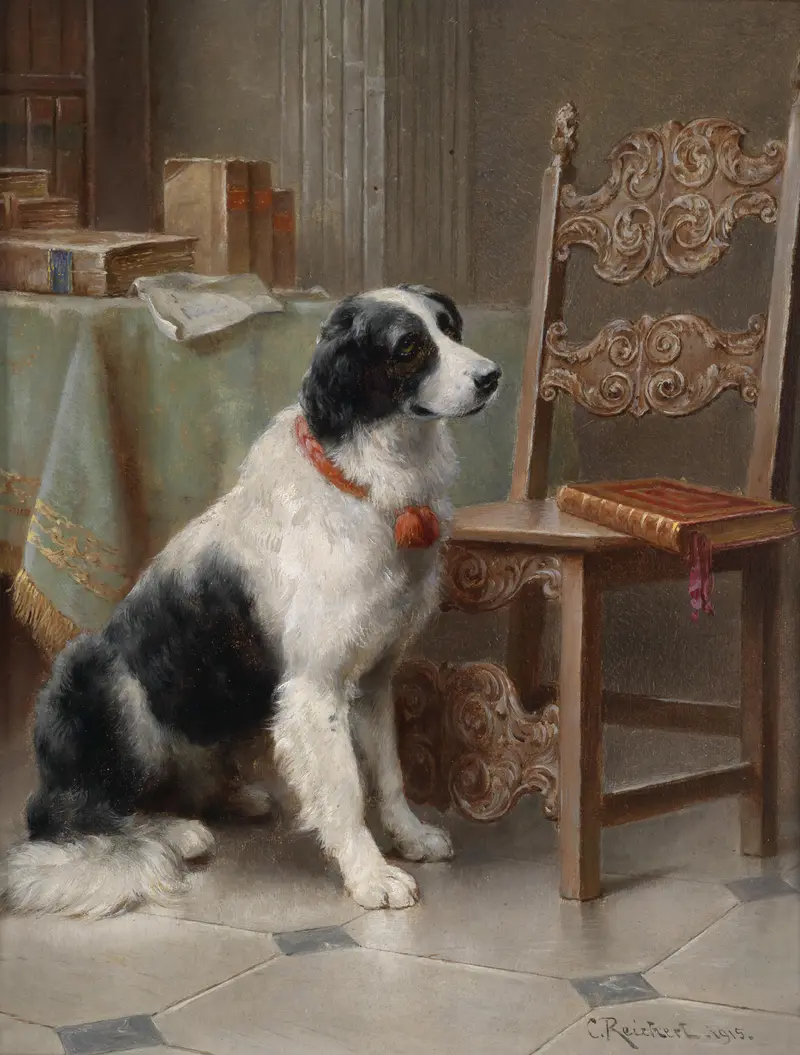
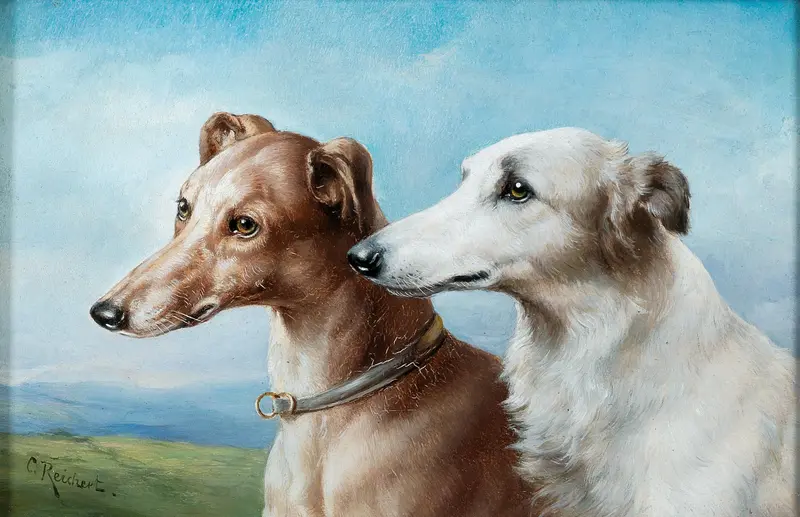
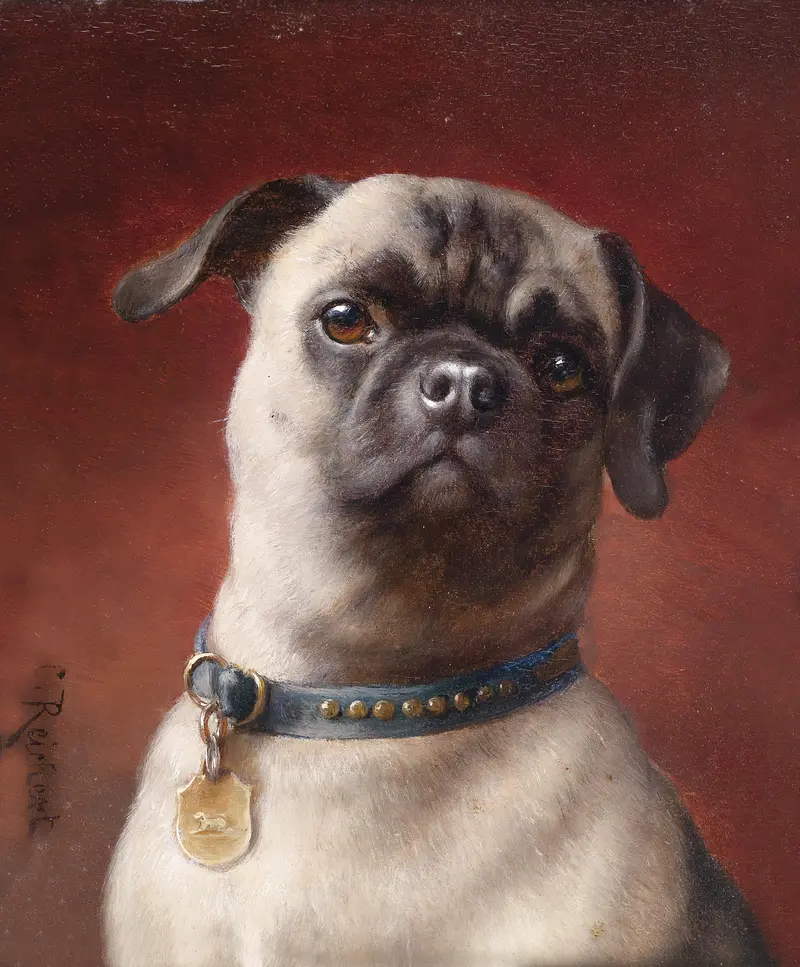
What draws the eye first is not the dogs themselves, but the quiet intensity of their gaze—three hunting companions, each fixed on something just beyond the frame, as if the story of the day is still unfolding. The largest, a russet hound, sits alert and ready, muscles taut beneath its short coat, while the black-and-white spaniel sprawls at ease, yet with a watchful eye. The smallest, a dark dachshund, sits a little apart, offering a direct, almost questioning look to the viewer.
The scattered leaves and abandoned leash at their feet hint at recent action, while the soft, natural light picks out the sheen of fur and the worn stone, grounding the scene in a moment of calm after exertion. This is not just a portrait of animals, but a study in anticipation and camaraderie, each dog’s posture and expression revealing its role and temperament. Painted by Carl Reichert by 1918, this work belongs to a tradition that flourished in the late nineteenth and early twentieth centuries, when animal portraiture was both a mark of status and a celebration of the working partnership between humans and their dogs. Such paintings were often commissioned by landowners and sportsmen, eager to commemorate loyal companions and the rituals of the hunt.
While little is recorded about the specific journey of this painting—now in the collection of Dorotheum—it stands as a testament to a world where the rhythms of country life and the bonds between species were central to daily existence. The viewer is left with the sense that, for these dogs, the day’s adventure is not quite over, inviting us to imagine what comes next.