Nacht in Shinagawa — History & Facts
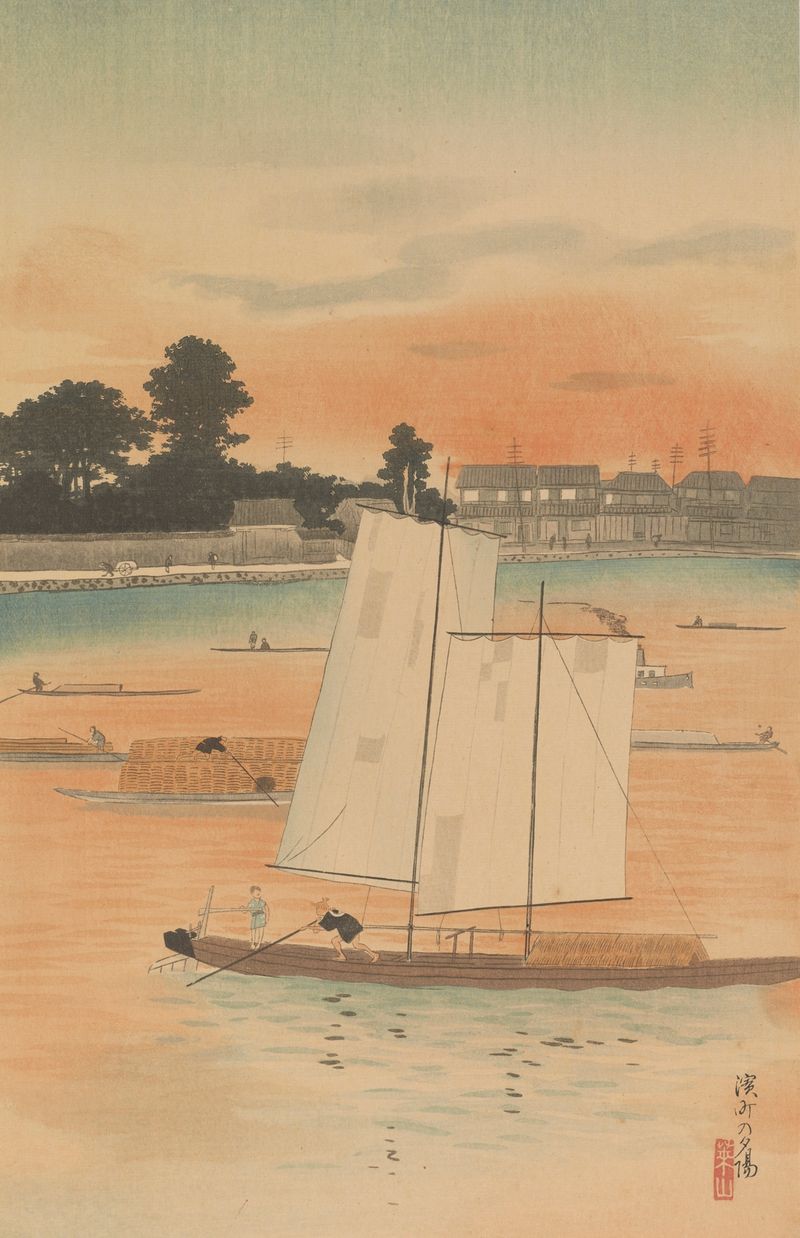
Where does light end, and longing begin? In Nacht in Shinagawa, the interplay of shadow and illumination beckons a contemplation of nostalgia, memory, and the fleeting essence of existence. Look to the center of the canvas where soft glows cascade against deep indigo and obsidian hues. The gentle strokes create a harmony between the bustling life of Shinagawa and the tranquil night sky. Notice how the lanterns flicker, their warm light illuminating the faces of figures in quiet contemplation, allowing them to emerge momentarily from the depths of darkness.
The composition, bathed in velvety textures, draws the viewer's gaze through layers of depth, inviting an exploration of both foreground and background. Beneath the surface lies a poignant contrast—a vibrant celebration of life juxtaposed with the ever-present shadows of solitude and longing. The figures, while together in this nocturnal gathering, seem to embody an inner world of isolation, their expressions tracing the delicate line between connection and yearning. The luminous lanterns symbolize hope, yet they also cast long shadows, reflecting the transient nature of human experiences and relationships.
The legacy of this moment, captured in an ephemeral light, invites us to ponder what remains when the glow fades. In 1922, Negoro Raizan painted this work during a period marked by significant shifts in Japanese art, as traditional practices mingled with Western influences. Living in the vibrant cultural landscape of Tokyo, the artist sought to encapsulate the essence of modernity while respecting the depth of tradition. This painting emerges as a testament to that delicate balance, capturing a moment that speaks to both the heart and the spirit of a changing world.