To the side of Hanzōmon gate — History & Facts
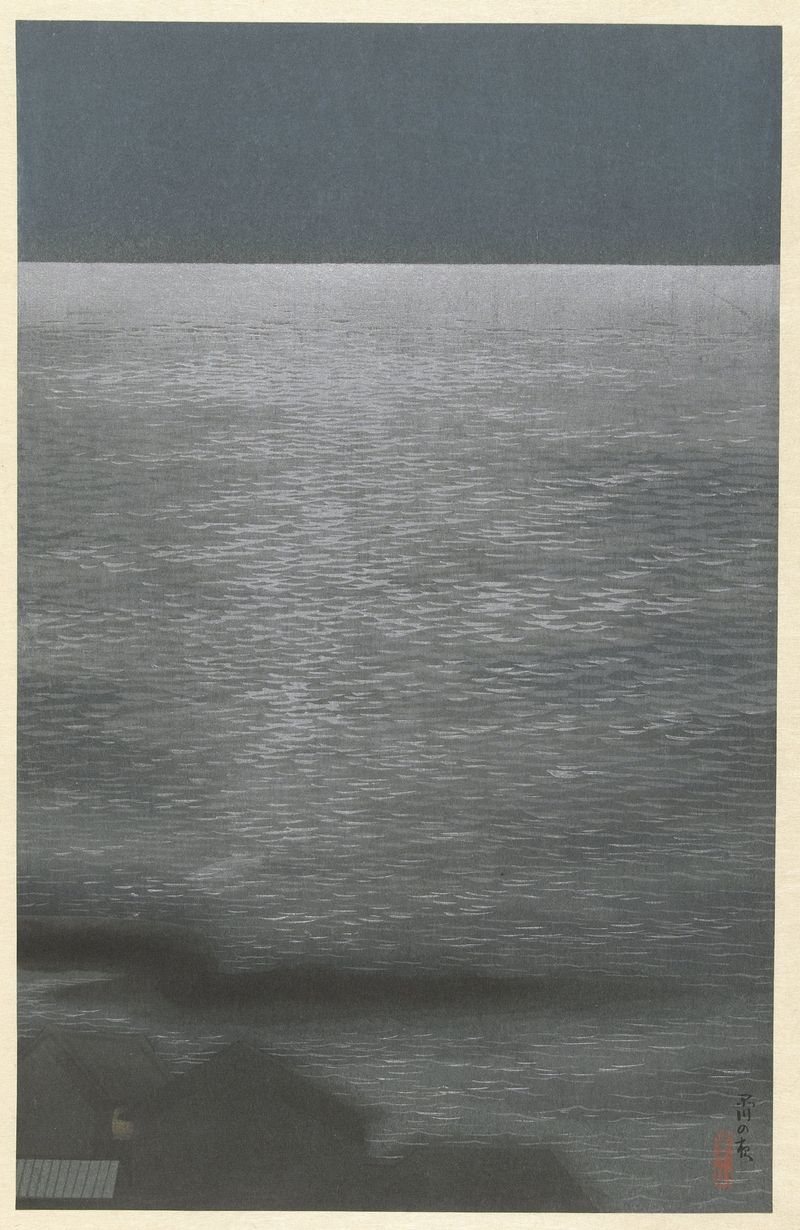
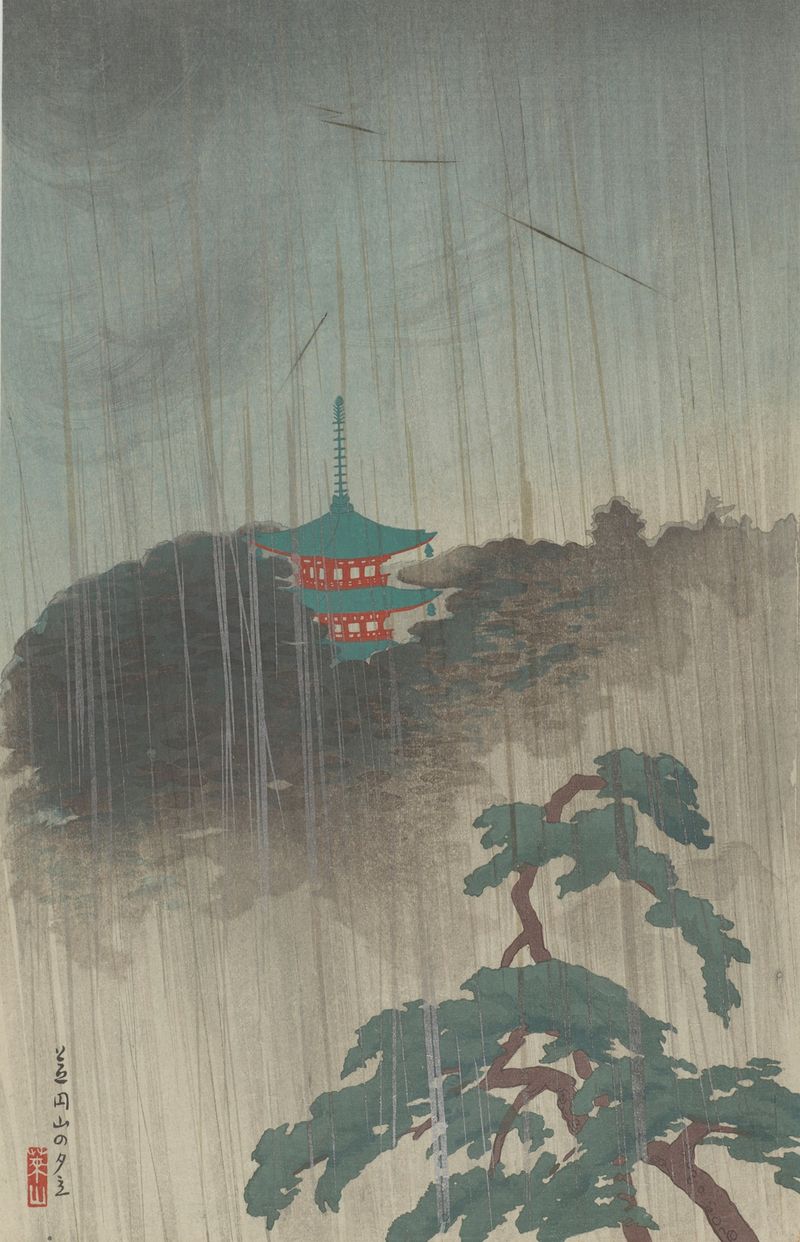
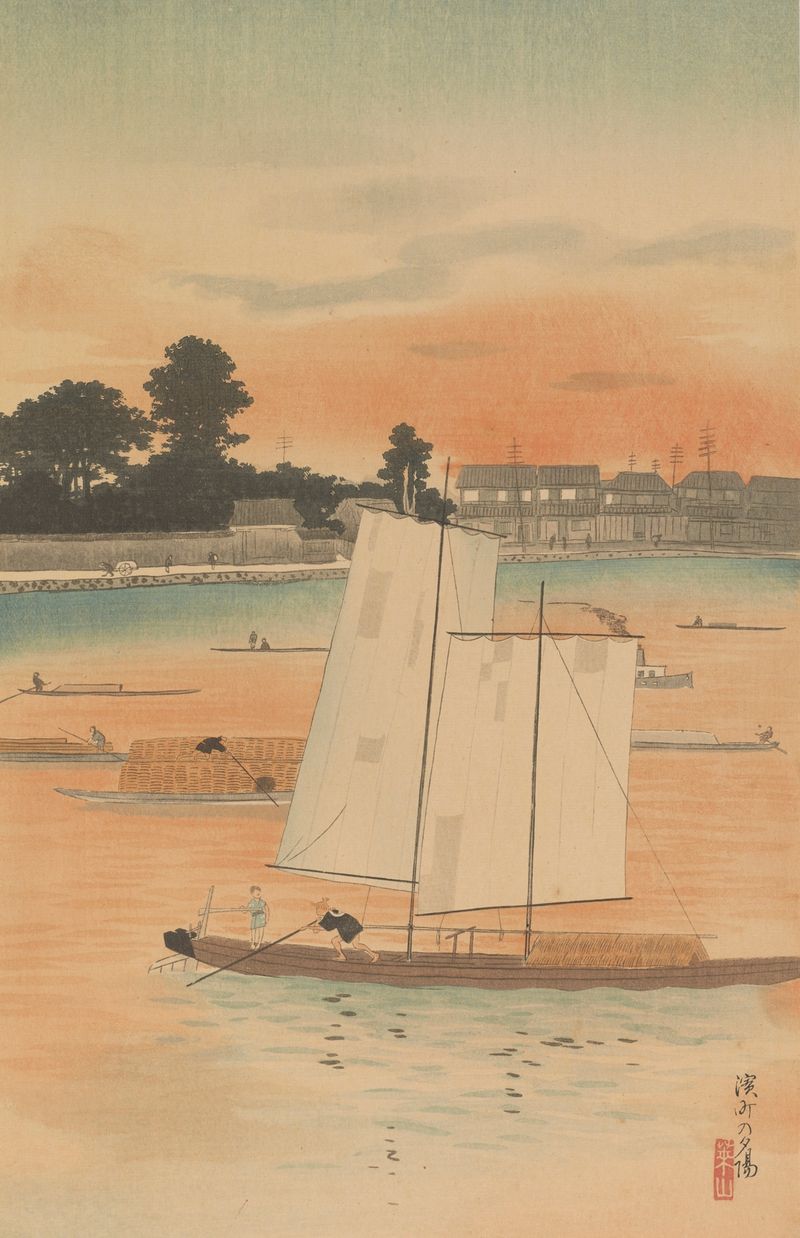
In the quiet embrace of nature, one can almost sense the divine whispering through the trees, as if each leaf holds a fragment of sacred history. Look to the left, where the soft contours of the landscape invite your gaze—gentle hills ripple under a delicate wash of greens and browns. The artist's precision is evident in the meticulous detailing of the foliage and the subtle variations of light that dance across the canvas, evoking a serene yet dynamic atmosphere. Notice how the choice of muted colors evokes an air of tranquility, while the strokes possess both fluidity and intention, guiding the viewer's eye throughout the scene. At the heart of this work lies a dialogue between nature and human presence, an interplay that speaks of reverence.
The careful placement of the gate hints at the threshold between the earthly and the divine, suggesting a world where the sacred intertwines with the mundane. Each element, from the towering trees to the distant horizon, embodies a deeper symbolism—a longing for connection to something greater that resonates within us all. In 1922, the artist was deeply rooted in the traditional practices of Japanese painting while also navigating the modern world emerging around him. As Japan underwent significant social and cultural transformations, he sought to bridge the past with the present, capturing the serene beauty of his surroundings at Hanzōmon gate.
This period marked an exploration of identity for many artists, and through this work, he contributed to a dialogue on spirituality and nature that continues to resonate today.