Sunset at Hamachō — History & Facts
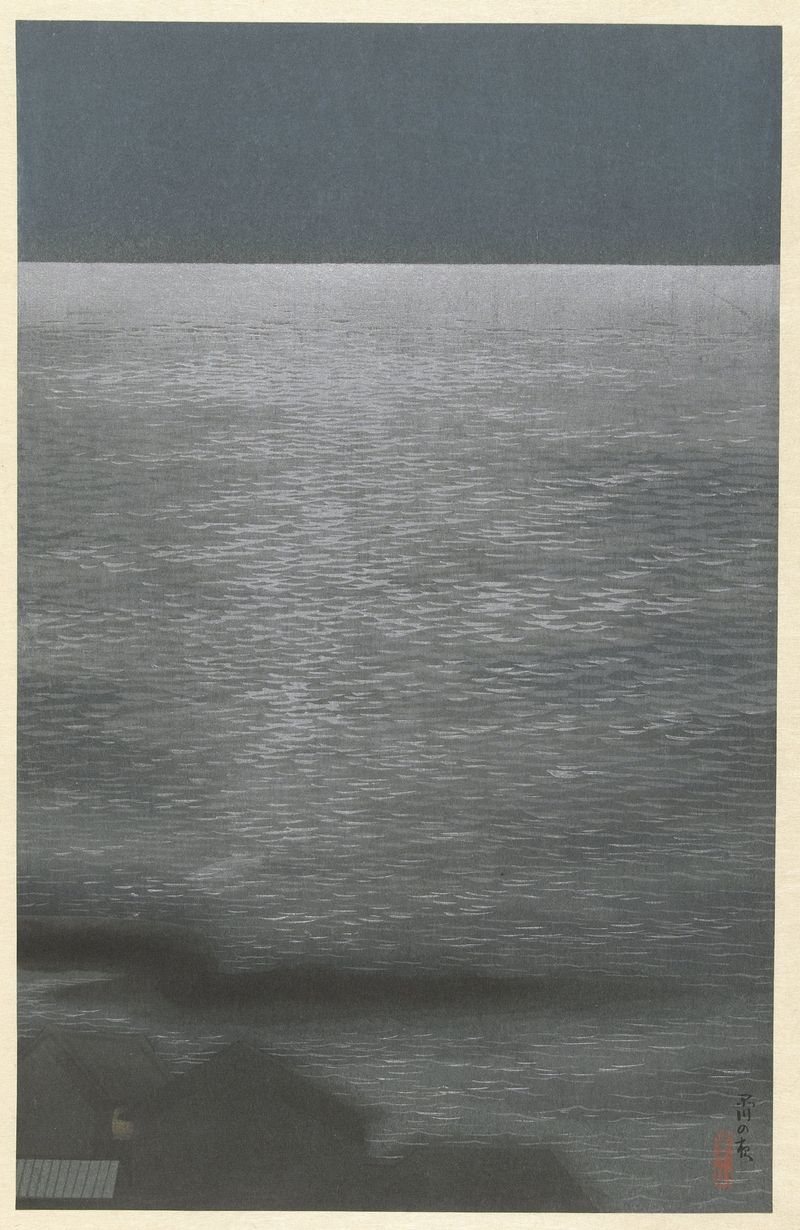
Could a single brushstroke hold eternity? In Sunset at Hamachō, one brushstroke carries the weight of solitude, whispering tales of longing against the backdrop of a fleeting day. Look to the horizon, where the sun dips low, and notice how warm hues of orange and gold blend seamlessly into deeper shades of indigo. The delicate balance of color captures the poignant transition from day to night, evoking a sense of melancholy. The sparse composition, with a lone figure gazing out towards the distant water, draws the eye and heart towards the vast emptiness that surrounds them.
Each stroke is deliberate, the ink flowing with an urgency that seems to echo the silence. This work speaks to the emotional landscapes we all navigate. The figure is isolated, a mere silhouette against the expansive sky, suggesting a profound loneliness yet to be bridged. The gentle ripples of water serve as a metaphor for the passage of time—a reflection of moments lost and dreams unfulfilled.
In the interplay of light and shadow, we sense the tension between hope and despair, the possibility that the dawn may bring renewal, yet uncertainty looms like the twilight enveloping the scene. Created in 1922 amidst the vibrant art scene of Taisho-era Japan, the artist worked during a period when traditional practices met modern influences. Negoro Raizan was exploring new forms of expression while grappling with the shifting dynamics of a society in flux. This painting encapsulates a moment where tradition and emotion intertwine, inviting viewers to pause and reflect on their own journeys through the twilight of existence.