Ochanomizu Bridge — History & Facts
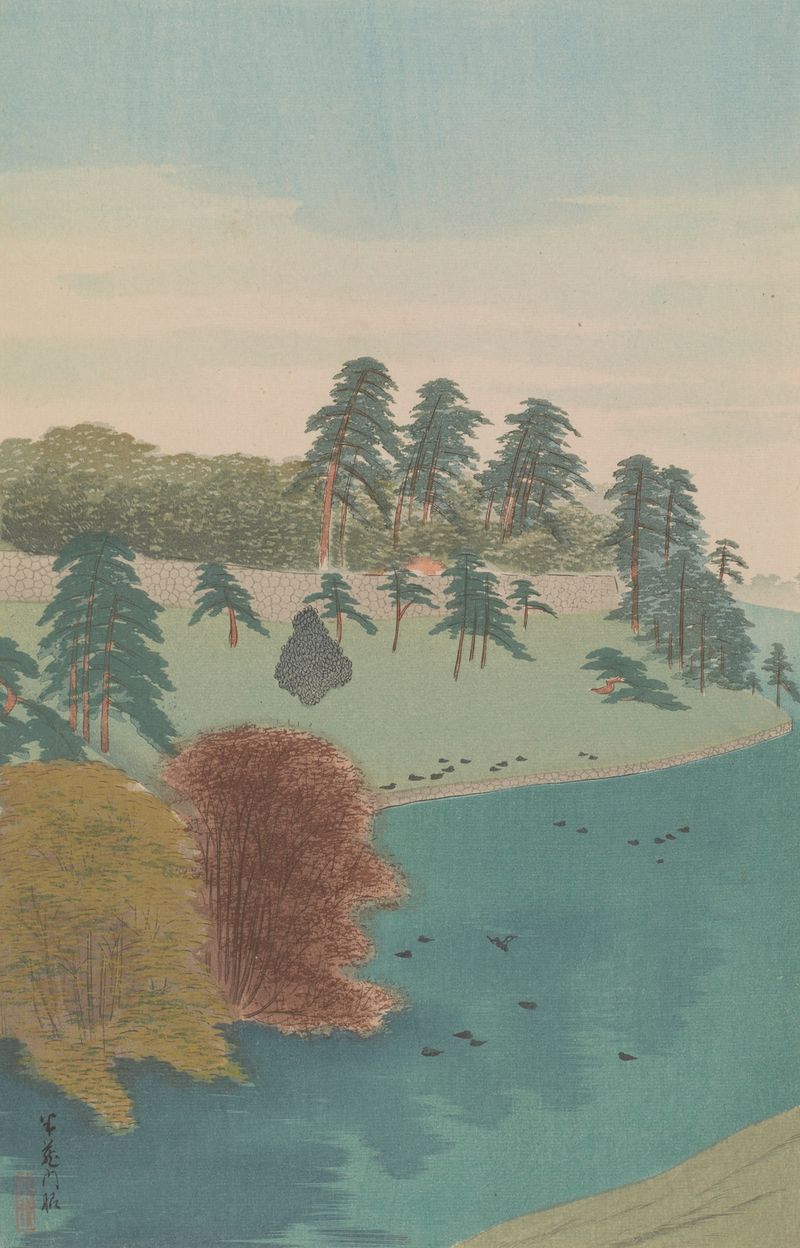
Could beauty survive in a century of chaos? In Ochanomizu Bridge, the answer glimmers like the water beneath its vibrant arch, inviting contemplation amidst the tumult of the era. Look to the left at the bridge’s graceful curve, its structure adorned with lush overhanging foliage. The artist’s delicate brushwork captures the interplay of light and shadow, creating a harmonious contrast between the sturdy architecture and the ephemeral beauty of nature. Notice how the vivid greens and soft blues blend seamlessly, evoking a tranquil moment that seems almost surreal, yet grounding the viewer in the present. The small figures crossing the bridge embody a quiet resilience, their presence hinting at the juxtaposition of human endeavor against the backdrop of Japan’s shifting socio-political landscape.
Each stroke reveals not just the beauty of the scene but also the undercurrents of change—modernity creeping into traditional life. The vibrant colors resonate with hope, yet the gathering clouds in the distance suggest uncertainties that linger, reminding us that beauty coexists with struggle. In 1922, Negoro Raizan painted this scene at a time when Japan grappled with rapid modernization and the aftermath of war. Living in Tokyo, he was part of a generation of artists exploring new expressions while maintaining connections to their cultural heritage.
This work reflects that transitional spirit, capturing both the awe of the natural world and the complexities of an evolving society.