Nightfall — History & Facts
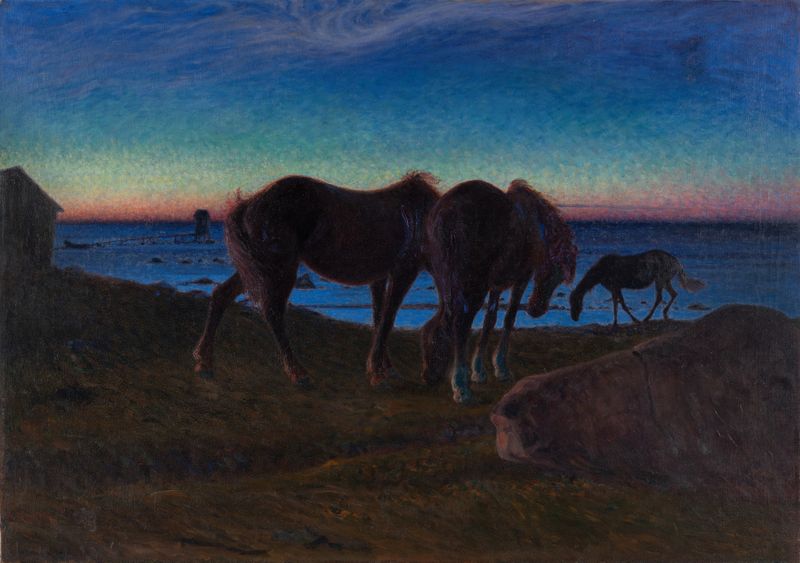
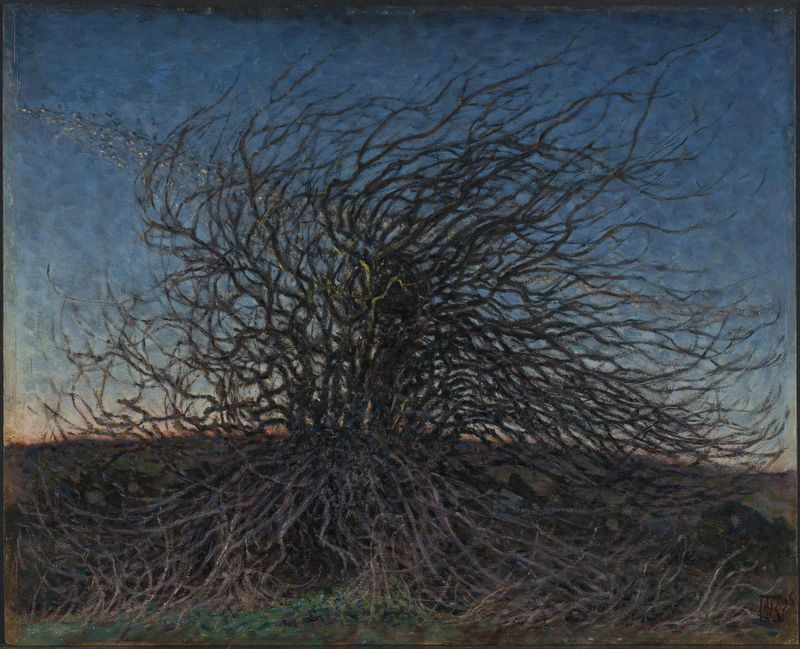
In Nightfall, a delicate interplay of shadow and light evokes an emotion deeper than mere imagery, trapping the viewer within a world suspended between day and night. Focus on the horizon first, where dusky shades of blue and deep indigo converge, blurring the line between land and sky. The painter’s technique breathes life into the atmosphere—notice how the gentle strokes sculpt the clouds above, weighty yet ephemeral, as they cradle the fading sun. The silhouettes of trees, dark and looming, stand sentinel against the encroaching dusk, their forms almost blending into the enveloping shadow.
This contrast brings forth a sense of looming tranquility, infusing the landscape with a haunting beauty. Yet, beneath this serene surface lies a tension. The shadows stretch and deepen, hinting at mysteries that the night may conceal. The use of muted tones contrasts sharply with the fading warmth of daylight, suggesting a transition not only in time but in emotion—a farewell to the day’s vibrancy.
Each shadow seems to whisper secrets of nature's quietude, urging contemplation and introspection. The painting invites us to sense the weight of time itself, a reminder of how shadows can illuminate the heart’s hidden fears and desires. Created in 1904, this work emerged during a period of artistic exploration for the painter, who was deeply influenced by the natural landscapes of Sweden. Kreuger was part of the late Romantic movement, often capturing the essence of the Nordic experience through his landscapes.
At this time, he was striving to convey not just the beauty of nature, but also the emotional resonance it carries, aligning with the broader shifts in art towards capturing the ephemeral qualities of light and atmosphere.