
Nobidome Heirin-ji Temple — History & Facts
In the stillness of a quiet temple, time seems to pause, holding its breath, inviting all who gaze upon it to find divinity nestled within the details. The serene aura of the artwork envelops the viewer, reminding us that sacred spaces are not mere constructs, but reflections of a higher presence. Look to the tranquil scene at the center, where the temple stands guard beneath a dappled sky. Notice the delicate hues of blue and green that cascade across the canvas, inviting your eyes to wander along the richly textured surfaces.
The interplay of light and shadow accentuates the wooden eaves and the surrounding foliage, evoking a sense of harmony that is both calming and reverent. Each brushstroke carries the weight of intention, transforming an ordinary moment into something timeless. Yet, there is more than meets the eye. The contrast between the architectural solidity of the temple and the fluidity of nature hints at the balance between man-made structures and the divine.
The careful arrangement of trees surrounding the temple suggests a protective embrace, a reminder that spirituality is often found in the natural world. Meanwhile, the distant mountains in soft focus symbolize the eternal, grounding the scene in a profound connection to the universe. In 1952, Kawase Hasui captured this moment in the midst of post-war Japan’s cultural renewal, where traditional aesthetics were being redefined. As a leading figure in the shin-hanga movement, he sought to marry Western techniques with Eastern themes, creating works that resonated with both nostalgia and hope.
This piece embodies a serene reverence for the sacred, reflecting Hasui’s deep-rooted respect for nature and spirituality during a transformative period in Japanese art.
More Artworks by Kawase Hasui
Browse all →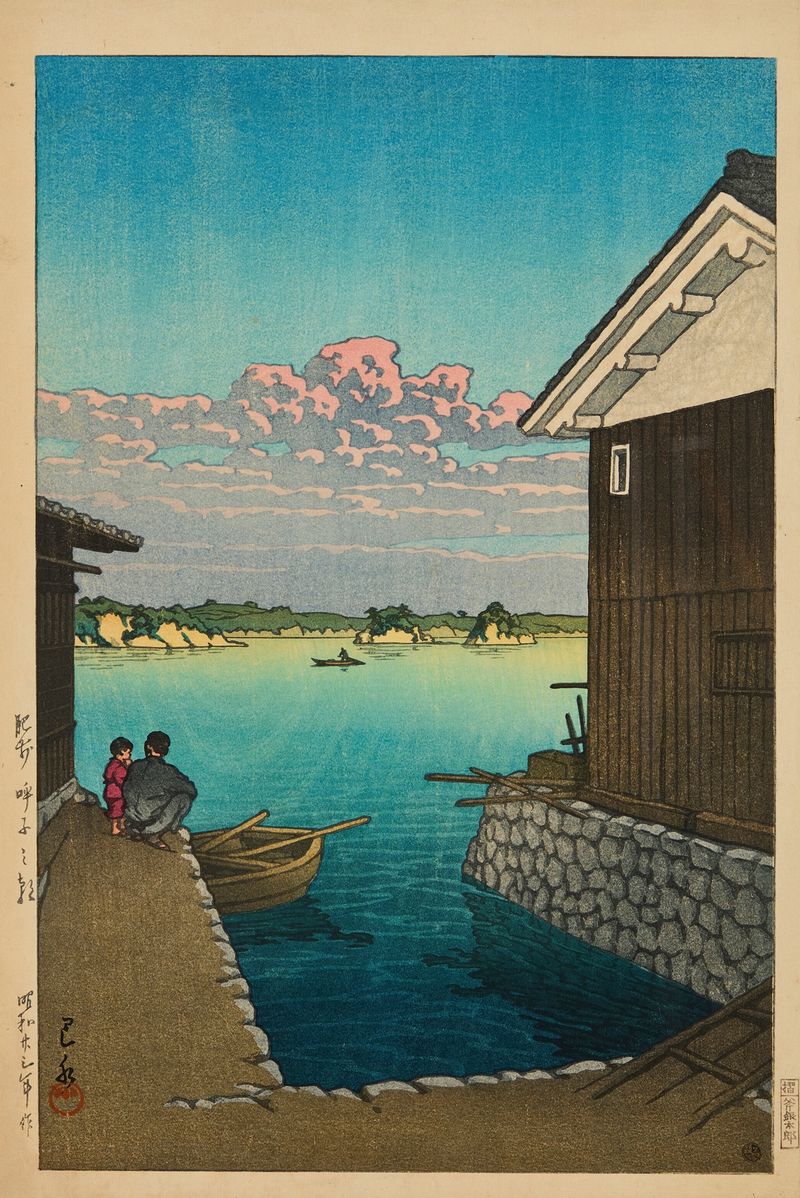
Hizen Yobuko no asa (Morning in Yobuko, Hizen)
Kawase Hasui
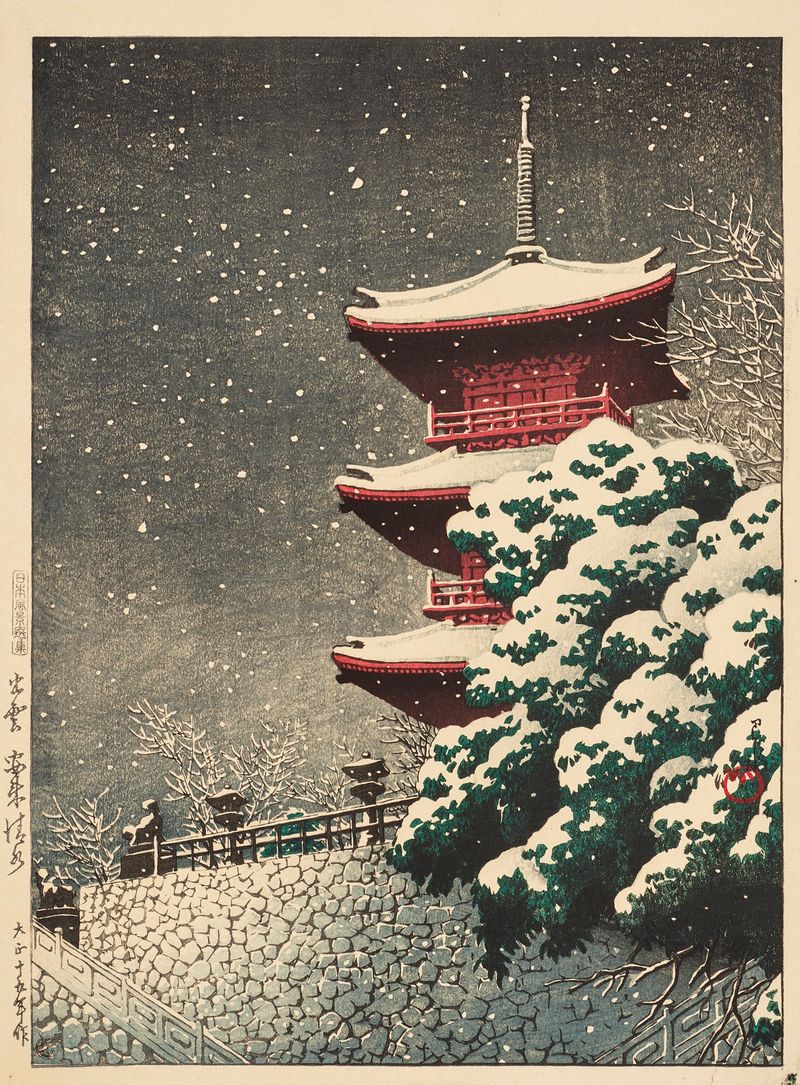
Izumo, Yasugi Kiyomizu (Yasugi Kiyomizu Temple at Izumo)
Kawase Hasui
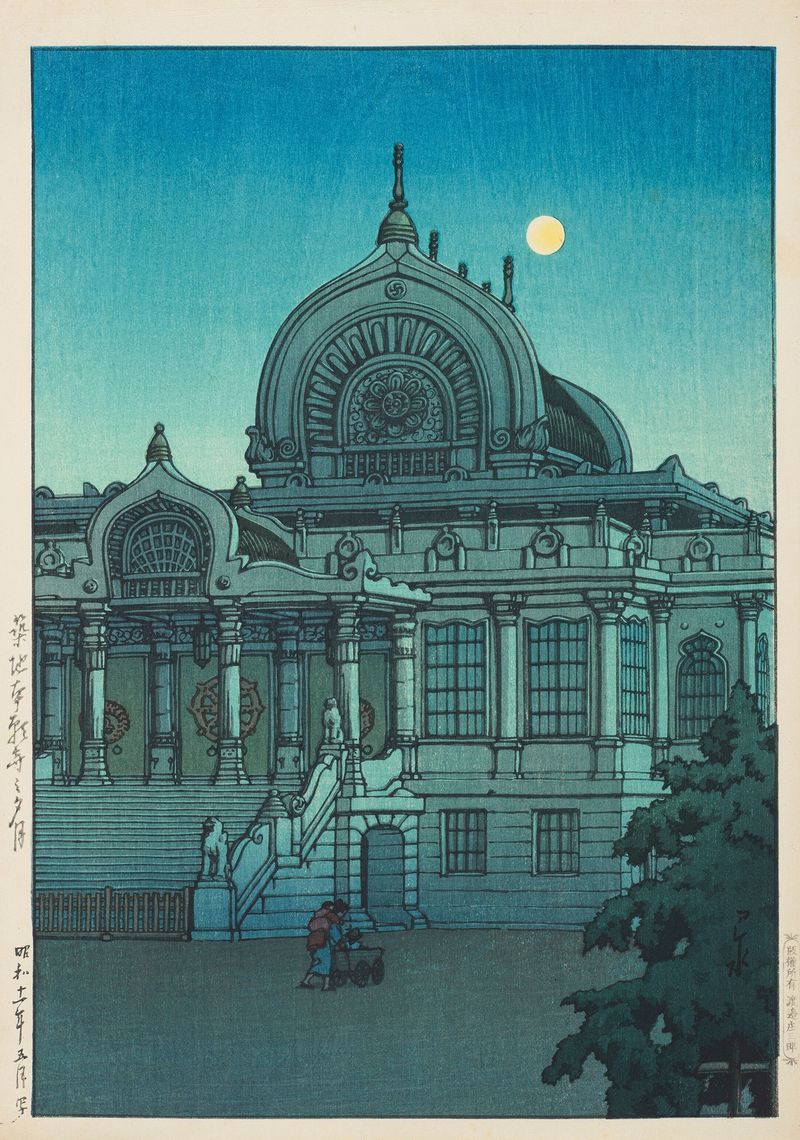
Tsukiji Honganji no yuzuki (Evening moon at Honganji Temple in Tsukiji)
Kawase Hasui
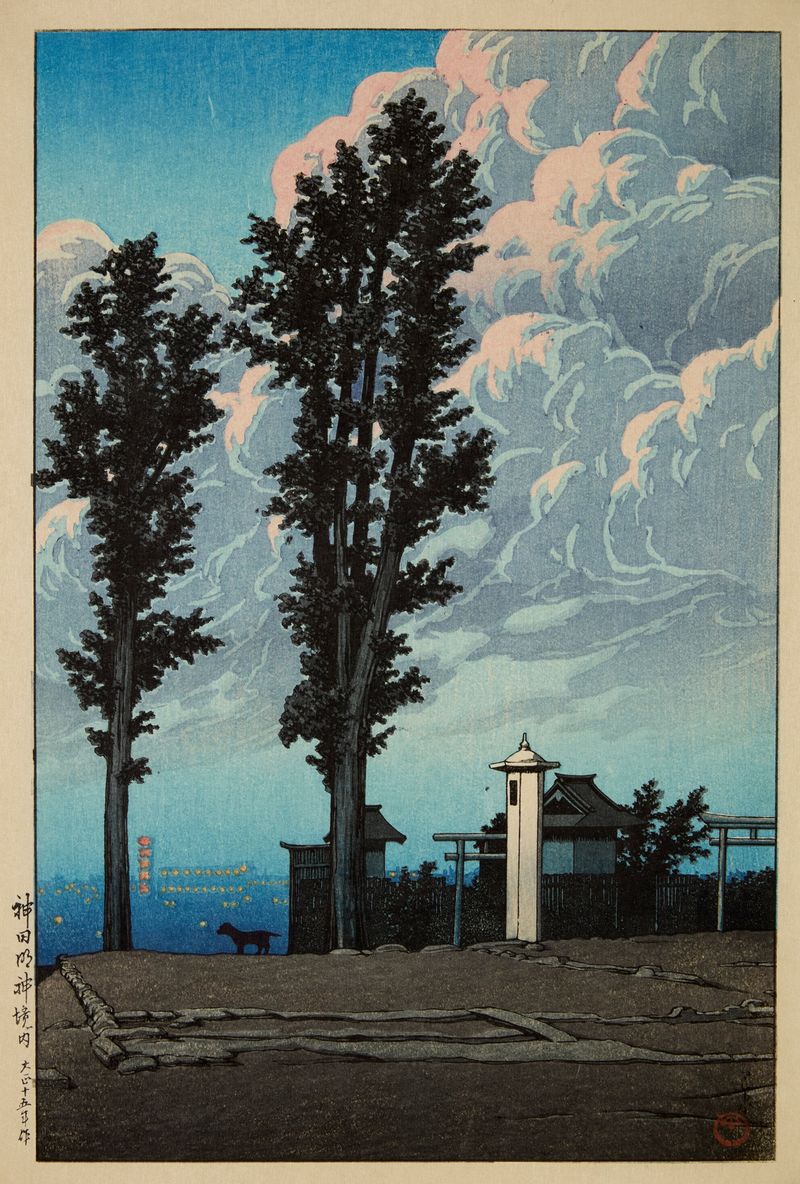
Kanda Myojin keidai (Kanda Myojin Shrine precent)
Kawase Hasui
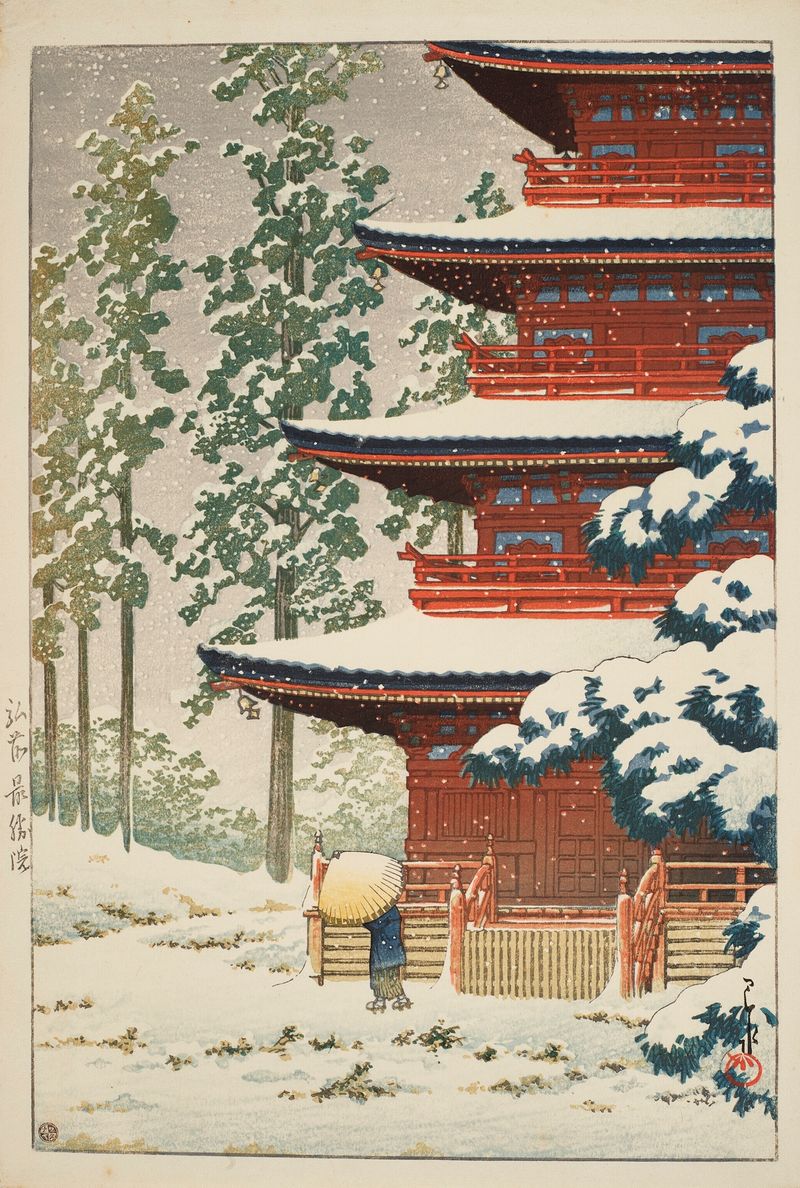
Saisho-in Temple, Hirosaki
Kawase Hasui
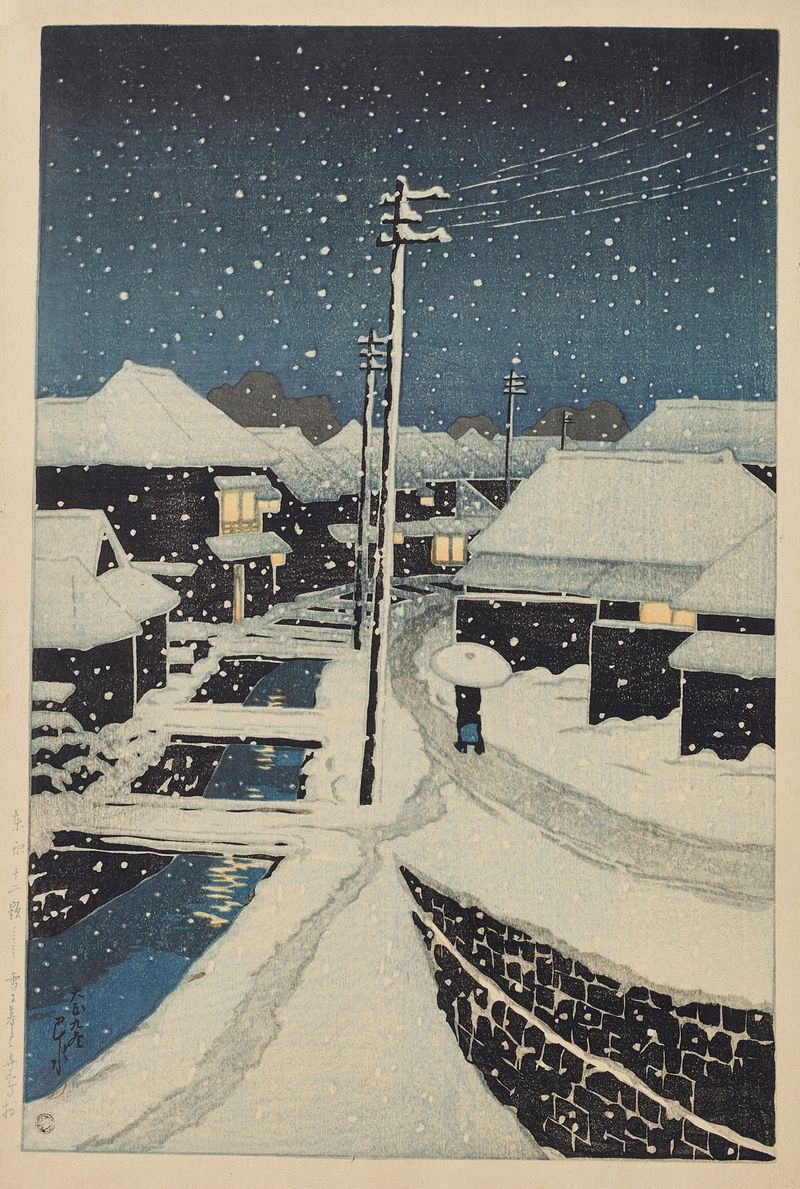
Yuki ni fururu Terajima mura (Evening snow at Terajima Village)
Kawase Hasui
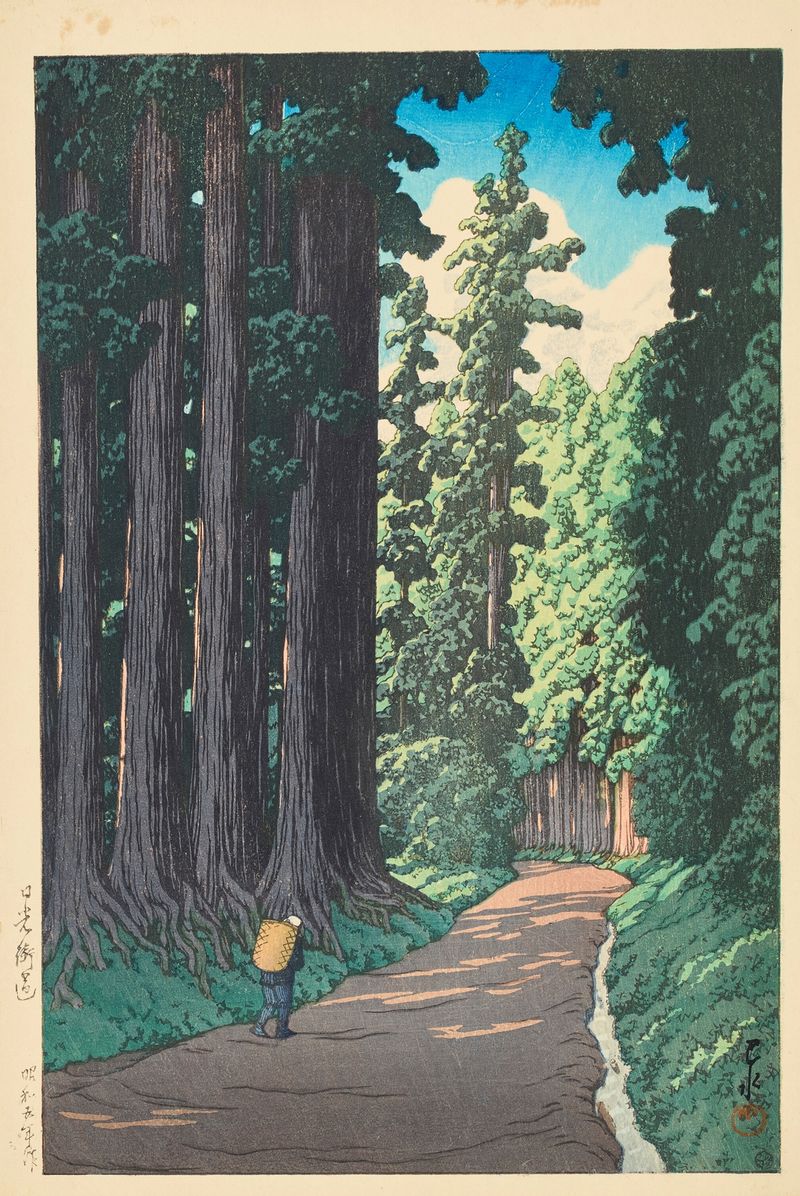
Nikko gaido (The Road to Nikko)
Kawase Hasui
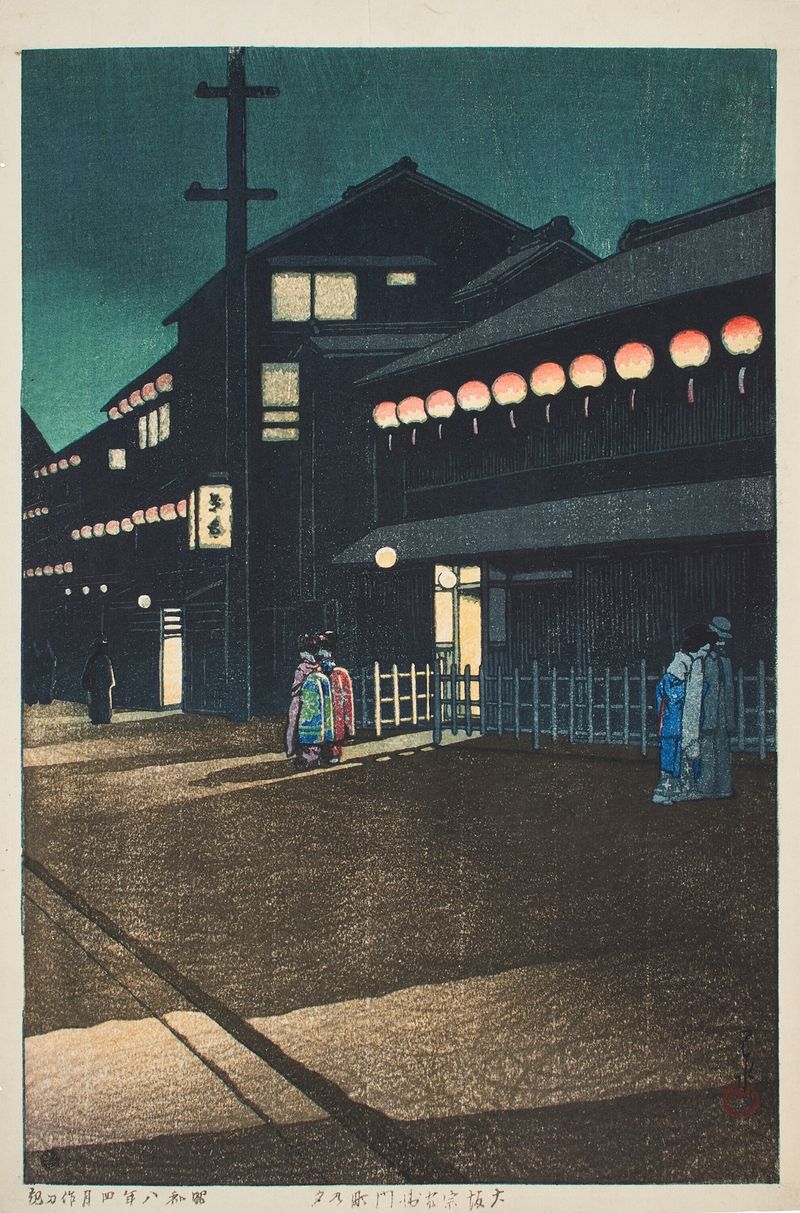
Osaka Soemon-cho no yu (Evening in Soemon-cho, Osaka)
Kawase Hasui
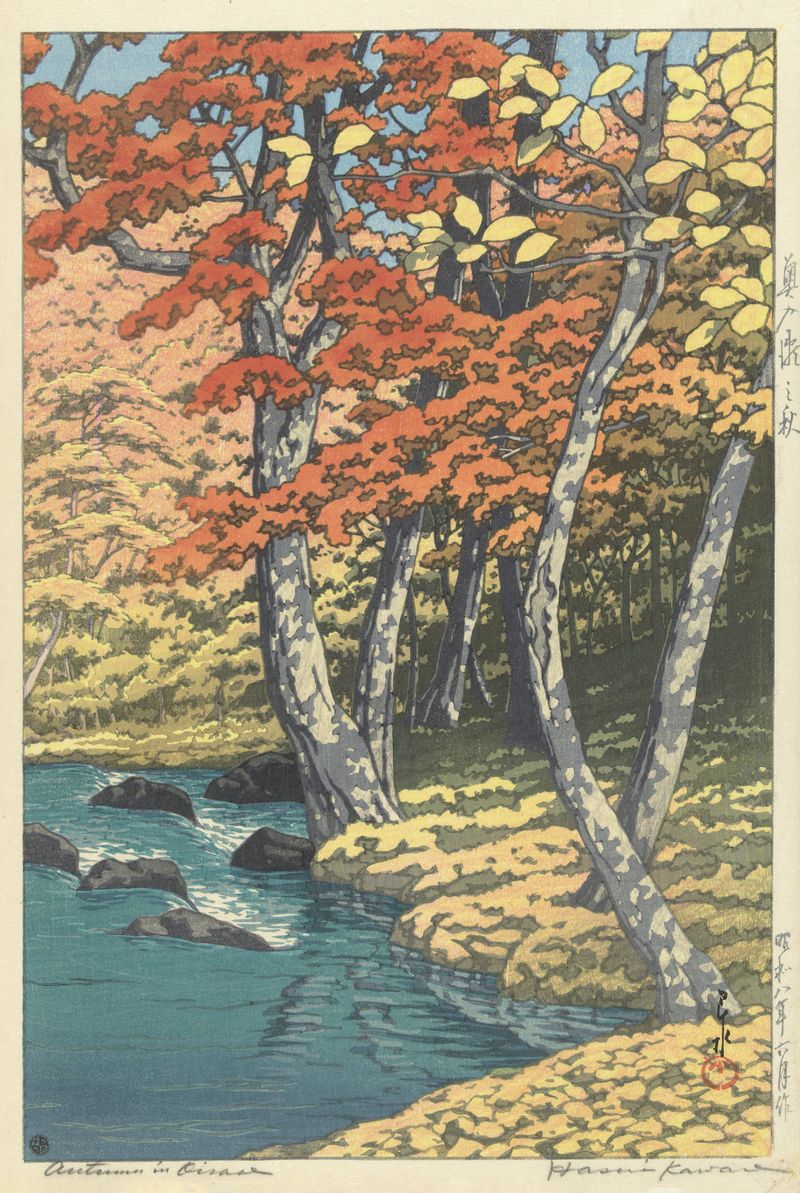
Autumn In Oirase
Kawase Hasui
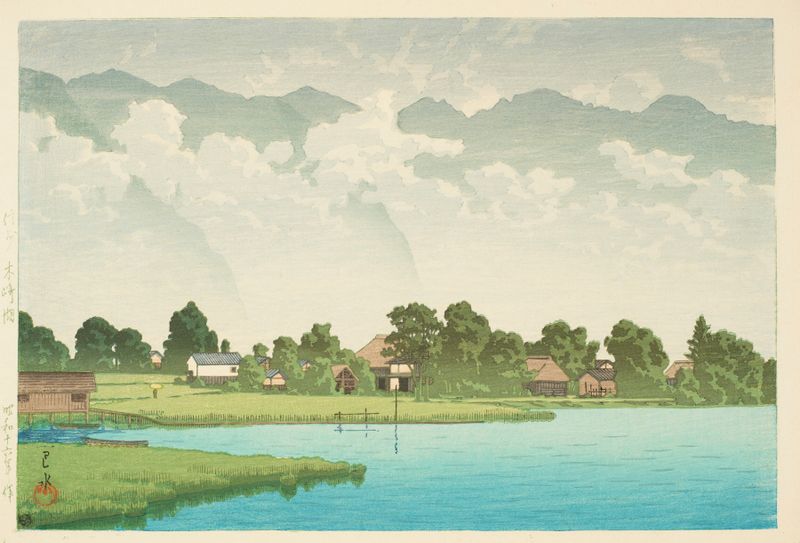
Shinshu Kizakiko (Kizaki Lake in Shinshu)
Kawase Hasui
More Architecture Art
Browse all →
The statue of Liberty
Frédéric Auguste Bartholdi

View of Houses in Delft, Known as ‘The Little Street’
Johannes Vermeer

View of Houses in Delft, Known as ‘The Little Street’
Johannes Vermeer

The Cathedral in Rouen. The portal, Grey Weather
Claude Monet

The yellow house
Vincent van Gogh

The Church in Auvers-sur-Oise, View from the Chevet
Vincent van Gogh