Næstved — History & Facts
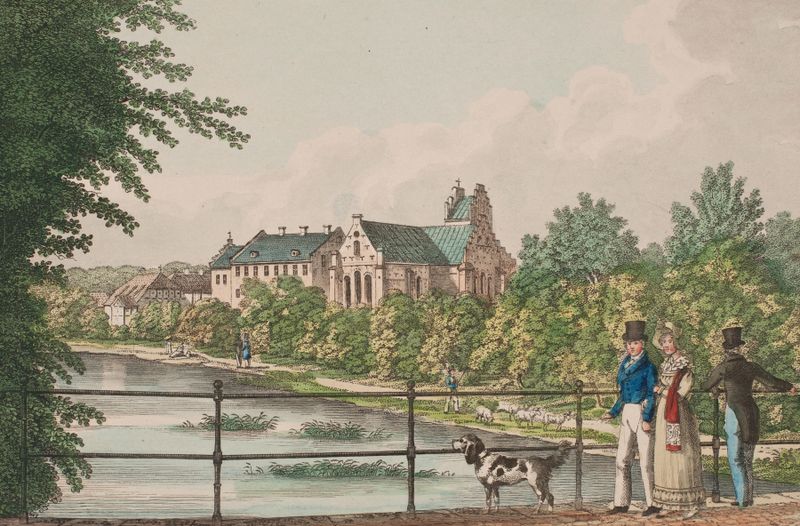
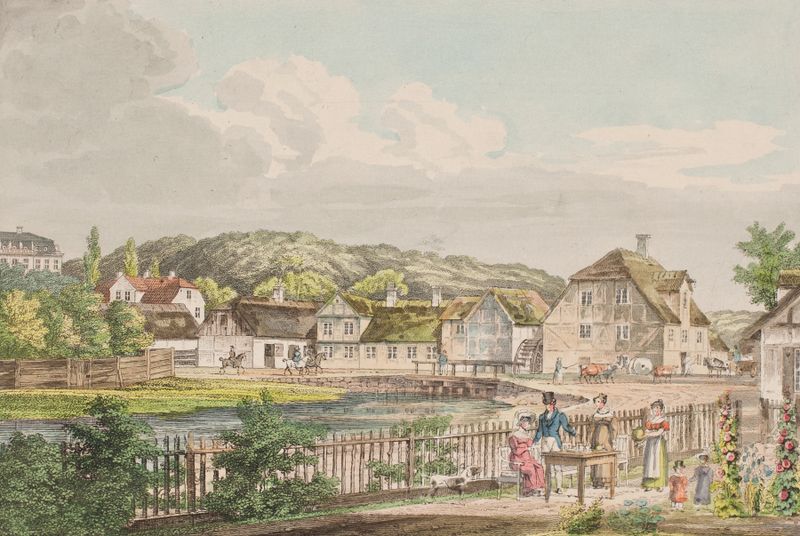
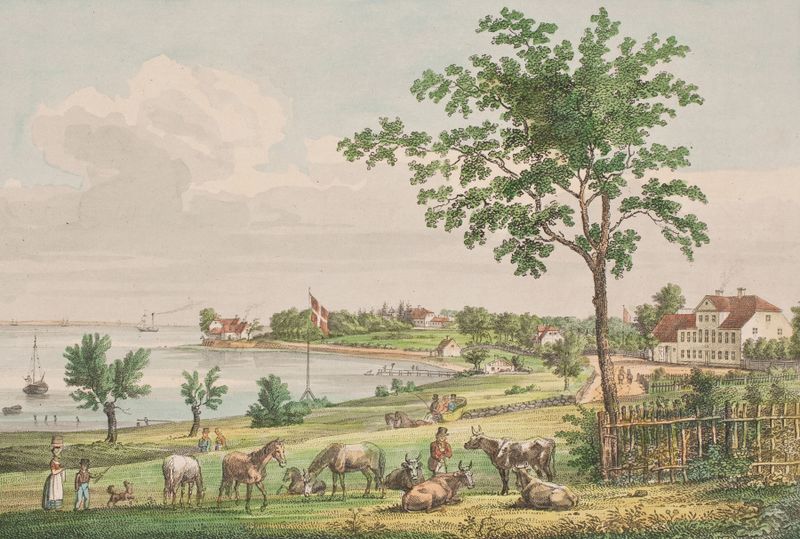
Where does light end, and longing begin? In the quiet stretch of time captured by this artwork, nostalgia seeps into the viewer's heart like the soft glow of evening light. Look to the horizon where the warm, golden hues of sunset blend seamlessly into the soft blues of twilight. The delicate balance of light and shadow dances across the landscape, drawing your gaze toward the quaint town nestled in the distance. Notice how the gentle brushstrokes create a sense of depth; the rolling hills beckon, inviting exploration, while the fine details of the buildings evoke a sense of familiarity, as if they are memories waiting to be recalled. Yet there is an undercurrent of melancholy woven throughout the scene, sharpened by the contrast between the vibrant sky and the subdued earth below.
The town, while picturesque, feels distant—the viewer is caught between admiration and a longing that can’t quite be defined. Each element speaks to a fleeting moment, evoking reflections on time, memory, and the passage of life, urging us to consider what is lost as we move into the twilight of our own existence. In the years between 1825 and 1826, Jens Holm created this work while living in Denmark, a time when the Romantic movement was gaining momentum in Europe. As he embraced the harmony of nature and nostalgia in his painting, Holm was navigating the personal turmoil of loss and the broader artistic shifts that sought to capture the emotional resonance of human experience.
This piece stands as a testament to that era, merging individual sentiment with the collective longing for a simpler, perhaps lost, time.