Parti af Frederiksdal — History & Facts
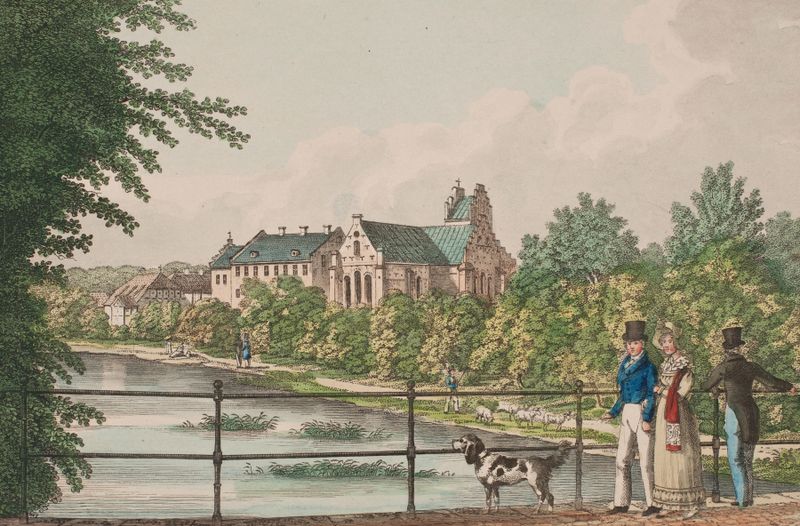
In Parti af Frederiksdal, one can almost sense the whispers of nature, where the mundane transforms into the sublime. This artwork beckons us into a world where brush strokes dance with intention, revealing a realm of transcendent beauty. Look to the left side of the canvas, where a vibrant splash of green unfurls, leading the eye into a serene landscape. Notice how the light delicately caresses the trees, their foliage a tapestry of varied hues—each leaf alive with anticipation.
The composition draws us inward, where gentle curves suggest the flow of the terrain. The horizon, softened by a warm palette, encourages contemplation, inviting the viewer to lose themselves in its tranquility. Upon closer inspection, the painting reveals contrasts between chaos and harmony, a testament to nature’s complexity. The tumultuous energy of the brushwork, rife with movement, finds harmony in the stillness of the water below, each ripple mirroring the sky’s gentle whispers.
Here, one senses a dialogue between the elements, a fleeting moment captured where nature's essence breathes life into the canvas, hinting at the spiritual transcendence inherent in the scene. During the years 1837 to 1838, as Jens Holm painted this piece, he was navigating the evolving landscape of Romanticism in Denmark. This period was marked by a heightened appreciation for nature, as artists sought to express emotional depth and a connection to the sublime. Holm's brush work reflects this desire, encapsulating both the beauty and the chaos present in the natural world, a testament to the artistic spirit of his time.